Artwork
A Donkey House in Tunis
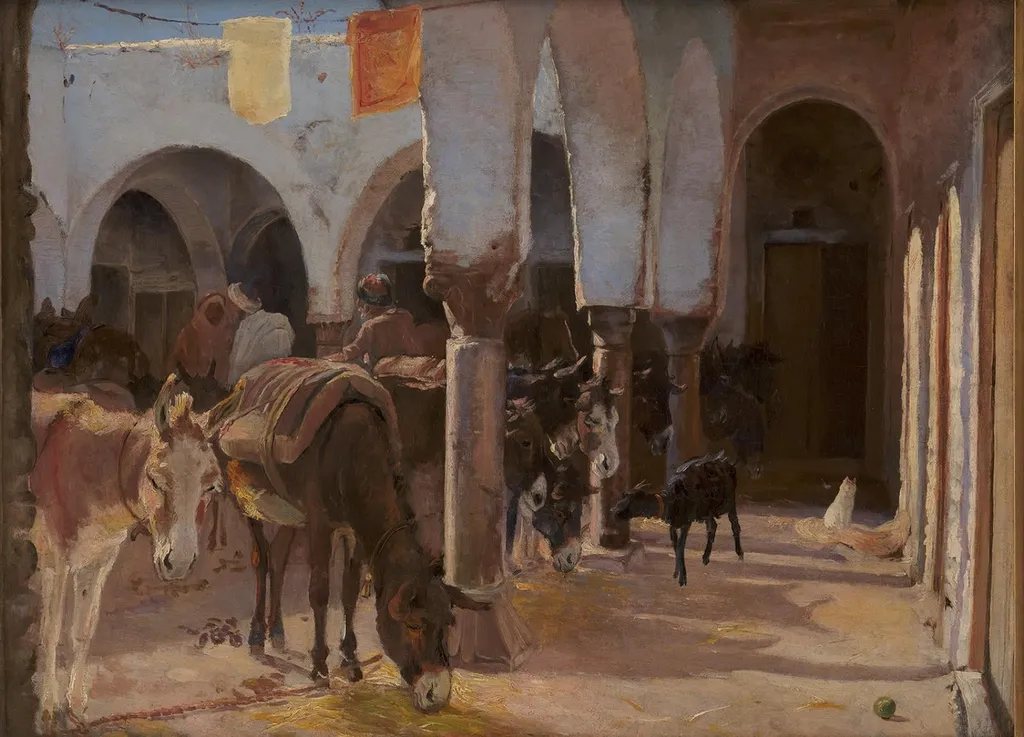
A Donkey House in Tunis is a photography by the Impressionist artist Unknown. It dates from 1882 and is held in the collection of the Statens Museum for Kunst.
About this work
Overview
The work captures the daily rhythm of urban life through a simple scene: two donkeys, one bearing cargo, stand beneath a shaded walkway.
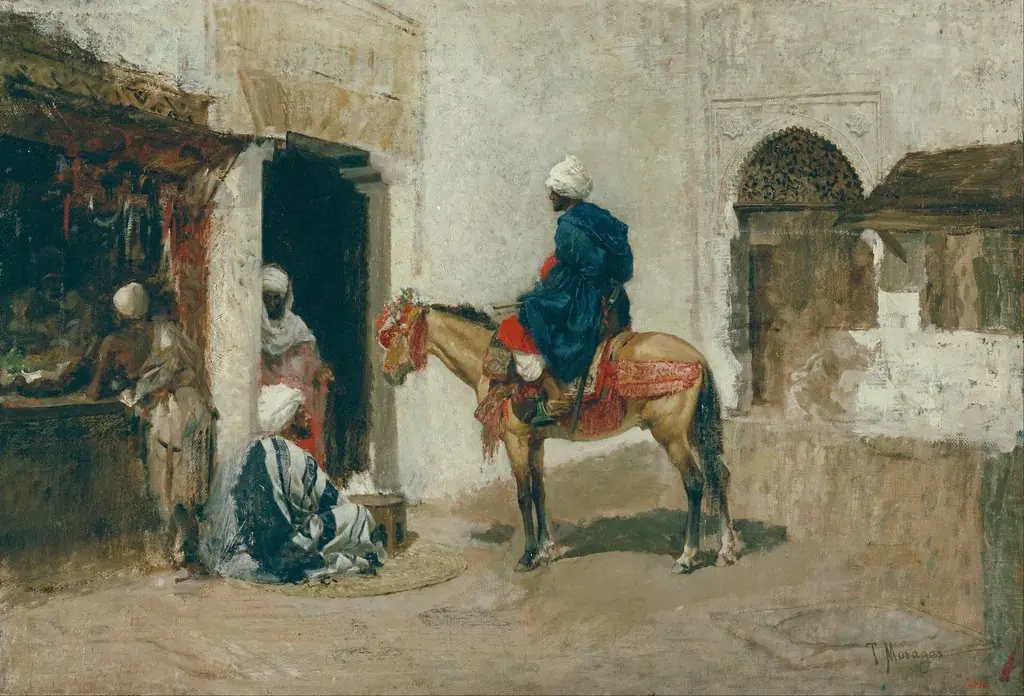
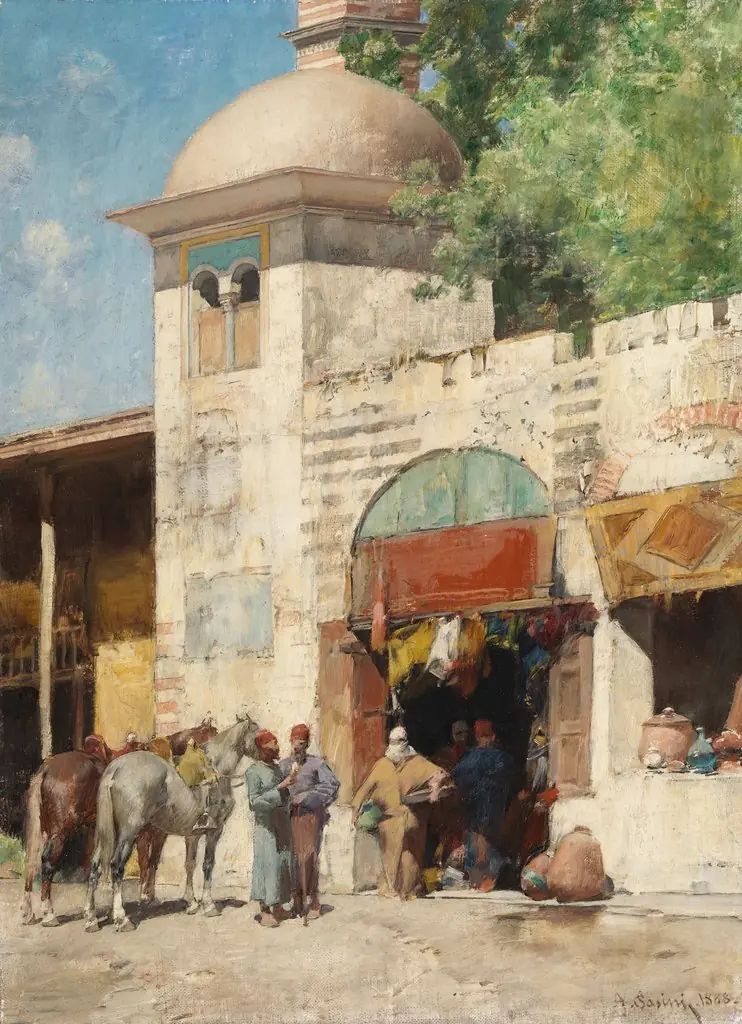
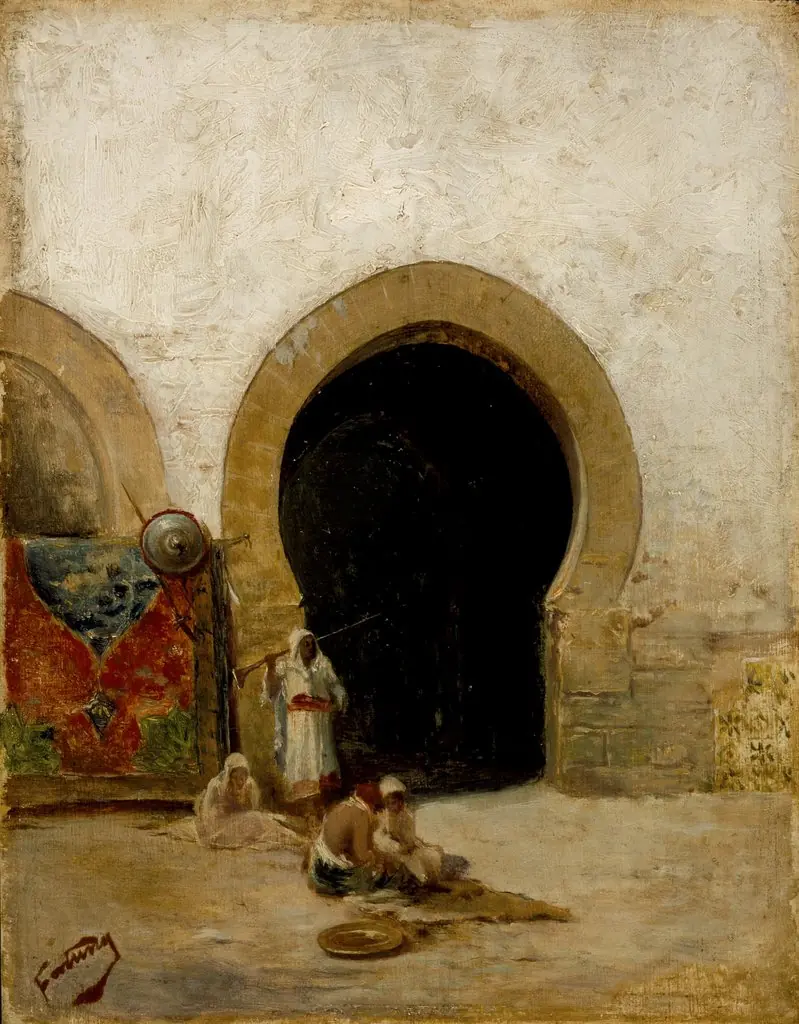
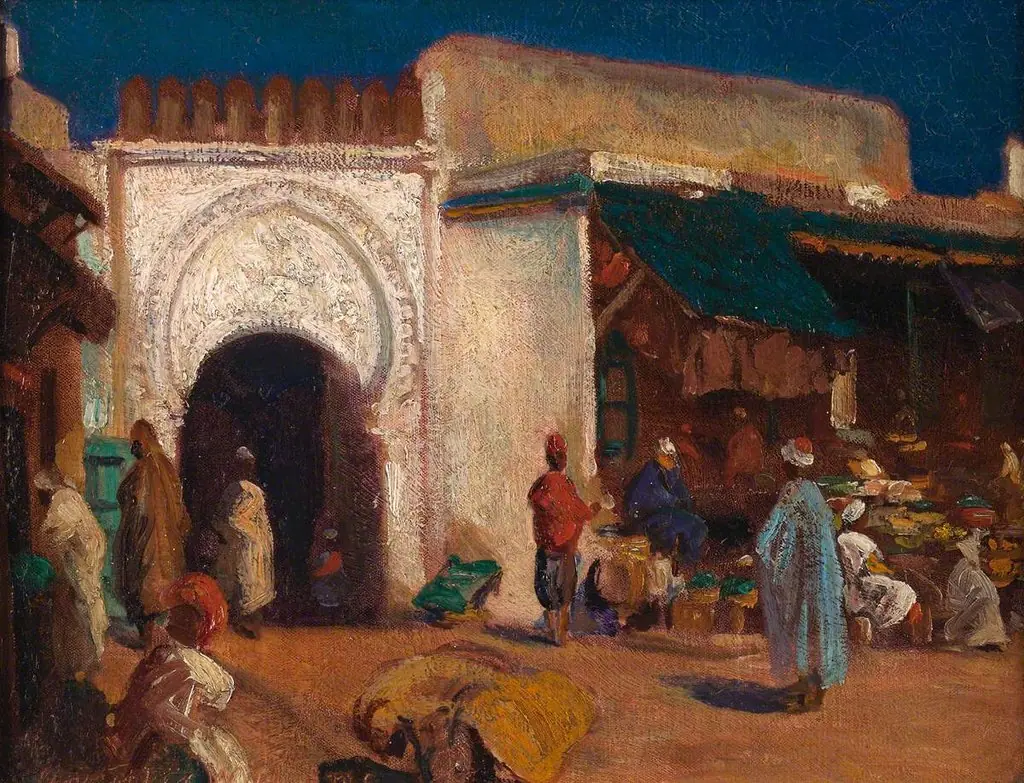
Painted in 1882, A Donkey House in Tunis depicts a quiet moment in a narrow Tunisian alley. The work captures the daily rhythm of urban life through a simple scene: two donkeys, one bearing cargo, stand beneath a shaded walkway. Figures rest nearby, laundry dries above, and a dog moves through the space. The artist rendered the setting with swift, impressionistic brushwork, emphasizing atmosphere over precise detail.
Subject & Meaning
The painting presents an unidealized view of street life in late 19th-century Tunis. Donkeys, essential to local transport, are shown not as symbols but as working animals embedded in the urban fabric. The seated figures and hanging laundry suggest routine, not spectacle. The scene conveys no narrative climax—its significance lies in its quiet ordinariness, reflecting the rhythms of a community often overlooked in art of the period.
Technique & Style
The artist employed loose, rapid brushstrokes to convey the effects of sunlight and shadow across weathered walls and cobblestones. Color, rather than line, defines form, with muted earth tones dominating the palette. Details like facial features or fabric textures are suggested, not rendered. This approach aligns with emerging practices that prioritized sensory impression over academic precision, focusing on transient light and movement.
History & Provenance
Created in 1882 during the artist’s time in North Africa, the work entered the collection of the Museum of Ethnography soon after. Its acquisition reflects late 19th-century interest in documenting non-European daily life. Unlike many contemporary Orientalist works, it avoids exoticism, instead offering a restrained, observational record. The painting has remained in the museum’s holdings since its initial acquisition.
Context
This painting emerged during a period when European artists increasingly traveled beyond their homelands, drawn to North African light and architecture. While many depicted dramatic or romanticized scenes, this work stands apart for its quiet focus on mundane activity. It aligns with broader shifts in art toward realism and impressionism, valuing the authenticity of ordinary moments over staged narratives.
Legacy
A Donkey House in Tunis contributes to a quieter strand of 19th-century art that documented everyday life without sentimentality or spectacle. Its preservation in an ethnographic museum underscores its role as a visual record of urban North African life. While not widely known, it remains a quiet example of how observation, not grandeur, could shape artistic representation during a time of expanding global awareness.
Artist & collection

 Domestic Scene
 Giacomo and Cardinal Marco, investing Andrea, Abbot of San Zeno, with his Benefice
 The Nymph of Fontainebleau
 Portrait of a Woman
 Madonna and Child with Saints in the Enclosed Garden
 Venus and Minerva
 Family Group of Four on Sofa
 Wall painting from Room H of the Villa of P. Fannius Synistor at Boscoreale