Artwork
Et gadekær. Maglebylille
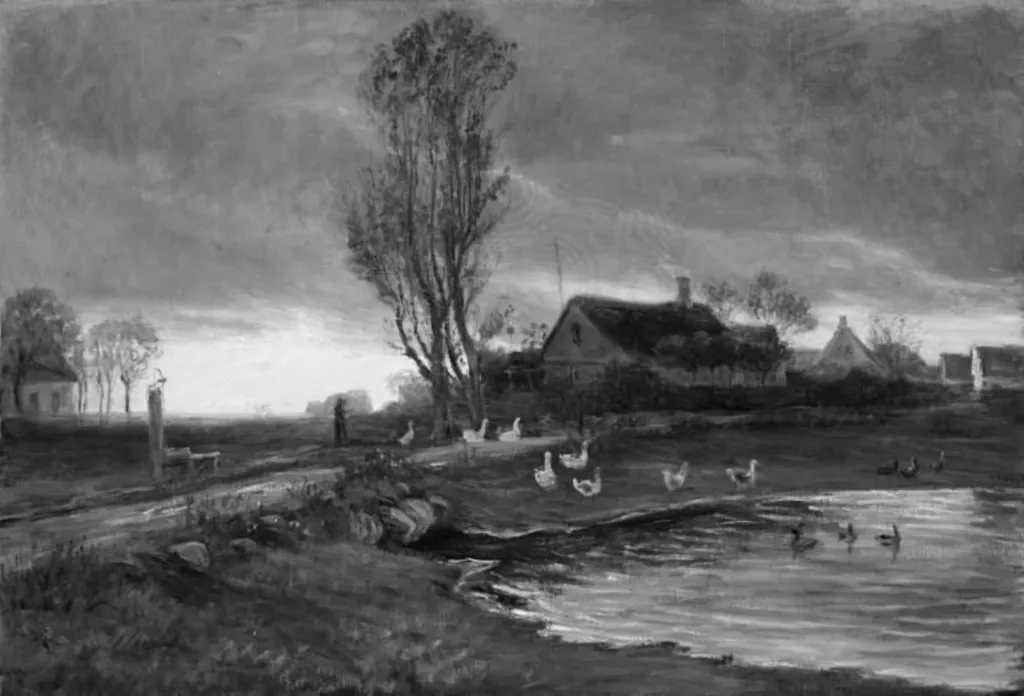
Et gadekær. Maglebylille is a photography by Unknown. It dates from 1903 and is held in the collection of the Statens Museum for Kunst. Created in 1903, Et gadekær.
About this work
Overview
Maglebylille is a quiet landscape painting by 987_person, currently held in the collection of the Museum of Ethnography.
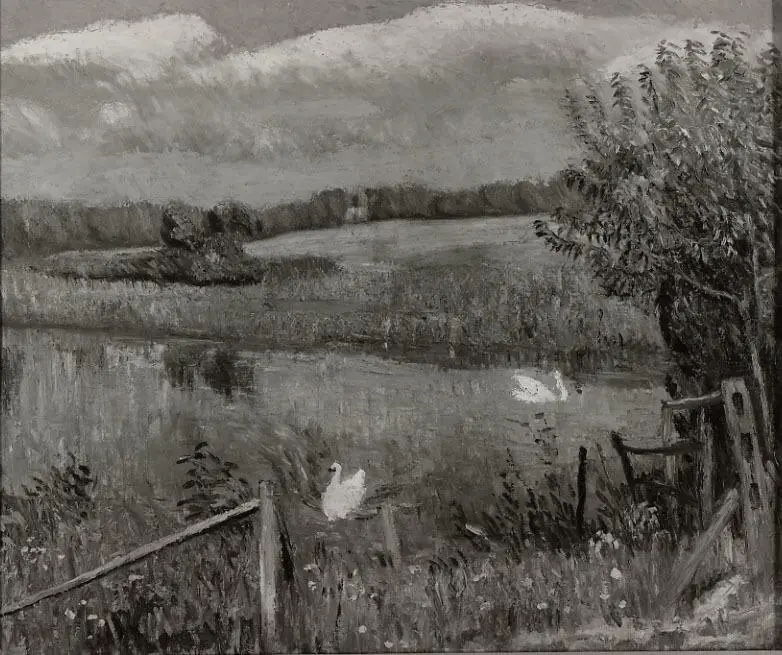
Created in 1903, Et gadekær. Maglebylille is a quiet landscape painting by 987_person, currently held in the collection of the Museum of Ethnography. The work captures a modest rural pond in Denmark, rendered with restrained tones and minimal detail. Its composition avoids dramatic elements, focusing instead on stillness and subtle natural rhythms, reflecting a deliberate engagement with everyday rural environments.
Subject & Meaning
The scene centers on a small pond surrounded by sparse vegetation and distant buildings, with a pair of ducks gliding across its surface. The absence of human figures emphasizes solitude and the quiet persistence of nature. The title references a local place name, grounding the image in a specific, unidealized Danish countryside, suggesting an interest in ordinary, overlooked landscapes rather than grand vistas.
Technique & Style
The painting employs a muted palette dominated by soft grays, browns, and muted greens, avoiding vivid contrasts. Brushwork is subdued and deliberate, with textures suggested rather than detailed. The horizon is low, giving prominence to the water and sky, while foreground elements like rocks and grass are rendered with gentle economy, reinforcing the painting’s contemplative mood.
History & Provenance
The work entered the Museum of Ethnography’s collection shortly after its creation, likely through direct acquisition or donation. Its presence in an ethnographic institution, rather than a fine arts museum, indicates an early interest in documenting regional life and vernacular environments as cultural artifacts, aligning with broader Nordic ethnographic practices of the period.
Context
Painted during a time when Danish artists increasingly turned to rural subjects, this work reflects a shift away from romanticized landscapes toward intimate, unembellished observations of local scenery. It resonates with contemporaneous efforts to record everyday life in the countryside, influenced by both national identity movements and emerging documentary sensibilities in the visual arts.
Legacy
Though not widely exhibited outside institutional collections, Et gadekær. Maglebylille remains a representative example of early 20th-century Danish landscape painting that prioritizes quiet observation over spectacle. It contributes to a lesser-known but persistent tradition of regional realism, valued for its restraint and fidelity to place rather than artistic innovation.
Artist & collection

 Domestic Scene
 Giacomo and Cardinal Marco, investing Andrea, Abbot of San Zeno, with his Benefice
 The Nymph of Fontainebleau
 Portrait of a Woman
 Madonna and Child with Saints in the Enclosed Garden
 Venus and Minerva
 Family Group of Four on Sofa
 Wall painting from Room H of the Villa of P. Fannius Synistor at Boscoreale