Artwork
H Beard Print Collection
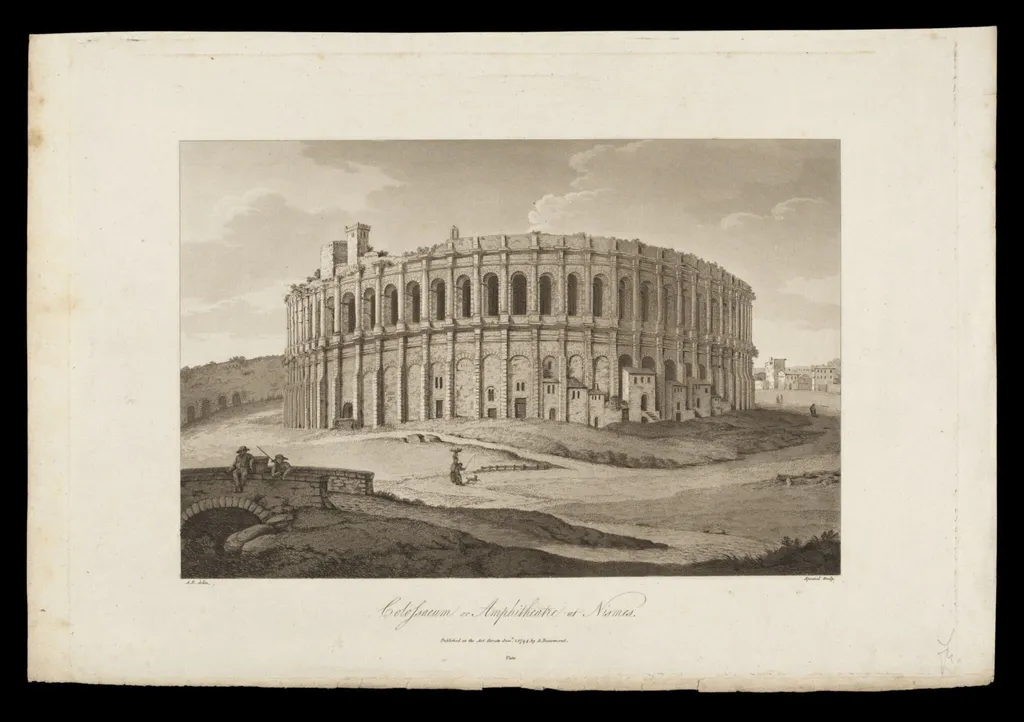
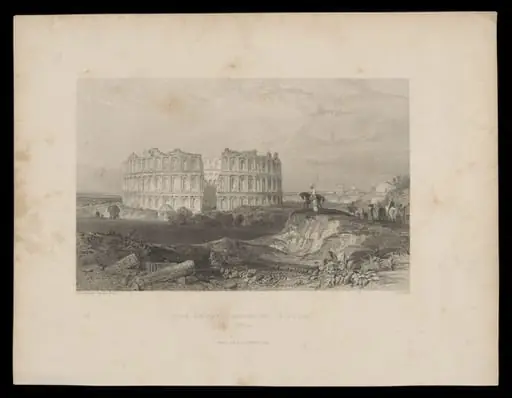
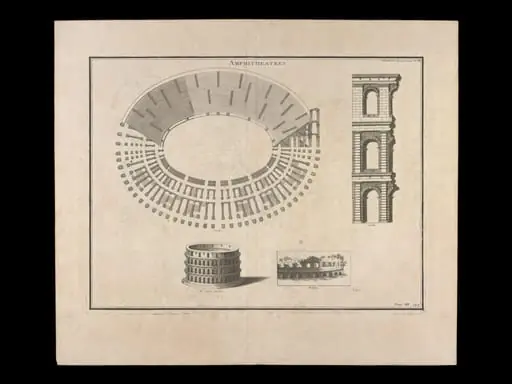
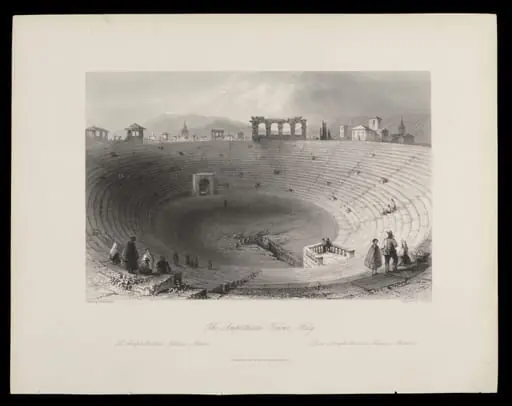
H Beard Print Collection is a print by the Romanticist artist Albrecht Dürer. It is held in the collection of the Victoria and Albert Museum. This engraving, dated January 1794, depicts the ancient amphitheatre in Nîmes as it appeared in the late 18th century.
About this work
This print shows an old stone amphitheatre sitting in the countryside. The artist used fine lines on paper to make the scene. It’s a quiet view of a historic place half covered by plants.
The artist dated it January 1794, so it’s from the Romantic era. That time loved nature and ruins like this one. The print captures a moment when the past met the wild.
Look up more prints by A.B.
Overview
Though largely intact, portions of the stonework are softened by creeping vegetation, suggesting a quiet reclamation by nature.
This engraving, dated January 1794, depicts the ancient amphitheatre in Nîmes as it appeared in the late 18th century. Rendered in fine linear detail on paper, the print captures the structure nestled within an undisturbed rural setting. Though largely intact, portions of the stonework are softened by creeping vegetation, suggesting a quiet reclamation by nature. The work belongs to the Harry Beard Print Collection and reflects the period’s fascination with antiquity and landscape.
Subject & Meaning
The amphitheatre, once a center of Roman public life, is shown not as a monument of grandeur but as a ruin gently overtaken by the natural world. The presence of plants growing along its arches and walls implies a passage of time and the quiet persistence of nature over human construction. This portrayal aligns with Romantic sensibilities that found beauty in decay and the sublime in abandoned history.
Technique & Style
Executed as a detailed engraving, the image relies on precise, delicate lines to define the architecture and surrounding terrain. The artist uses tonal variation through line density to suggest texture and depth, from the rough stone surfaces to the soft foliage. The composition is calm and balanced, avoiding dramatic lighting or human figures, emphasizing solitude and the passage of time.
History & Provenance
The print is part of the Harry Beard Collection, a 19th-century assembly of topographical and architectural engravings. Its date of 1794 places it within a period of growing interest in documenting ancient sites across Europe. While the artist’s full name is not provided here, the work is attributed to A.B., a common practice in prints of the era when the engraver’s identity was secondary to the subject.
Context
Created during the height of the Romantic movement, the image reflects a cultural shift toward valuing ruins as emotional and aesthetic objects. Unlike earlier antiquarian records focused on accuracy alone, this print evokes atmosphere—emphasizing the interplay between human legacy and natural growth. Similar views of Roman sites in France and Italy were increasingly popular among collectors and travelers seeking the picturesque.
Legacy
As part of a broader archive of architectural prints, this work contributes to the historical record of how ancient monuments were perceived in the late 18th century. It offers insight into pre-modern conservation attitudes and the evolving relationship between heritage and landscape. The print remains a quiet testament to the enduring appeal of ruins as symbols of time’s quiet triumph.
Artist & collection
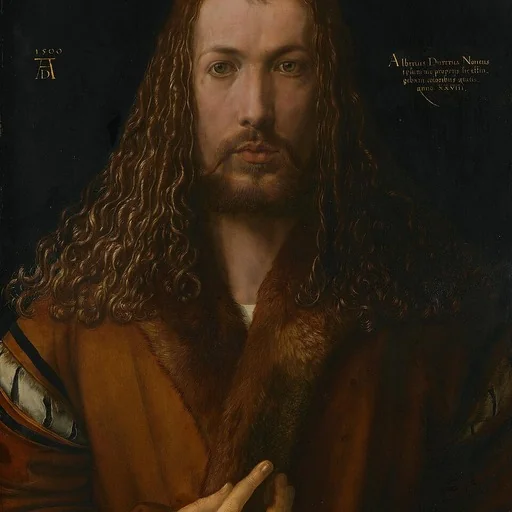
Artist
Albrecht Dürer spent his life in Nuremberg, a busy German city where artists traded prints like currency.

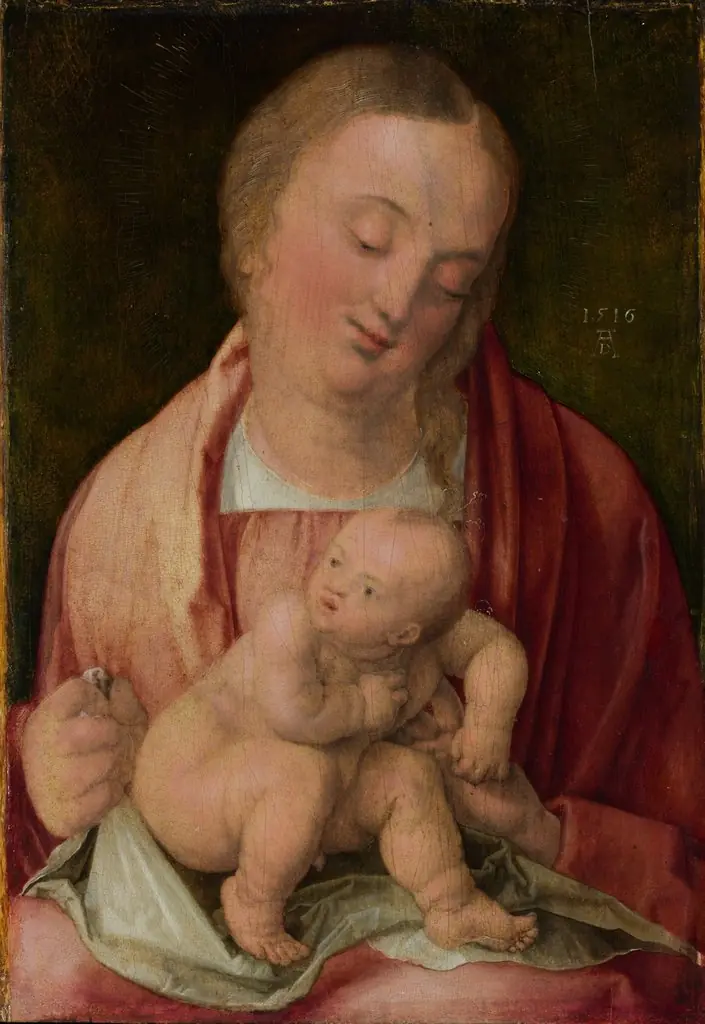
![Madonna and Child [obverse], by Albrecht Dürer](https://artifactworldgallery.com/img/albrecht-durer--madonna-and-child-obverse--d7b8ebf05d22ebe5-w320.webp)
![Lot and His Daughters [reverse], by Albrecht Dürer](https://artifactworldgallery.com/img/albrecht-durer--lot-and-his-daughters-reverse--b4ebf9b282faa17a-w320.webp)