Artwork
The Prophet Elijah with the Widow of Zarephath and her Son
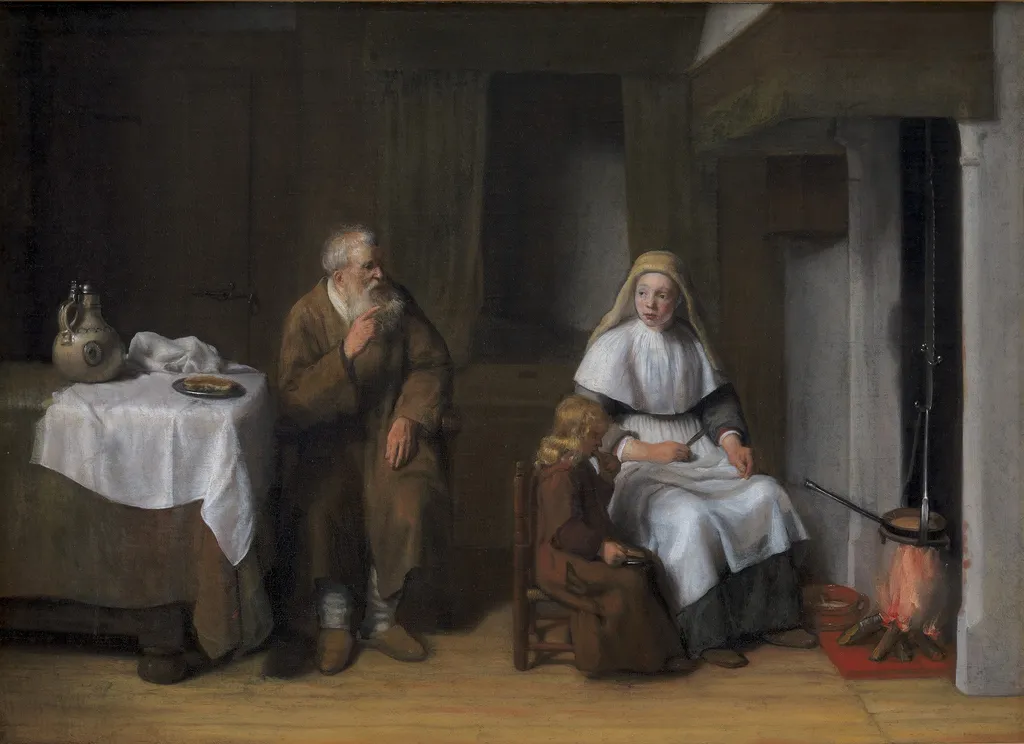
The Prophet Elijah with the Widow of Zarephath and her Son is an oil painting by the Dutch Golden Age artist Abraham van Dijck. It dates from 1661 and is held in the collection of the Statens Museum for Kunst.
About this work
Overview
Abraham van Dijck’s 1661 oil painting portrays a biblical episode in which the prophet Elijah visits a destitute widow and her child. The work, now in the Statens Museum for Kunst, captures a quiet, interior moment that emphasizes the human dimensions of the scriptural narrative.
Subject & Meaning
The composition centers on Elijah, identifiable by his white beard and brown robes, seated at a modest table. Opposite him, the widow in a white dress cradles her infant, suggesting the miracle of sustenance that follows. The scene reflects themes of divine providence and compassion within a humble domestic setting.
Technique & Style
Van Dijck employs chiaroscuro, allowing a soft light from the left to illuminate the figures against a darker background, creating depth and focus. Warm earth tones dominate, reinforcing the intimate atmosphere, while careful modeling of the faces and garments conveys texture and volume.
History & Provenance
Executed in 1661, the painting entered the collection of Denmark’s national gallery, the Statens Museum for Kunst, where it remains on display. Its provenance traces back to the Dutch Golden Age, reflecting van Dijck’s engagement with religious subjects popular among his contemporaries.
Own this work as a print
Artist & collection
