Artwork
Tobit and the Angel
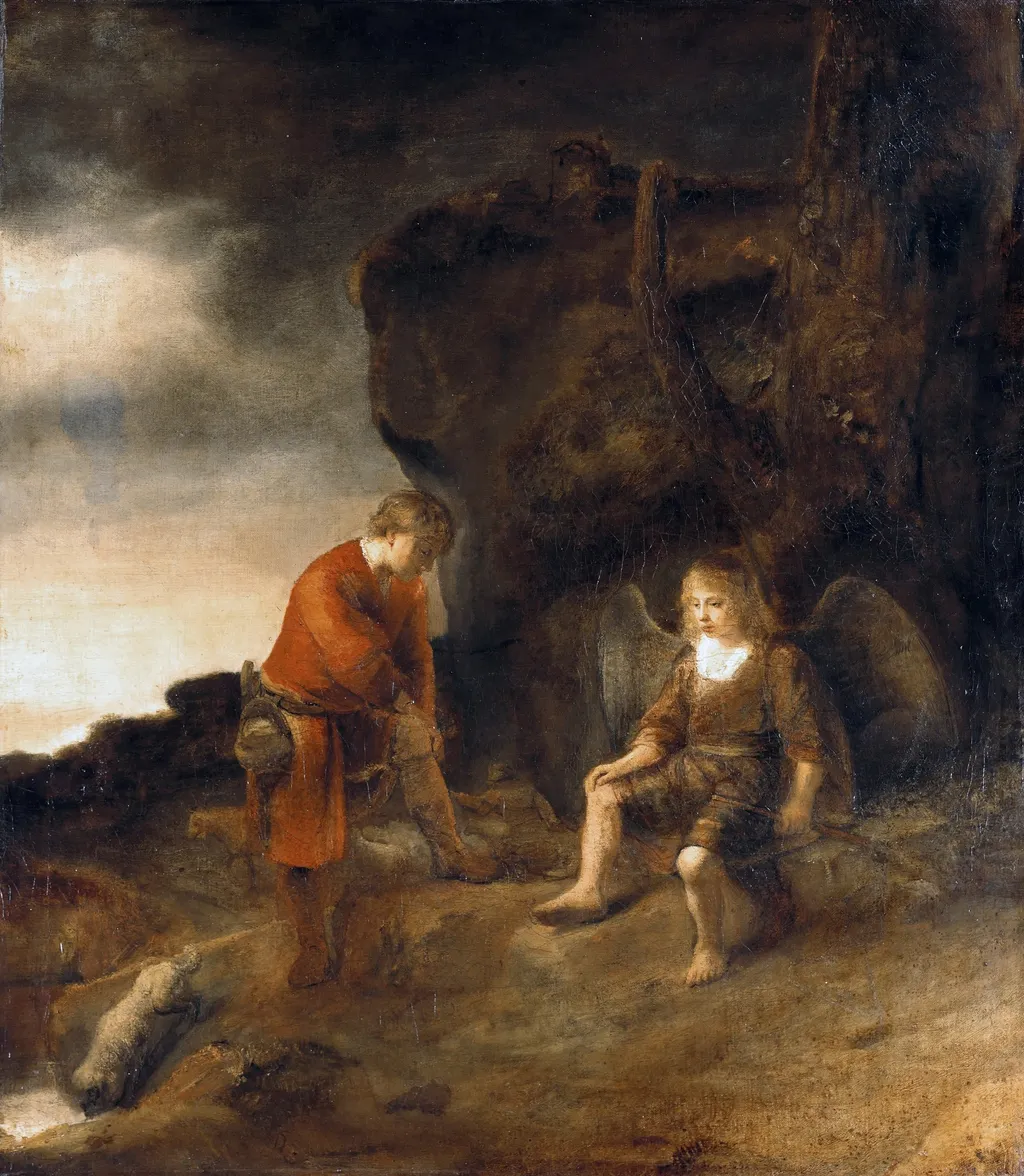
Tobit and the Angel is an oil painting by the Dutch Golden Age artist Abraham van Dijck. It dates from 1650 and is held in the collection of the Gemäldegalerie Berlin.
About this work
Overview
Abraham van Dijck’s oil painting Tobit and the Angel, executed around 1650, is part of the collection of the Gemäldegalerie in Berlin. The work presents a nocturnal scene rendered in the Dutch Baroque style, focusing on a solitary figure in a vivid red coat and an attendant angelic youth amidst a rugged landscape.
Subject & Meaning
The composition draws on the biblical episode of Tobit, showing the older man kneeling beside a sleeping dog while a winged youth, identified as the archangel Raphael, watches from a ledge. The quiet gesture of care toward the animal and the serene presence of the angel suggest themes of divine guidance and protection in a moment of vulnerability.
Technique & Style
Van Dijck employs strong chiaroscuro, contrasting the illuminated figure and the red garment against a dark, storm‑filled sky and looming rock. The handling of light creates depth on the craggy ground, while the smooth modeling of flesh and the delicate rendering of the angel’s wings reveal the artist’s mastery of oil paint.
History & Provenance
Created in the mid‑17th century, the painting entered the German national collection and is now displayed in Berlin’s Gemäldegalerie. Its provenance prior to acquisition by the museum remains undocumented in public records, typical of many Dutch works that circulated through private collections before entering public institutions.
Context
The work reflects the Dutch Golden Age’s interest in biblical narratives rendered with dramatic lighting and naturalistic detail. Van Dijck, a follower of Rembrandt, often incorporated theatrical chiaroscuro and emotive gestures, aligning this piece with contemporary religious paintings that emphasized personal piety.
Legacy
While not among the most frequently reproduced Dutch works, Tobit and the Angel illustrates van Dijck’s contribution to the development of narrative oil painting in the 17th century, offering scholars insight into the period’s visual language of faith and the interplay of light and shadow.
Own this work as a print
Artist & collection