Artwork
Louis XIV Crossing into the Netherlands at Lobith
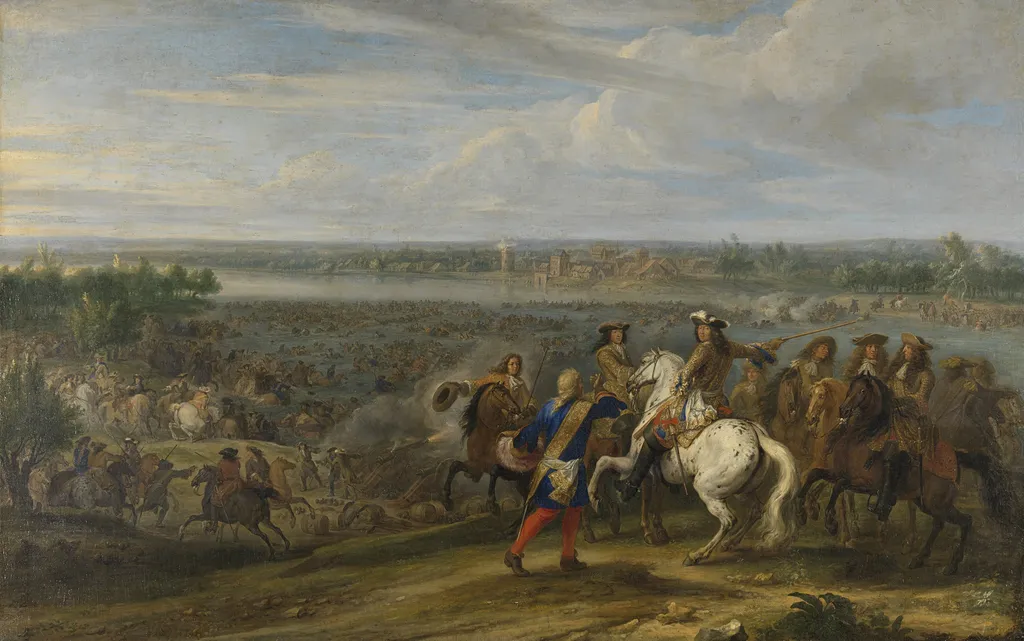
Louis XIV Crossing into the Netherlands at Lobith is an oil painting by the Rococo painting artist Adam Frans van der Meulen. It is held in the collection of the Rijksmuseum.
About this work
Overview
Louis XIV Crossing into the Netherlands at Lobith (1696) is an oil painting by Adam Frans van der Meulen, depicting a pivotal moment in Louis XIV’s military campaign. The work exemplifies van der Meulen’s specialization in military and propagandistic scenes for the French monarchy.
Subject & Meaning
The painting captures Louis XIV’s entry into the Netherlands at Lobith, emphasizing the king’s authority and military prowess. The composition reinforces the monarch’s image as the Sun King, highlighting his leadership amidst a disciplined army.
Technique & Style
Van der Meulen employs contrasting colors to draw attention to the royal entourage in the foreground, set against a backdrop of orderly, yet blurred, military ranks. The landscape, with its soft sky and muddy terrain, provides a nuanced setting for the scene’s focal point: the king’s advance.
History & Provenance
Created in 1696 as part of van der Meulen’s output for the French monarchy, the painting is now part of the Rijksmuseum’s collection.
Context
This work reflects the artistic demand for visual narratives of conquest during Louis XIV’s reign, with van der Meulen playing a key role in producing such propaganda.
Own this work as a print
Artist & collection
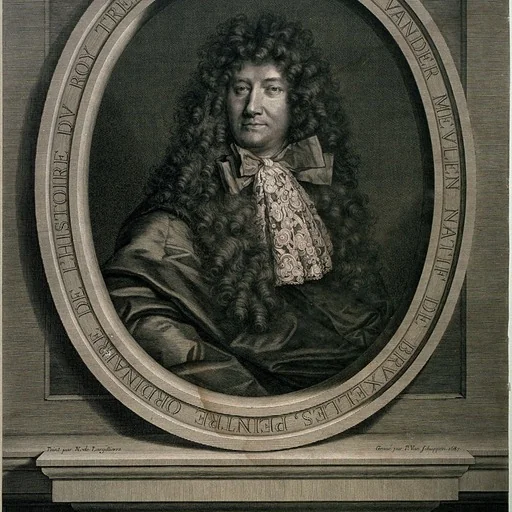
Artist
Adam Frans van der Meulen or Adam-François van der Meulen (11 January 1632 – 15 October 1690) was a Flemish painter and draughtsman who was particularly known for his scenes of military campaigns and conquests.