Artwork
Rauriser Goldberggletscher
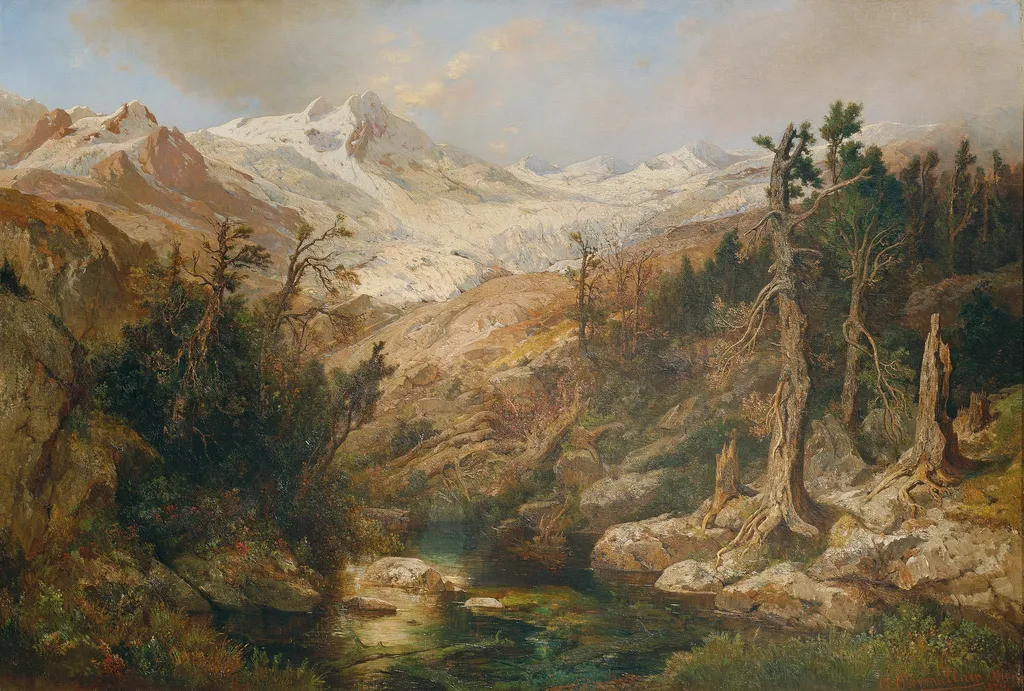
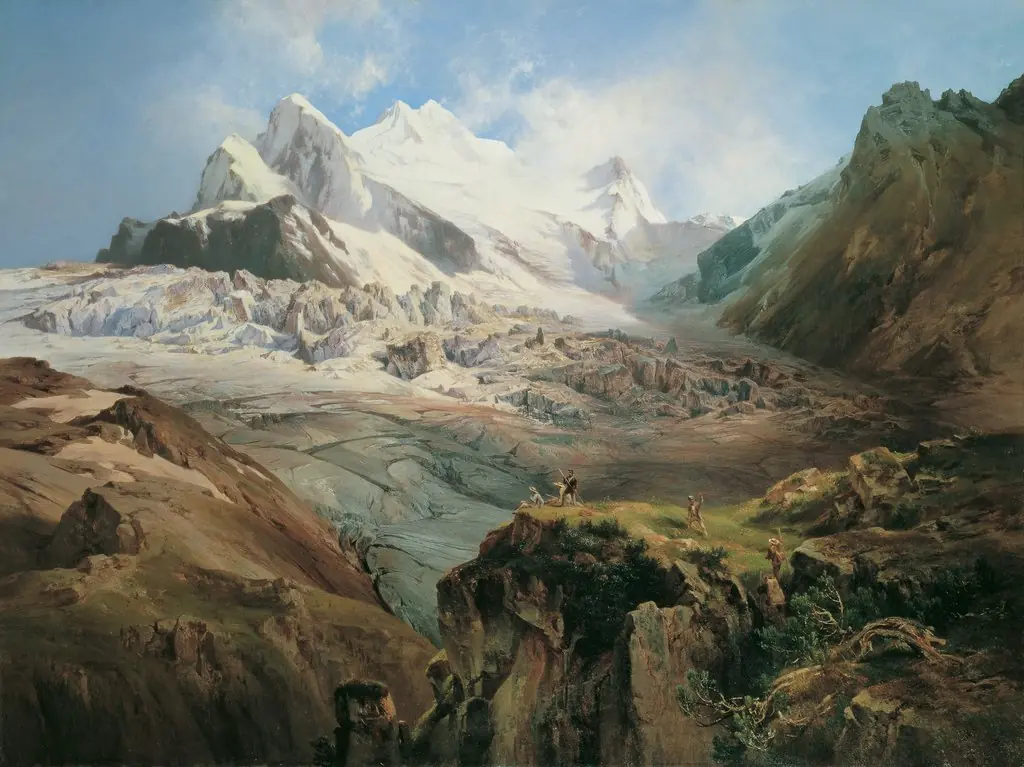
Rauriser Goldberggletscher is an oil painting by the Impressionist artist Adolf Obermüllner. It dates from 1874 and is held in the collection of the Kunsthistorisches Museum.
About this work
Overview
Adolf Obermüllner painted this oil landscape in 1874, capturing the Rauriser Goldberggletscher region in the Austrian Alps. The work resides in the Kunsthistorisches Museum in Vienna, where it represents a quiet, observational approach to alpine scenery typical of late 19th-century Austrian landscape painting.
Subject & Meaning
The painting presents a tranquil mountain valley with a winding river cutting through the foreground, bordered by dense vegetation and weathered rocks. Snow-capped peaks rise in the distance, their stillness suggesting isolation and endurance. There is no human presence, emphasizing nature’s quiet dominance and the subtle grandeur of the alpine environment.
Technique & Style
Obermüllner employs subtle gradations of color to suggest spatial depth, from rich forest greens in the foreground to pale, cool blues and grays in the distant peaks. Chiaroscuro is used sparingly to model forms, enhancing the volume of rocks and ridges without dramatic contrast. Brushwork remains controlled, favoring atmospheric cohesion over expressive detail.
History & Provenance
Completed in 1874, the painting entered the collection of the Kunsthistorisches Museum shortly after its creation. It was likely acquired as part of a broader effort to document Austrian natural landscapes during a period of growing national interest in regional topography and environmental identity.
Context
In the 1870s, Austrian artists increasingly turned to alpine subjects as symbols of cultural and geographic identity, moving away from idealized classical landscapes. Obermüllner’s work reflects this trend, aligning with scientific and topographical interests of the time while maintaining a poetic, understated tone.
Legacy
Though not widely exhibited outside Austria, the painting remains a representative example of regional landscape painting from the late Habsburg era. Its quiet realism contributes to a body of work that documented the Austrian Alps with fidelity, influencing later generations of regional artists focused on natural observation.
Own this work as a print
Artist & collection

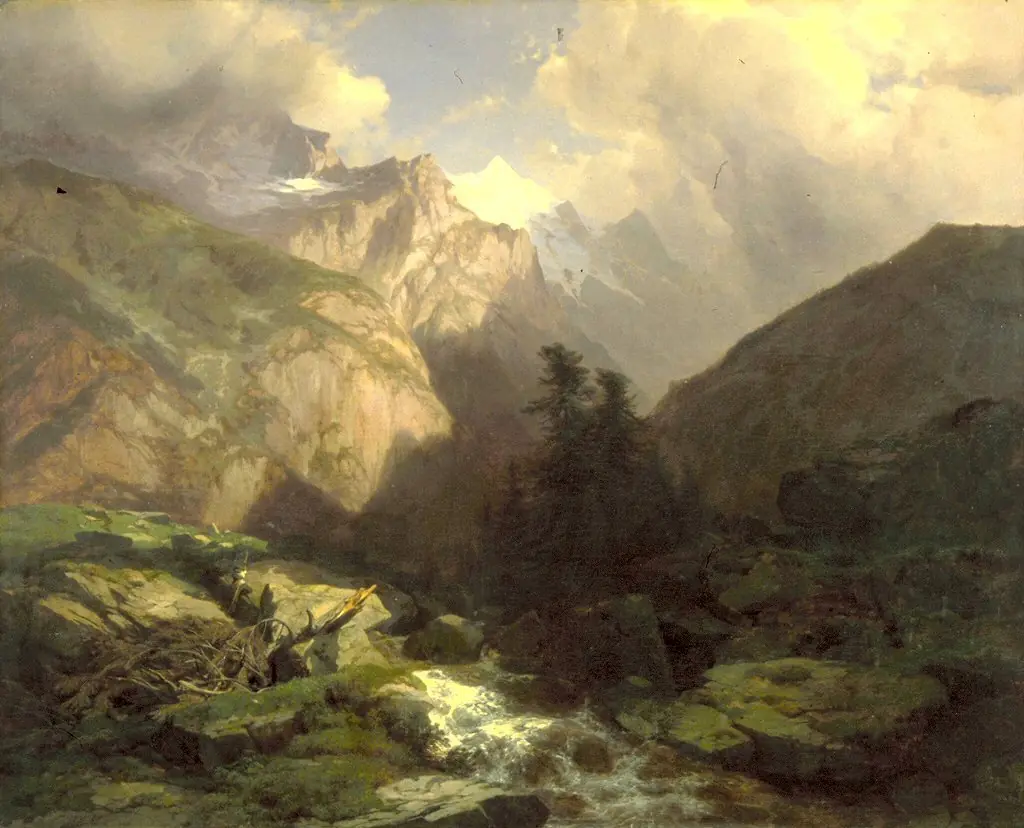 The Jungfrau, Switzerland
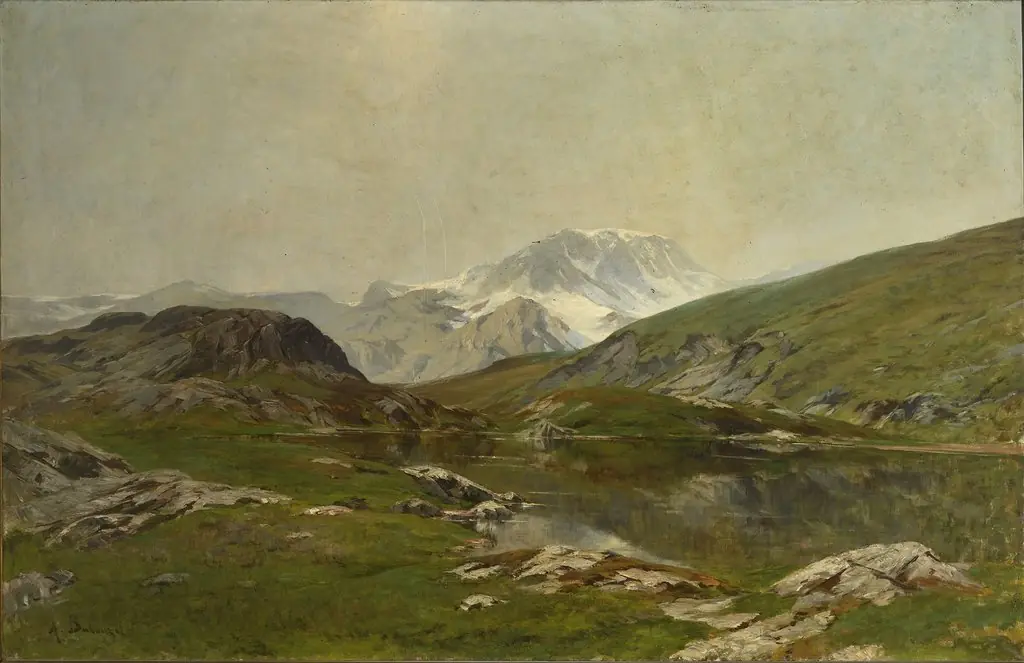 Site du Dauphiné
 Snowy Range
 In the Southern Alps
 Wengeralpe im Berner Oberland (Jungfrau und Mönch)
 Stream in Mountains at Dusk
 Der Stubaiferner in Tirol
 Road to the Morskie Oko Lake
 Vorderer Gosausee against Dachstein
 California Pines
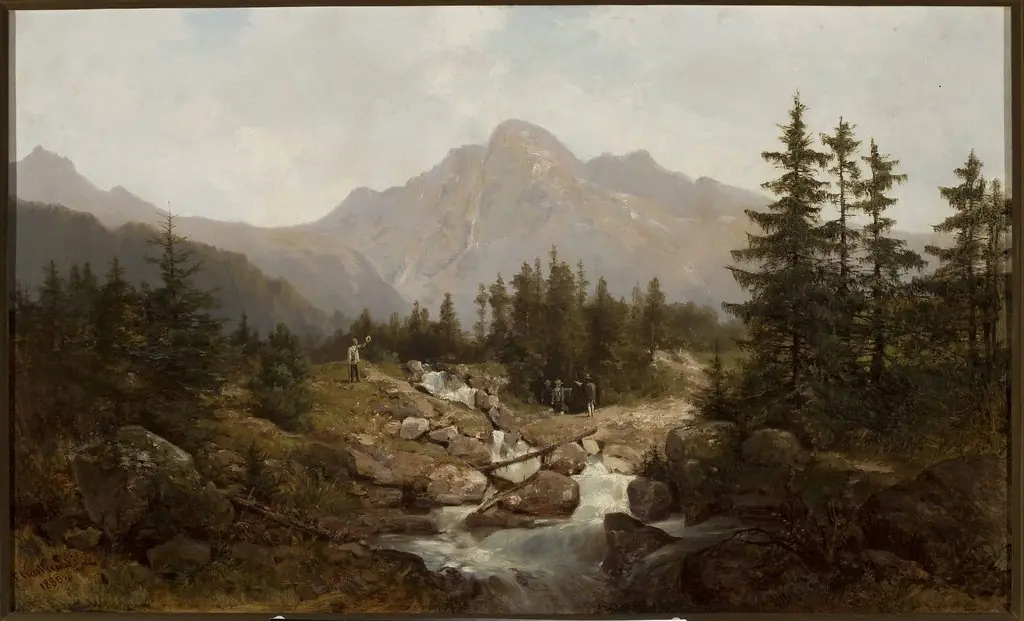 Tatra Mountain landscape
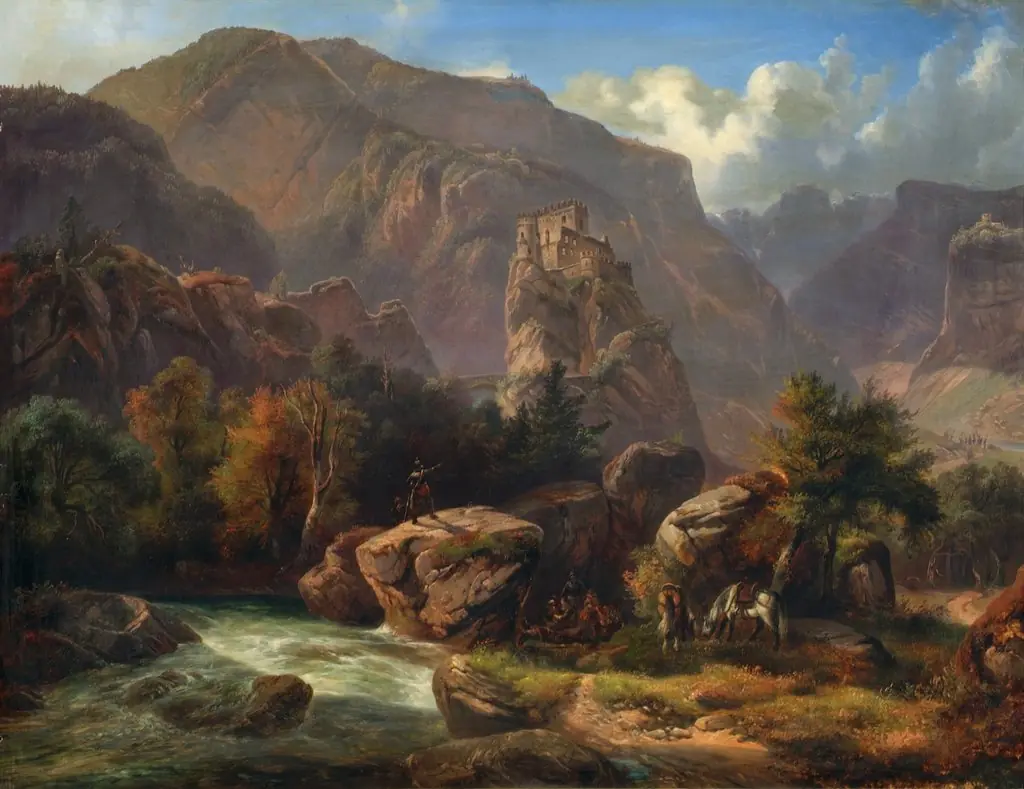 Schloss Salurn in Südtirol