Artwork
Man with Lance Riding through the Snow
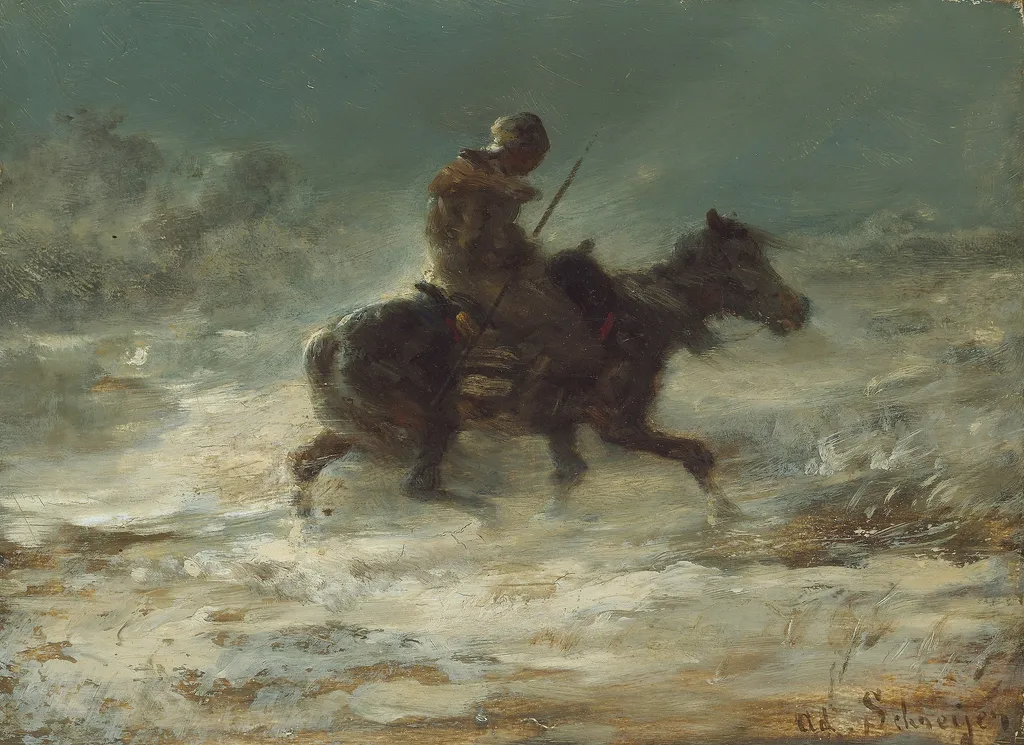
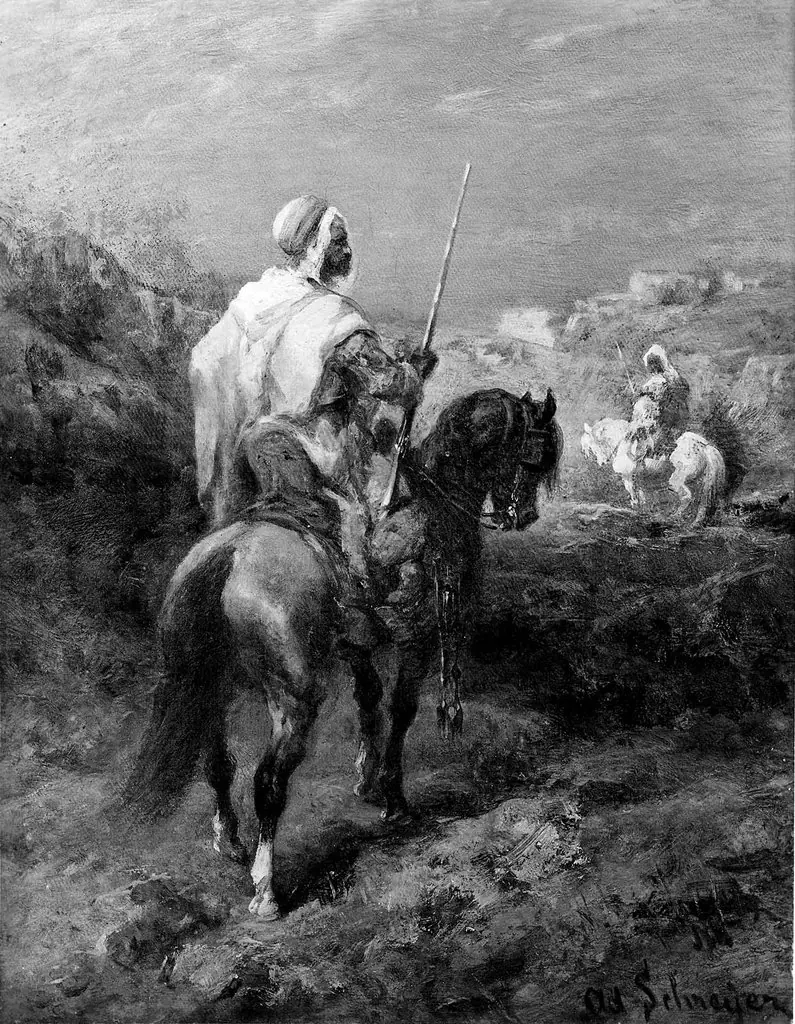
Man with Lance Riding through the Snow is an oil painting by the Orientalist artist Adolf Schreyer. It dates from 1890 and is held in the collection of the Art Institute of Chicago.
About this work
Overview
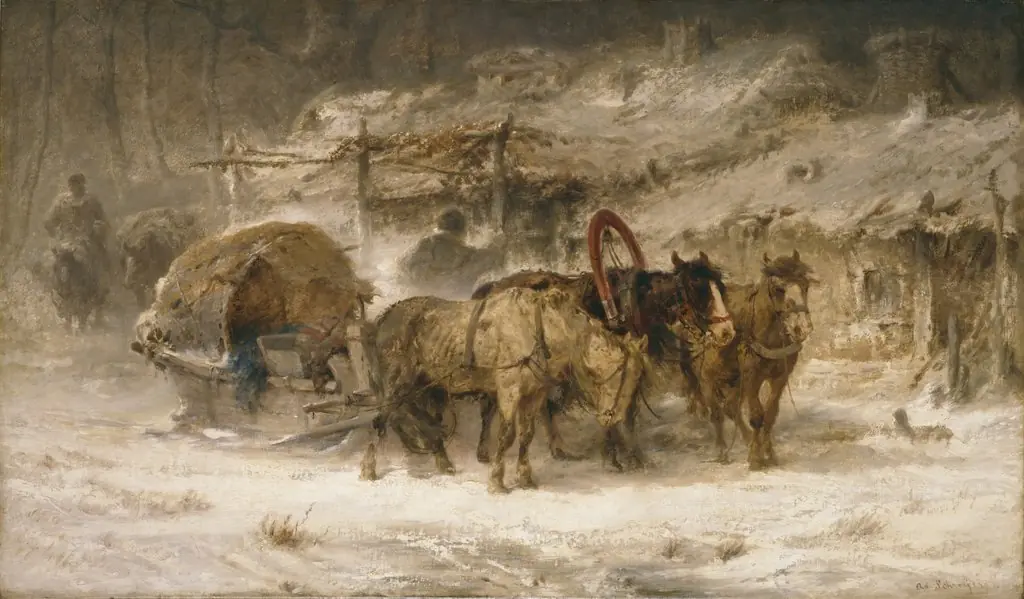
Painted in 1890 by Adolf Schreyer, this oil on canvas captures a solitary equestrian traversing a snow-covered terrain. The work is part of the permanent collection at the Art Institute of Chicago. Schreyer, known for his focus on equine subjects, rendered this scene with attention to motion and atmospheric conditions, reflecting his broader interest in equestrian life and natural environments.
Subject & Meaning
The lance implies a martial or ceremonial role, yet its presence feels incidental, emphasizing movement over narrative.
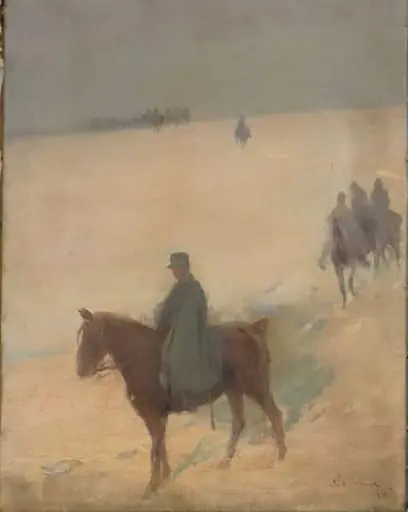
The figure, clad in dark attire and bearing a lance, rides a dark brown horse through a quiet winter landscape. The absence of context—no settlement, no other figures—suggests solitude or transit rather than battle or ceremony. The lance implies a martial or ceremonial role, yet its presence feels incidental, emphasizing movement over narrative. The scene conveys quiet determination amid winter’s stillness.
Technique & Style
Schreyer employed loose, energetic brushwork to suggest the horse’s motion and the falling snow. The background trees and hills are rendered in soft focus, enhancing the sense of speed and depth. The rider and horse, sharply defined against the blurred terrain, anchor the composition. Dark pigments dominate, with subtle tonal variations in the snow conveying texture without detail, reinforcing the painting’s atmospheric immediacy.
History & Provenance
The painting was completed in 1890 during Schreyer’s mature period, when he was widely recognized for his animal and equestrian subjects. It entered the Art Institute of Chicago’s collection in the early 20th century, likely through acquisition from a European dealer or collector. Its provenance remains largely undocumented beyond its institutional ownership since that time.
Context
Schreyer worked within the 19th-century European tradition of animal painting, influenced by Romanticism and Realism. His focus on horses in motion aligned with broader interests in depicting nature and animal behavior with authenticity. While not overtly political, his works responded to a public fascination with equestrian culture, military horsemanship, and the sublime qualities of winter landscapes.
Legacy
Though Schreyer is less widely known today than some of his contemporaries, his paintings remain valued for their technical precision and dynamic portrayal of animals. This work exemplifies his ability to convey motion and mood with restrained detail. It continues to be studied as an example of late 19th-century equestrian art, reflecting both artistic skill and cultural attitudes toward nature and movement.
Own this work as a print
Artist & collection