Artwork
Falls of the Rhine at Schaffhausen (Rheinfall von Schaffhausen)
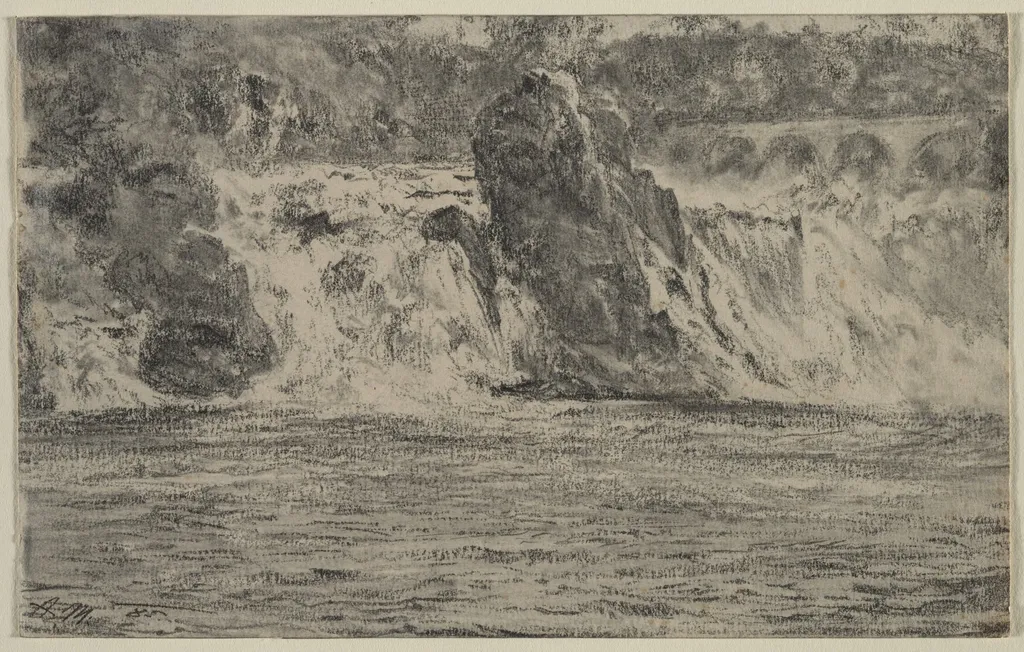
Falls of the Rhine at Schaffhausen (Rheinfall von Schaffhausen) is a drawing by the Impressionist artist Adolph von Menzel. It dates from 1885 and is held in the collection of the Cleveland Museum of Art.
About this work
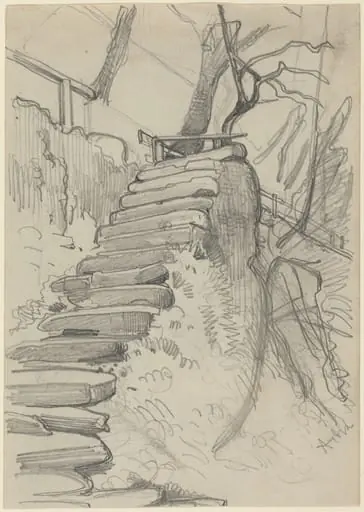
The drawing is done in graphite, with careful lines that show every ripple and rock.
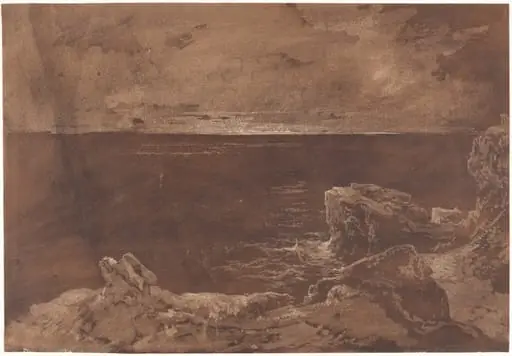
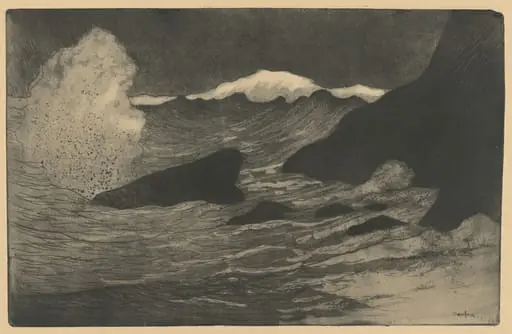
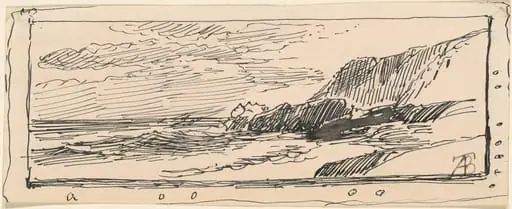
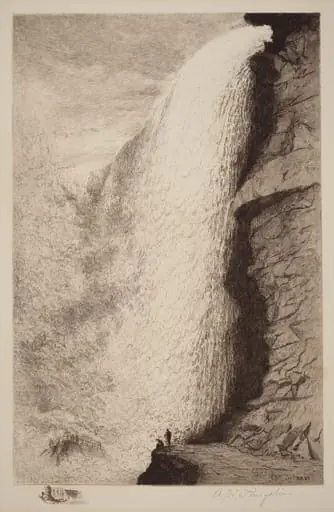
You see a misty waterfall crashing over jagged rocks. A stone bridge arches in the background, half-hidden by spray. The drawing is done in graphite, with careful lines that show every ripple and rock.
This isn’t just a landscape. Menzel spent weeks sketching the Rhine Falls in person. He used tiny notebook studies to plan his paintings. The detail here proves why he’s remembered as Germany’s top draftsman.
Want to see more like it? Check out Adolph von Menzel (German, 1815–1905).
Overview
Adolph von Menzel created this graphite drawing as part of a series of on-site studies for larger works depicting the Rhine Falls at Schaffhausen. Executed with precision, the drawing captures the dynamic interplay of water, rock, and atmospheric moisture. Unlike finished paintings, this study reveals the artist’s direct engagement with the landscape, emphasizing observation over idealization.
Subject & Meaning
The scene portrays the powerful cascade of the Rhine Falls, framed by a partially obscured stone bridge. Mist swirls around the rocks and arches, softening edges and heightening the sense of motion and scale. The composition does not romanticize nature but presents it as a force to be recorded, reflecting Menzel’s commitment to empirical observation over symbolic interpretation.
Technique & Style
Rendered entirely in graphite, the drawing employs fine, controlled lines to define water’s turbulence, rock textures, and the diffuse quality of spray. Subtle tonal gradations suggest depth and light filtering through mist. Menzel’s method prioritized anatomical precision even in natural forms, treating each ripple and ledge with the same attention as human figures in his other works.
History & Provenance
This sheet belongs to a large corpus of surviving sketchbooks Menzel produced during his travels across Germany and Switzerland. Created during extended stays at Schaffhausen, it was likely one of many preparatory studies used to inform later compositions. The drawing remained in the artist’s possession until his death, later entering institutional collections through documented acquisitions.
Context
In mid-19th-century Germany, landscape drawing was increasingly valued as a scientific and artistic discipline. Menzel’s approach aligned with broader trends favoring direct observation, influenced by naturalism and the rise of topographical documentation. His studies stood apart for their technical rigor, distinguishing him from contemporaries who favored atmospheric effects over structural detail.
Legacy
Menzel’s graphite studies, including this one, are now regarded as essential to understanding his artistic process. They demonstrate how meticulous draftsmanship underpinned his reputation as a chronicler of modern German life and landscape. These works continue to inform scholarly analysis of 19th-century drawing practices and the transition from sketch to finished painting.
Artist & collection

Artist
Adolph Friedrich Erdmann von Menzel was a German Realist artist noted for drawings, etchings, and paintings.