Artwork
Landschap met bloeiende boomgaard
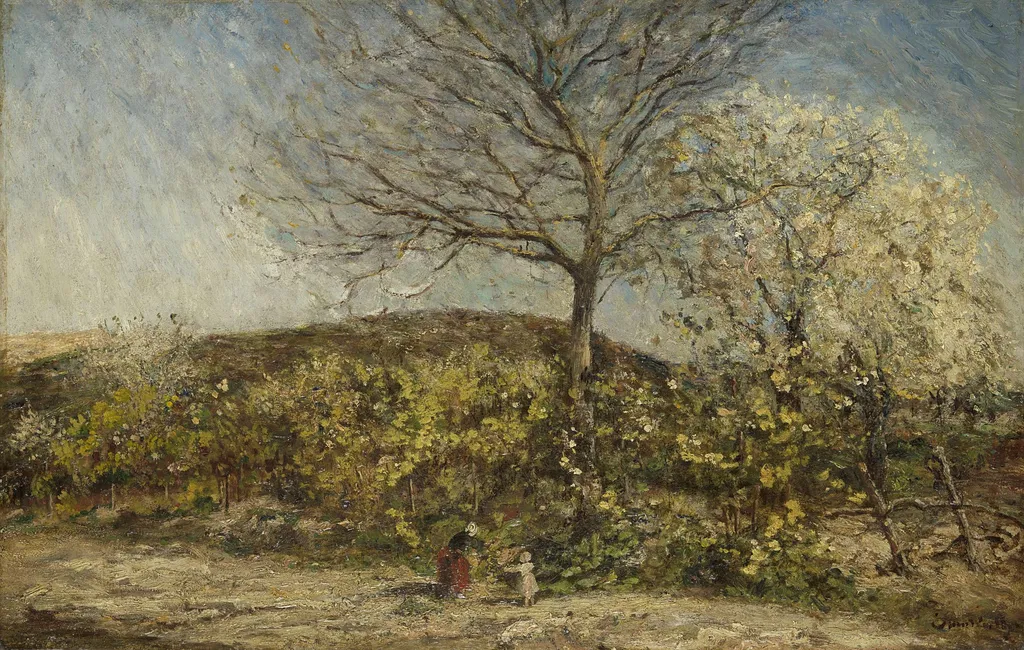
Landschap met bloeiende boomgaard is an oil painting by the Post-Impressionist artist Adolphe Joseph Thomas Monticelli. It is held in the collection of the Rijksmuseum.
About this work
Overview
Adolphe Joseph Thomas Monticelli, a French painter active just before the rise of Impressionism, completed the oil canvas *Landschap met bloeiende boomgaard* in 1890. The work belongs to the Post‑Impressionist current and is presently part of the Rijksmuseum’s holdings.
Subject & Meaning
The composition presents a countryside scene dominated by an orchard in full bloom. A solitary, leaf‑less tree rises in the foreground, while surrounding saplings are covered with white flowers. Beyond the trees, gentle hills roll under a clear blue sky, conveying a tranquil, seasonal moment.
Technique & Style
Monticelli employs a palette that juxtaposes warm greens and yellows with the cool whites of the blossoms, creating visual depth. Brushwork is loose and energetic, imparting a sense of movement to both foliage and atmosphere. The handling of light and shade hints at chiaroscuro principles, enhancing three‑dimensionality.
History & Provenance
Created in the late nineteenth century, the painting entered the Rijksmuseum’s collection at an unspecified date, where it has been displayed as part of the museum’s representation of Post‑Impressionist landscape painting.
Context
Working in the generation preceding the Impressionists, Monticelli blended traditional academic training with a more expressive approach to color and form. This painting reflects his interest in atmospheric effects and the decorative potential of natural subjects, situating it within broader trends toward personal interpretation of landscape in the 1890s.
Own this work as a print
Artist & collection
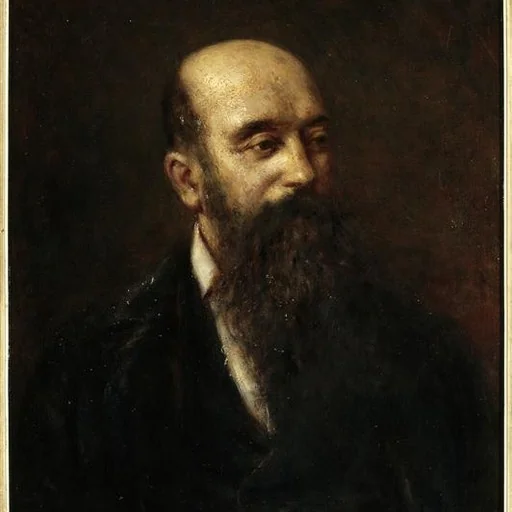
Artist
Adolphe Joseph Thomas Monticelli
Adolphe Joseph Thomas Monticelli (October 14, 1824 – June 29, 1886) was a French painter of the generation preceding the Impressionists.