Artwork
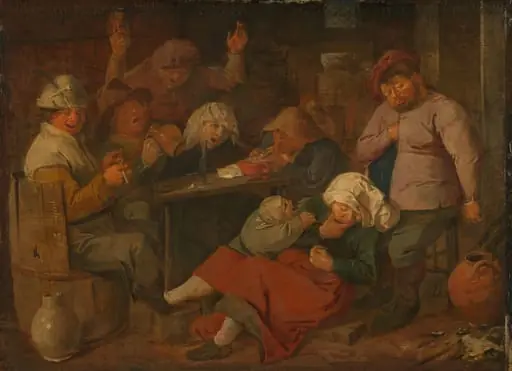
Peasant Brawl
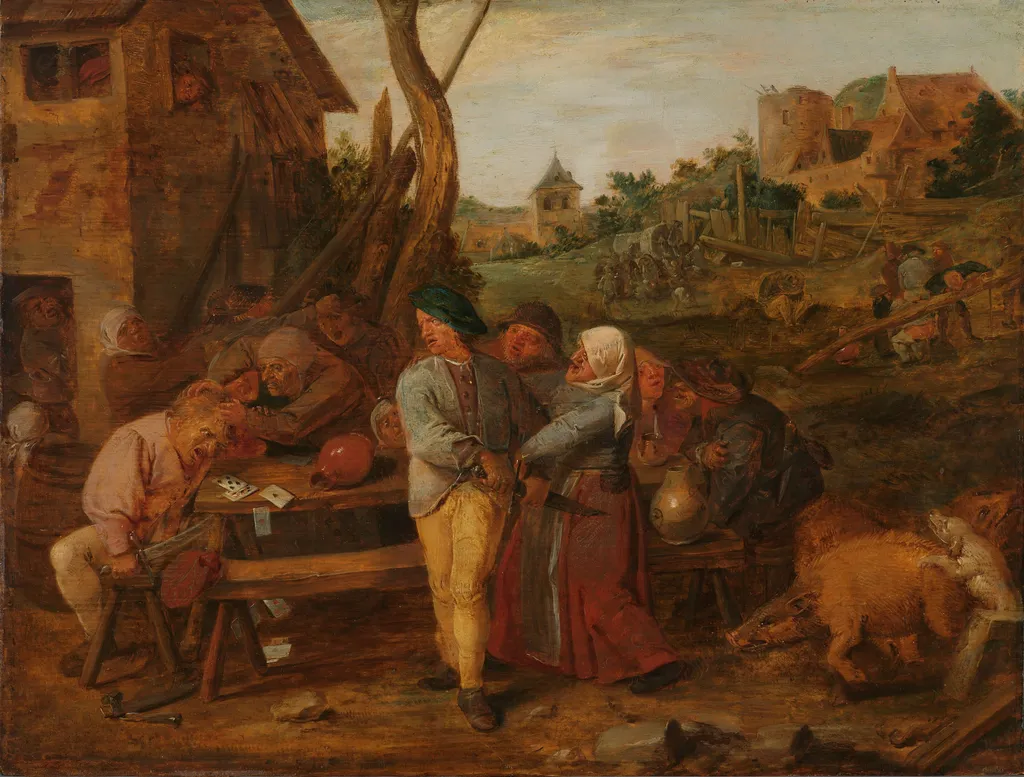
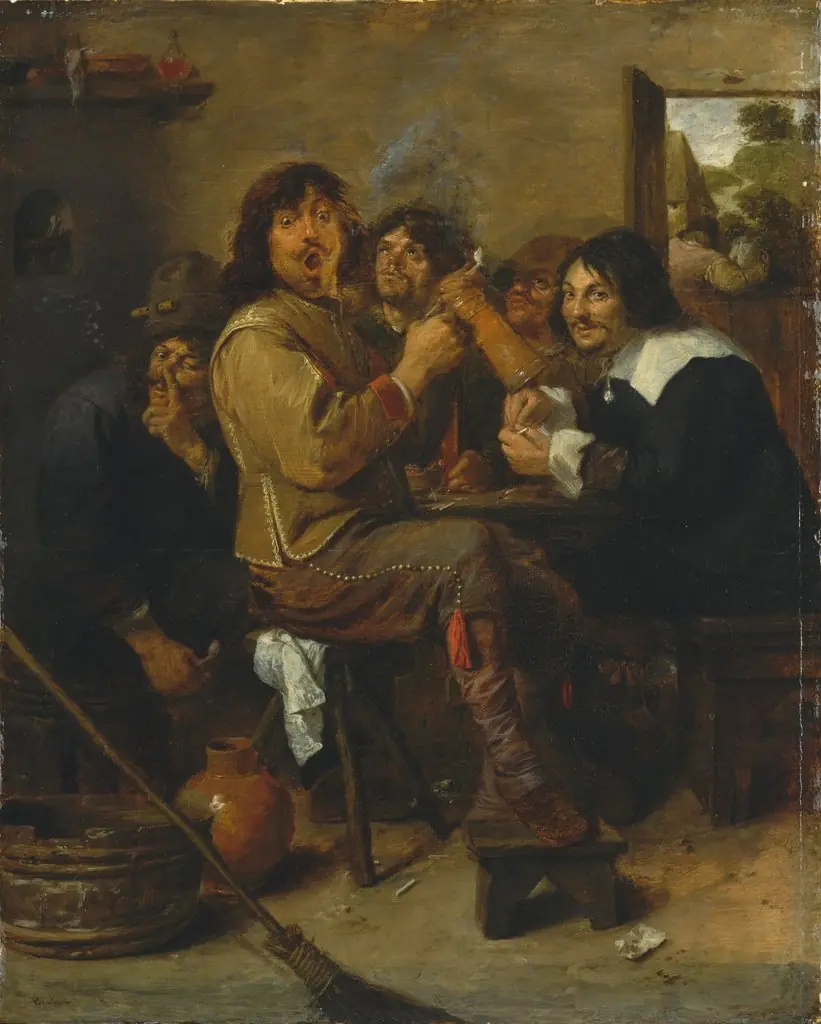
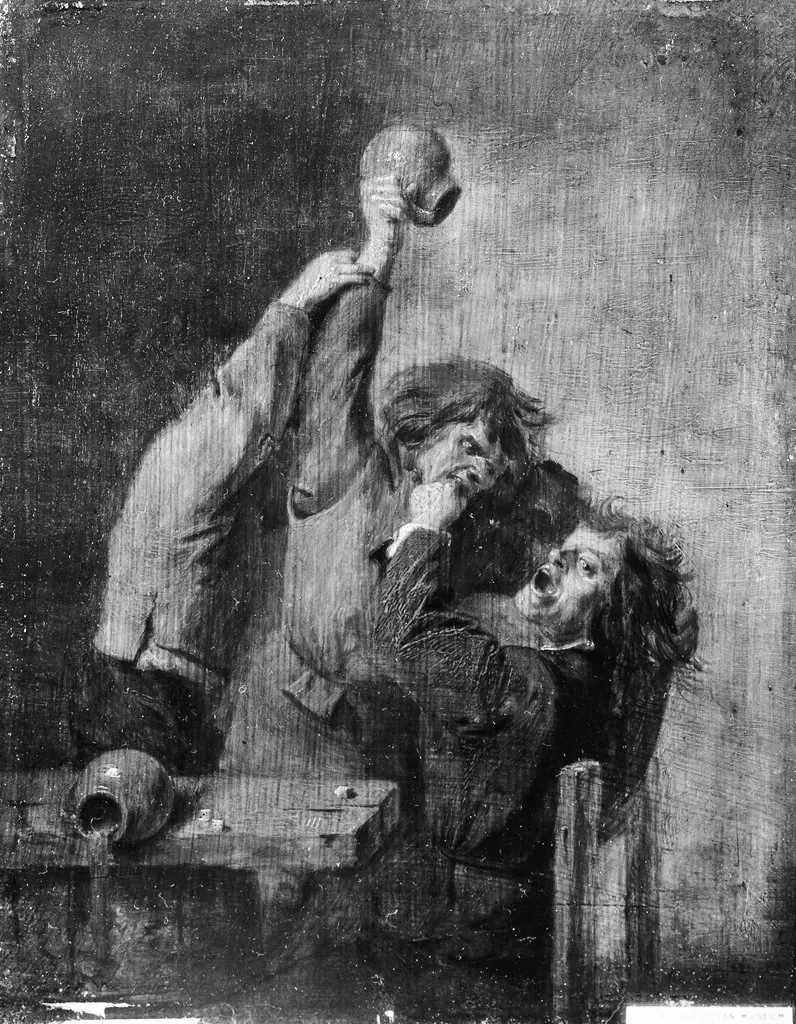
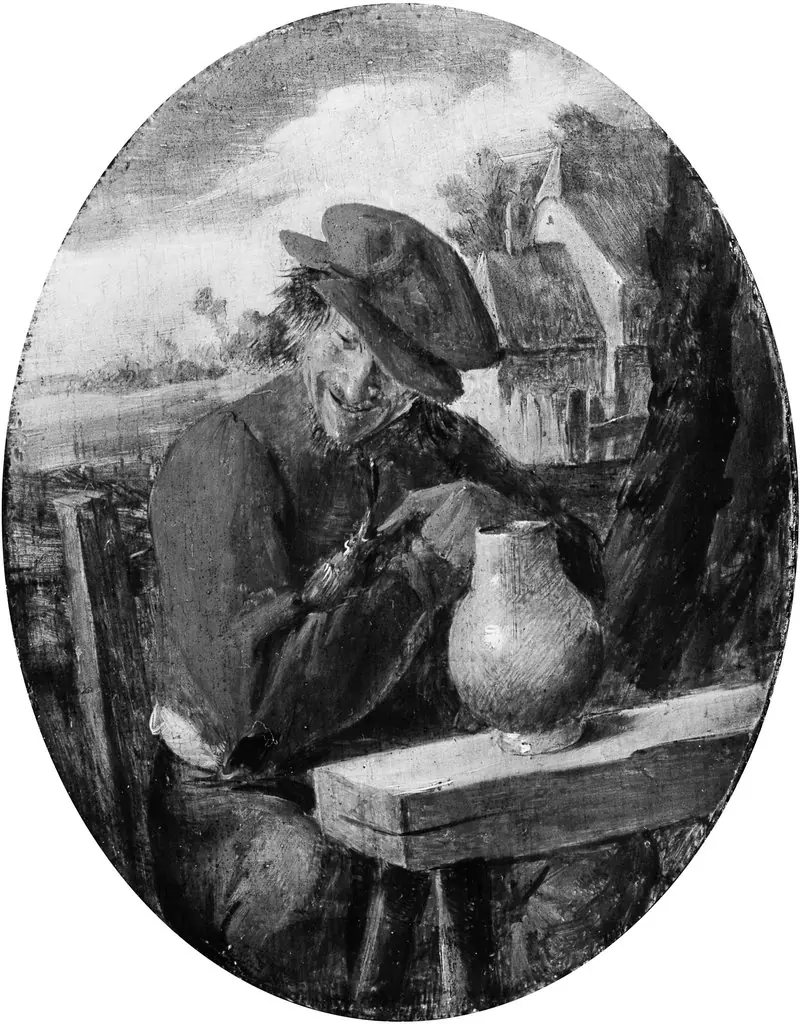
Peasant Brawl is an oil painting by the Flemish Baroque painting artist Adriaen Brouwer. It dates from 1620 and is held in the collection of the Rijksmuseum.
About this work
Overview
Adriaen Brouwer’s *Peasant Brawl*, executed in oil around 1620, captures a moment of disorder inside a modest inn.
Adriaen Brouwer’s *Peasant Brawl*, executed in oil around 1620, captures a moment of disorder inside a modest inn. The composition centers on a group of rough‑shod figures—some slumped, others upright—caught in a heated dispute. A dog lies at the feet of a man in a dark hat, while scattered jugs, plates and a half‑filled tankard litter the table, and a muted sky and distant church tower glimpse through the doorway.
Subject & Meaning
The work presents a slice of everyday life among the lower classes, emphasizing the raw emotions that surface in communal drinking spaces. By focusing on a quarrel rather than a narrative episode, Brouwer highlights the volatility and camaraderie inherent in such settings, inviting viewers to contemplate the universal impulses of anger, pride, and social tension that transcend time and place.
Technique & Style
Brouwer employs brisk, almost sketch‑like brushwork that renders the figures with a tactile immediacy. The palette is earthy, dominated by browns and muted ochres, while stark contrasts of light and shadow—an early use of chiaroscuro—carve out facial features and emphasize the scene’s gritty atmosphere. The uneven illumination leaves several faces half‑obscured, heightening the sense of drama and movement.
History & Provenance
Created during the early phase of the Flemish Baroque, *Peasant Brawl* reflects Brouwer’s interest in genre scenes that foreground ordinary people. The painting entered the Rijksmuseum’s collection in the 20th century, where it has been conserved as part of the museum’s extensive holdings of Dutch and Flemish Baroque art, providing a reference point for the development of tronie studies.
Context
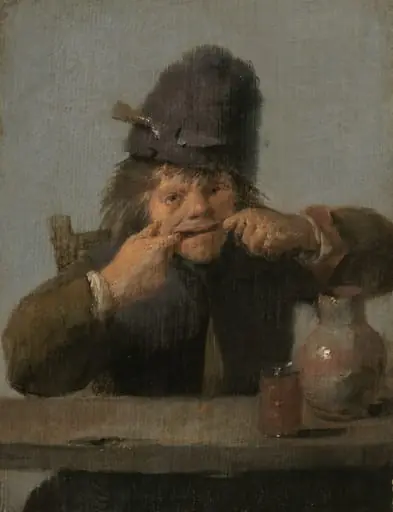
Brouwer was a pivotal figure in the emergence of the tronie—a study of expressive heads—within the broader Flemish genre tradition. His focus on peasants, soldiers and tavern patrons distinguished him from contemporaries who favored religious or aristocratic subjects. The work exemplifies the shift toward depicting unidealized human behavior, a trend that would influence later Dutch Golden Age painters.
Own this work as a print
Artist & collection
Artist
Adriaen Brouwer (c. 1605 – January 1638) was a Flemish painter active in Flanders and the Dutch Republic in the first half of the 17th century. Brouwer was an important innovator of genre painting through his vivid…