Artwork
Still Life with Fruit and Vegetables
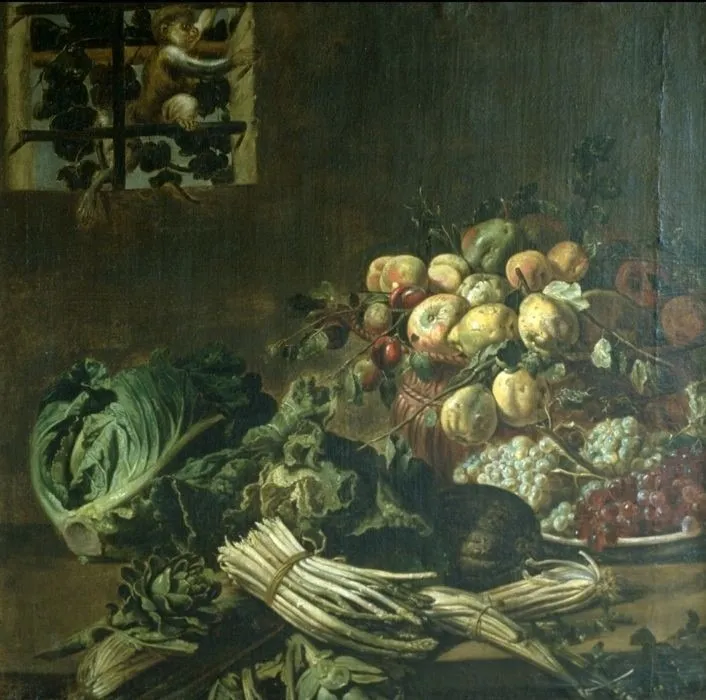
Still Life with Fruit and Vegetables is a paint painting by the Dutch Golden Age artist Adriaen van Utrecht. It dates from 1636 and is held in the collection of the Gemäldegalerie Berlin.
About this work
Overview
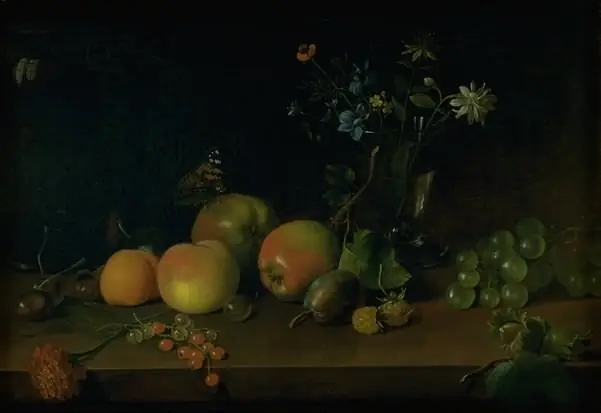
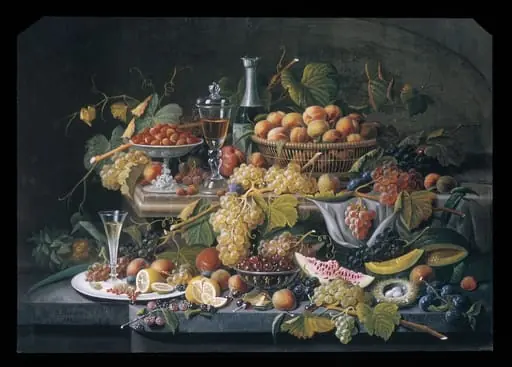
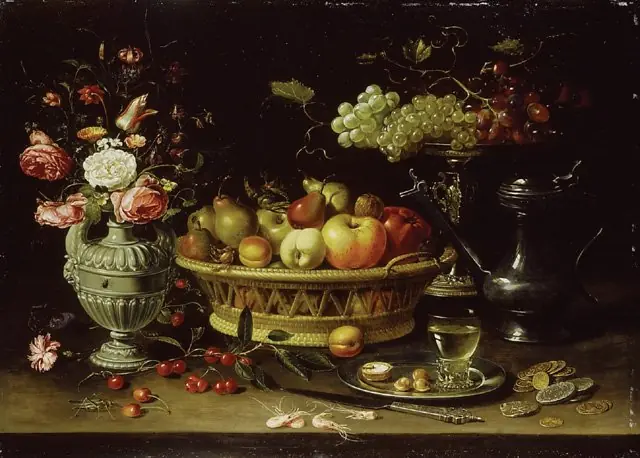
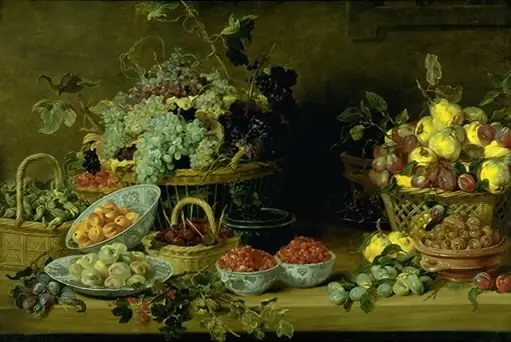
Adriaen van Utrecht’s *Still Life with Fruit and Vegetables* (1636) presents a densely arranged banquet of produce on a darkened tabletop.
Adriaen van Utrecht’s *Still Life with Fruit and Vegetables* (1636) presents a densely arranged banquet of produce on a darkened tabletop. A large cabbage, bundles of asparagus, a basket brimming with apples, pears and grapes, and a solitary gourd dominate the composition, while a plate suggests a cooked dish. The work exemplifies the Flemish tradition of meticulous observation of natural objects within a restrained interior setting.
Subject & Meaning
The painting concentrates on the material wealth of the market garden, displaying a variety of seasonal fruits and vegetables in a single view. By gathering such abundance, van Utrecht underscores the prosperity of the Dutch Golden Age and invites contemplation of the fleeting nature of food, a common moral undercurrent in still‑life imagery of the period.
Technique & Style
Van Utrecht employs a strong chiaroscuro, contrasting illuminated surfaces with deep shadows to model each item’s texture. The glaze layers render the glossy skin of grapes, the matte sheen of cabbage leaves, and the metallic glint of the plate. This careful handling of light and surface creates a tactile realism that heightens the visual immediacy of the composition.
History & Provenance
Created in 1636, the canvas entered the collection of the Gemäldegalerie in Berlin, where it remains on display. The work reflects van Utrecht’s collaborations with contemporaries such as Frans Snyders, whose influence on dynamic arrangement and inclusion of varied foodstuffs is evident in the piece’s lively grouping.
Context
The painting belongs to the *pronkstilleven* genre, a Flemish‑Dutch development that celebrated opulent displays of domestic abundance. During the early seventeenth century, such works functioned both as status symbols and as visual inventories of the region’s agricultural bounty, aligning with broader cultural interests in trade, wealth, and scientific observation of nature.
Artist & collection
Artist
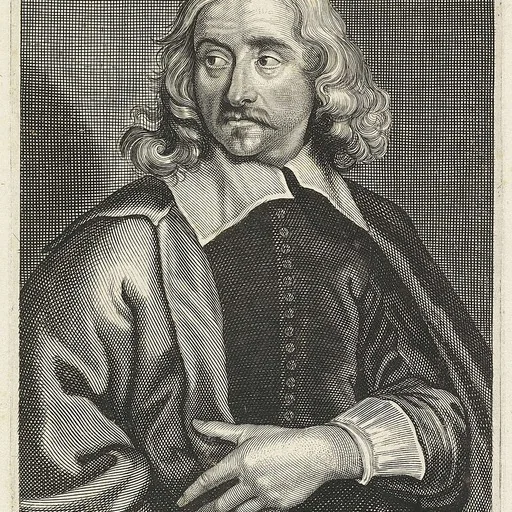
Adriaen van Utrecht (Antwerp, 12 January 1599 – 1652) was a Flemish painter known mainly for his sumptuous banquet still lifes, game and fruit still lifes, fruit garlands, market and kitchen scenes and depictions of live poultry in…