Artwork
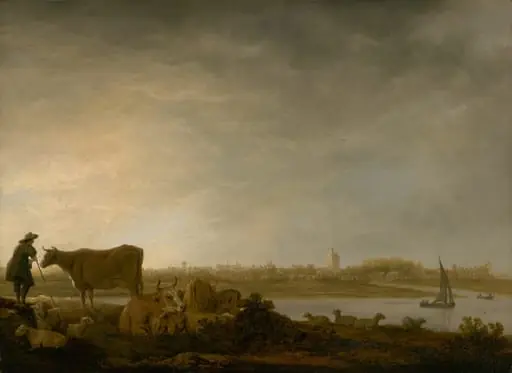
A View of Vianen with a Herdsman and Cattle by a River
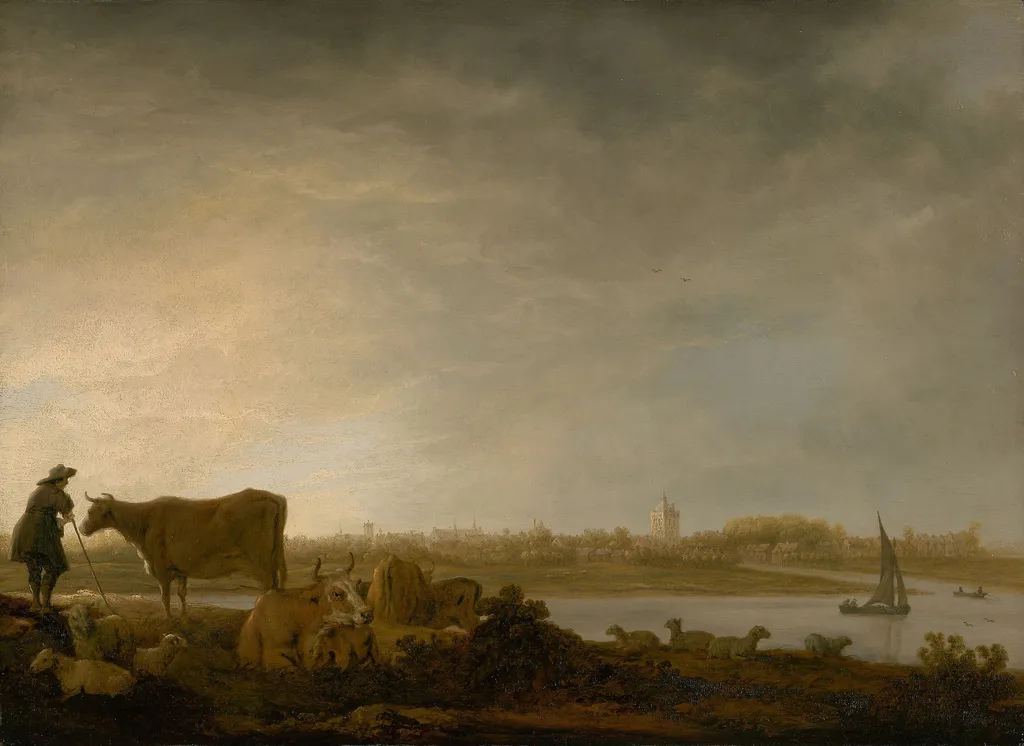
A View of Vianen with a Herdsman and Cattle by a River is an unspecified painting by the Dutch Golden Age artist Aelbert Cuyp. It dates from 1644 and is held in the collection of the Art Institute of Chicago.
About this work
Overview
It exemplifies Cuyp’s focus on tranquil rural scenes, rendered with a soft, luminous quality that suggests the gentle transition between day and evening.
Painted in 1644, this landscape by Aelbert Cuyp captures a quiet moment along the river near Vianen, a small town in the Netherlands. It exemplifies Cuyp’s focus on tranquil rural scenes, rendered with a soft, luminous quality that suggests the gentle transition between day and evening. The composition balances natural elements with subtle human presence, reflecting the Dutch Golden Age’s interest in everyday life and the environment.
Subject & Meaning
The painting centers on a herdsman standing with his cattle near the riverbank, a common motif in Cuyp’s work that evokes rural labor and harmony with nature. The animals rest peacefully, while birds drift across the sky, suggesting a moment of stillness amid daily routine. The distant town, marked by a church steeple, implies community and order without intruding on the serenity of the foreground. No narrative is forced; the scene invites contemplation rather than storytelling.
Technique & Style
Cuyp employed a muted palette with warm golden tones to model forms through subtle shifts in light and shadow. His use of chiaroscuro enhances spatial depth, guiding the eye from the dark foreground cattle to the hazy, sunlit horizon. Brushwork is restrained yet precise, particularly in the rendering of water, foliage, and cloud formations. The atmospheric perspective and soft edges distinguish his approach from the sharper detail favored by some contemporaries.
History & Provenance
Created in the year Cuyp was thirty-six, this work belongs to his mature period, following his training under his father, Jacob Gerritszoon Cuyp, in Dordrecht. The painting remained within Dutch collections for centuries before entering its current institutional home. Its survival in good condition reflects its early recognition among collectors who valued Cuyp’s ability to convey light and place with quiet authority.
Context
In mid-17th-century Holland, landscape painting flourished as a distinct genre, reflecting national pride in the land and its management. Cuyp’s scenes, unlike the bustling cityscapes of his peers, emphasized pastoral calm and the effects of natural light. His work aligned with broader cultural values that celebrated rural life, agricultural stability, and the quiet dignity of the countryside during a time of commercial and maritime expansion.
Legacy
Cuyp’s influence extended beyond his lifetime, particularly in how he integrated light as a structural and emotional element in landscape painting. Later artists, including British landscape painters of the 18th century, studied his handling of atmosphere. While not widely celebrated in his own era as a revolutionary, his consistent focus on serene, luminous nature secured his place as a defining voice in Dutch landscape tradition.
Own this work as a print
Artist & collection
Artist
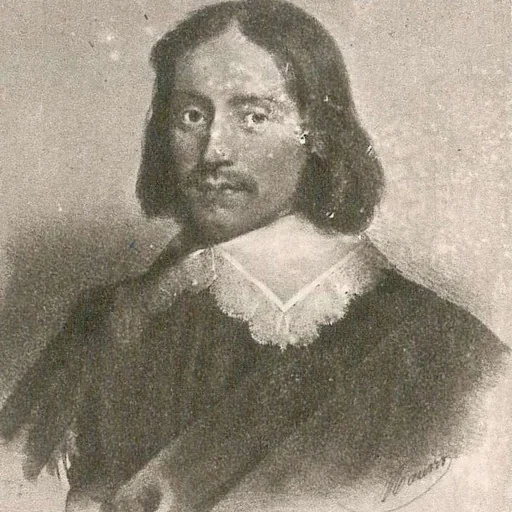
Aelbert Jacobszoon Cuyp or Cuijp (Dutch pronunciation: ; 20 October 1620 – 15 November 1691) was one of the leading Dutch Golden Age painters, producing mainly landscapes.

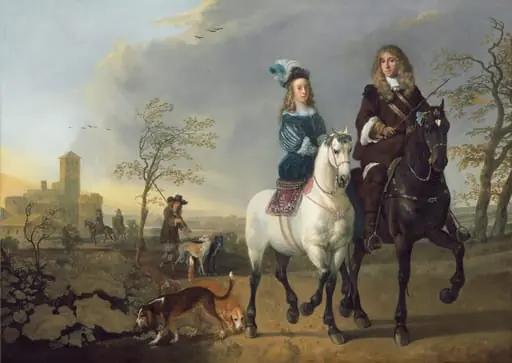 Lady and Gentleman on Horseback
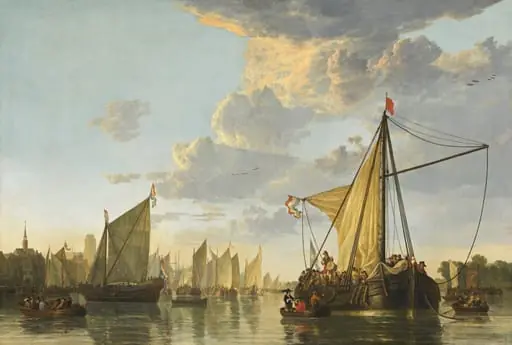 The Maas at Dordrecht
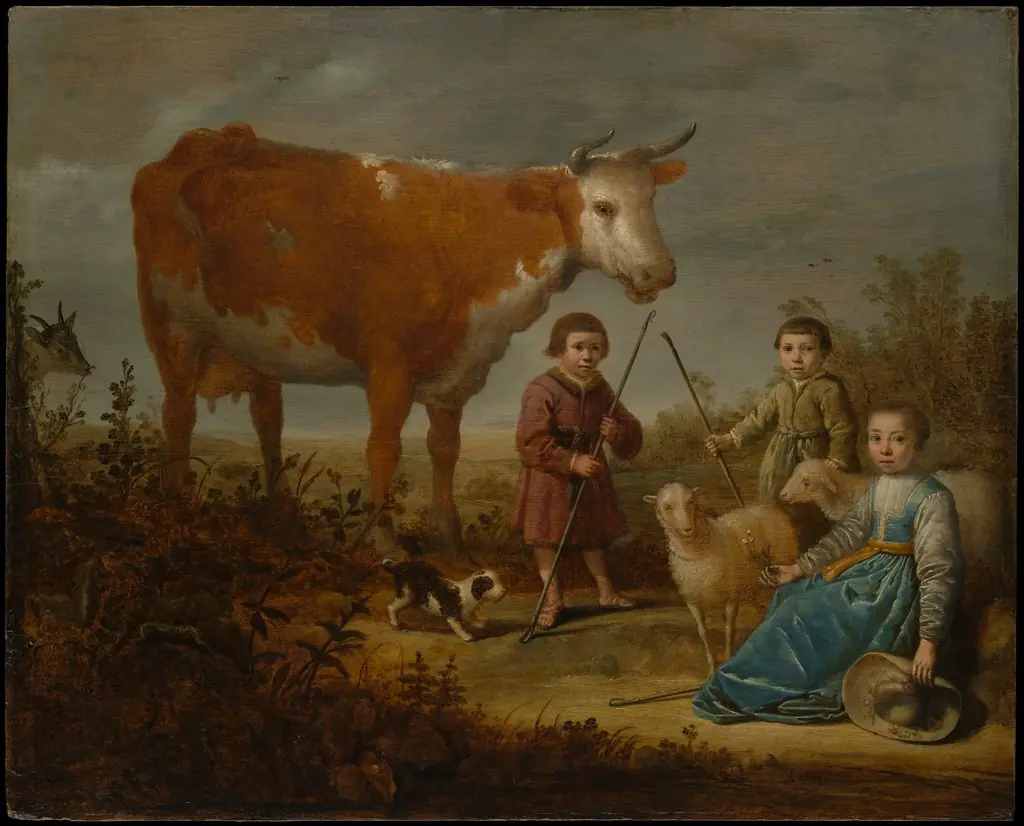 Children and a Cow
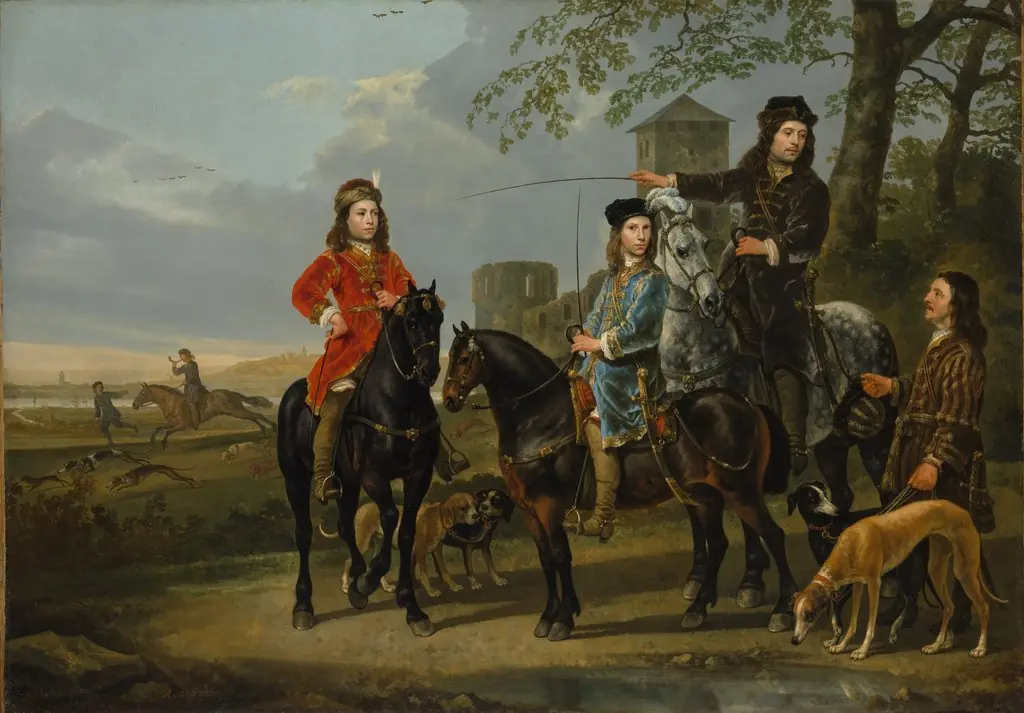 Equestrian Portrait of Cornelis (1639–1680) and Michiel Pompe van Meerdervoort (1638–1653) with Their Tutor and Coachman ("Starting for the Hunt")
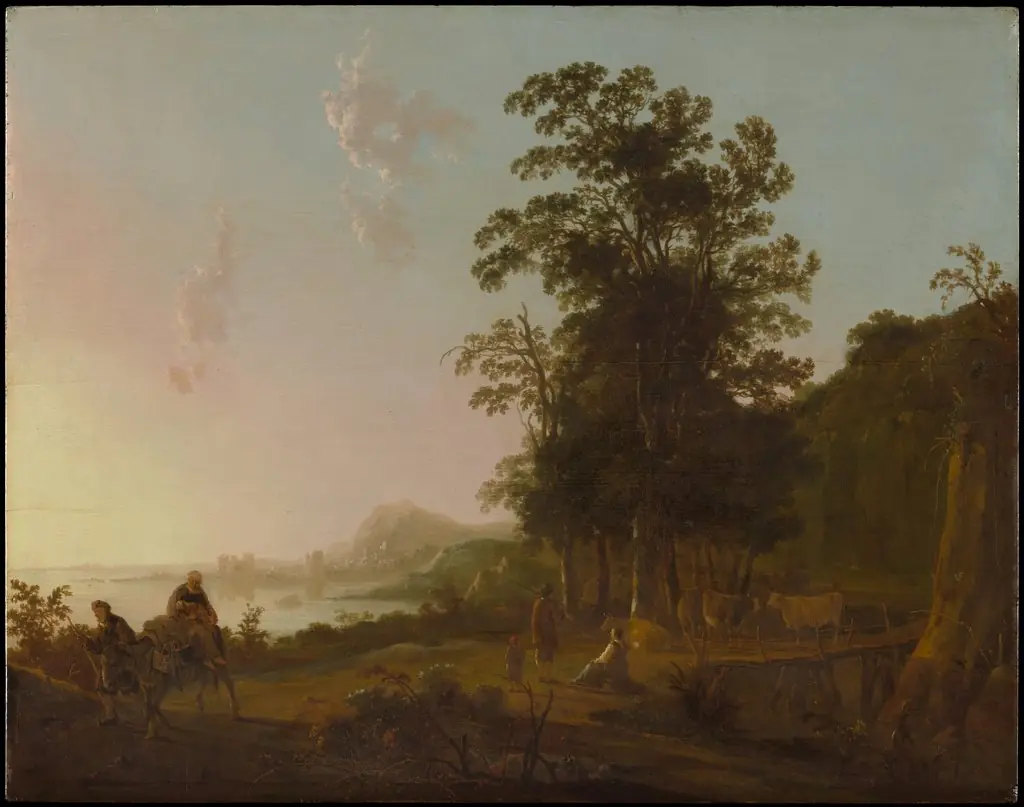 Landscape with the Flight into Egypt
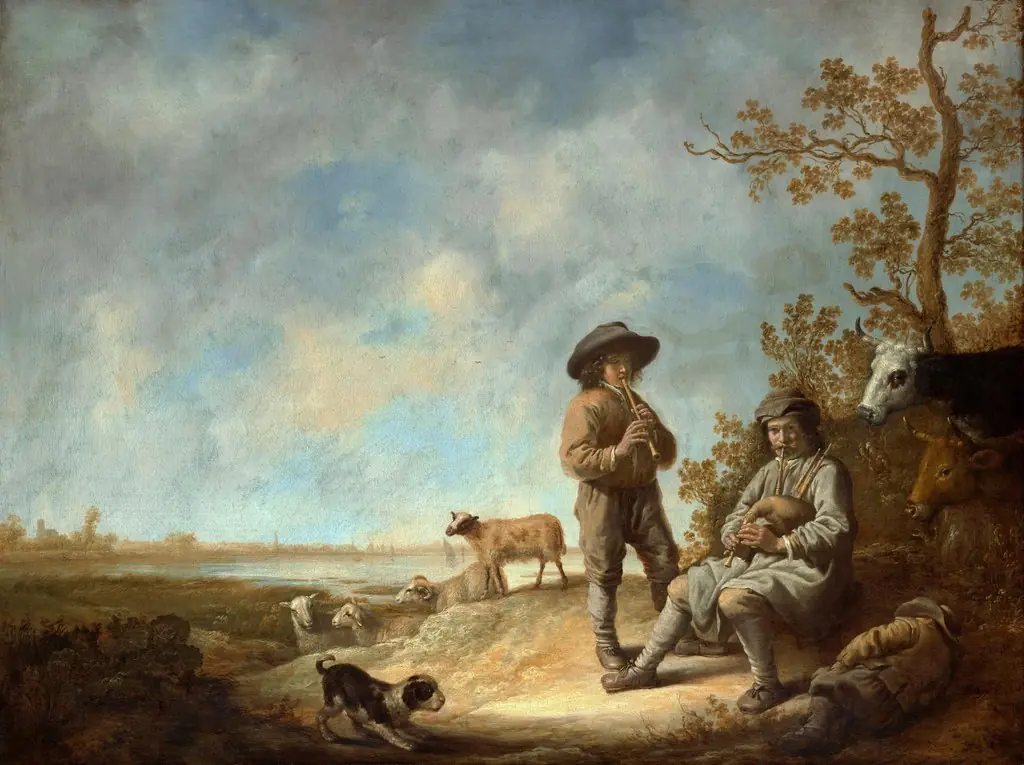 Piping Shepherds
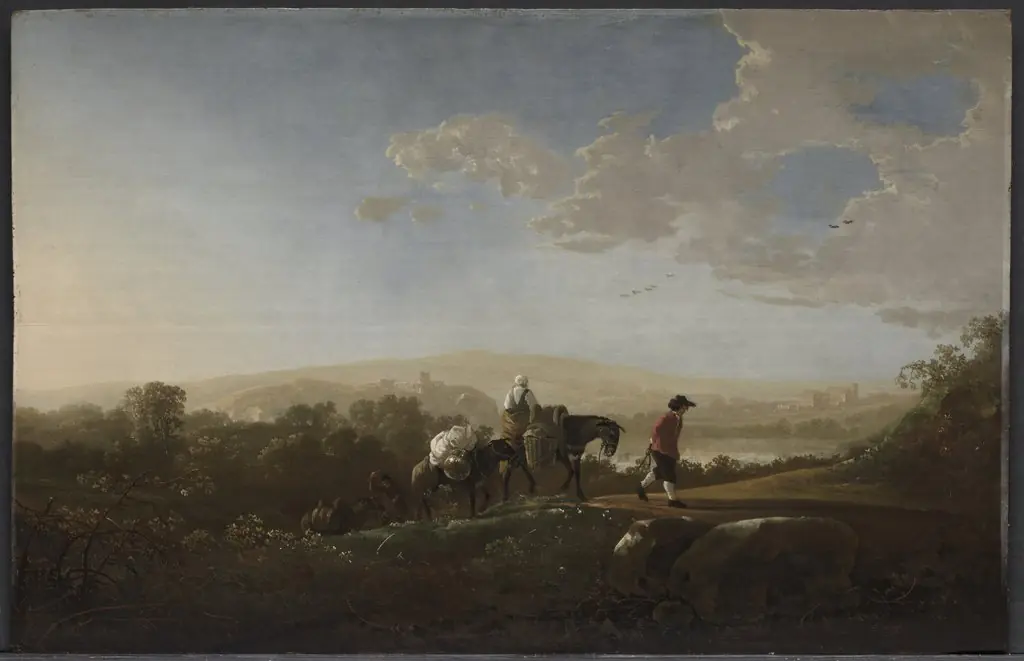 Travellers in Hilly Countryside
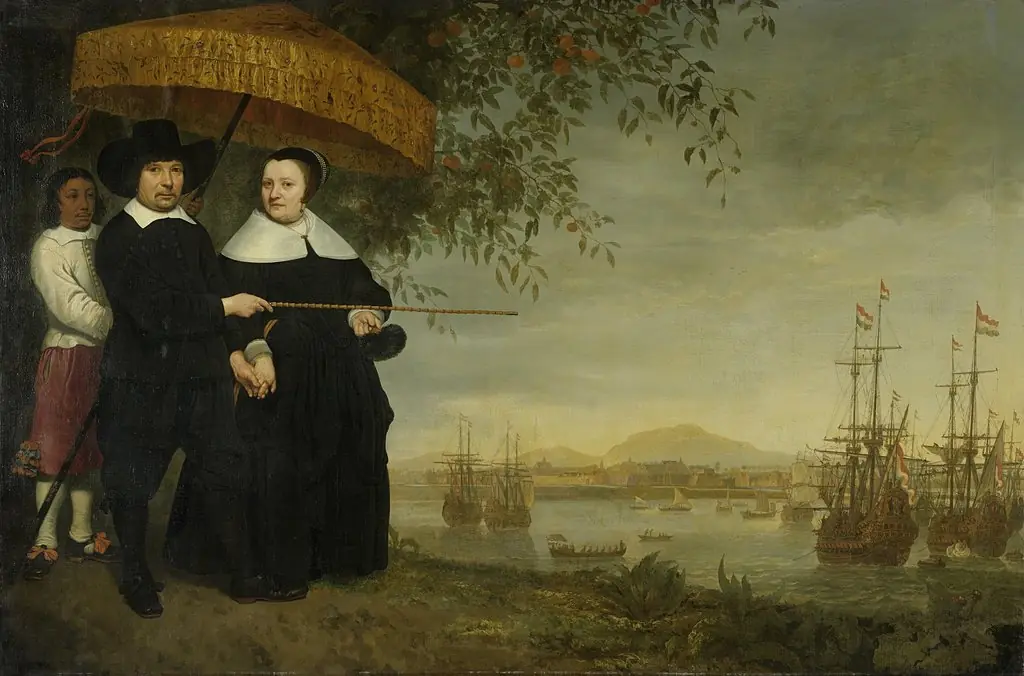 A Chief Merchant of the VOC with his Wife and an Enslaved Servant