Artwork
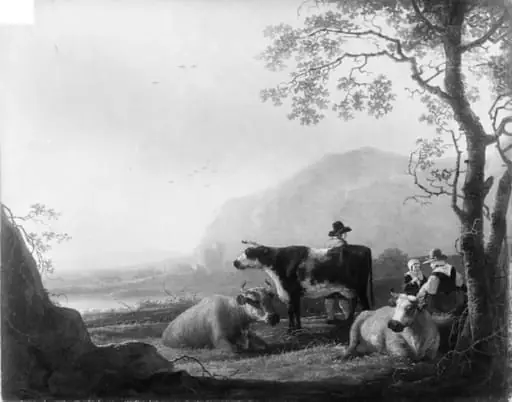
Landscape with Three Cows and Shepherds
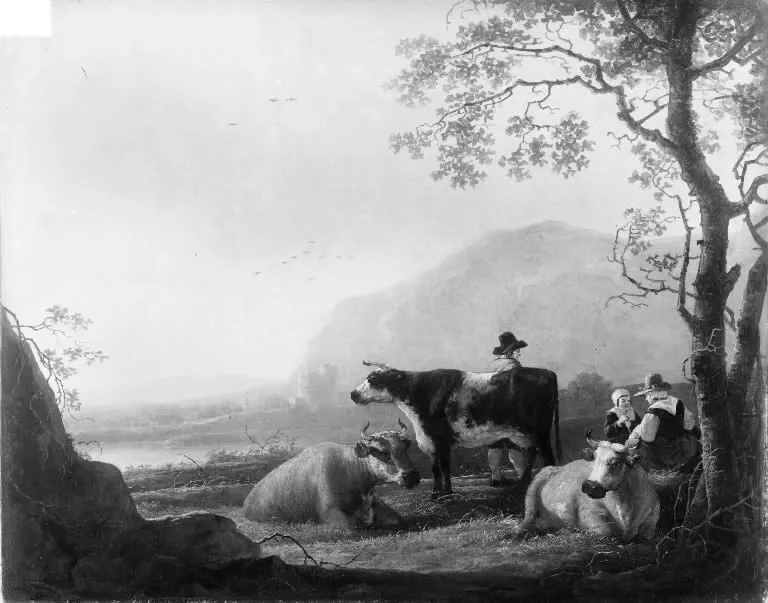
Landscape with Three Cows and Shepherds is an oil painting by the Dutch Golden Age artist Aelbert Cuyp. It dates from 1663 and is held in the collection of the Statens Museum for Kunst.
About this work
Overview
The work is part of the Dutch Golden Age’s focus on everyday rural life and is currently held in the Statens Museum for Kunst in Copenhagen.
Painted in 1663 by Aelbert Cuyp, this oil on canvas depicts a tranquil Dutch countryside scene. It features three cattle and three shepherds in a quiet, sunlit meadow near a rocky formation. The composition emphasizes stillness and harmony between animals, humans, and nature. The work is part of the Dutch Golden Age’s focus on everyday rural life and is currently held in the Statens Museum for Kunst in Copenhagen.
Subject & Meaning
The painting portrays a moment of repose in agricultural life, with shepherds resting beside their herd. The figures are not engaged in labor but in quiet observation, suggesting a contemplative relationship with the land. The absence of dramatic action reinforces a sense of enduring peace. The scene reflects an idealized, unspoiled countryside, valued in 17th-century Dutch culture for its stability and order.
Technique & Style
Cuyp employed soft, diffused light to unify the landscape, casting a warm, golden glow across the sky and ground. Brushwork is subtle, with muted tones blending seamlessly to create atmospheric depth. The cows and figures are rendered with quiet precision, their forms integrated into the natural contours of the land. Distant hills and bare trees are rendered in hazy washes, enhancing the sense of spatial recession and calm.
History & Provenance
Created in 1663, the painting remained in private collections before entering the Danish national collection in the 19th century. It has been consistently attributed to Cuyp since its acquisition by the Statens Museum for Kunst. No significant alterations or restorations are documented, preserving its original tonal balance and compositional integrity.
Context
During the Dutch Golden Age, landscape painting flourished as a distinct genre, reflecting national pride in the reclaimed countryside. Cuyp’s works stood out for their luminous skies and serene mood, contrasting with the more bustling urban scenes of contemporaries. This painting aligns with a broader cultural preference for pastoral tranquility, rooted in both economic prosperity and religious ideals of moderation.
Legacy
Cuyp’s approach to light and atmosphere influenced later landscape painters, including British artists of the 18th century. While not widely celebrated in his lifetime beyond the Netherlands, his quiet, luminous style gained recognition in later centuries for its emotional restraint and technical subtlety. Today, the painting remains a representative example of Dutch pastoral realism, valued for its understated harmony.
Artist & collection
Artist
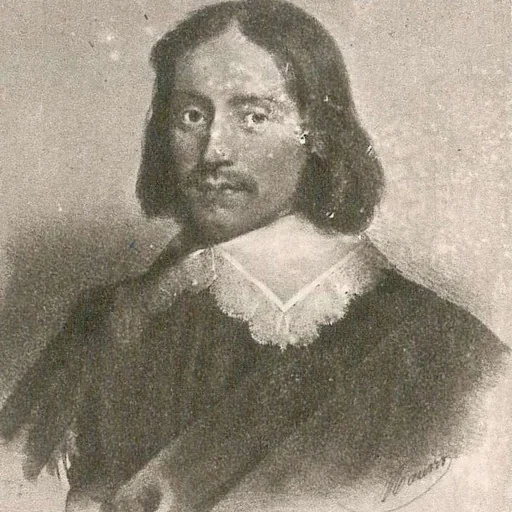
Aelbert Jacobszoon Cuyp or Cuijp (Dutch pronunciation: ; 20 October 1620 – 15 November 1691) was one of the leading Dutch Golden Age painters, producing mainly landscapes.

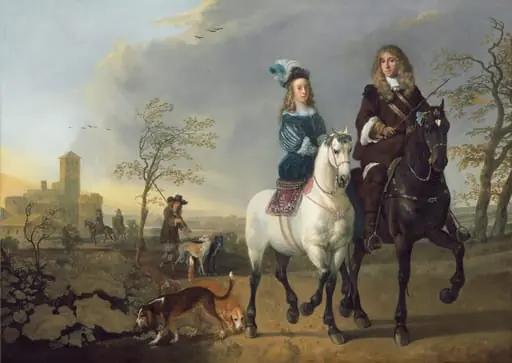 Lady and Gentleman on Horseback
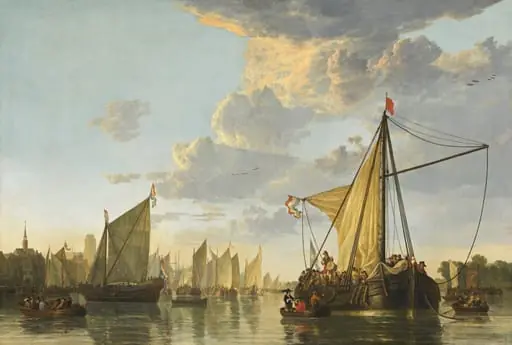 The Maas at Dordrecht
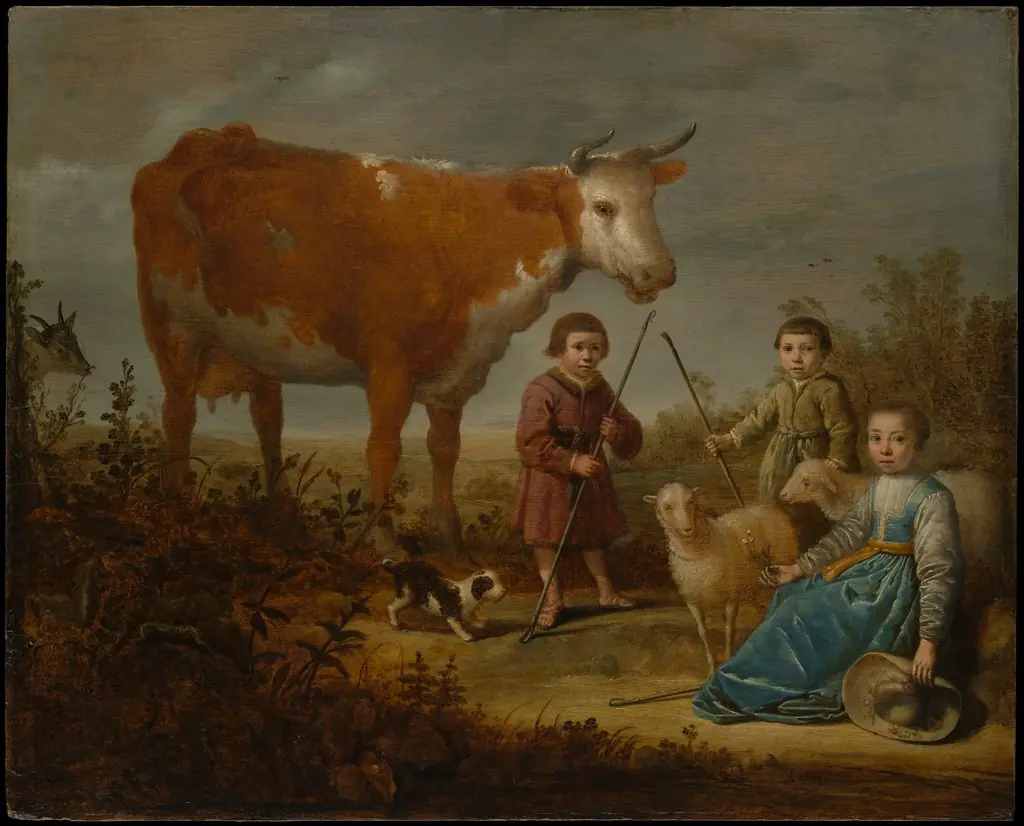 Children and a Cow
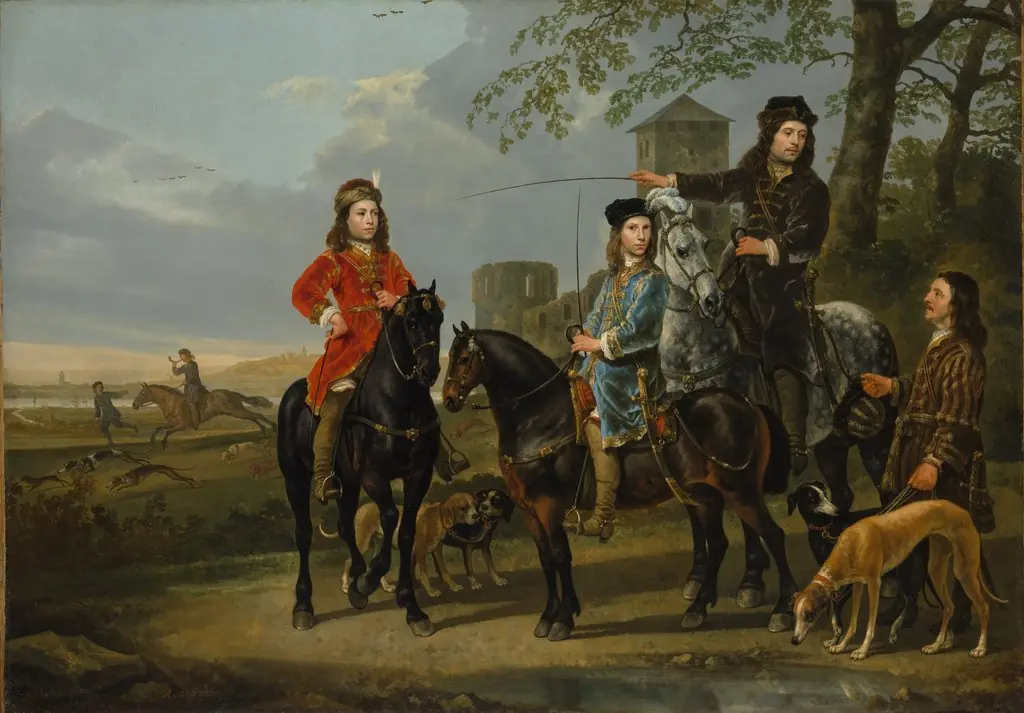 Equestrian Portrait of Cornelis (1639–1680) and Michiel Pompe van Meerdervoort (1638–1653) with Their Tutor and Coachman ("Starting for the Hunt")
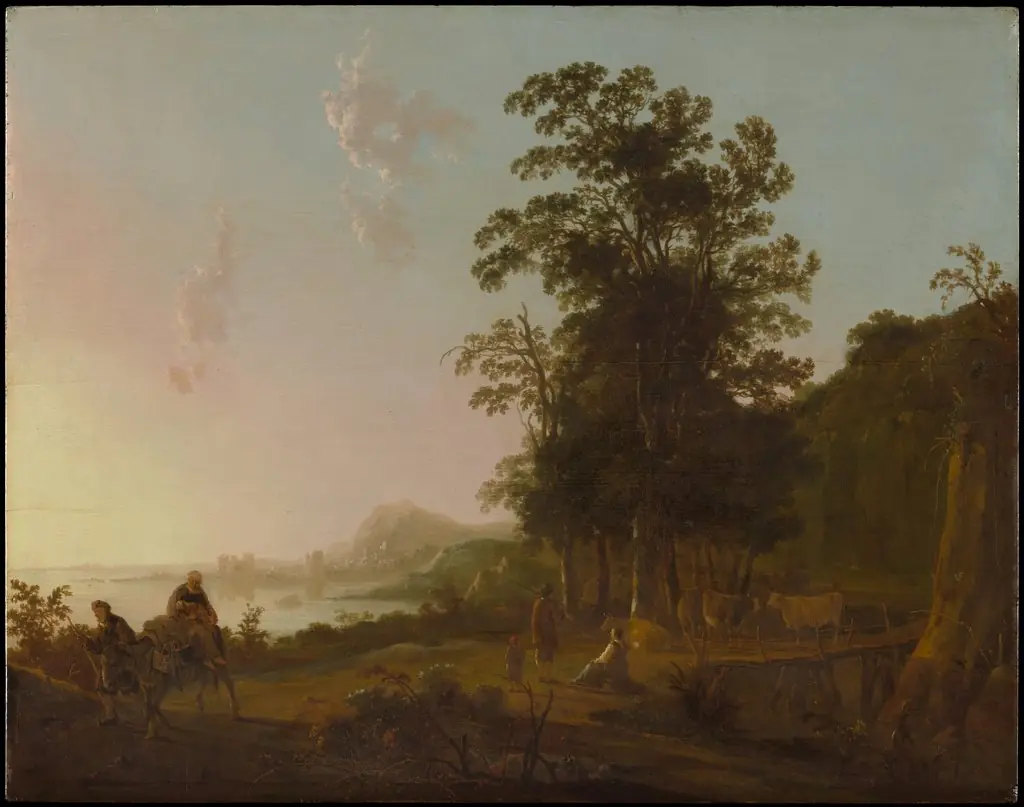 Landscape with the Flight into Egypt
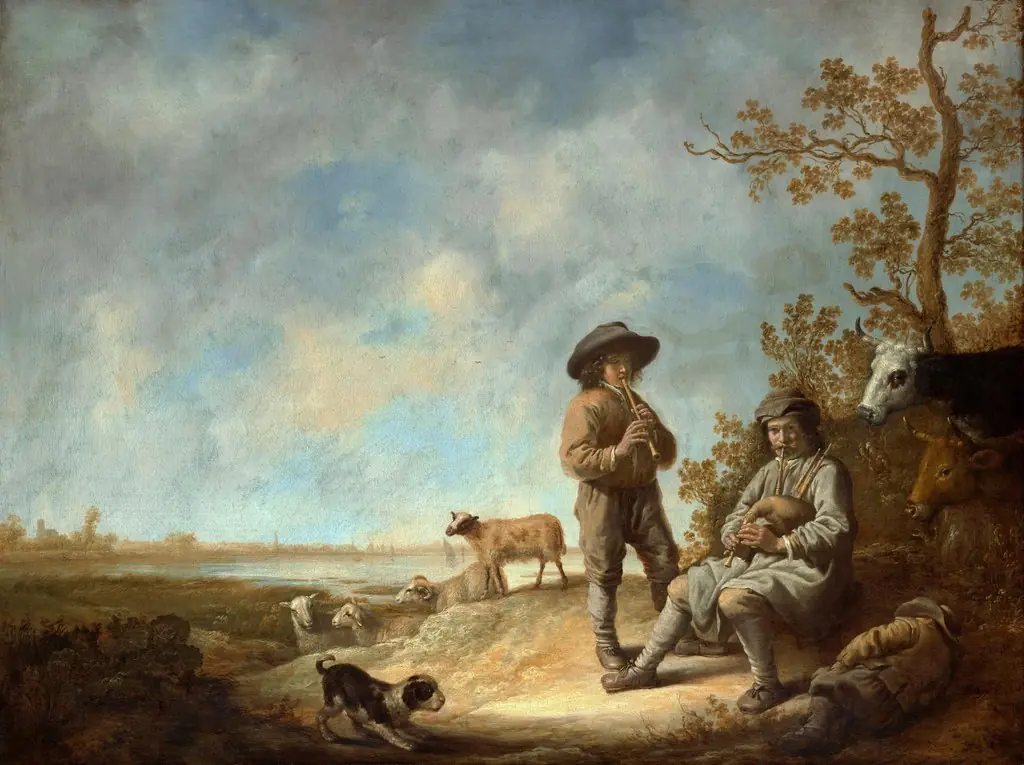 Piping Shepherds
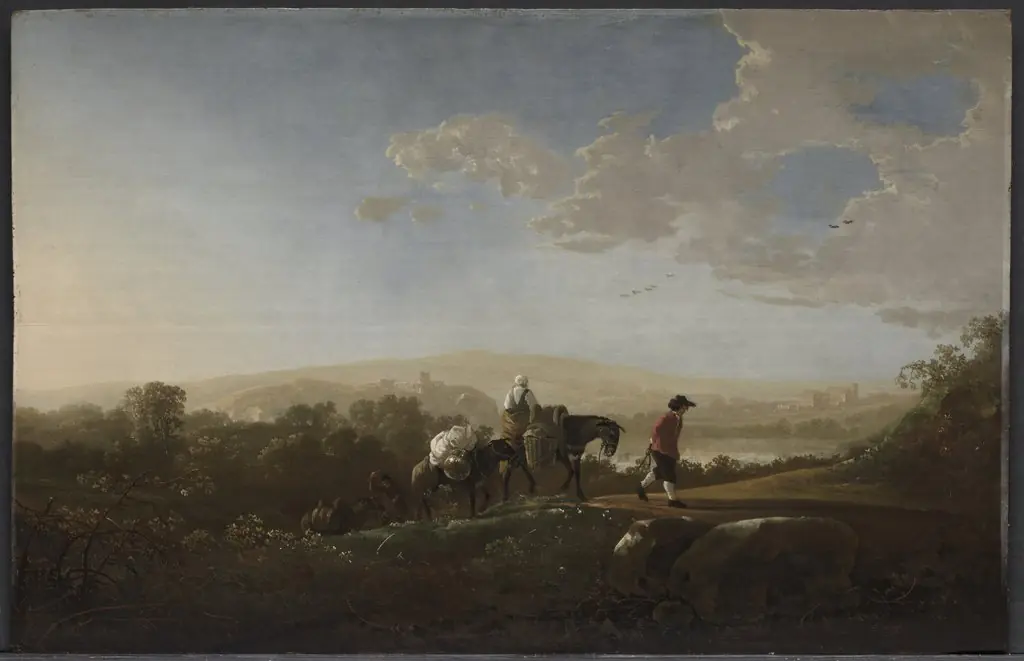 Travellers in Hilly Countryside
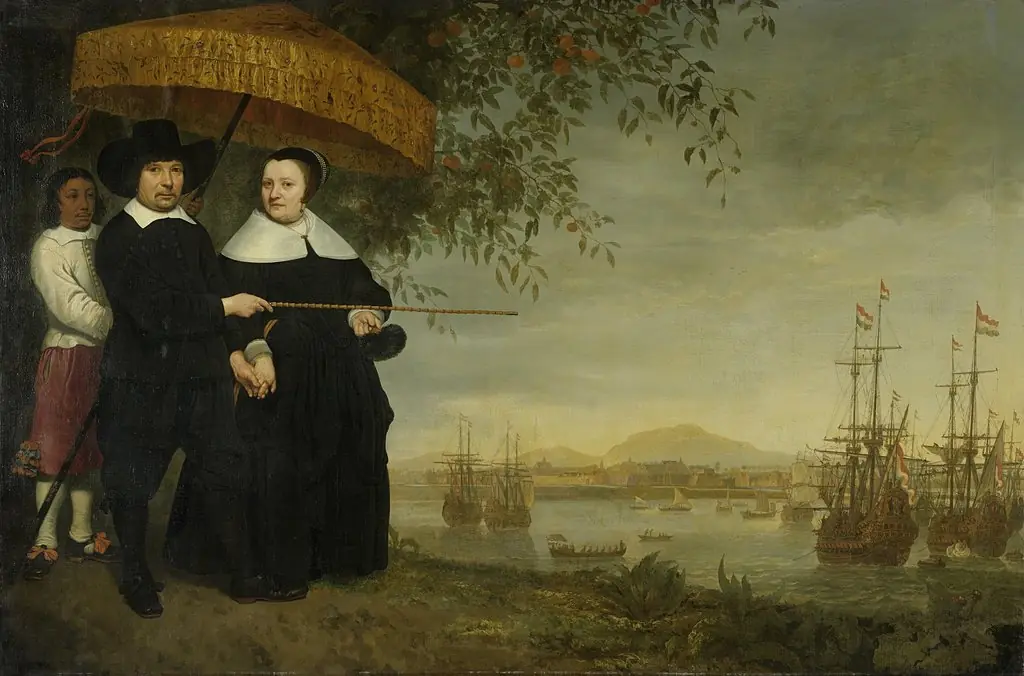 A Chief Merchant of the VOC with his Wife and an Enslaved Servant