Artwork
Milking Cows
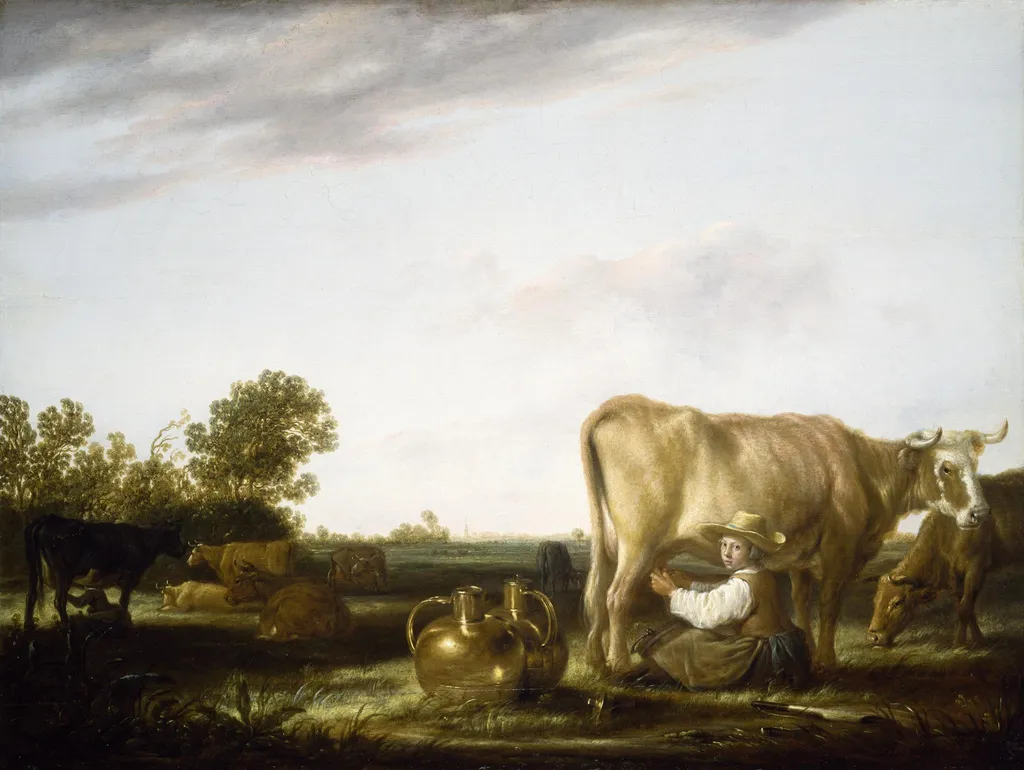
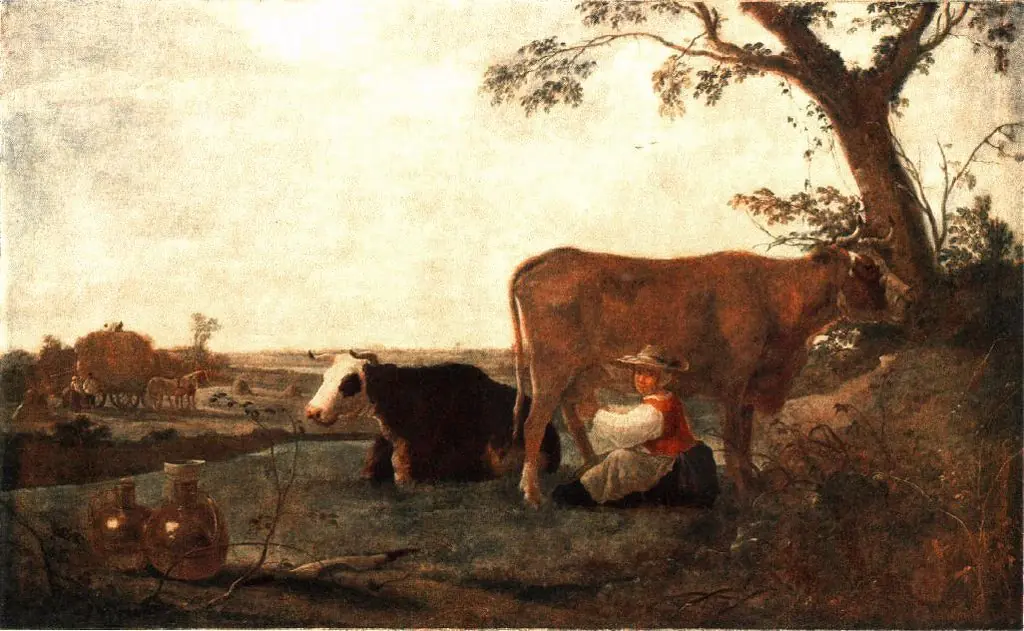
Milking Cows is an oil painting by the Dutch Golden Age artist Aelbert Cuyp. It dates from 1640 and is held in the collection of the National Gallery of Ireland.
About this work
Overview
Aelbert Cuyp’s *Milking Cows* (1640) exemplifies the Dutch Golden Age’s preoccupation with rural life rendered in oil. The painting situates a single laboring figure within an expansive landscape, subordinating human activity to the broader rhythms of nature. Its composition balances intimacy with openness, reflecting the period’s interest in both observational detail and atmospheric effects.
Subject & Meaning
The scene centers on a woman engaged in the daily task of milking, a motif recurrent in Dutch genre painting.
The scene centers on a woman engaged in the daily task of milking, a motif recurrent in Dutch genre painting. Her posture and the cow’s docility suggest harmony between labor and the natural world. The presence of additional cattle in the distance reinforces the painting’s focus on agrarian routines, while the soft light and muted palette evoke a sense of timelessness, elevating ordinary work to a contemplative ideal.
Technique & Style
Cuyp employs a restrained yet luminous palette, favoring earthy tones punctuated by the woman’s white blouse. His brushwork remains precise in the foreground, dissolving into softer, blended strokes for the sky and distant figures. The play of light—diffused yet directional—creates depth and volume, a hallmark of the artist’s ability to merge naturalism with a serene, almost idealized vision of the countryside.
History & Provenance
Dated to 1640, *Milking Cows* entered the collection of the National Gallery of Ireland at an unrecorded date. Little is documented about its early ownership, though its inclusion in a major public institution underscores its recognition as a representative work of Dutch landscape painting. The painting’s condition remains stable, preserving its original composition and tonal subtleties.
Context
Created during the Dutch Republic’s economic prosperity, the painting reflects a cultural valorization of rural life as a counterpoint to urban expansion. Landscapes of this kind often served as moral allegories, celebrating industry and the virtues of simplicity. Cuyp’s treatment aligns with broader trends in Dutch art, where domestic scenes and pastoral imagery were imbued with both descriptive accuracy and symbolic resonance.
Own this work as a print
Artist & collection
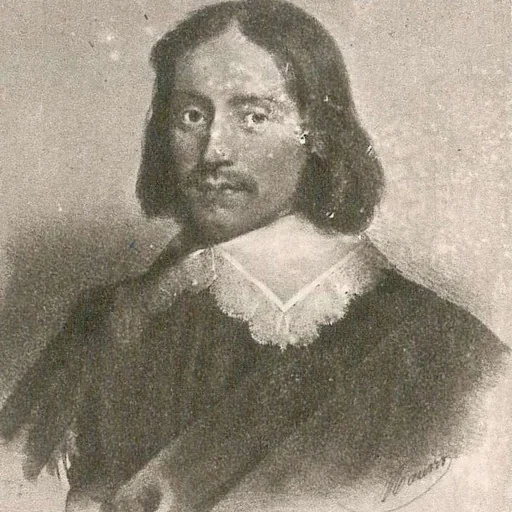
Artist
Aelbert Jacobszoon Cuyp or Cuijp (Dutch pronunciation: ; 20 October 1620 – 15 November 1691) was one of the leading Dutch Golden Age painters, producing mainly landscapes.

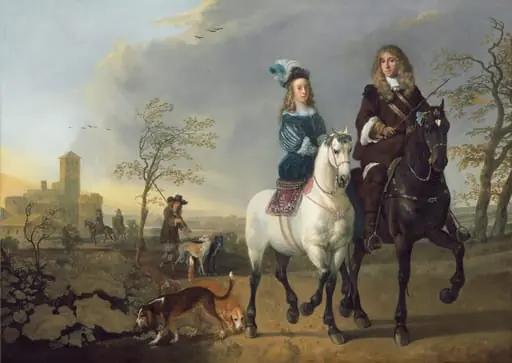 Lady and Gentleman on Horseback
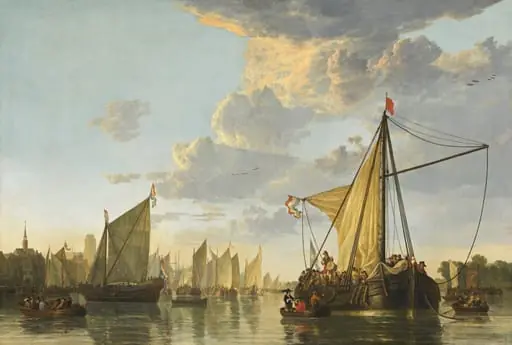 The Maas at Dordrecht
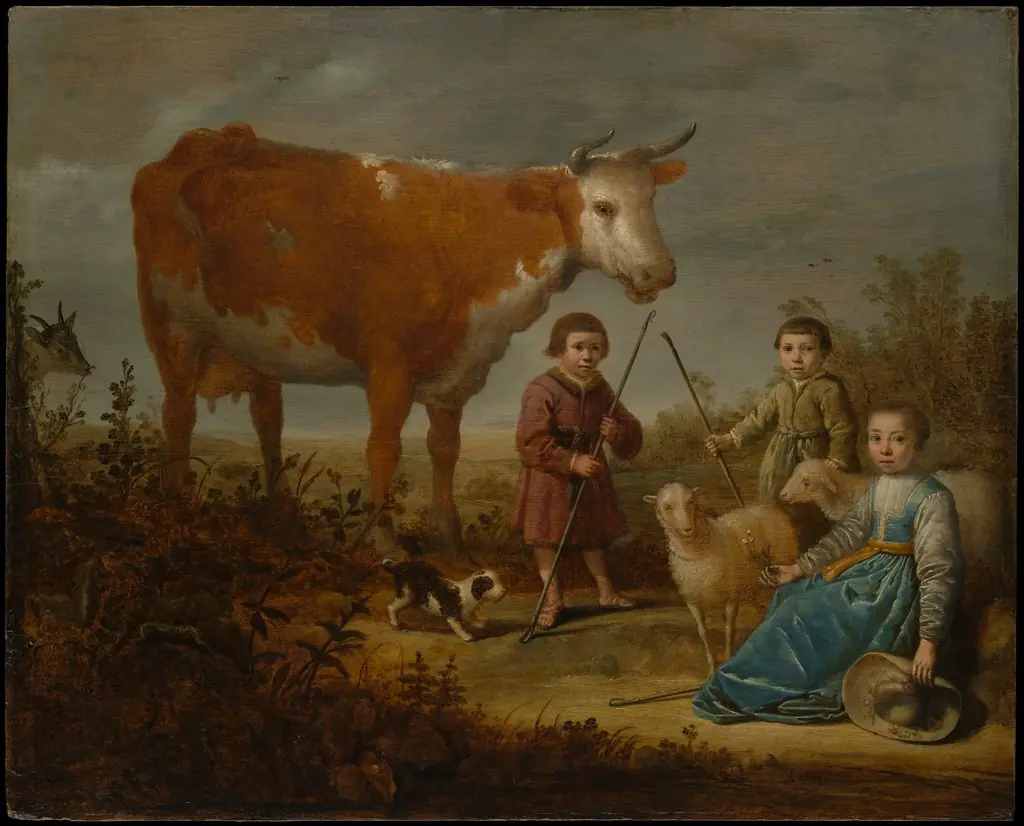 Children and a Cow
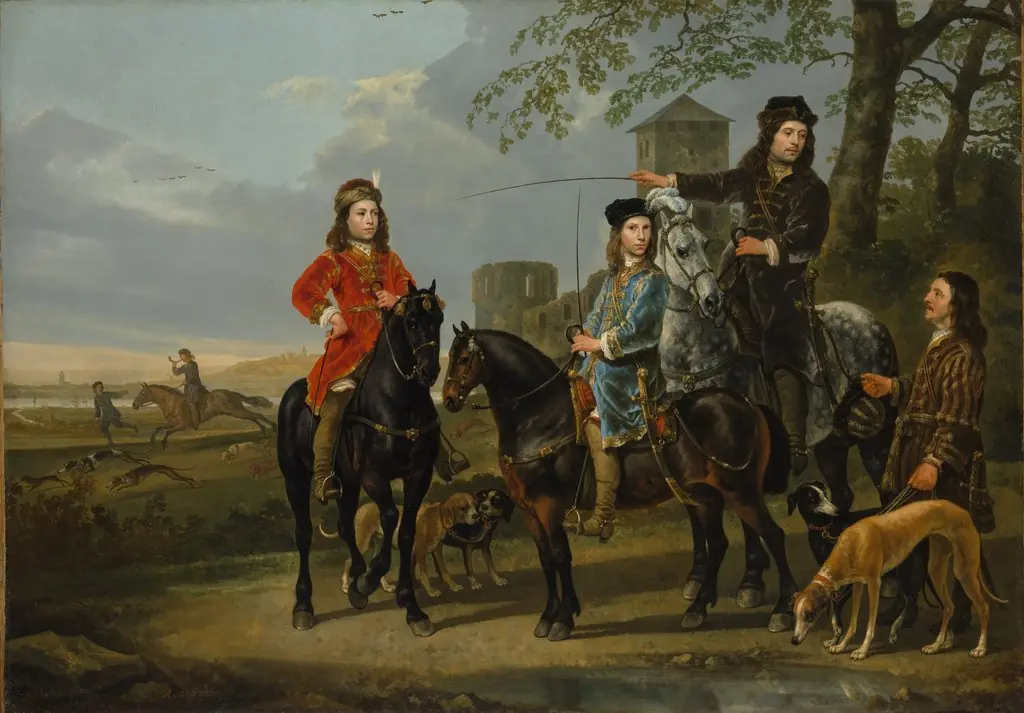 Equestrian Portrait of Cornelis (1639–1680) and Michiel Pompe van Meerdervoort (1638–1653) with Their Tutor and Coachman ("Starting for the Hunt")
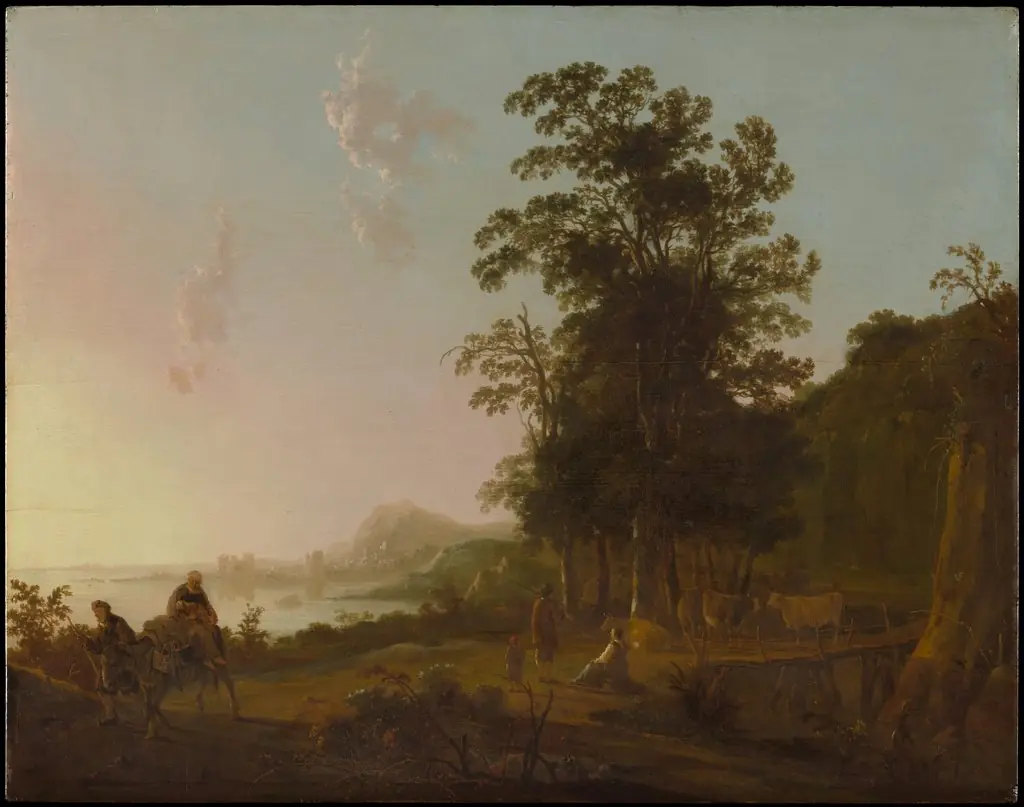 Landscape with the Flight into Egypt
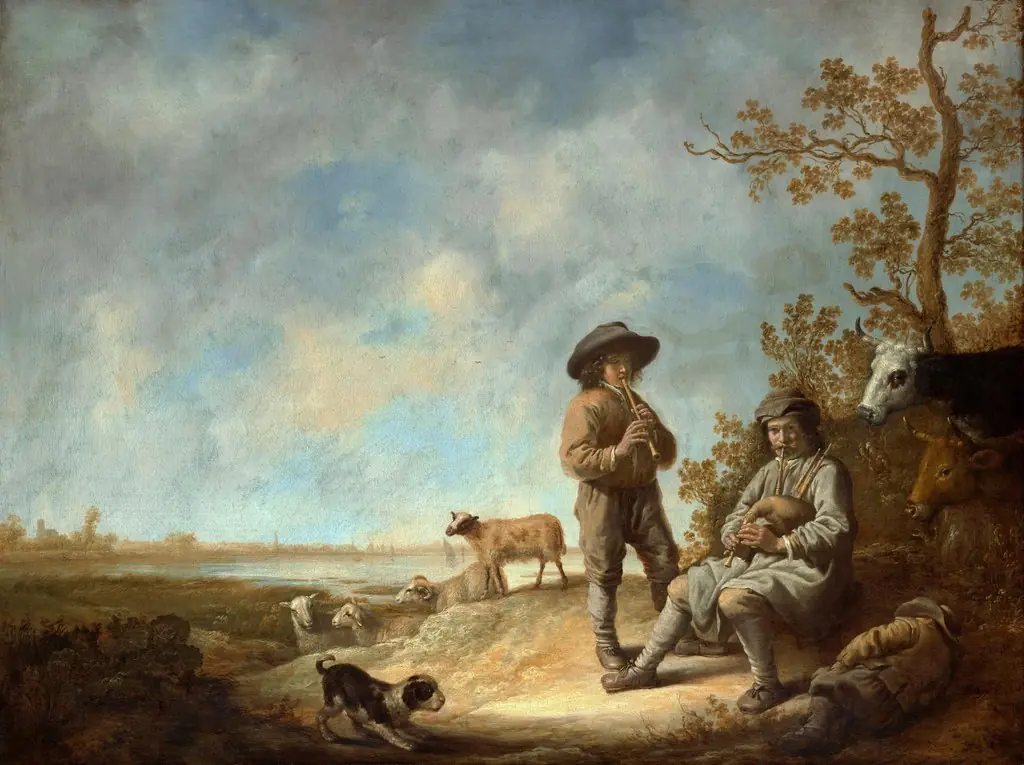 Piping Shepherds
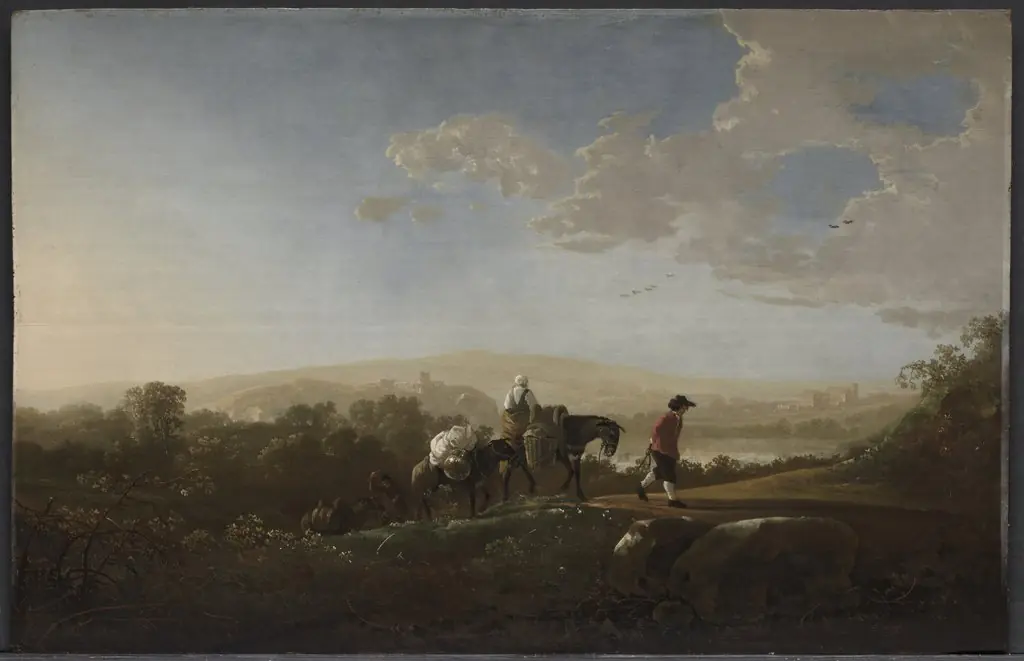 Travellers in Hilly Countryside
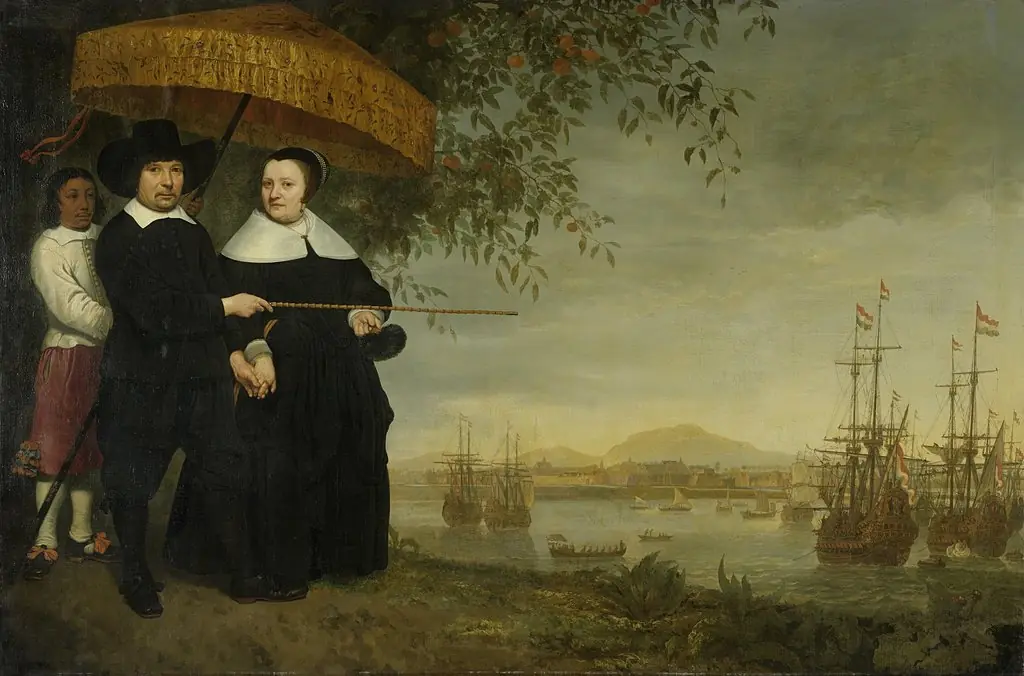 A Chief Merchant of the VOC with his Wife and an Enslaved Servant