Artwork
Mountainous landscape with the ruins of a castle
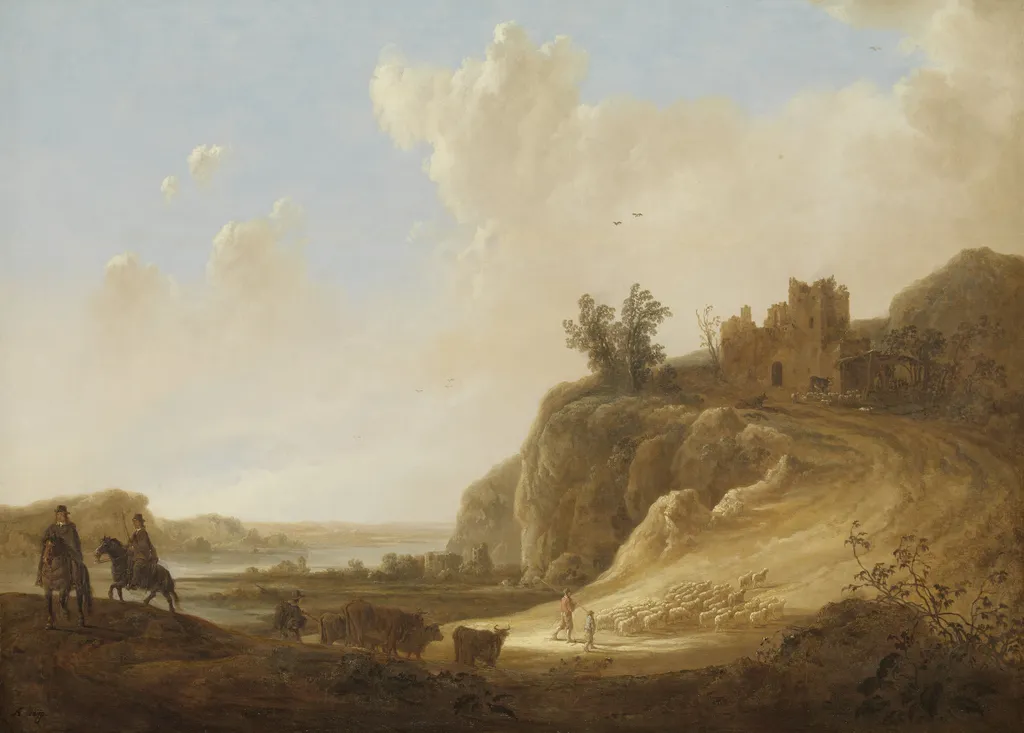
Mountainous landscape with the ruins of a castle is an oil painting by Aelbert Cuyp. It dates from 1650 and is held in the collection of the Rijksmuseum.
About this work
Overview
Created circa 1650 by Aelbert Cuyp, a prominent Dutch Golden Age landscape painter, this oil work depicts a tranquil rural tableau. A crumbling fortress crowns a rocky rise, while a river meanders through a valley populated by livestock and figures on horseback. Soft, warm light suffuses the sky and hills, imparting a calm atmosphere to the scene.
Subject & Meaning
The composition juxtaposes human activity with the remnants of a medieval stronghold, suggesting a passage of time where nature reclaims former power. The shepherds and riders, moving peacefully beside sheep and cattle, emphasize the everyday rhythms of agrarian life beneath the silent, elevated ruins, inviting contemplation of history’s quiet integration into the landscape.
Technique & Style
Cuyp employs his characteristic luminous palette, rendering the sky and foliage in gentle, golden tones. Subtle chiaroscuro models the forms, with delicate shadows defining the hill and castle silhouette. The brushwork balances fine detail in the figures with broader, atmospheric treatment of the background, creating depth and a sense of expansive space.
History & Provenance
The painting has been part of the Rijksmuseum’s collection, where it represents Cuyp’s exploration of non‑Dutch topography alongside his more typical river scenes. Its acquisition date and prior ownership remain documented within the museum’s records, confirming its attribution to Cuyp and its placement within the broader narrative of 17th‑century Dutch landscape art.
Own this work as a print
Artist & collection
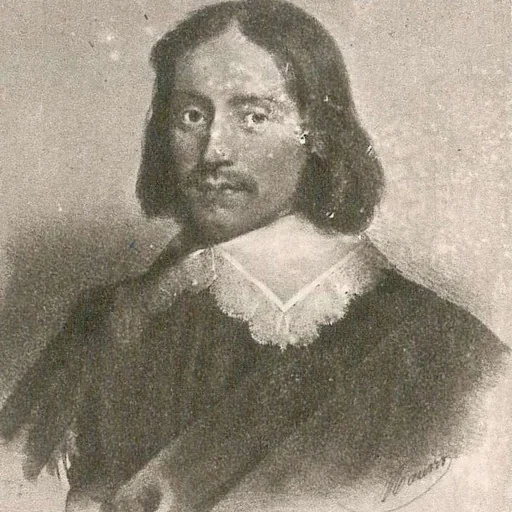
Artist
Aelbert Jacobszoon Cuyp or Cuijp (Dutch pronunciation: ; 20 October 1620 – 15 November 1691) was one of the leading Dutch Golden Age painters, producing mainly landscapes.

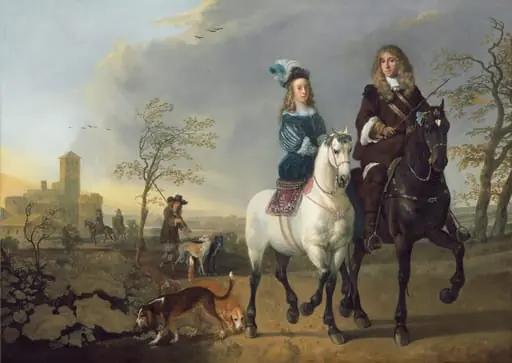 Lady and Gentleman on Horseback
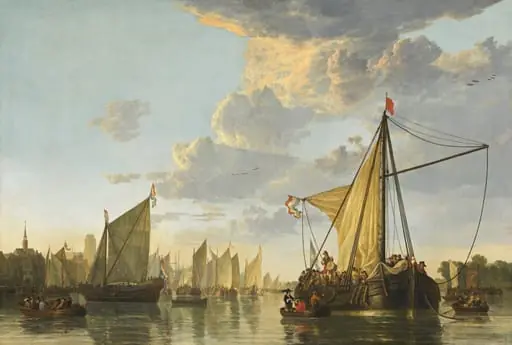 The Maas at Dordrecht
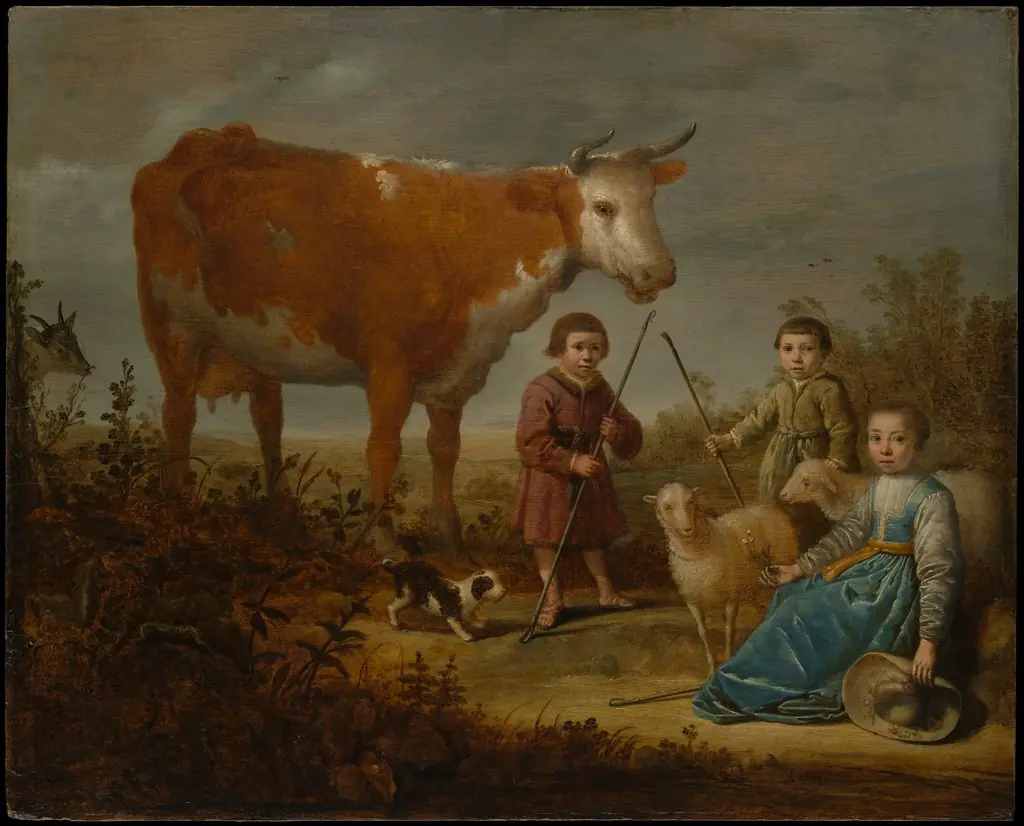 Children and a Cow
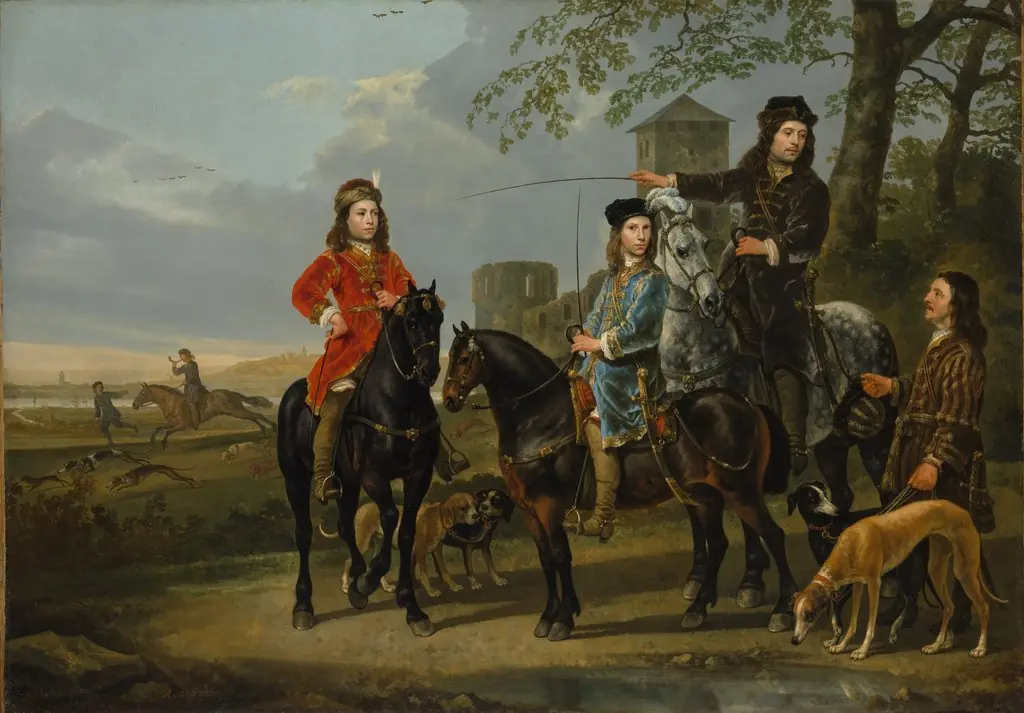 Equestrian Portrait of Cornelis (1639–1680) and Michiel Pompe van Meerdervoort (1638–1653) with Their Tutor and Coachman ("Starting for the Hunt")
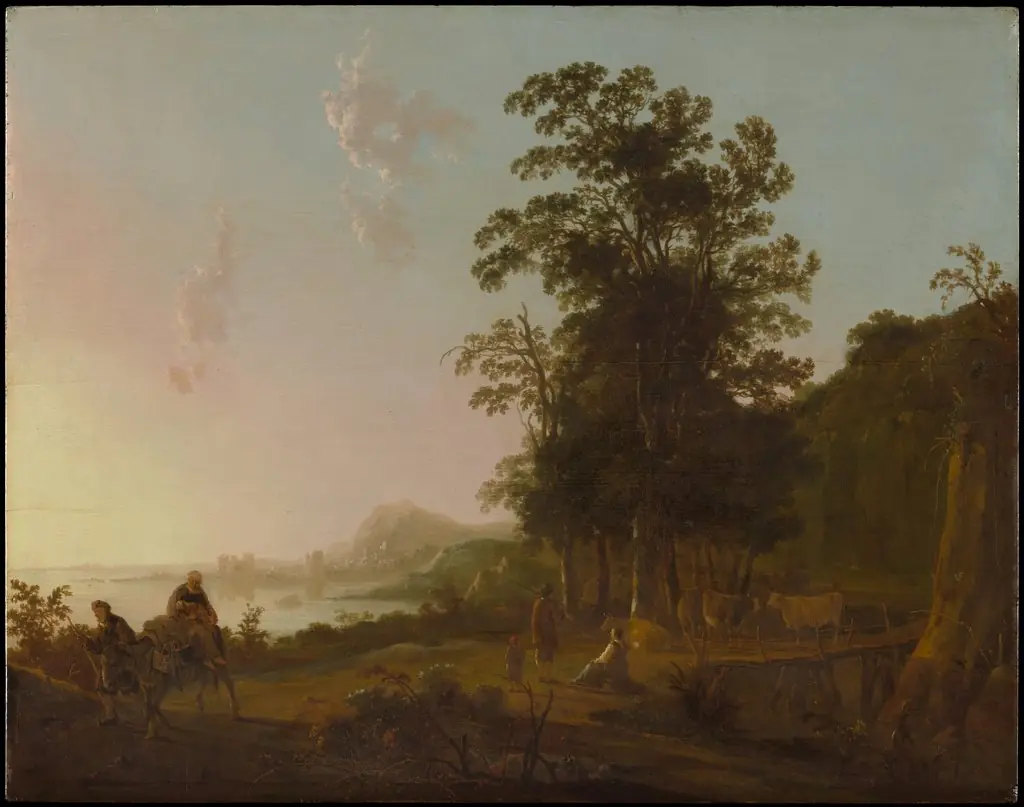 Landscape with the Flight into Egypt
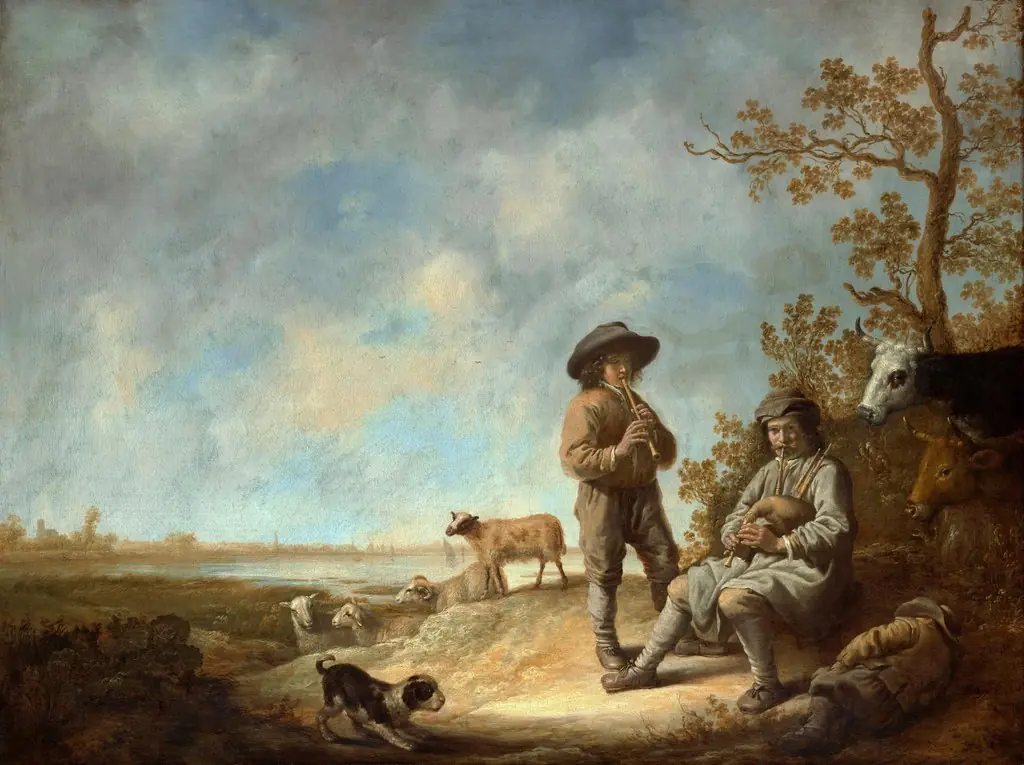 Piping Shepherds
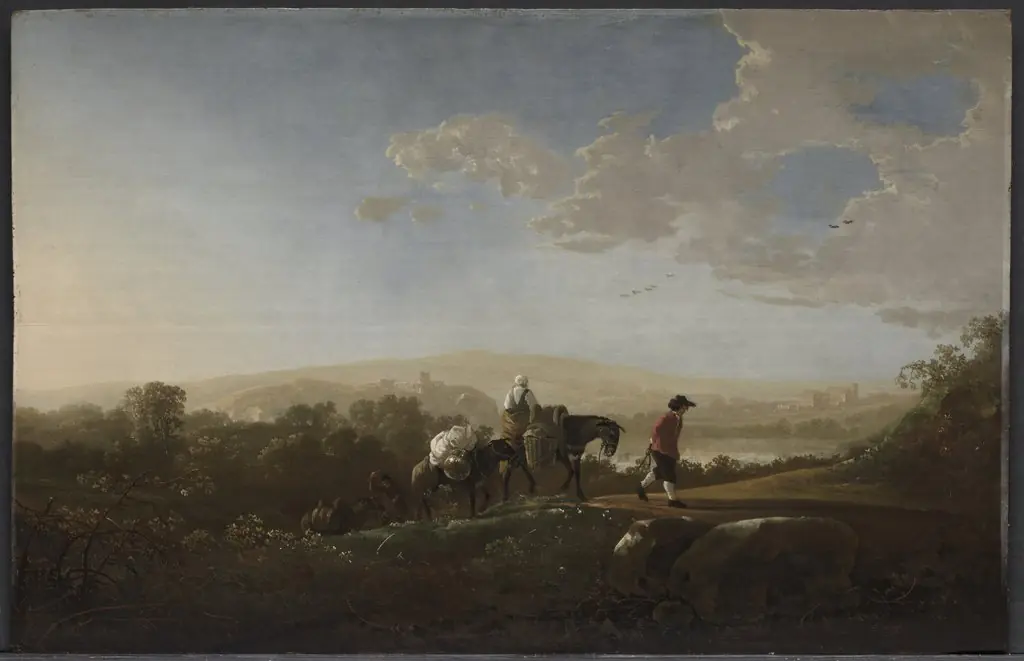 Travellers in Hilly Countryside
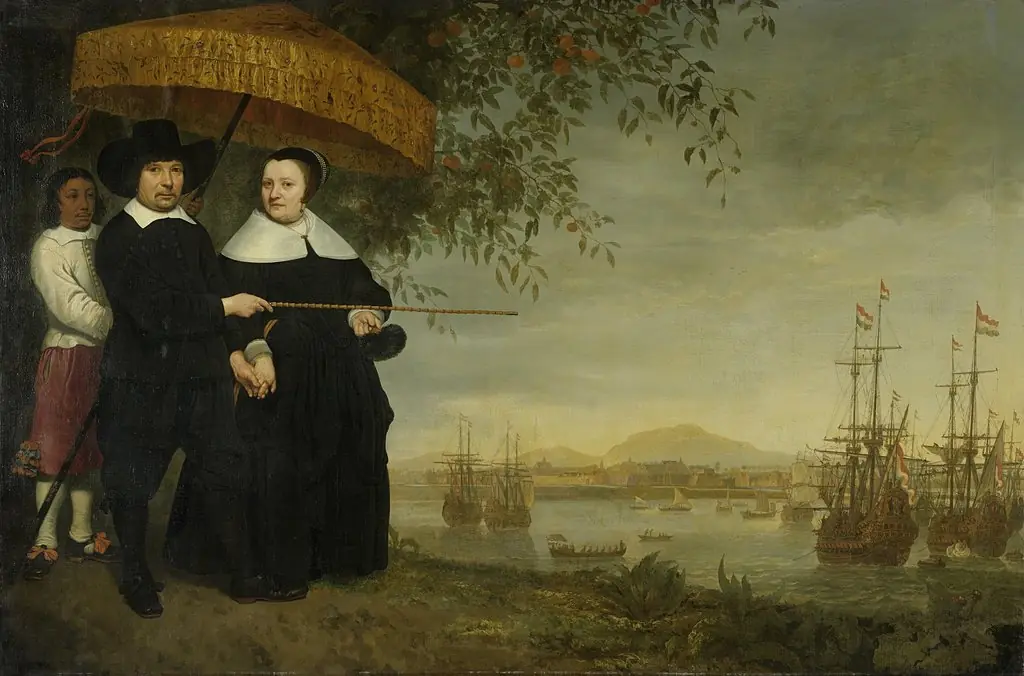 A Chief Merchant of the VOC with his Wife and an Enslaved Servant