Artwork
Frozen River with a Footbridge
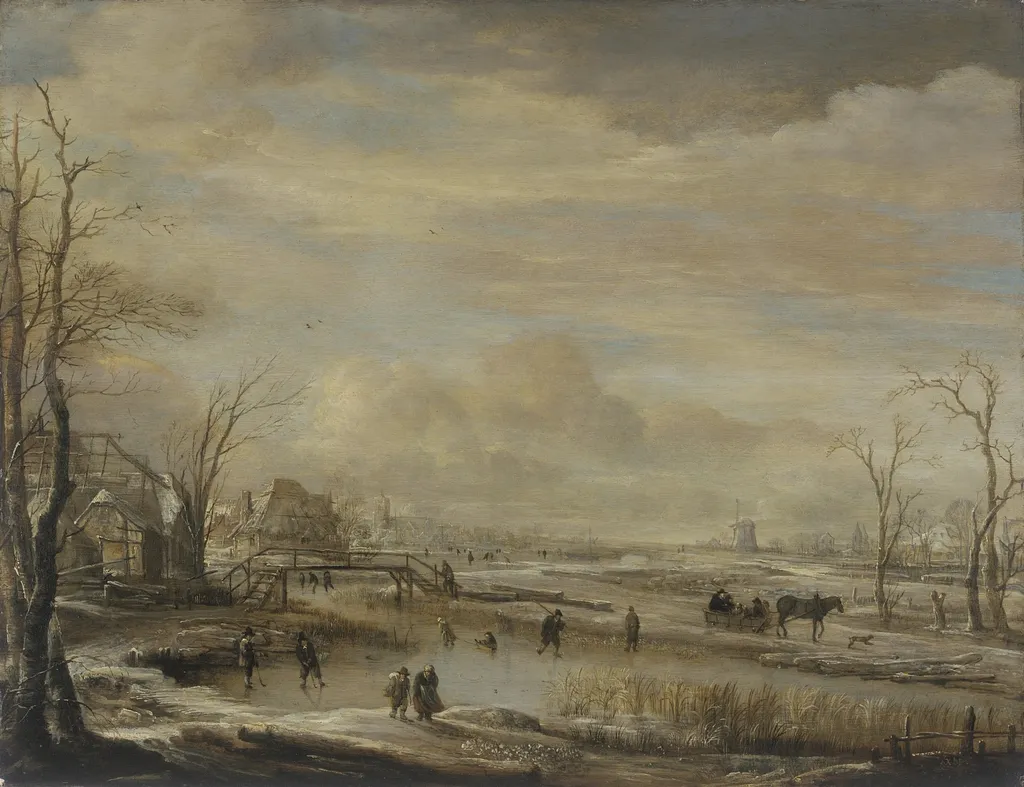
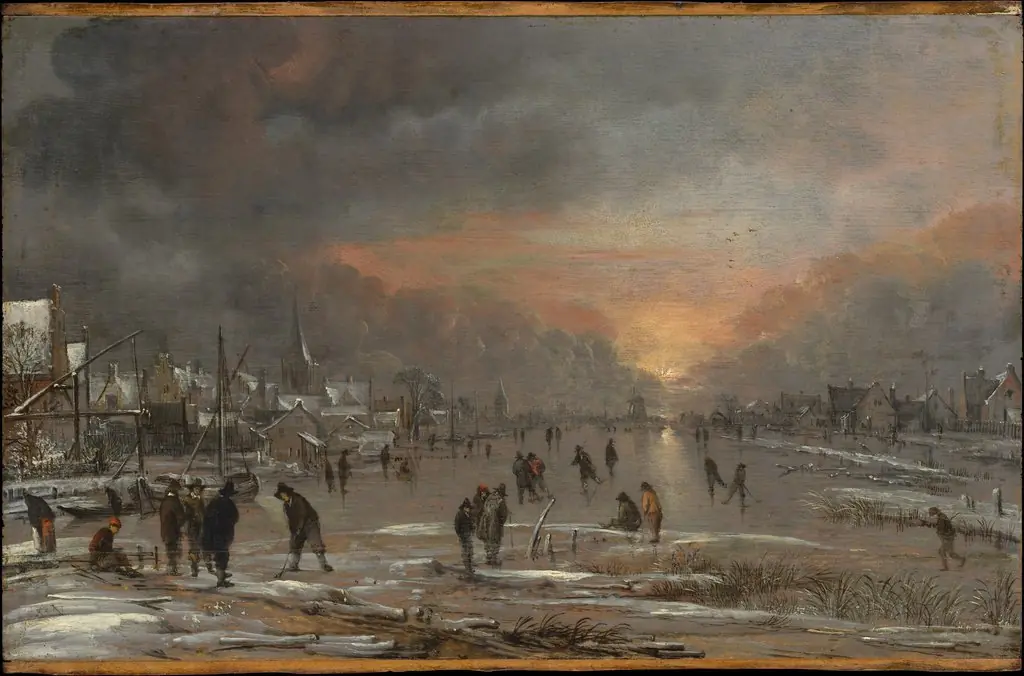
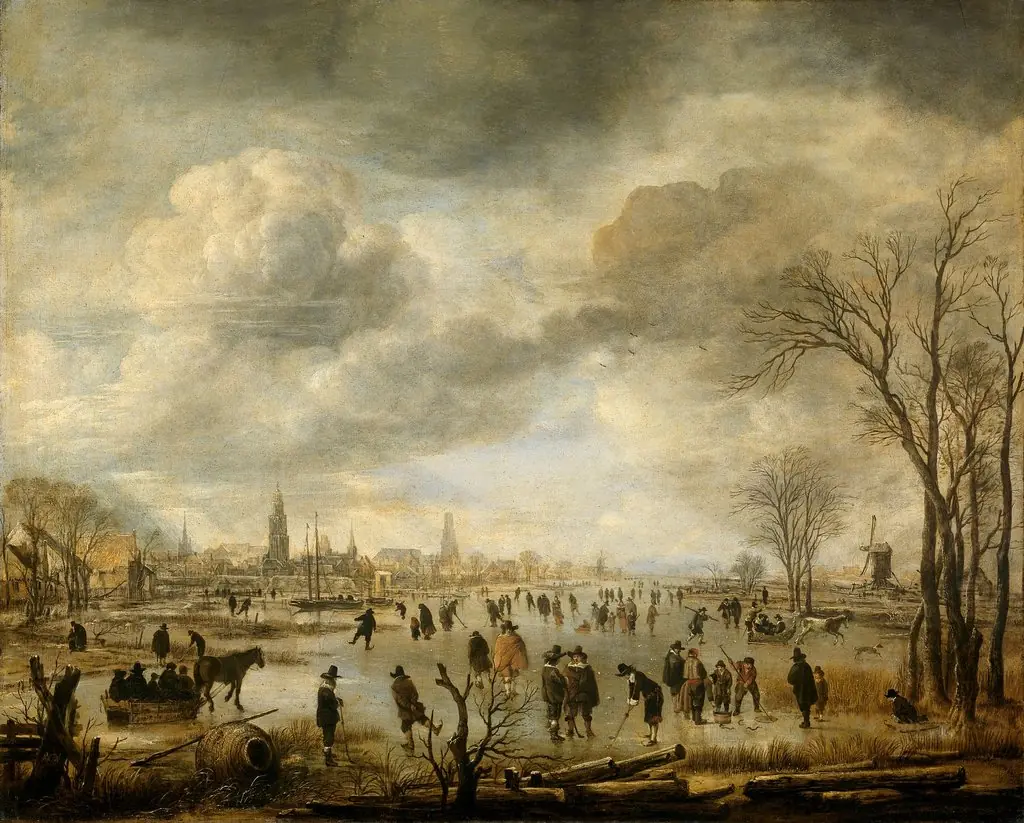
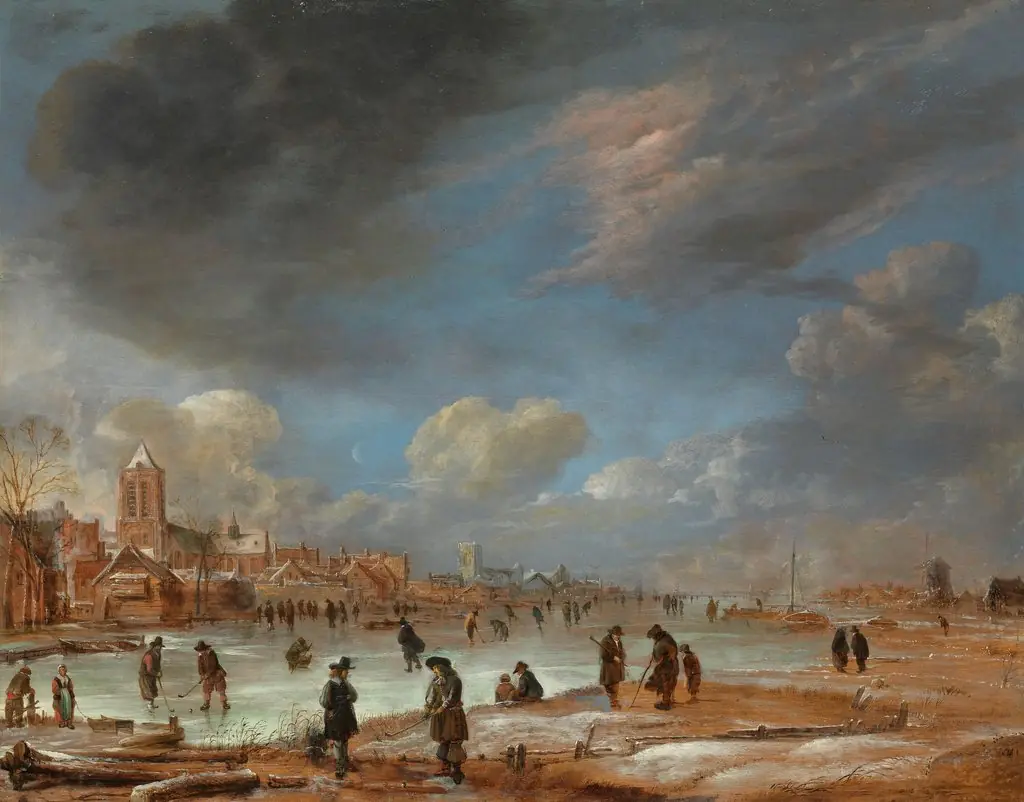
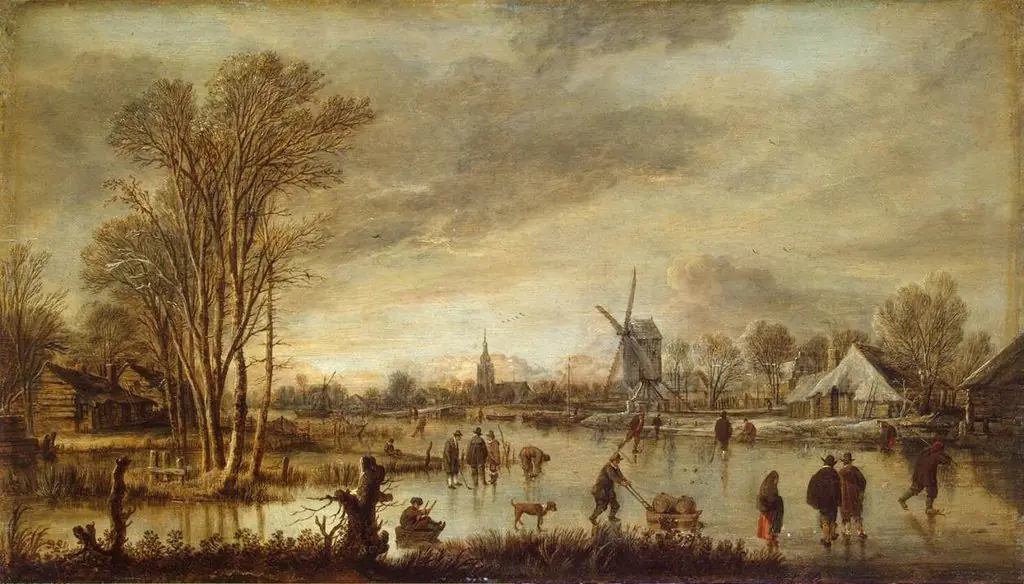
Frozen River with a Footbridge is an oil painting by the Dutch Golden Age artist Aert van der Neer. It dates from 1650 and is held in the collection of the Los Angeles County Museum of Art.
About this work
Overview
Painted around 1650, *Frozen River with a Footbridge* is an oil-on-canvas landscape by Aert van der Neer, a Dutch artist noted for his quiet winter scenes.
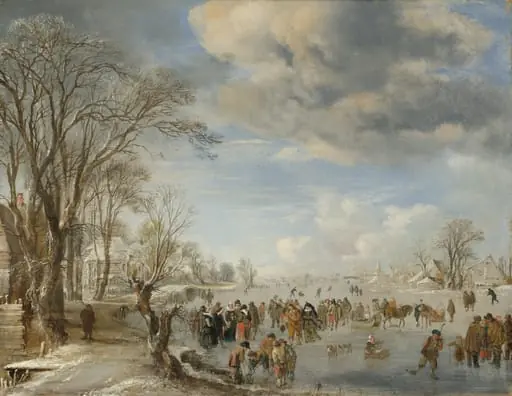
Painted around 1650, *Frozen River with a Footbridge* is an oil-on-canvas landscape by Aert van der Neer, a Dutch artist noted for his quiet winter scenes. The composition captures a still, frozen waterway under a pale sky, with figures moving across the ice and a modest wooden bridge spanning the river. Van der Neer’s focus on atmospheric winter conditions distinguishes his work within the broader tradition of Dutch landscape painting.
Subject & Meaning
The scene portrays everyday winter life along a rural Dutch waterway. People skate and walk on the ice, while a distant windmill and clustered buildings suggest a modest settlement. The absence of dramatic action and the subdued tones convey a sense of quiet endurance, reflecting the rhythms of seasonal labor and leisure in the Netherlands. The painting offers no overt narrative, instead inviting contemplation of the quiet beauty of winter.
Technique & Style
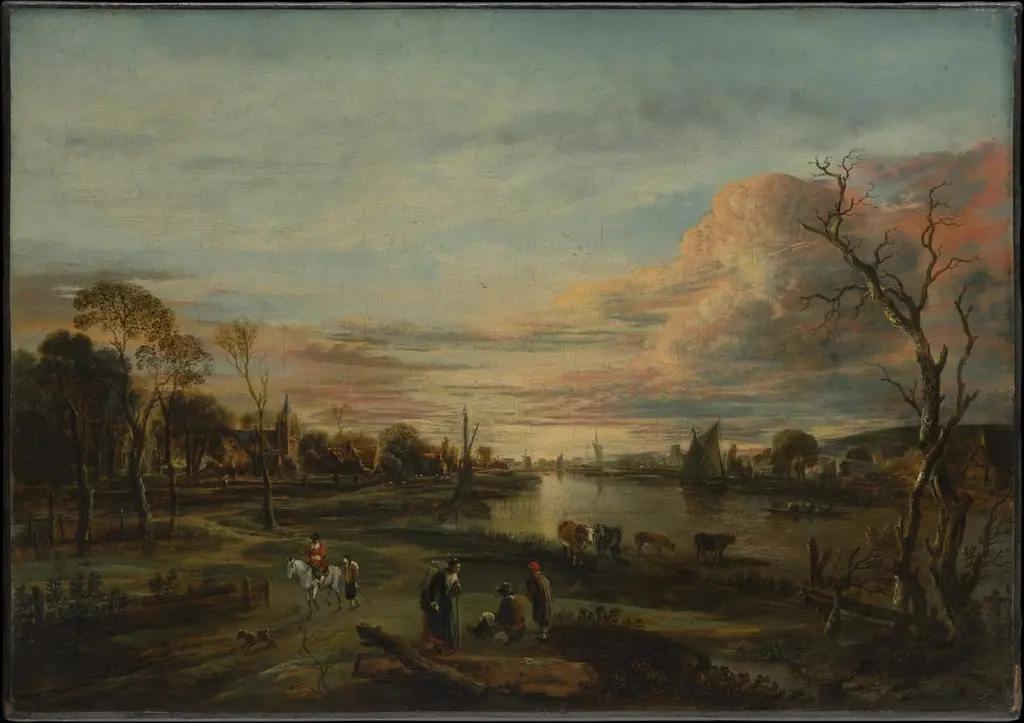
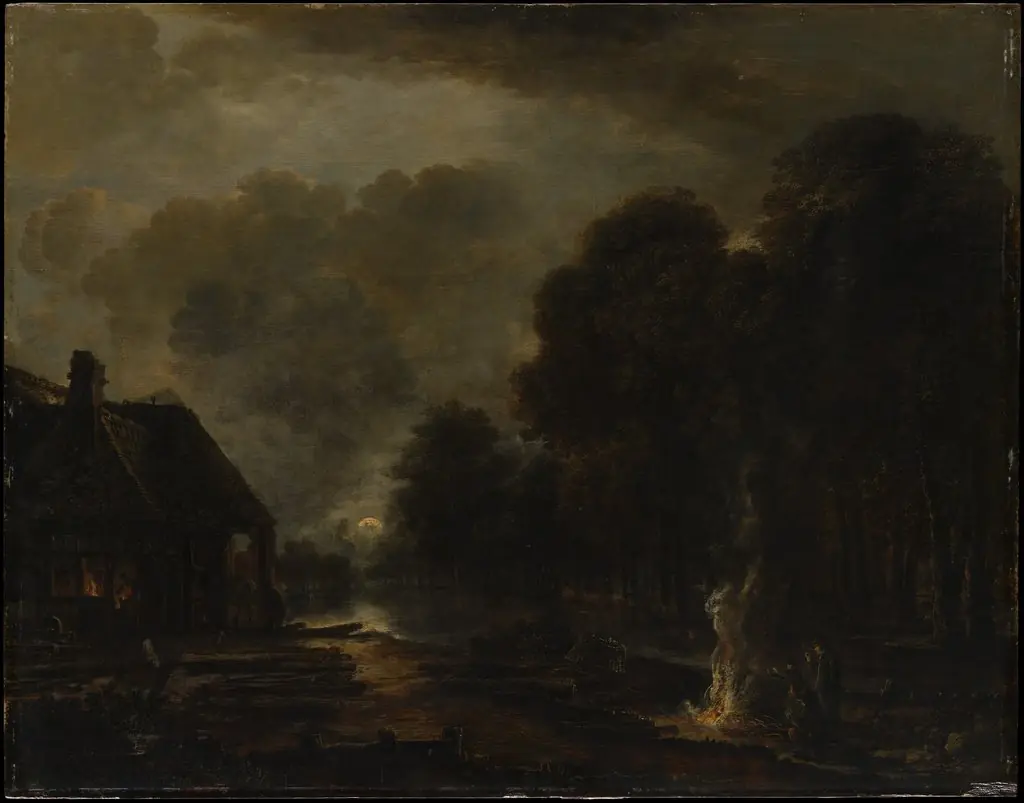
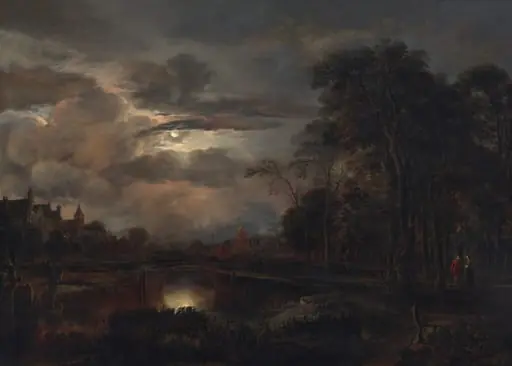
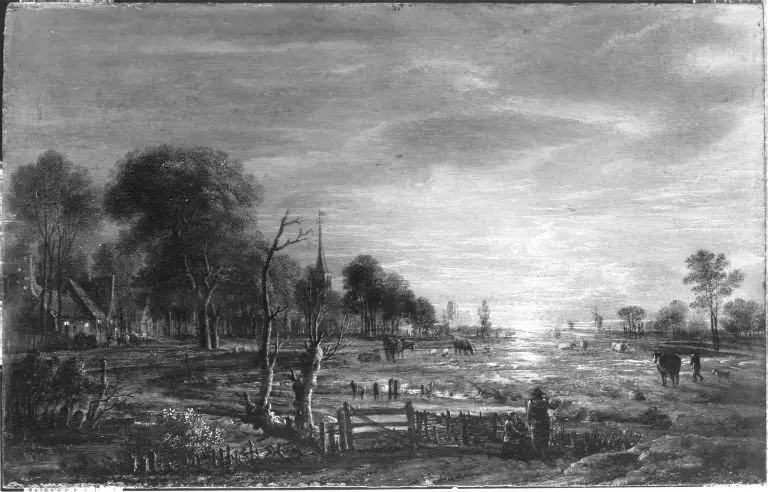
Van der Neer employed a restrained palette of cool grays, pale blues, and muted browns to evoke the chill of winter. Thin, layered brushwork creates a soft luminosity, particularly in the sky and ice, while fine details—like the outlines of trees and figures—are rendered with precision. His use of light suggests a diffuse, overcast day, enhancing the hushed, tranquil mood that characterizes his nocturnal and winter scenes.
History & Provenance
Created during the height of the Dutch Golden Age, the painting remained largely outside the spotlight of contemporary fame. Van der Neer worked in relative obscurity compared to peers like Hobbema or Cuyp. The work entered the collection of the Los Angeles County Museum of Art in the 20th century, where it now resides as part of a broader grouping of Dutch landscape paintings.
Context
Van der Neer’s winter scenes emerged amid a flourishing Dutch market for landscape art, where patrons favored depictions of familiar, unidealized environments. Unlike grand historical or mythological subjects, his quiet, atmospheric views appealed to a growing middle class interested in the natural world and seasonal change. His work aligns with a broader trend of intimate, observational painting in 17th-century Holland.
Legacy
Though not widely celebrated in his lifetime, Van der Neer’s distinctive treatment of winter light and quiet composition influenced later landscape painters. His ability to convey mood through subtle tonal shifts and restrained detail contributed to the evolution of atmospheric landscape painting. Today, his works are valued for their poetic restraint and keen sensitivity to natural conditions.
Own this work as a print
Artist & collection
Artist
Aert van der Neer, or Aernout or Artus (c. 1603 – 9 November 1677), was a landscape painter of the Dutch Golden Age, who specialized in small night scenes lit only by moonlight and fires, and snowy winter landscapes,…