Artwork
Moonlight
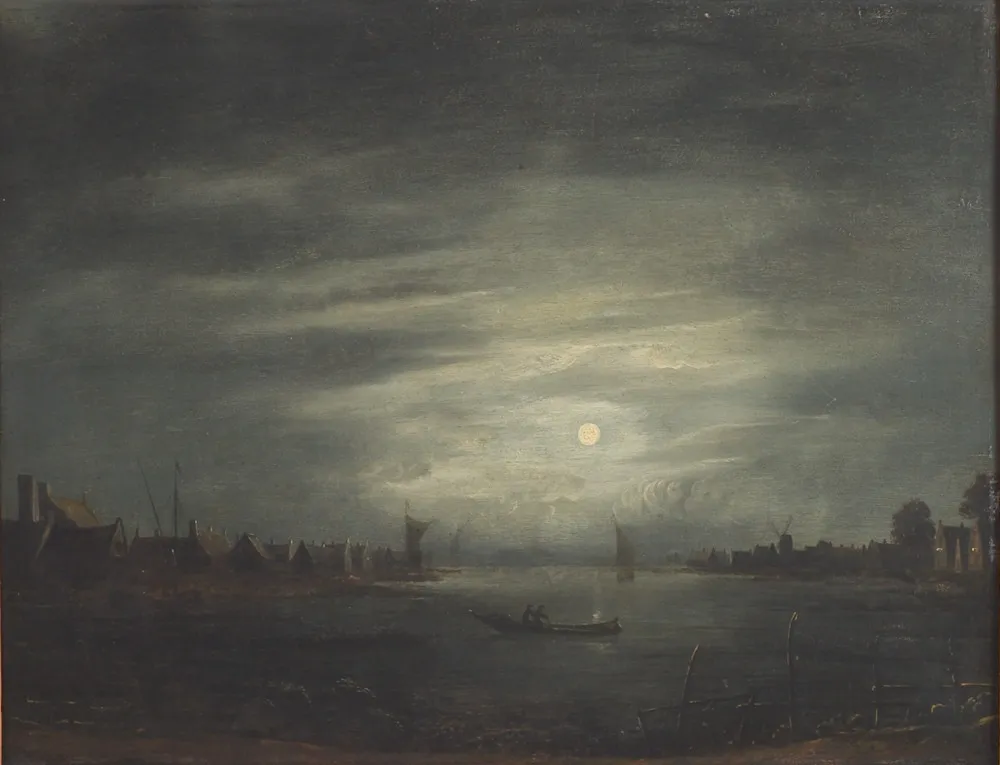
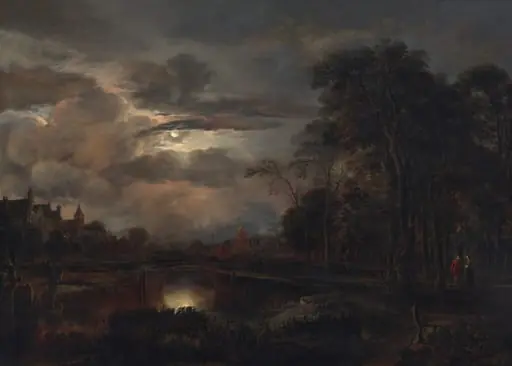
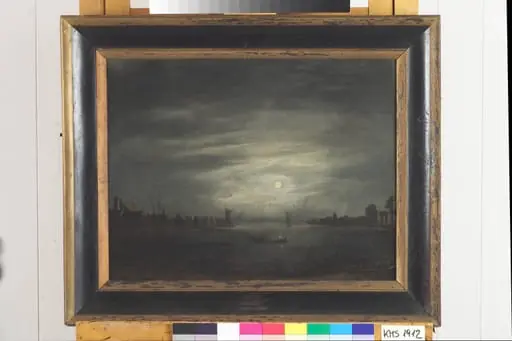
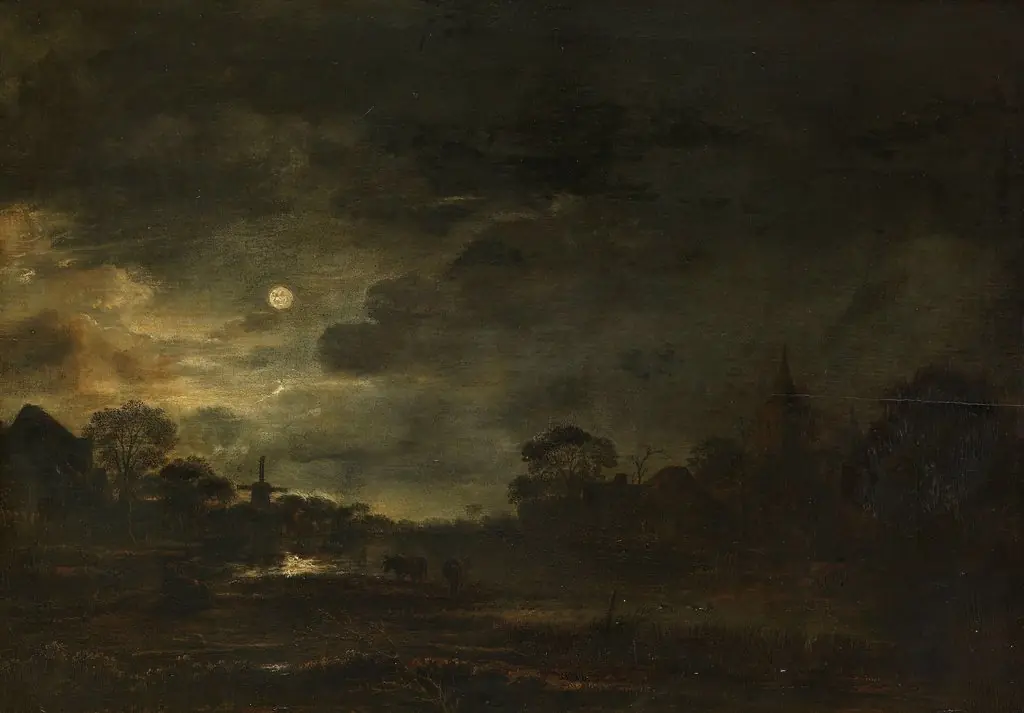
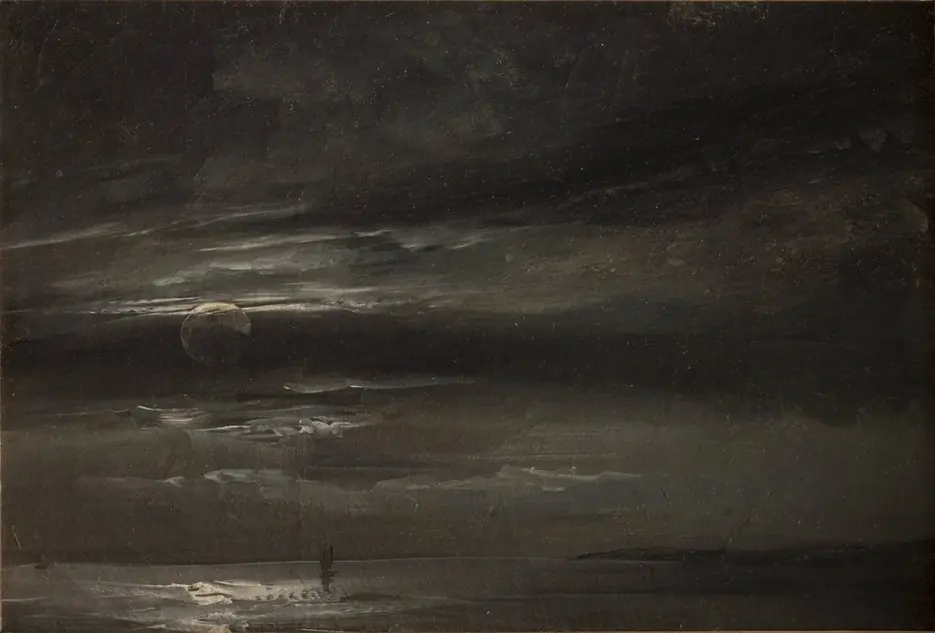
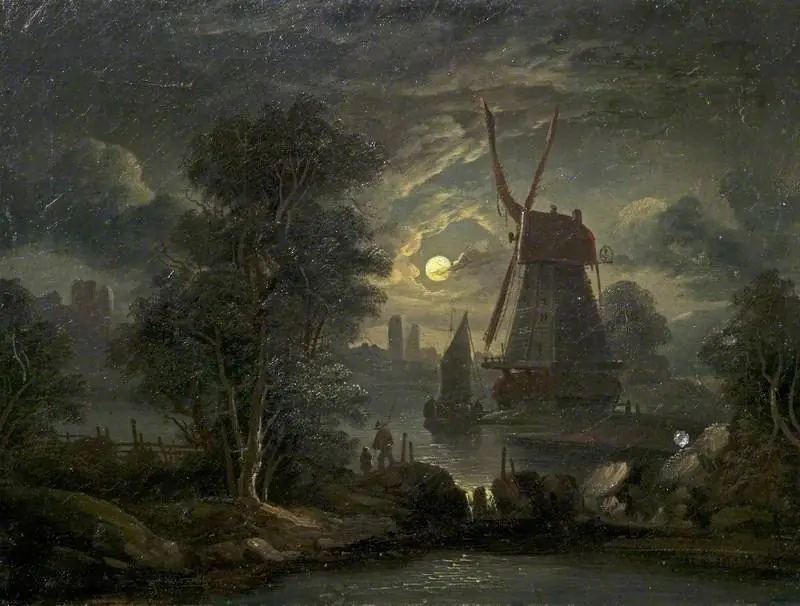
Moonlight is an unspecified painting by the Rococo painting artist Aert van der Neer. It dates from 1761 and is held in the collection of the Statens Museum for Kunst.
About this work
Overview
This small-scale work exemplifies his focus on quiet, moonlit waterscapes, rendered with subtle tonal gradations rather than dramatic contrasts.
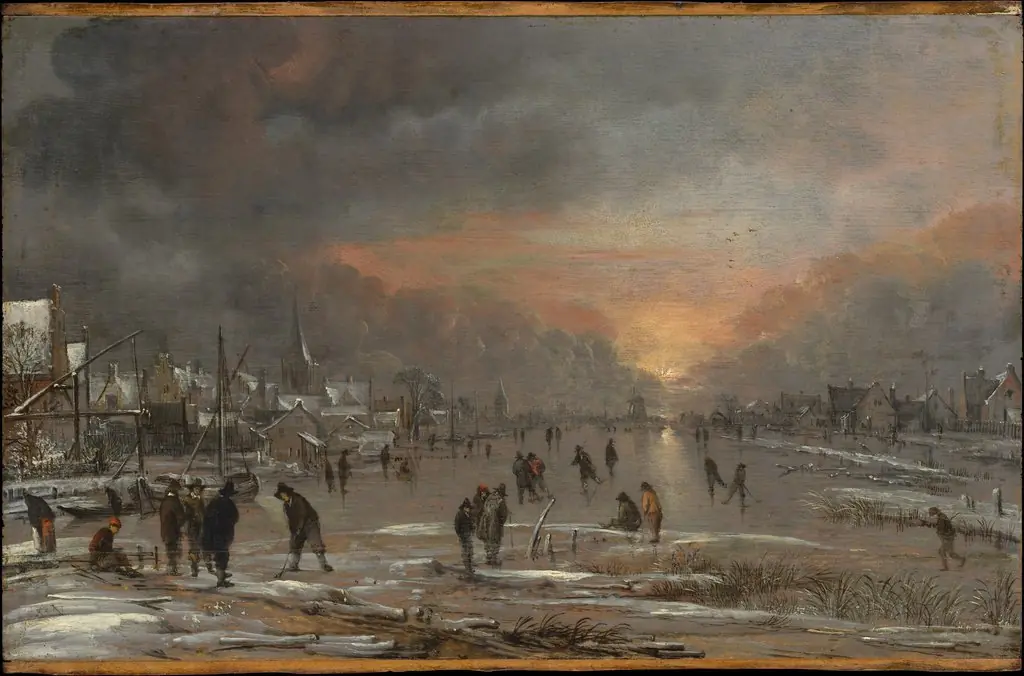
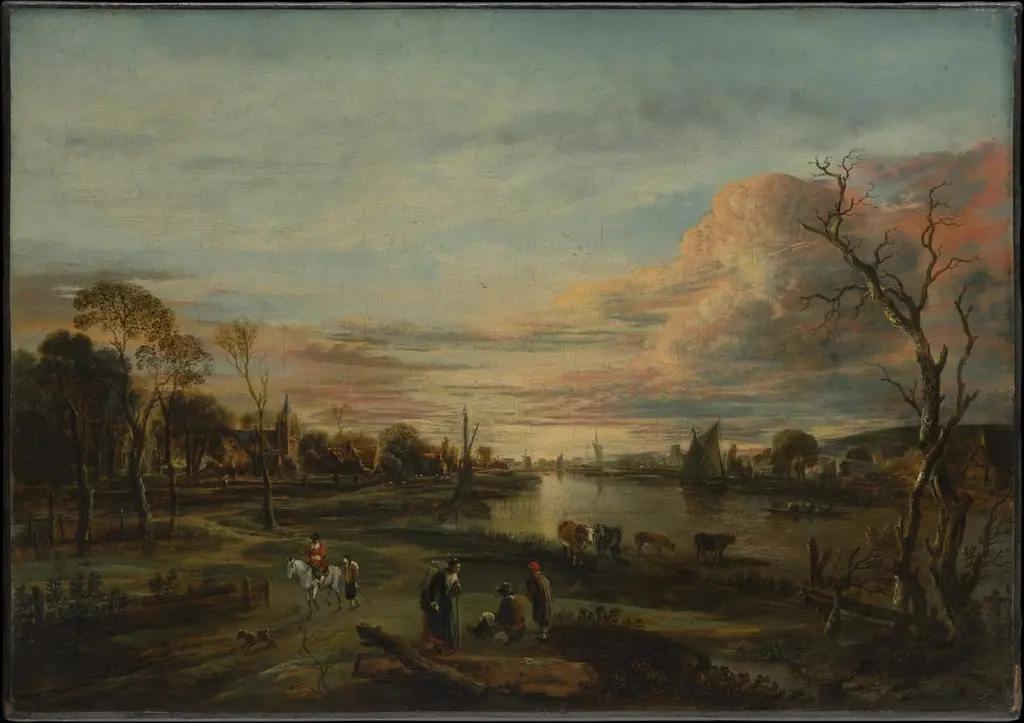
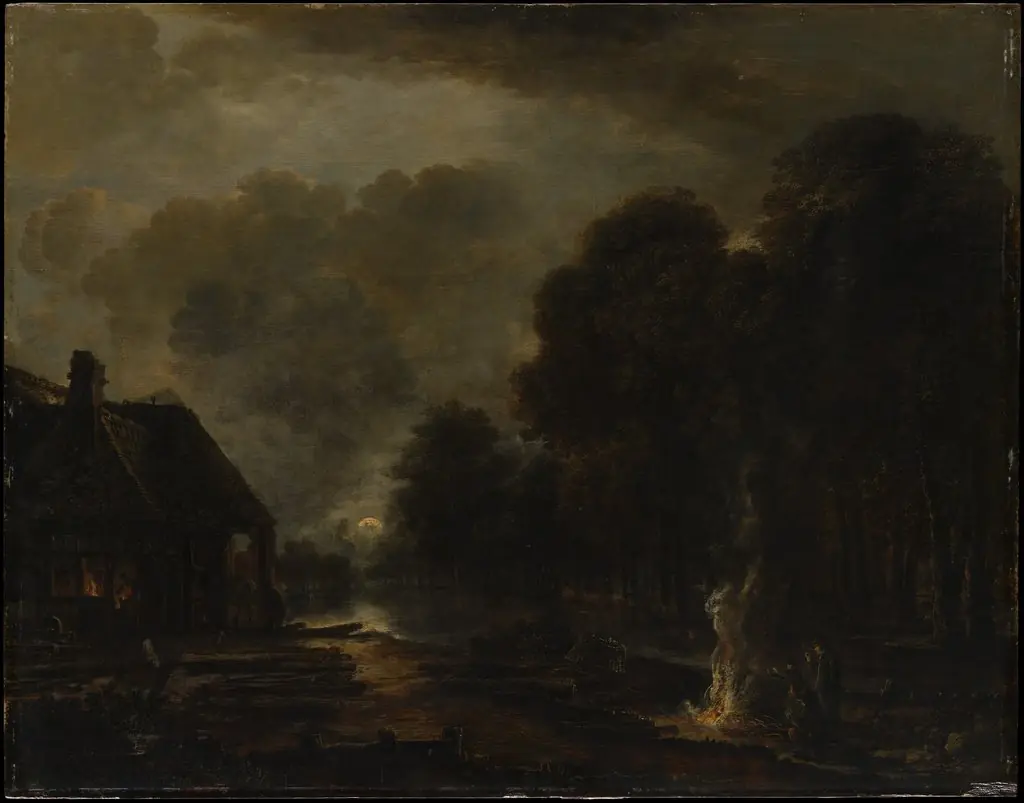
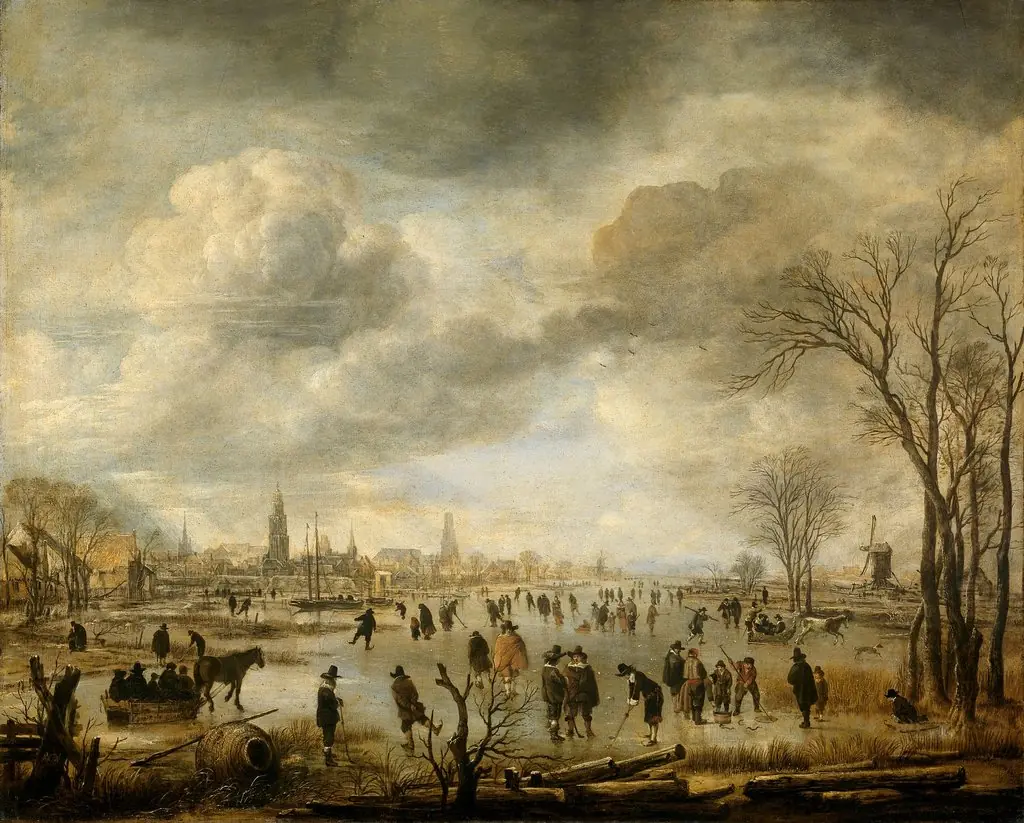
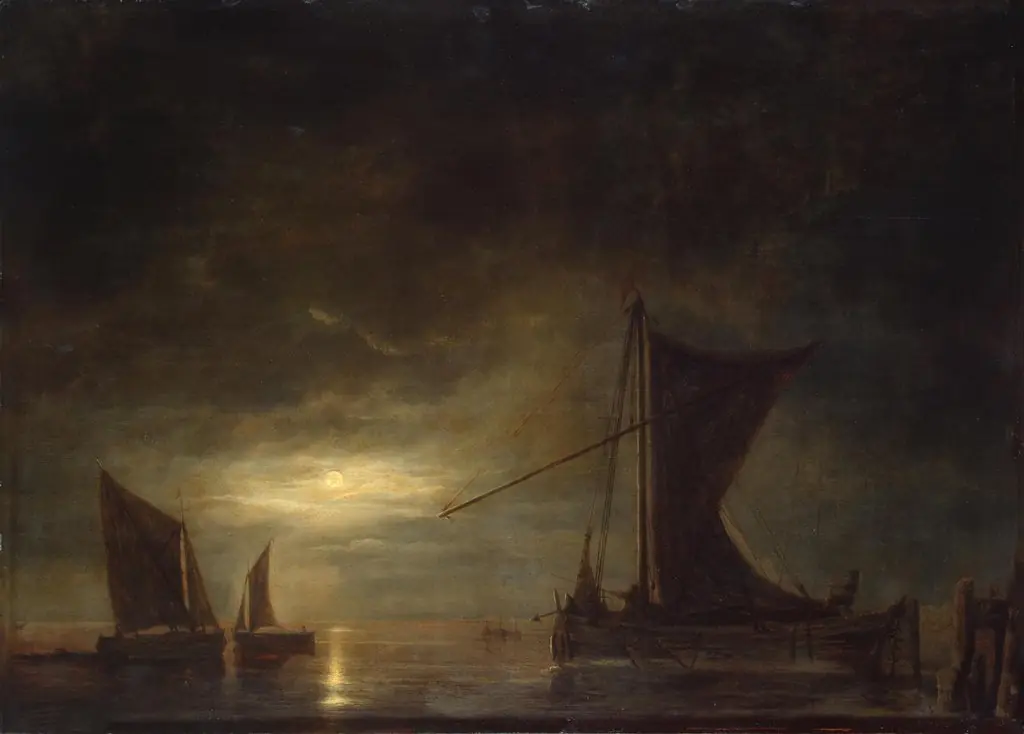
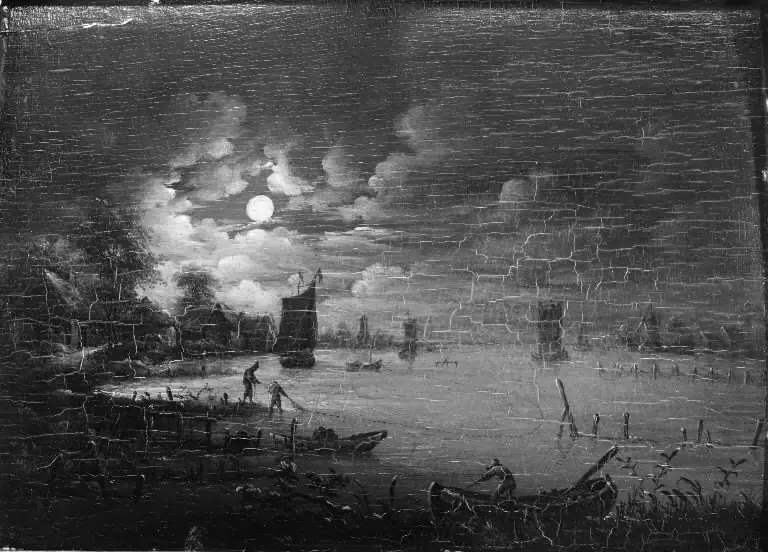
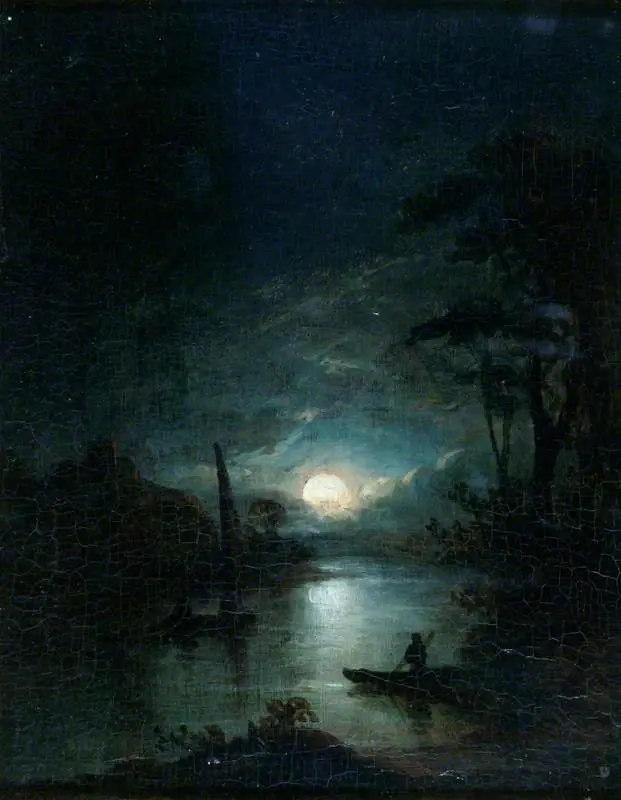
Aert van der Neer painted *Moonlight* around 1650, not 1761, during the Dutch Golden Age. Though often associated with nocturnal themes, he was not part of the Rococo movement, which emerged decades after his death. This small-scale work exemplifies his focus on quiet, moonlit waterscapes, rendered with subtle tonal gradations rather than dramatic contrasts. The scene avoids narrative detail, emphasizing mood over action.
Subject & Meaning
The painting presents a still river under a full moon, with a single small boat moored near the shore and faint outlines of buildings lining the opposite bank. No figures are present, reinforcing a sense of solitude. The absence of human activity invites quiet reflection, aligning with Dutch artistic values that found dignity in ordinary, uneventful moments of nature and domestic life.
Technique & Style
Van der Neer employed thin, layered glazes to achieve the soft luminosity of moonlight, using muted blues, grays, and browns to suggest depth without sharp definition. His brushwork is restrained, blending edges to dissolve forms into atmospheric haze. Light is not depicted as a source but as a diffuse presence, shaping the landscape through subtle shifts in tone rather than highlights or shadows.
History & Provenance
The painting was created during van der Neer’s mature period in Amsterdam, where he developed his signature nocturnal style. It likely passed through private Dutch collections before entering public ownership. Records confirm its attribution to van der Neer, though its exact early provenance remains partially undocumented. Its survival reflects sustained appreciation for his quiet, contemplative approach to landscape.
Context
In mid-17th-century Holland, landscape painting flourished as a genre independent of religious or mythological themes. Van der Neer’s moonlit scenes stood apart from the brighter, bustling daylight views popular among contemporaries. His work catered to collectors drawn to introspective, intimate views of nature—reflecting broader cultural interests in solitude, observation, and the quiet rhythms of daily life.
Legacy
Van der Neer’s nocturnes influenced later artists interested in atmospheric effects, including 18th-century German and English painters who explored twilight and night. Though never widely celebrated in his lifetime, his technical precision in rendering moonlight earned retrospective recognition. Today, his works are studied for their restraint and sensitivity to natural light, offering a counterpoint to the more theatrical styles of his era.
Artist & collection
Artist
Aert van der Neer, or Aernout or Artus (c. 1603 – 9 November 1677), was a landscape painter of the Dutch Golden Age, who specialized in small night scenes lit only by moonlight and fires, and snowy winter landscapes,…