Artwork
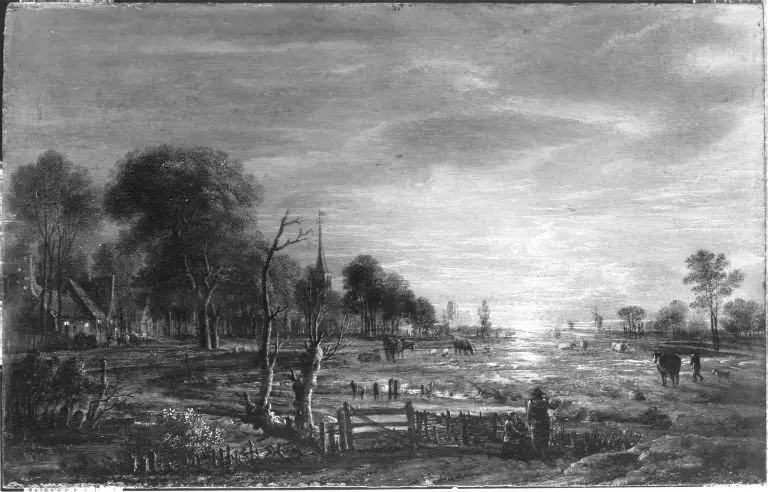
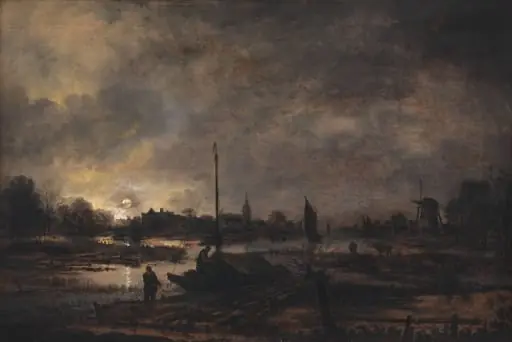
Moonlight Landscape with village
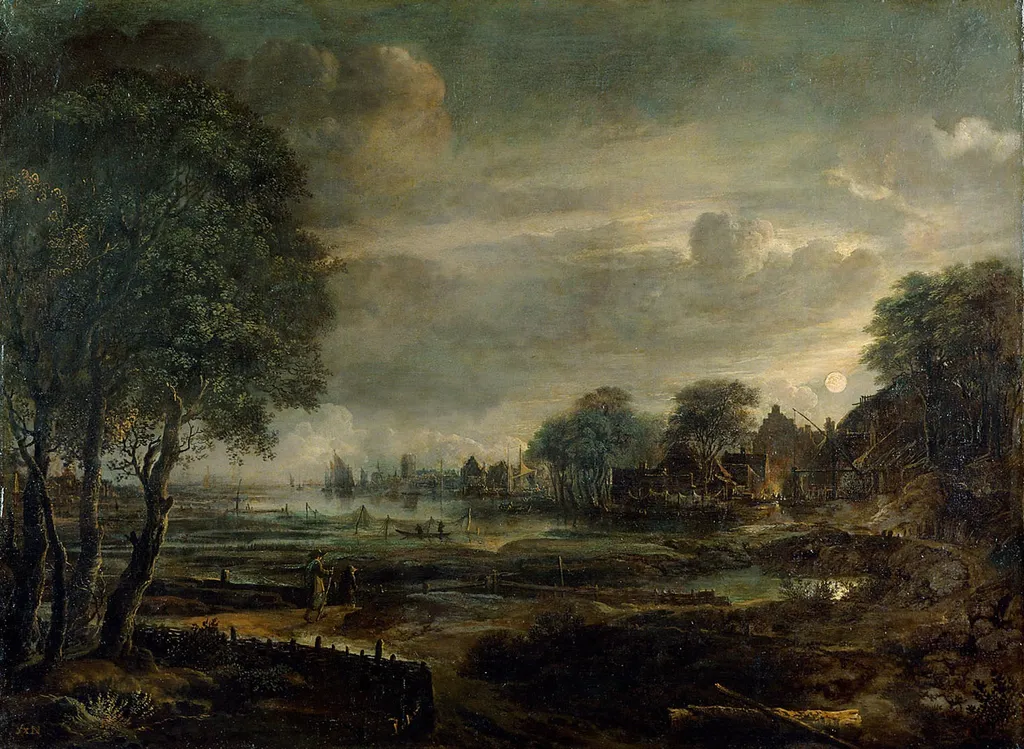
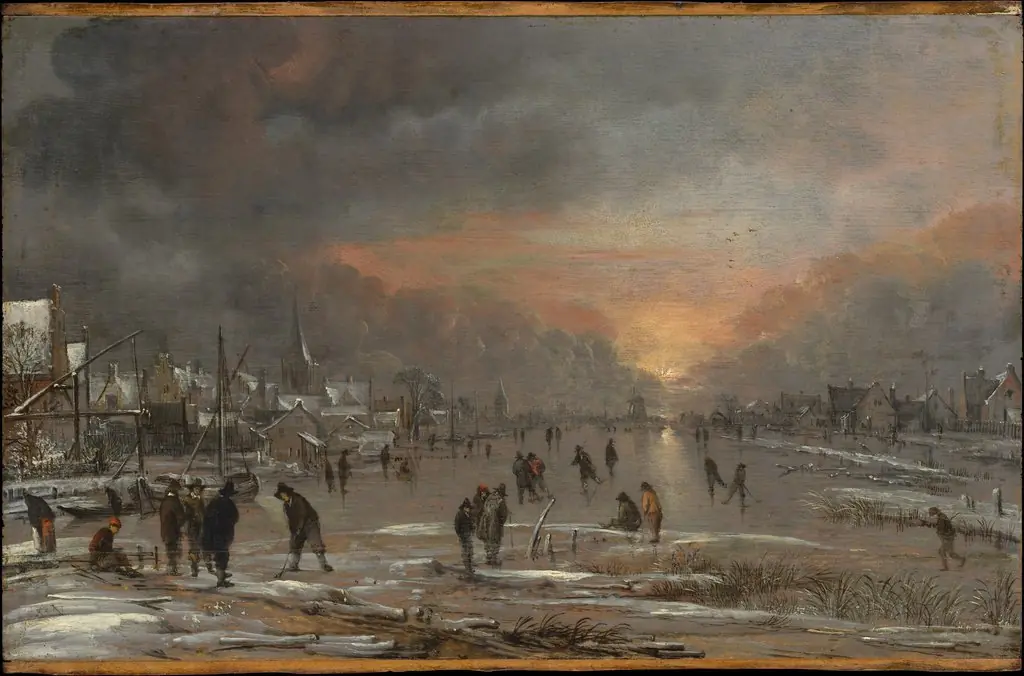
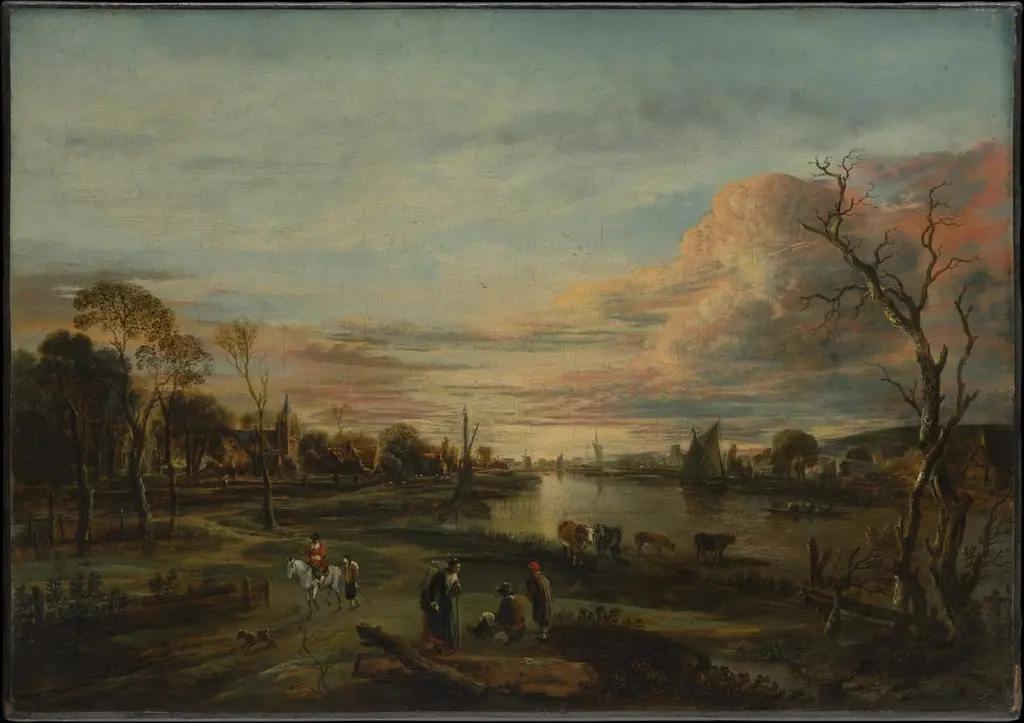
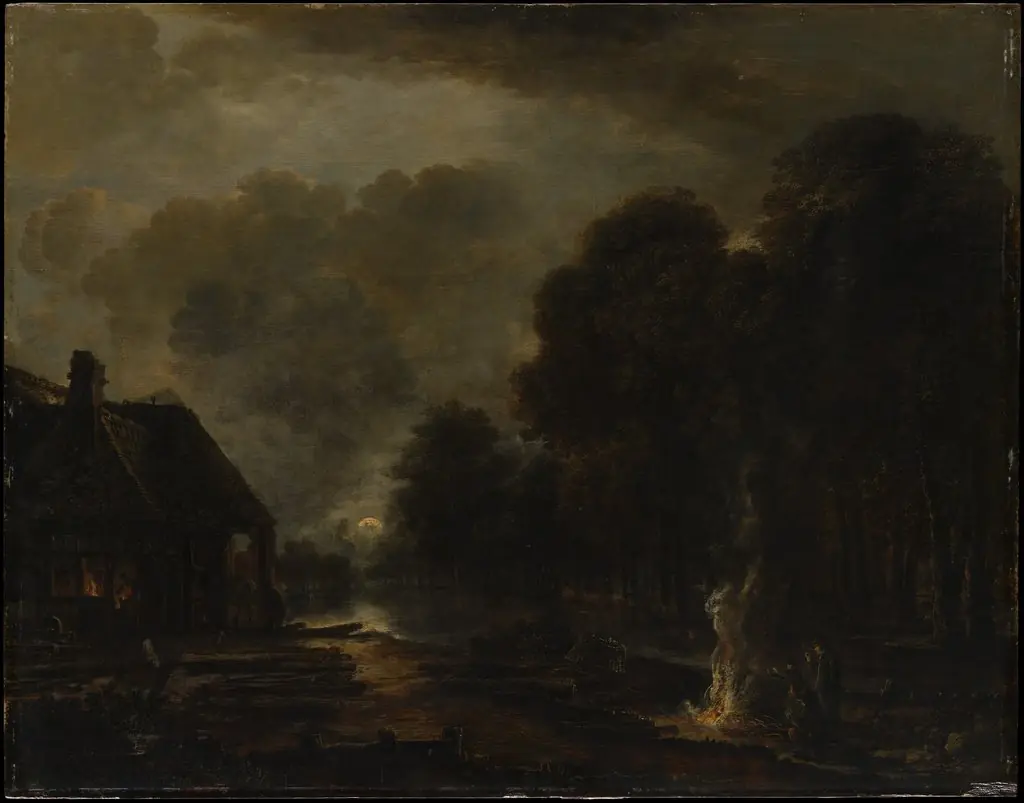
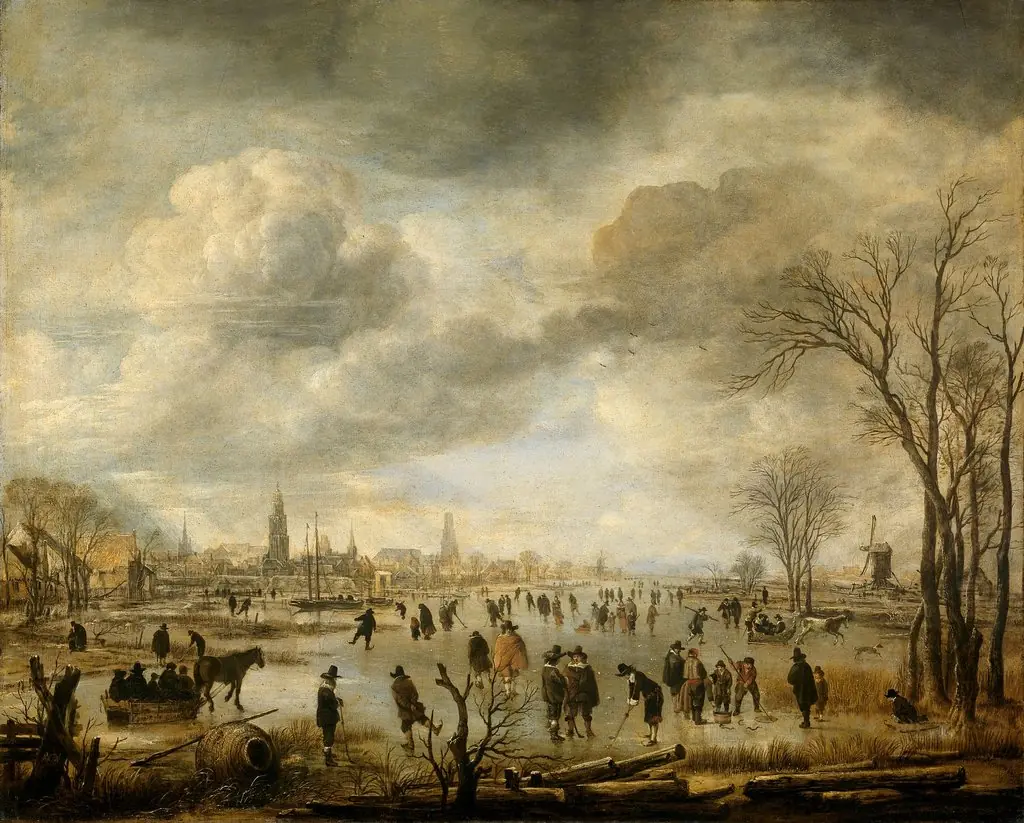
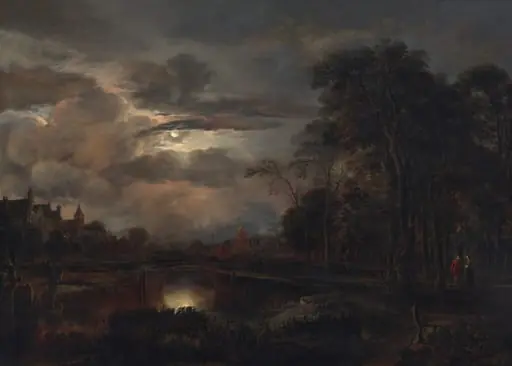
Moonlight Landscape with village is an unspecified painting by the Dutch Golden Age artist Aert van der Neer. It dates from 1650 and is held in the collection of the Kunsthistorisches Museum.
About this work
Overview
Painted circa 1650 by Aert van der Neer, this small nocturnal landscape captures a quiet village under moonlight.
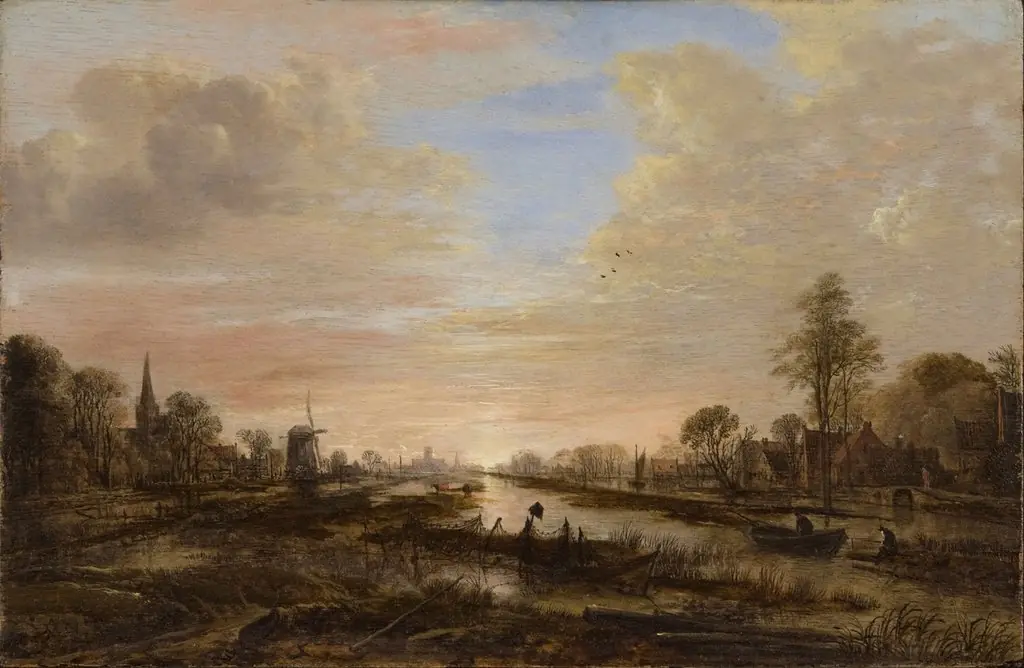
Painted circa 1650 by Aert van der Neer, this small nocturnal landscape captures a quiet village under moonlight. Van der Neer focused on twilight and night scenes, often set near waterways, distinguishing himself among Dutch Golden Age painters through his atmospheric precision. The work is part of the Kunsthistorisches Museum’s collection and reflects a niche yet refined strand of 17th-century Dutch painting centered on quiet, unpopulated natural settings.
Subject & Meaning
The scene depicts a rural village nestled among trees, with a church steeple rising above low buildings. No figures or movement are present, emphasizing stillness and solitude. The absence of human activity invites contemplation rather than narrative, aligning with a broader Dutch interest in the quiet dignity of the natural world. Moonlight transforms the landscape into a meditative space, detached from daily life and temporal concerns.
Technique & Style
Van der Neer employed subtle gradations of cool tones—silvers, blues, and muted greens—to render the moon’s diffuse glow. Chiaroscuro defines forms without harsh contrasts, creating depth through soft transitions. Brushwork is restrained, favoring smooth blending over texture, enhancing the hushed mood. His technique prioritizes luminous atmosphere over detail, making light itself the subject of the composition.
History & Provenance
Created during the height of the Dutch Golden Age, the painting remained largely unrecognized during van der Neer’s lifetime, overshadowed by more prominent contemporaries. It entered the Kunsthistorisches Museum’s collection in the 19th century, where its quiet intensity gradually gained scholarly attention. Its survival and preservation reflect a later appreciation for the subtleties of nocturnal landscape painting.
Context
Van der Neer worked alongside artists like Aelbert Cuyp and Meindert Hobbema, yet his focus on night scenes set him apart. While many Dutch painters celebrated daylight, commerce, or human activity, he turned to the stillness of evening, a rare theme in the period. His work resonates with a growing cultural interest in introspection and the emotional resonance of nature beyond utility.
Legacy
Though little celebrated in his time, van der Neer’s nocturnal landscapes influenced later generations interested in mood and atmosphere. His ability to convey silence through light and tone paved the way for 19th-century Romantic and Impressionist explorations of night. Today, his paintings are valued for their quiet originality and technical restraint within the broader canon of Dutch art.
Artist & collection
Artist
Aert van der Neer, or Aernout or Artus (c. 1603 – 9 November 1677), was a landscape painter of the Dutch Golden Age, who specialized in small night scenes lit only by moonlight and fires, and snowy winter landscapes,…