Artwork
Snowfall on a village beside a frozen canal
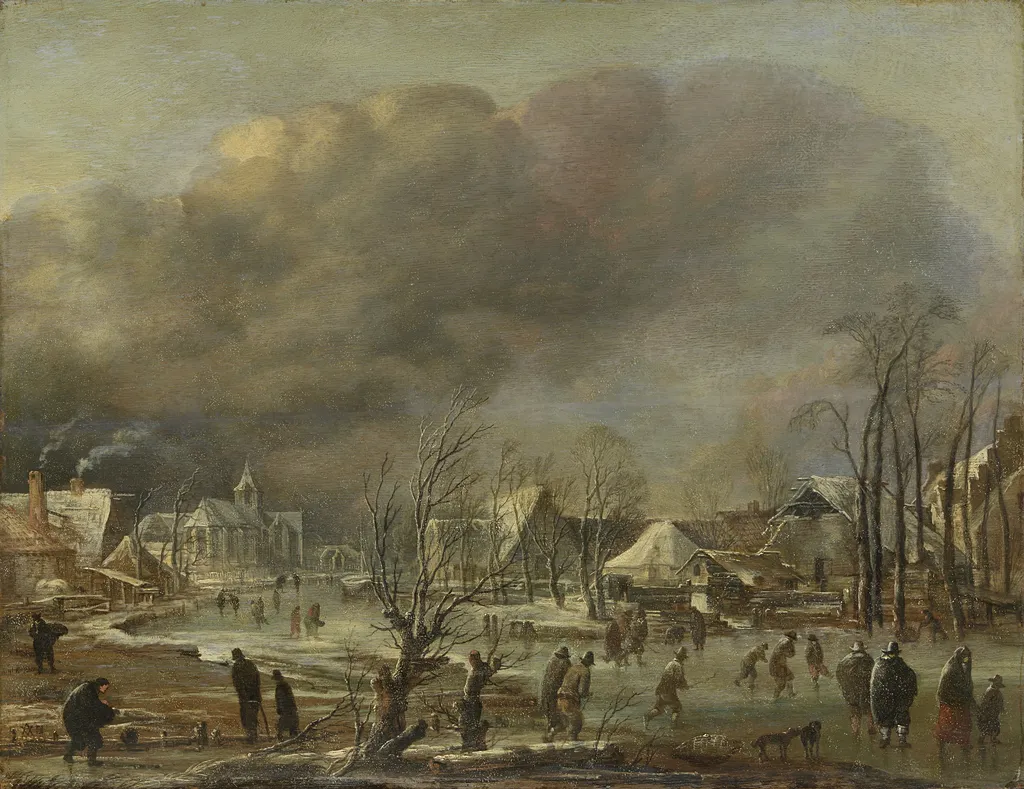
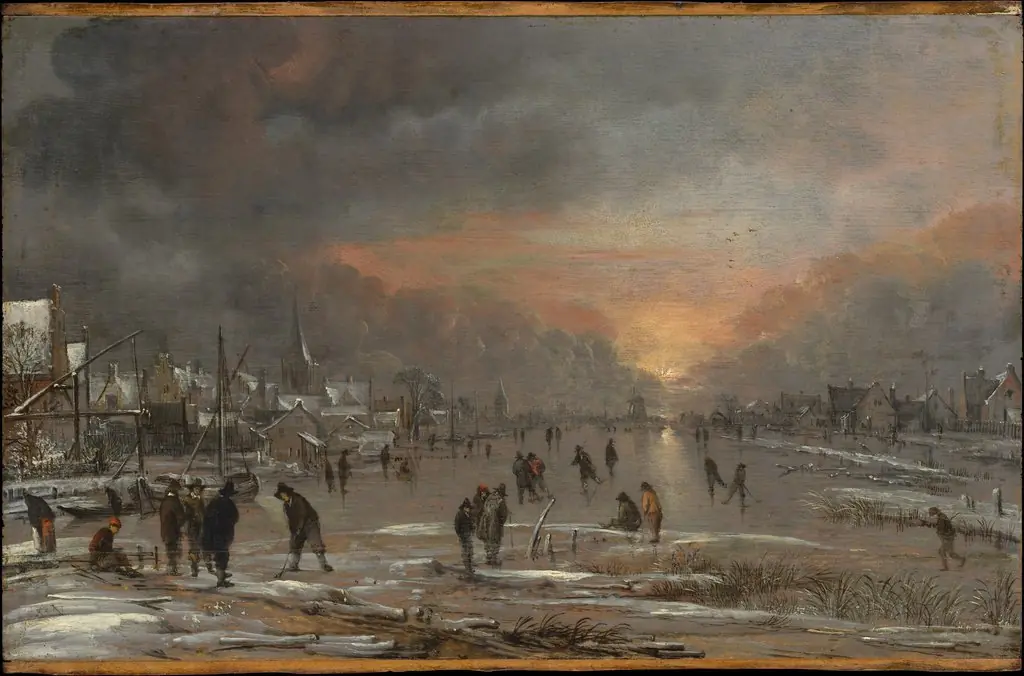
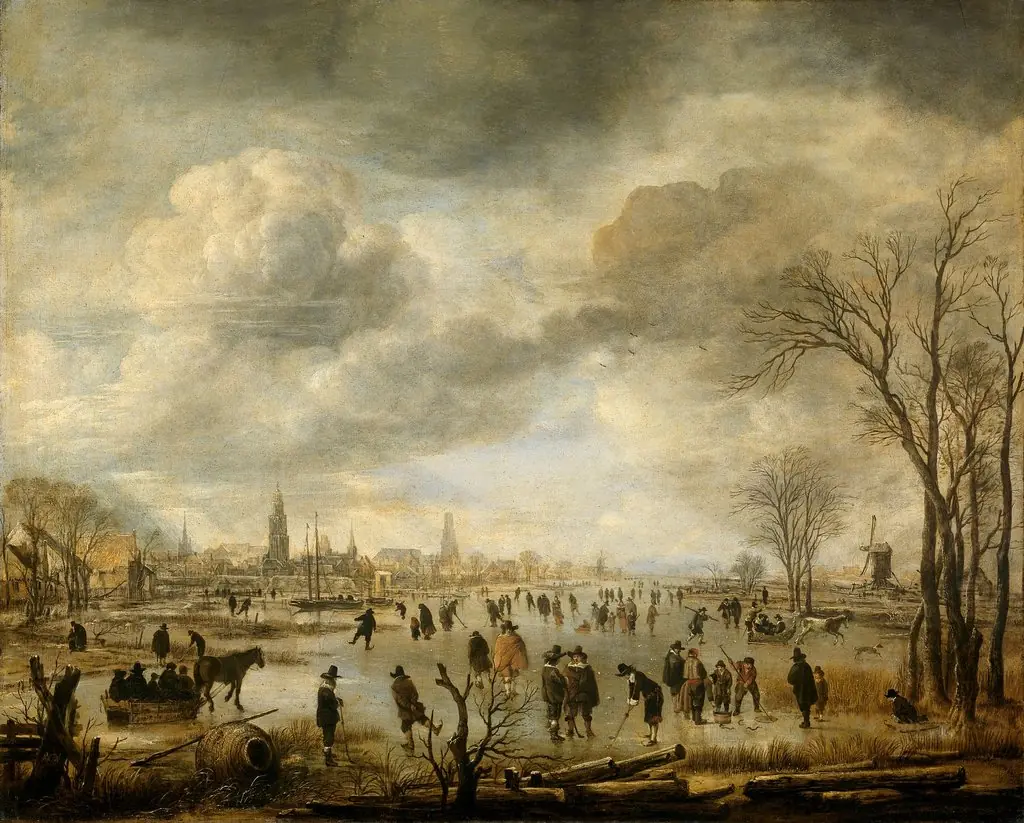
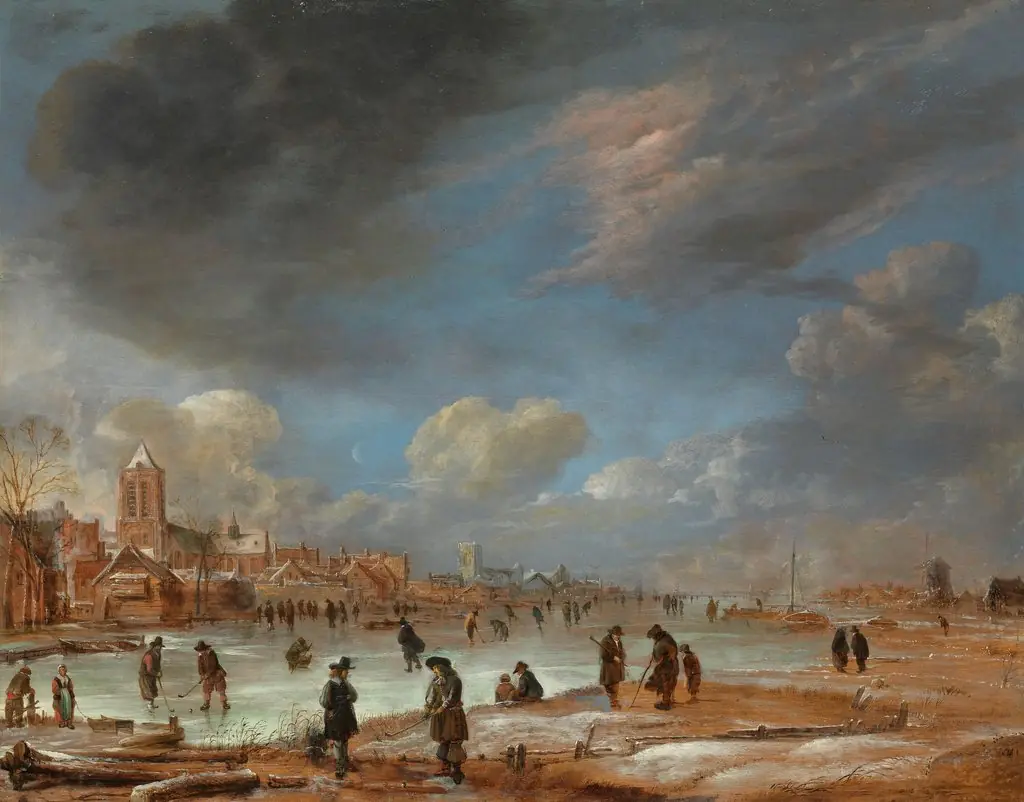
Snowfall on a village beside a frozen canal is an oil painting by the Dutch Golden Age artist Aert van der Neer. It dates from 1650 and is held in the collection of the Rijksmuseum. Created circa 1650, this oil painting portrays a tranquil winter village bisected by a frozen canal.
About this work
Overview
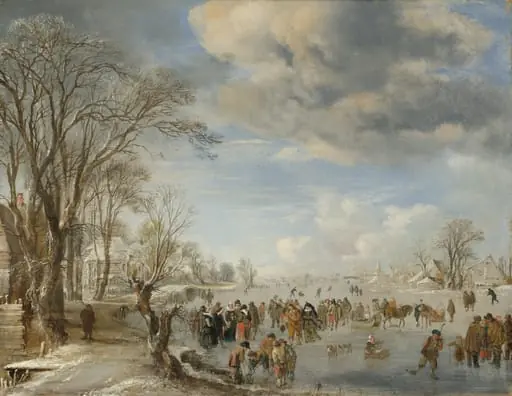
Created circa 1650, this oil painting portrays a tranquil winter village bisected by a frozen canal. Figures traverse the ice, some skating, while modest houses with steep roofs cluster beyond a line of leafless trees. A muted sky, heavy with cloud, allows a soft light to diffuse across the scene, lending it a quiet, atmospheric quality.
Subject & Meaning
The composition captures everyday life under winter conditions, emphasizing communal activity on the frozen waterway.
The composition captures everyday life under winter conditions, emphasizing communal activity on the frozen waterway. The solitary tree and subdued architecture serve as focal points that balance the human presence, suggesting a harmonious relationship between the villagers and their harsh environment. The gentle illumination hints at either moonlight or distant fire, reinforcing a sense of calm endurance.
Technique & Style
Van der Neer employs a restrained palette of grays, blues, and earth tones, applying thin glazes to achieve depth and a delicate luminosity. Soft transitions between light and shadow create a seamless atmospheric veil, while fine brushwork renders the texture of ice and snow. The modest scale and careful handling of detail are typical of his intimate winter landscapes.
History & Provenance
The work belongs to the Dutch Golden Age, a period when artists often depicted seasonal scenes. Though the painter remained relatively unknown in his lifetime, his oeuvre includes numerous small, river‑framed winter views. The painting entered the Rijksmuseum’s collection, where it remains part of the institution’s holdings of 17th‑century Dutch art.
Context
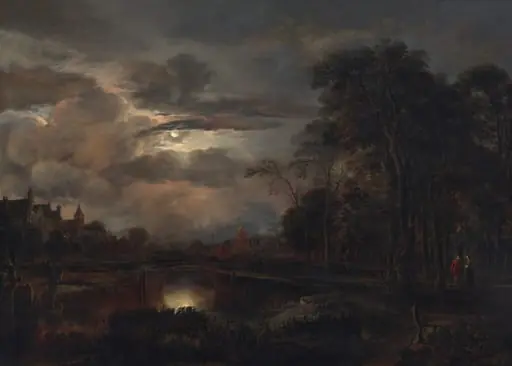
During the mid‑17th century, Dutch society was fascinated by the interplay of light and weather, a theme reflected in the prolific production of winter genre scenes. Van der Neer’s focus on nocturnal or low‑light settings aligns with contemporary interests in atmospheric effects, while his modest compositions contrast with the grander landscapes of peers such as Cuyp and Hobbema.
Own this work as a print
Artist & collection
Artist
Aert van der Neer, or Aernout or Artus (c. 1603 – 9 November 1677), was a landscape painter of the Dutch Golden Age, who specialized in small night scenes lit only by moonlight and fires, and snowy winter landscapes,…