Artwork
Mount Starr King, Yosemite
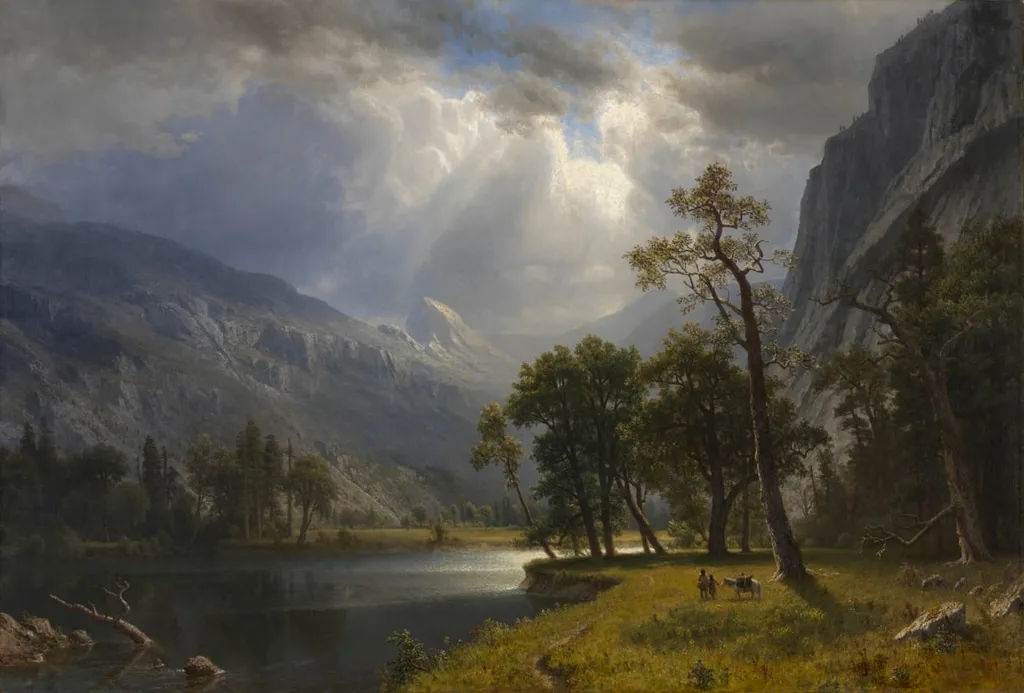
Mount Starr King, Yosemite is an unspecified painting by the Hudson River School artist Albert Bierstadt. It dates from 1866 and is held in the collection of the Cleveland Museum of Art.
About this work
Overview
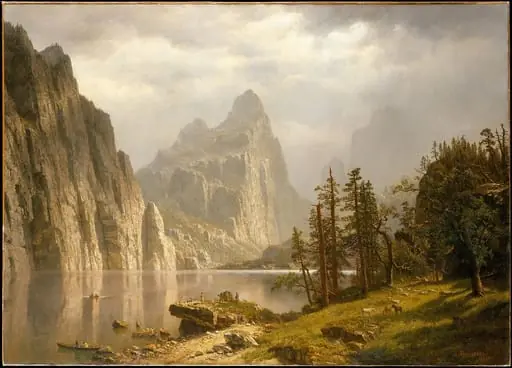
Mount Starr King, Yosemite is a painting by Albert Bierstadt, created in his New York studio from sketches made during his 1863 summer visit to Yosemite Valley, California. The work depicts the distant granite peak of Mount Starr King within a serene landscape.
Subject & Meaning
The painting showcases Mount Starr King, a Yosemite Valley landmark, set amidst trees and a lake. The inclusion of two Native Americans with a packhorse subtly acknowledges the region's long history of Indigenous habitation, preceding its preservation as public land.
Technique & Style
Bierstadt's technique transformed on-site sketches into a majestic, studio-crafted painting, characteristic of his ability to evoke the American West's grandeur for Eastern audiences.
History & Provenance
Created circa 1863-1864, this painting coincided with the early conservation movement. In 1864, Yosemite was preserved as public property under President Lincoln, later becoming a national park in 1890.
Context
The painting reflects the complex history of Yosemite, where Indigenous peoples were dispossessed of their ancestral lands despite millennia of presence. Descendants of the seven affected nations continued to reside in neighboring areas.
Legacy
Bierstadt's Yosemite paintings, including this work, contributed to the growing appreciation of the American West's natural beauty, influencing early environmental preservation efforts.
Artist & collection