Artwork
Bodensee (Lake Constance)
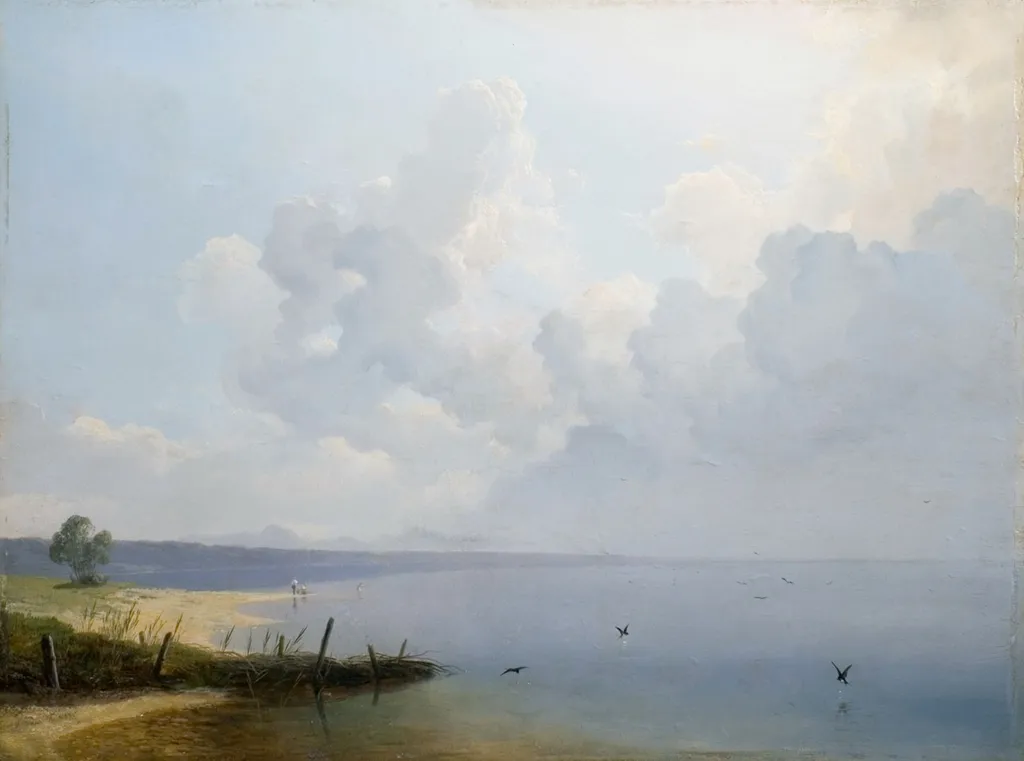
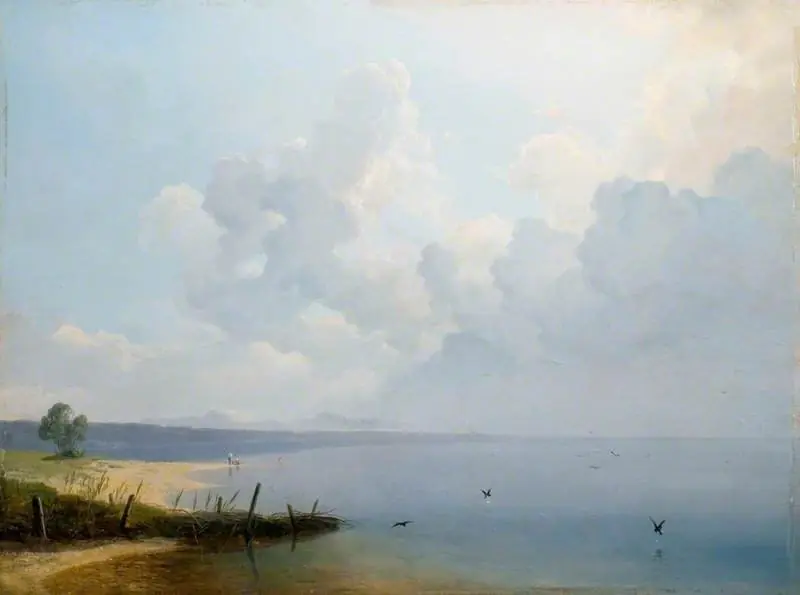
Bodensee (Lake Constance) is an unspecified painting by the German Romanticist artist Albert Zimmermann. It dates from 1868 and is held in the collection of the Victoria and Albert Museum.
About this work
Overview
Painted in 1868 by Albert Zimmermann, *Bodensee (Lake Constance)* is a landscape that captures the quiet expanse of the lake in southern Germany.
Painted in 1868 by Albert Zimmermann, *Bodensee (Lake Constance)* is a landscape that captures the quiet expanse of the lake in southern Germany. Though not widely known today, Zimmermann was active in 19th-century German art circles, trained at Dresden and Munich academies, and came from a family of artists. The work aligns with the enduring interest in nature that characterized German Romantic painting, though it avoids dramatic flourishes in favor of restrained observation.
Subject & Meaning
The painting presents Lake Constance as a still, reflective surface, framed by modest foreground elements: a grassy bank, scattered trees, and a low wooden fence. A distant boat and a few birds suggest quiet human presence and natural movement. The scene conveys no narrative or symbolic allegory; instead, its meaning lies in the contemplative mood it evokes — an invitation to stillness, not grandeur, reflecting a personal, inward turn common in later Romantic landscape traditions.
Technique & Style
Zimmermann employed soft, blended brushwork to render the water and sky as seamless extensions of one another. The palette is subdued, dominated by pale blues, muted greens, and soft grays, avoiding vivid contrasts. Details like the fence and tree branches are rendered with precision but without emphasis, contributing to an overall sense of harmony. The composition is balanced and shallow, guiding the eye gently from foreground to horizon without dramatic perspective.
History & Provenance
Created in 1868, the painting emerged during a period when German artists increasingly turned to regional landscapes as subjects of personal reflection. Zimmermann, though trained in academic traditions, favored intimate scenes over monumental themes. The work’s early ownership is undocumented, and it has not been widely exhibited in major institutions. Its survival suggests it remained in private hands, possibly within the artist’s network or among regional collectors.
Context
In the mid-19th century, German Romantic landscape painting had evolved from its earlier sublime intensity toward quieter, more domesticated views. Zimmermann’s *Bodensee* reflects this shift, aligning with contemporaries who found meaning in unassuming natural settings. Unlike the Alpine dramas of Caspar David Friedrich, this work offers no spiritual tension — only the quiet rhythm of water, sky, and shore, resonating with a growing urban desire for peaceful retreat.
Legacy
Zimmermann’s *Bodensee* remains a modest example of 19th-century German landscape painting, not widely reproduced or studied. It contributes to a broader understanding of how Romantic ideals persisted in quieter forms after their peak. While overshadowed by more famous contemporaries, the painting preserves a sensitive, unembellished vision of nature that reflects the personal, rather than the public, face of German artistic sentiment in the late 1800s.
Artist & collection
Artist
August Albert Zimmermann (born Zittau, September 20, 1808 - died Munich, October 18, 1888) was a German painter.