Artwork
Damaskus
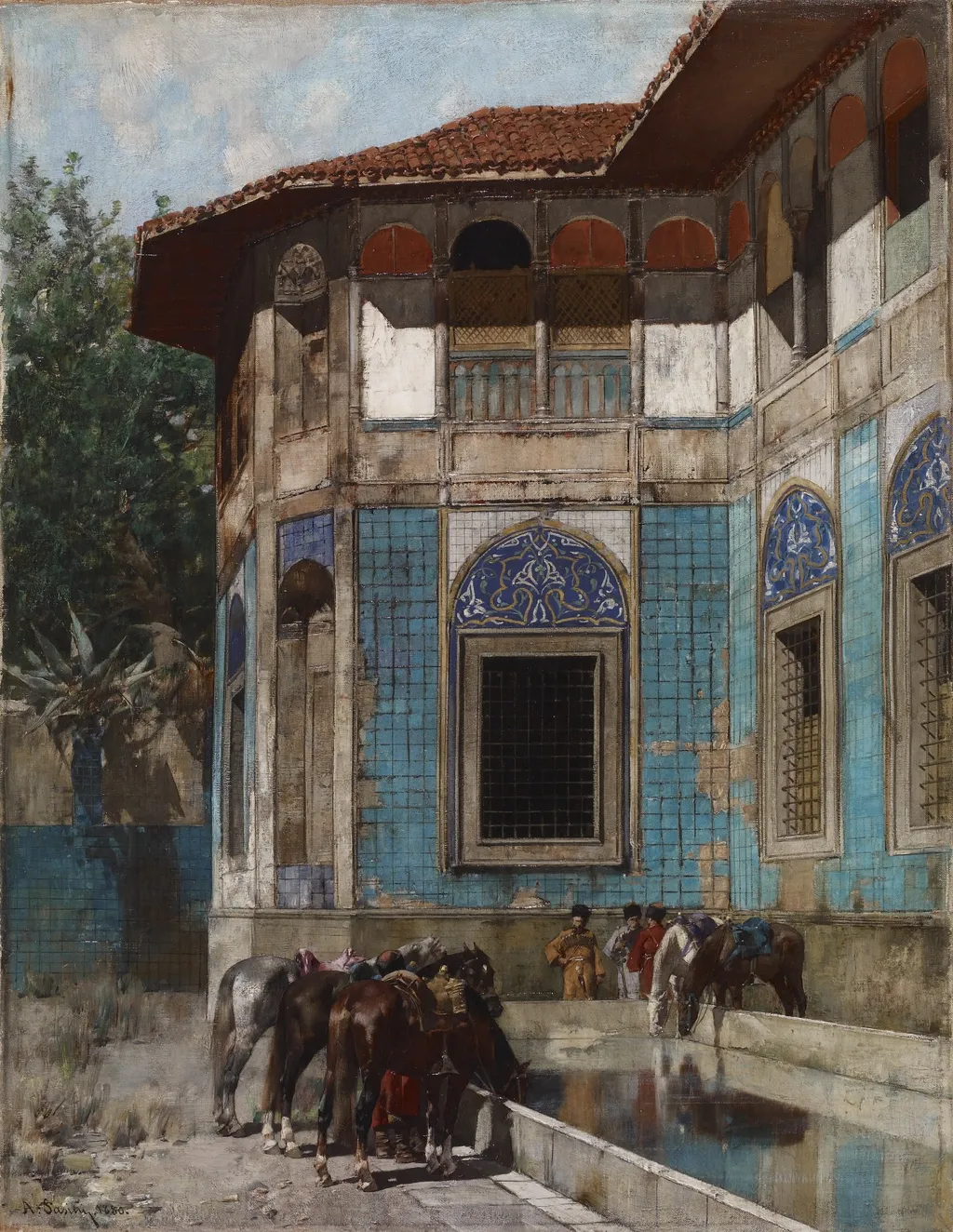
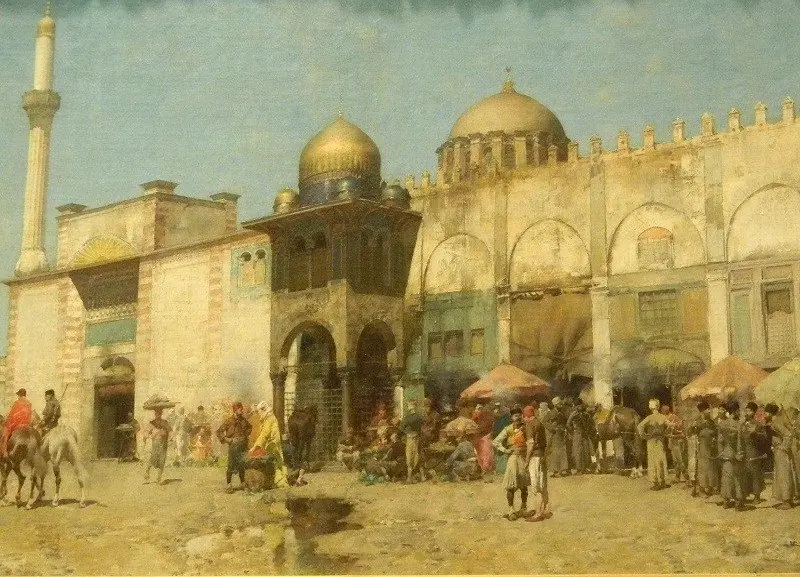
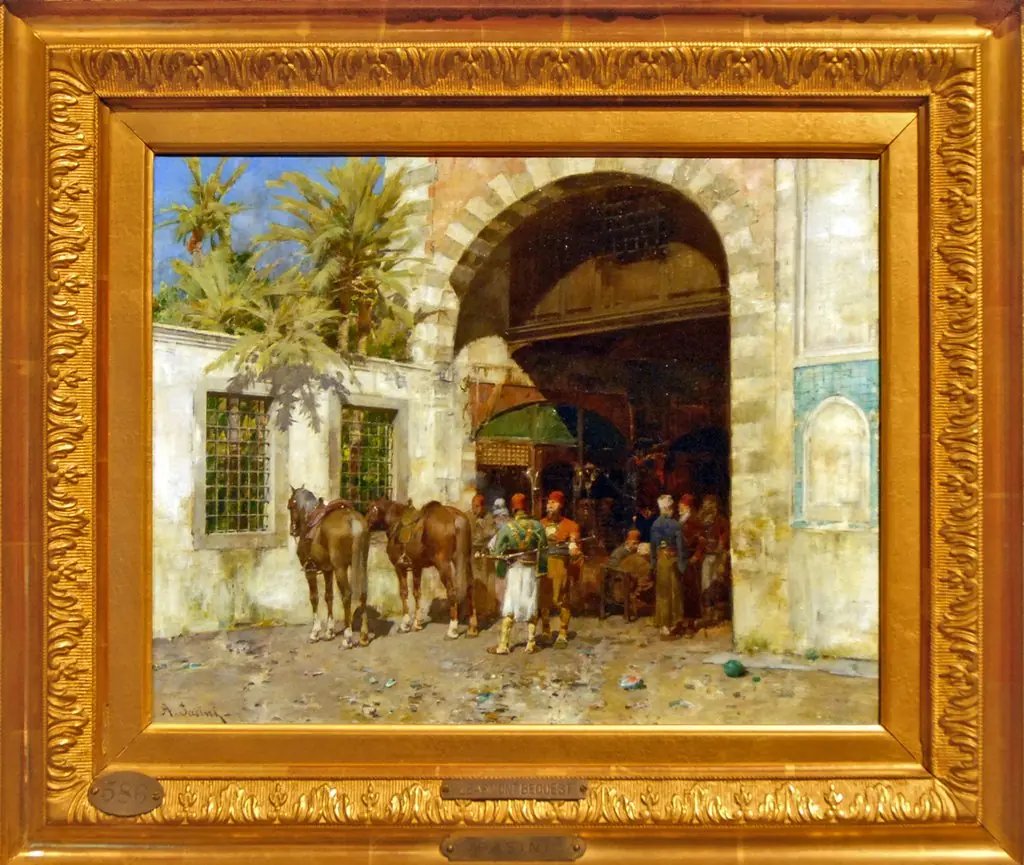
Damaskus is an oil painting by the Orientalist artist Alberto Pasini. It dates from 1890 and is held in the collection of the Walters Art Museum.
About this work
Overview
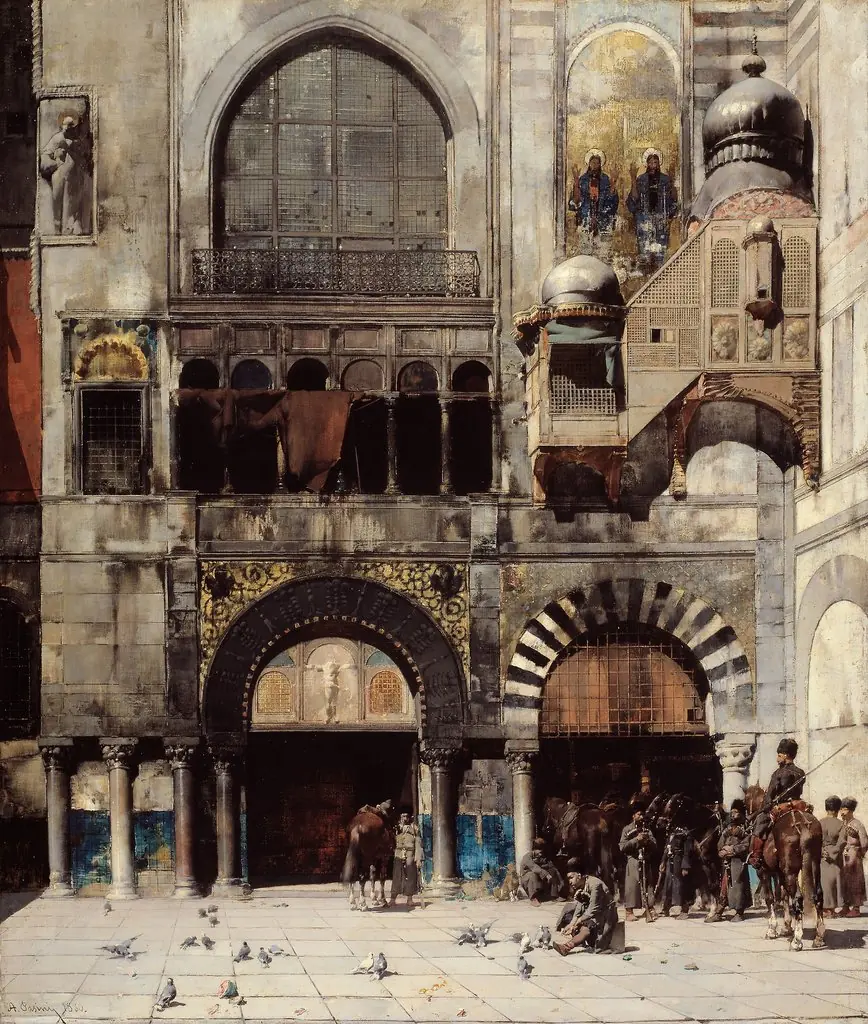
Alberto Pasini’s 1890 oil on canvas, titled “Damascus,” depicts an elaborate urban façade rendered with meticulous realism. The composition centers on a richly tiled building, highlighted by a blue‑and‑gold window ornament and a balcony railing, while figures and tethered horses occupy the foreground. The work is part of the Walters Art Museum’s collection.
Subject & Meaning
The scene presents a bustling street in Damascus, emphasizing the interaction between architecture and daily life. The gathering of pedestrians and the presence of horses suggest a moment of communal activity, inviting viewers to consider the social rhythms of a historic Middle‑Eastern city.
Technique & Style
Pasini employs a restrained palette of blues, browns and tans, allowing the intricate details of the tiled façade and the textures of clothing and animal hide to emerge. His precise brushwork and careful modeling create a convincing three‑dimensional space, characteristic of his realist approach to orientalist subjects.
History & Provenance
Created in 1890, the painting entered the Walters Art Museum’s holdings through acquisition in the early twentieth century, though the exact path of ownership prior to that remains undocumented. It has been displayed as part of the museum’s European and Orientalist collections.
Context
During the late nineteenth century, European artists like Pasini were drawn to the exotic allure of the Ottoman Empire, producing works that combined travelogue observation with studio refinement. “Damascus” reflects this trend, offering a Western perspective on an Eastern urban environment while adhering to academic standards of the period.
Own this work as a print
Artist & collection

Artist
Alberto Pasini was an Italian painter. He is best known for depicting Orientalist subjects in a late-Romantic style.