Artwork
Christ Crowned with Thorns
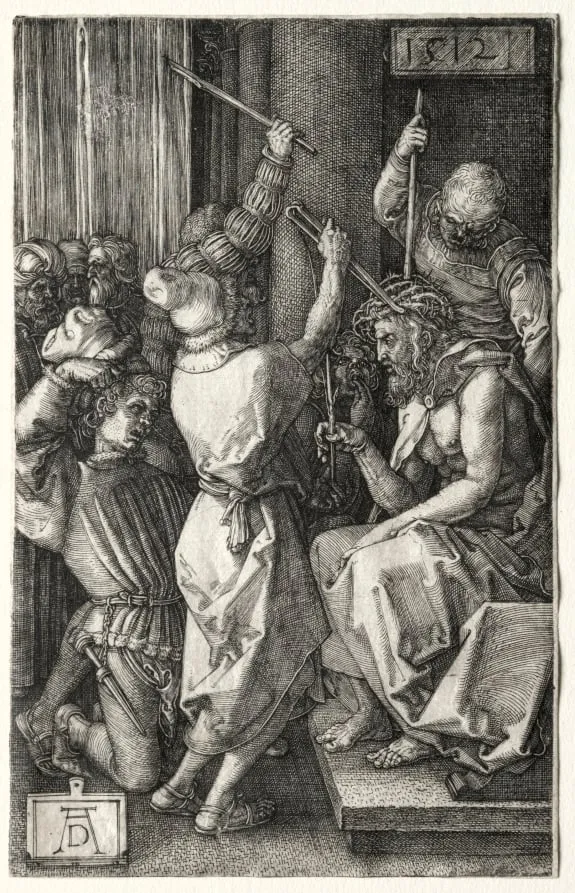
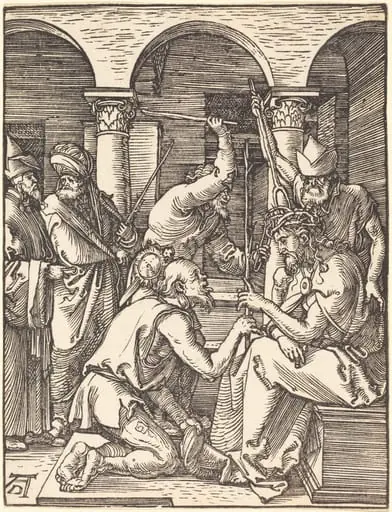
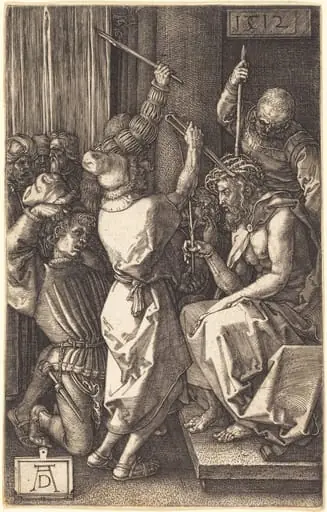
Christ Crowned with Thorns is a print by the Renaissance artist Albrecht Dürer. It dates from 1512 and is held in the collection of the Cleveland Museum of Art.
About this work
Overview
His technical precision and emotional depth distinguished his work from contemporaries and extended his influence beyond Germany.
Created in 1512, this print by Albrecht Dürer portrays the moment Christ is crowned with thorns. Executed in engraving, it belongs to a series of devotional images produced during the later phase of his career. Dürer, a Nuremberg-born artist, was instrumental in elevating printmaking to a respected art form in Northern Europe. His technical precision and emotional depth distinguished his work from contemporaries and extended his influence beyond Germany.
Subject & Meaning
The scene captures Christ seated on a stone step, bound hands behind his back, wearing a crown of thorns. Surrounding figures, some menacing, others passive, emphasize his isolation and suffering. The composition avoids overt spectacle, focusing instead on quiet anguish. This depiction invites contemplation of sacrifice and human cruelty, aligning with devotional practices that encouraged personal meditation on Christ’s Passion.
Technique & Style
Dürer employed fine, controlled lines to model form and texture, using engraving’s capacity for detail to render fabric, skin, and thorns with striking clarity. Strong contrasts of light and shadow—chiaroscuro—heighten the emotional gravity, isolating Christ in a pool of illumination against a near-black background. The spatial depth is suggested through subtle gradations, not perspective, reflecting a shift toward Italianate naturalism in his later style.
History & Provenance
The print was made during Dürer’s mature period, following his travels to Italy, where he encountered works by Raphael and Leonardo. Though not commissioned for a specific altar, it circulated widely among collectors and religious communities. Its survival in multiple impressions indicates high demand. No single original owner is documented, but it was likely owned by educated patrons interested in theological and artistic innovation.
Context
In early 16th-century Germany, devotional prints served as accessible tools for private piety. Dürer’s work responded to a growing market for images that combined spiritual intensity with artistic sophistication. His engagement with Italian ideals—harmony, anatomy, emotional restraint—reflected broader cultural exchanges. This print stands as part of a quiet revolution in religious imagery, moving away from ornate altarpieces toward intimate, portable reflections.
Legacy
Dürer’s engraving influenced generations of Northern European artists through its emotional restraint and technical mastery. Its widespread distribution helped standardize visual narratives of the Passion across regions. Later collectors and scholars recognized it as a benchmark in printmaking, not for spectacle, but for its capacity to convey profound human and spiritual tension through minimal means.
Artist & collection
Artist
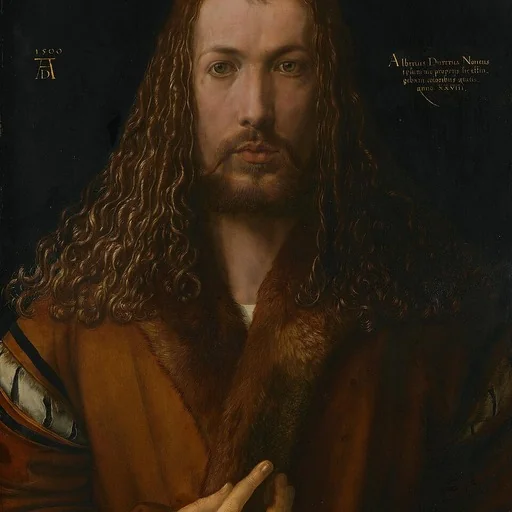
Albrecht Dürer spent his life in Nuremberg, a busy German city where artists traded prints like currency.

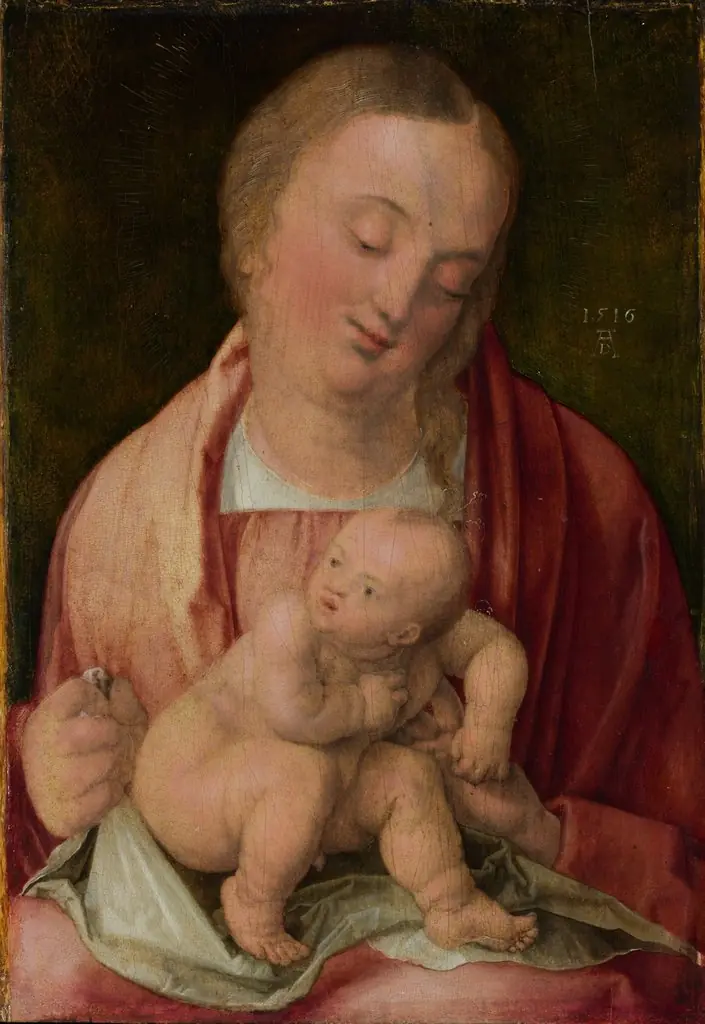
![Madonna and Child [obverse], by Albrecht Dürer](https://artifactworldgallery.com/img/albrecht-durer--madonna-and-child-obverse--d7b8ebf05d22ebe5-w320.webp)
![Lot and His Daughters [reverse], by Albrecht Dürer](https://artifactworldgallery.com/img/albrecht-durer--lot-and-his-daughters-reverse--b4ebf9b282faa17a-w320.webp)