Artwork
Holy Family with the Butterfly
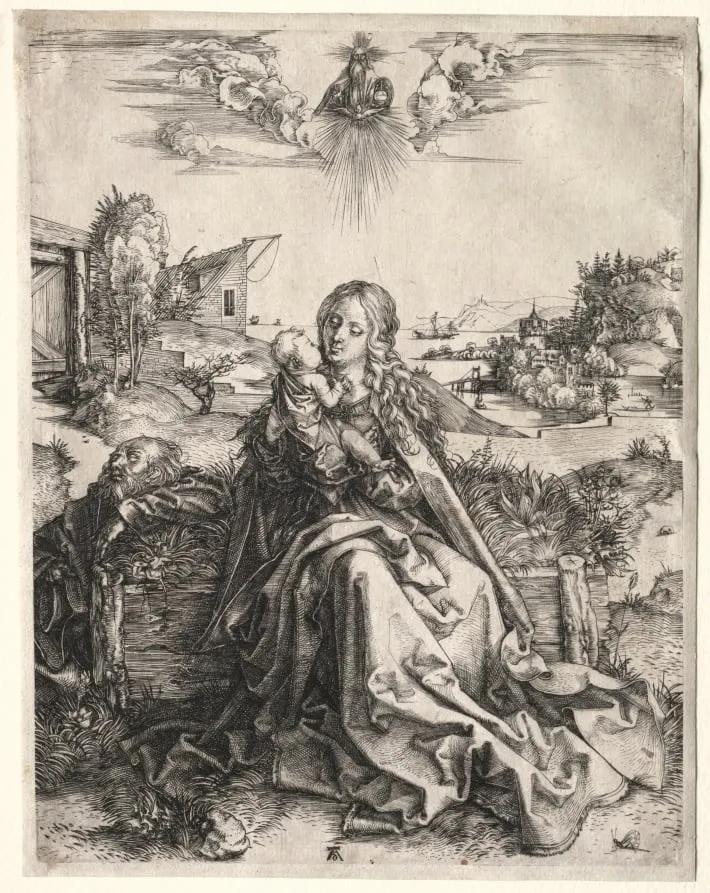
Holy Family with the Butterfly is a print by the Renaissance artist Albrecht Dürer. It dates from 1495 and is held in the collection of the Cleveland Museum of Art.
About this work
This painting shows the Holy Family with a butterfly.
The scene is set in an enclosed garden, which was a traditional setting for the Virgin and Child. This setting alludes to the Virgin's purity and sacred role as the mother of the Messiah.
You can learn more about this style by looking at the work of artist: Albrecht Dürer (German, 1471–1528)
Overview
It depicts the Virgin Mary seated with the Christ Child in a walled garden, a conventional setting symbolizing her purity.
This engraving by Albrecht Dürer is among his earliest treatments of the Holy Family, created around 1495. It depicts the Virgin Mary seated with the Christ Child in a walled garden, a conventional setting symbolizing her purity. A butterfly hovers near them, and above, the Holy Spirit appears as a dove. Joseph sleeps nearby, introducing a quiet, human moment into the sacred scene. The work marks the beginning of Dürer’s sustained exploration of this subject through printmaking.
Subject & Meaning
The enclosed garden, or hortus conclusus, was a medieval symbol of Mary’s virginity and spiritual seclusion. The butterfly, though uncommon in such compositions, may suggest resurrection or the soul’s transformation, reinforcing the theological significance of Christ’s future sacrifice. The dove above signifies divine presence, while Joseph’s slumber grounds the scene in domestic realism, balancing the sacred with the ordinary.
Technique & Style
Dürer’s early engraving technique shows the precision of his draftsmanship but also his developing mastery of the medium. The lines are fine and controlled, yet Joseph’s proportions appear slightly off, indicating his relative inexperience with human anatomy in this format. The texture of the grass and the delicate rendering of the butterfly reveal his attention to natural detail, even as compositional balance remains tentative.
History & Provenance
Created during Dürer’s formative years in Nuremberg, this print reflects his early engagement with religious imagery for a growing market of private collectors. It predates his Italian travels and the stylistic refinements that followed. No specific early ownership records are widely documented, but the print circulated among Northern European patrons interested in devotional art and emerging print culture.
Context
In late 15th-century Germany, devotional prints were increasingly accessible to middle-class households. Dürer’s choice of the Holy Family theme aligned with popular piety, while his use of engraving—then a relatively new medium for fine art—positioned him at the forefront of artistic innovation. The inclusion of symbolic elements like the butterfly and the enclosed garden drew from both theological tradition and contemporary visual culture.
Legacy
This engraving initiated a lifelong thematic exploration for Dürer, who revisited the Holy Family in multiple media over decades. Its modest scale and intimate tone contrast with his later, more monumental works, yet it remains a key indicator of his technical evolution. The print’s blend of symbolism and realism influenced subsequent Northern Renaissance artists and helped establish engraving as a serious artistic medium.
Artist & collection
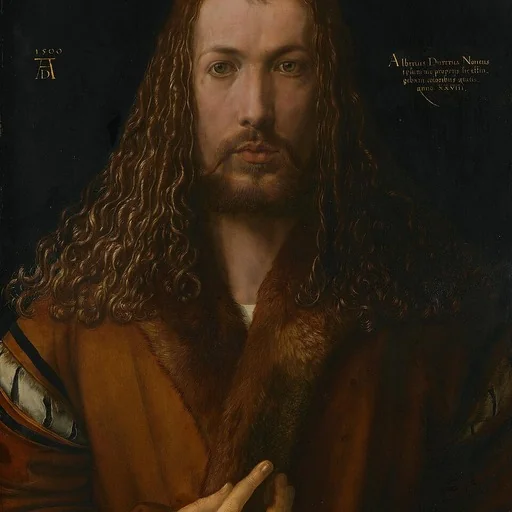
Artist
Albrecht Dürer spent his life in Nuremberg, a busy German city where artists traded prints like currency.

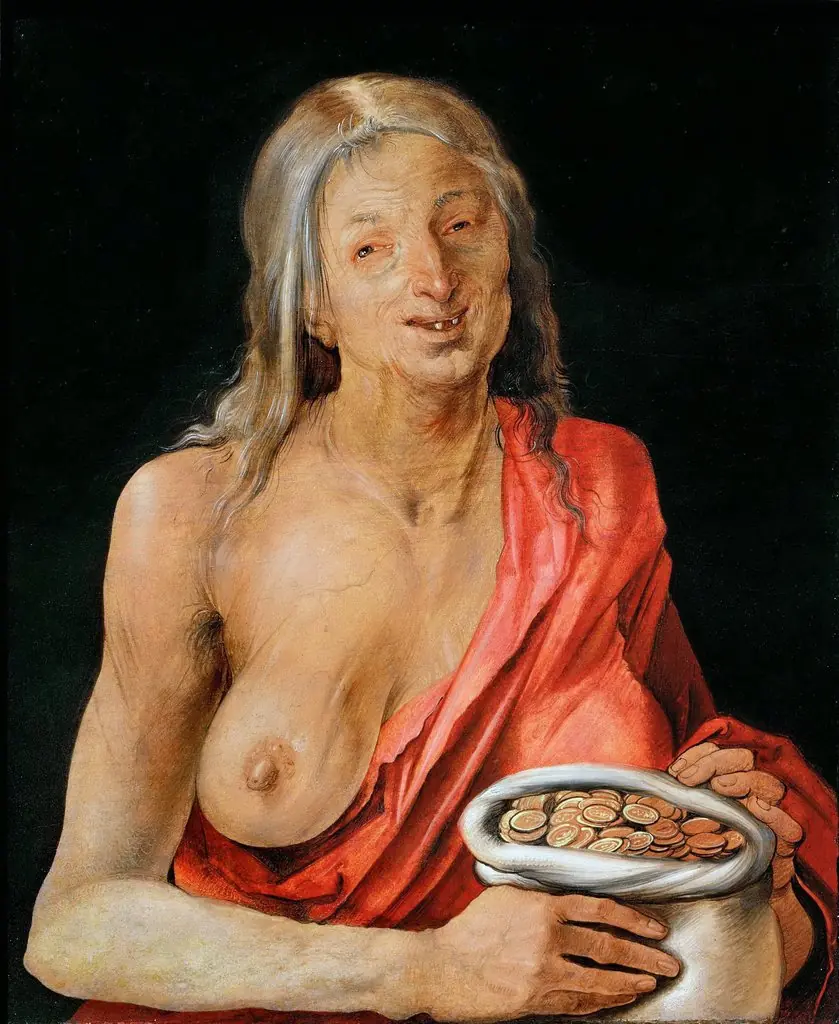
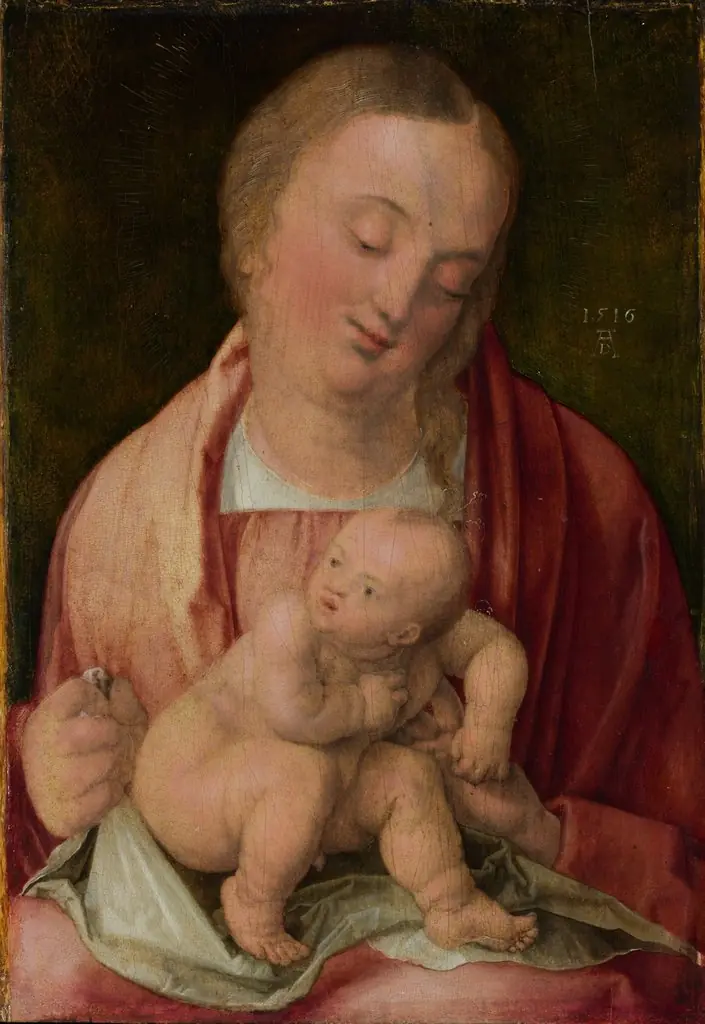
![Madonna and Child [obverse], by Albrecht Dürer](https://artifactworldgallery.com/img/albrecht-durer--madonna-and-child-obverse--d7b8ebf05d22ebe5-w320.webp)
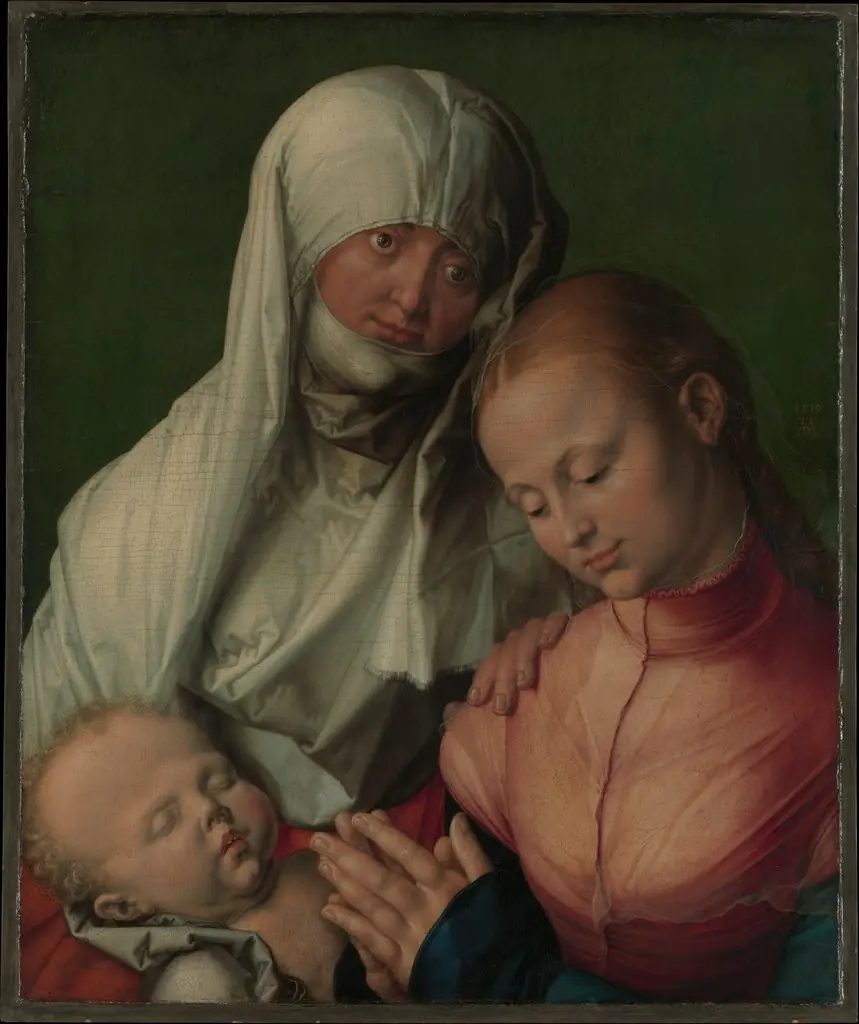
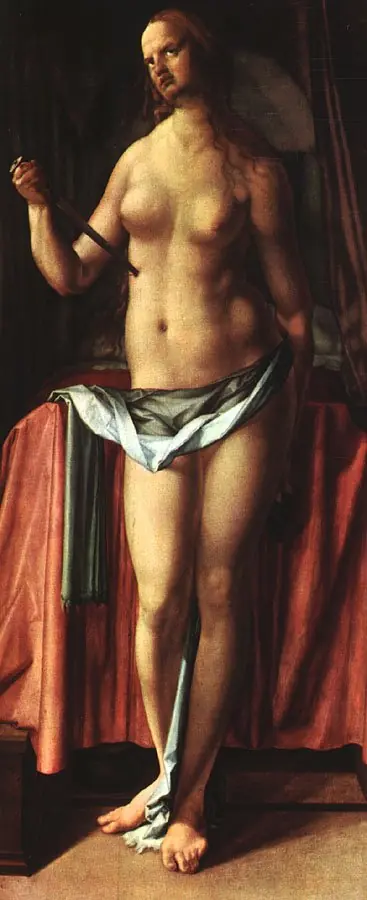
![Lot and His Daughters [reverse], by Albrecht Dürer](https://artifactworldgallery.com/img/albrecht-durer--lot-and-his-daughters-reverse--b4ebf9b282faa17a-w320.webp)
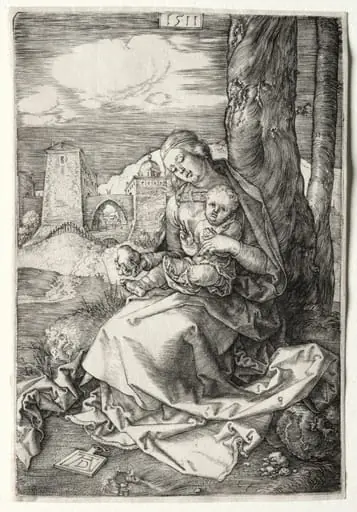 The Virgin and Child with the Pear
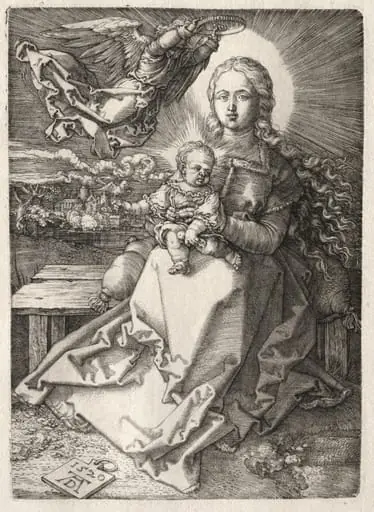 Virgin Crowned by an Angel
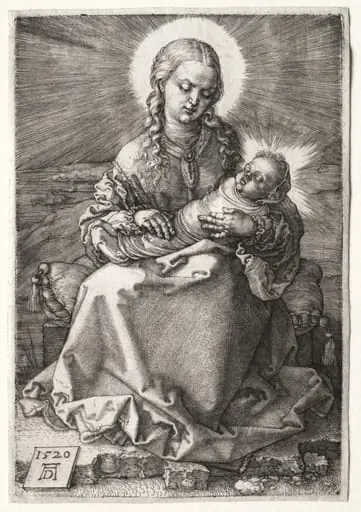 The Virgin with the Swaddled Child
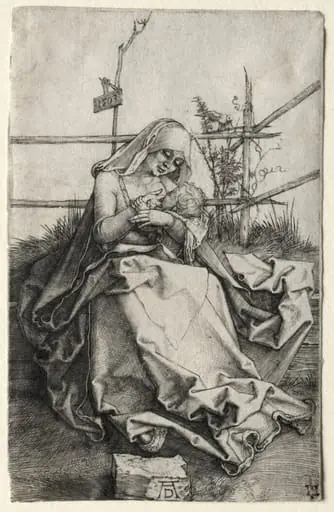 The Virgin and Child on a Grassy Bench
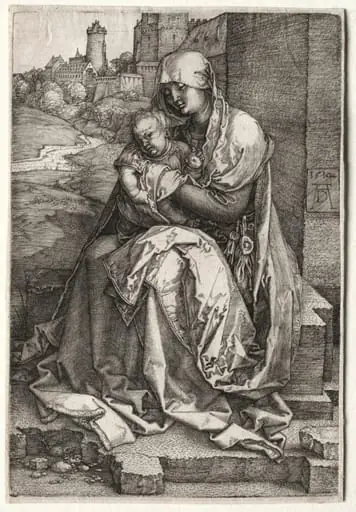 The Virgin and Child Seated by the Wall
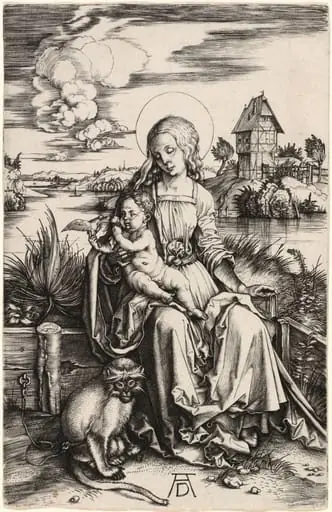 The Virgin and Child with the Monkey
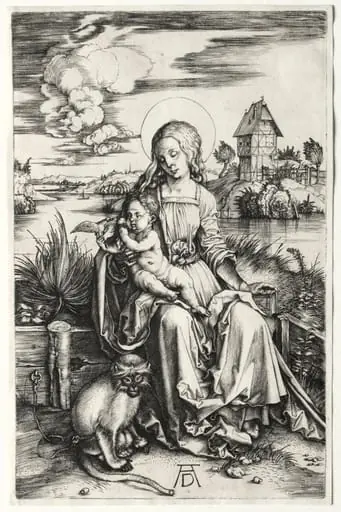 The Virgin and Child with a Monkey
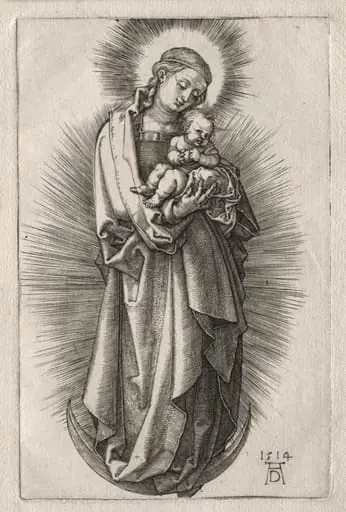 The Virgin with Hairband on a Crescent Moon
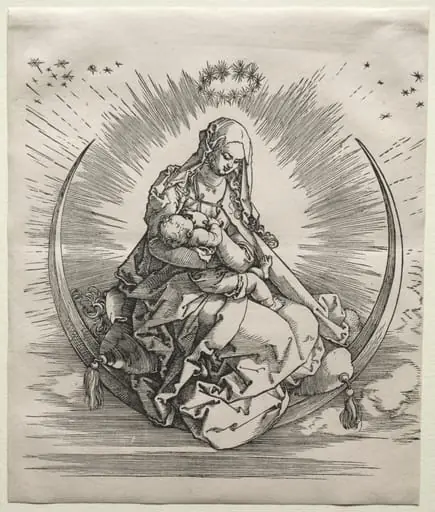 The Virgin on a Crescent