Artwork
Felix Claessens, the painter's uncle
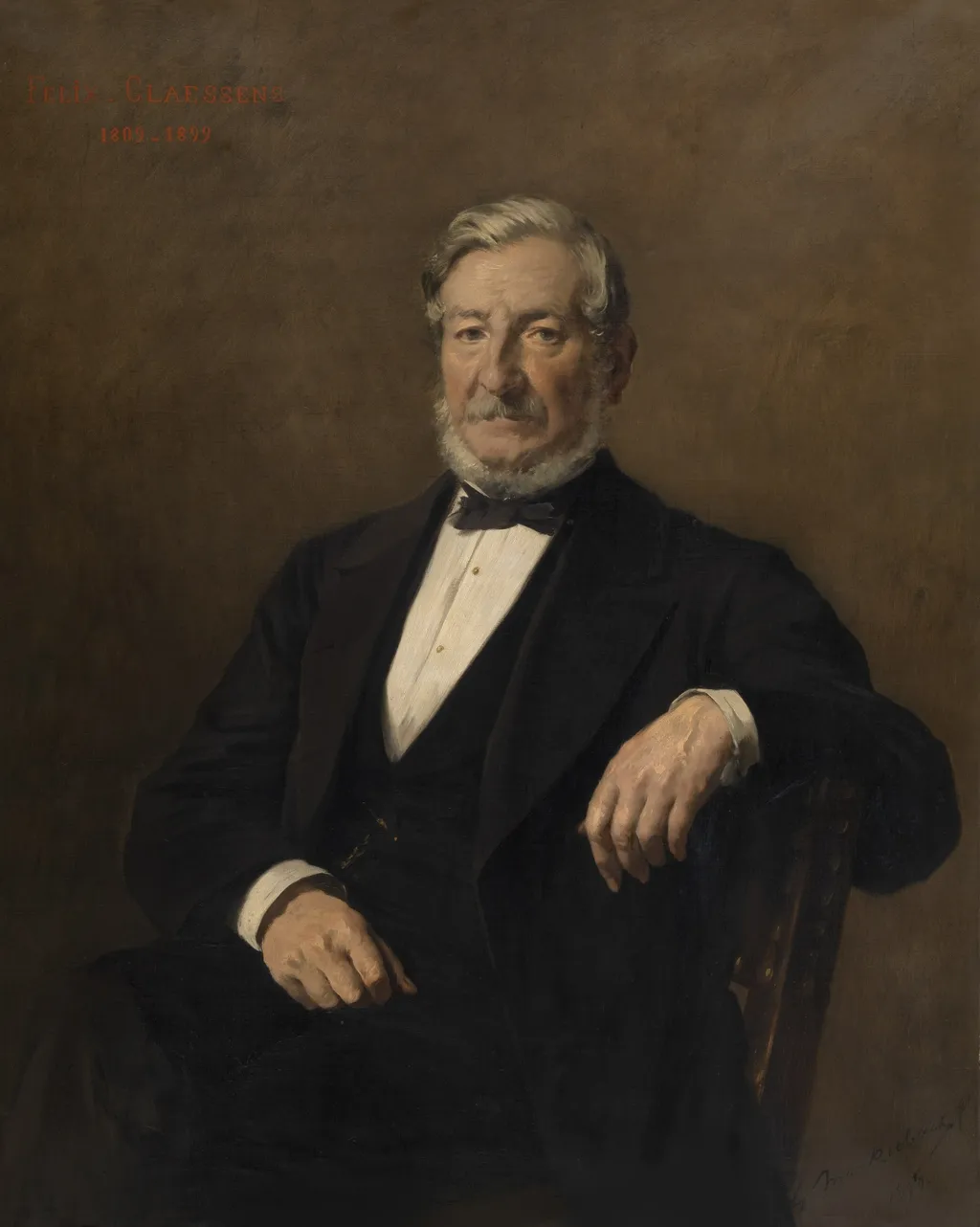
Felix Claessens, the painter's uncle is an oil painting by the Impressionist artist Alexandre Markelbach. It dates from 1890 and is held in the collection of the Royal Museum of Fine Arts Antwerp.
About this work
This painting depicts a man with short, gray hair and a beard, dressed in a black suit with a white shirt and black bow tie.
This painting depicts a man with short, gray hair and a beard, dressed in a black suit with a white shirt and black bow tie. He is seated in a chair, with his left arm resting on the armrest and his right hand placed on his lap.
The man's attire and hairstyle suggest that the painting was created in the 19th century. The artist's use of oil paint adds depth and texture to the image.
To learn more about the artist's techniques and style, explore the works of Alexandre Markelbach.
Overview
Alexandre Markelbach’s oil portrait, titled “Felix Claessens, the painter’s uncle,” was executed in 1890. The work is part of the collection of the Royal Museum of Fine Arts in Antwerp and presents a seated gentleman in a formal nineteenth‑century outfit, rendered with the characteristic depth of oil paint.
Subject & Meaning
The sitter is a middle‑aged man with short, greying hair and a neatly trimmed beard. He wears a black suit, white shirt and black bow tie, and is positioned in a chair with his left arm on the armrest and his right hand resting on his lap, conveying a calm, dignified presence.
Technique & Style
Markelbach employed traditional oil techniques, building layers to achieve subtle modelling of flesh and fabric. The palette is restrained, emphasizing tonal contrast between the dark clothing and the lighter background, while the brushwork provides texture to the hair and suit, enhancing the three‑dimensional effect.
History & Provenance
Created in 1890, the portrait entered the Royal Museum of Fine Arts Antwerp’s holdings, where it remains on display. Its provenance traces directly to the museum’s acquisition records, confirming its continuous public ownership since the early twentieth century.
Own this work as a print
Artist & collection

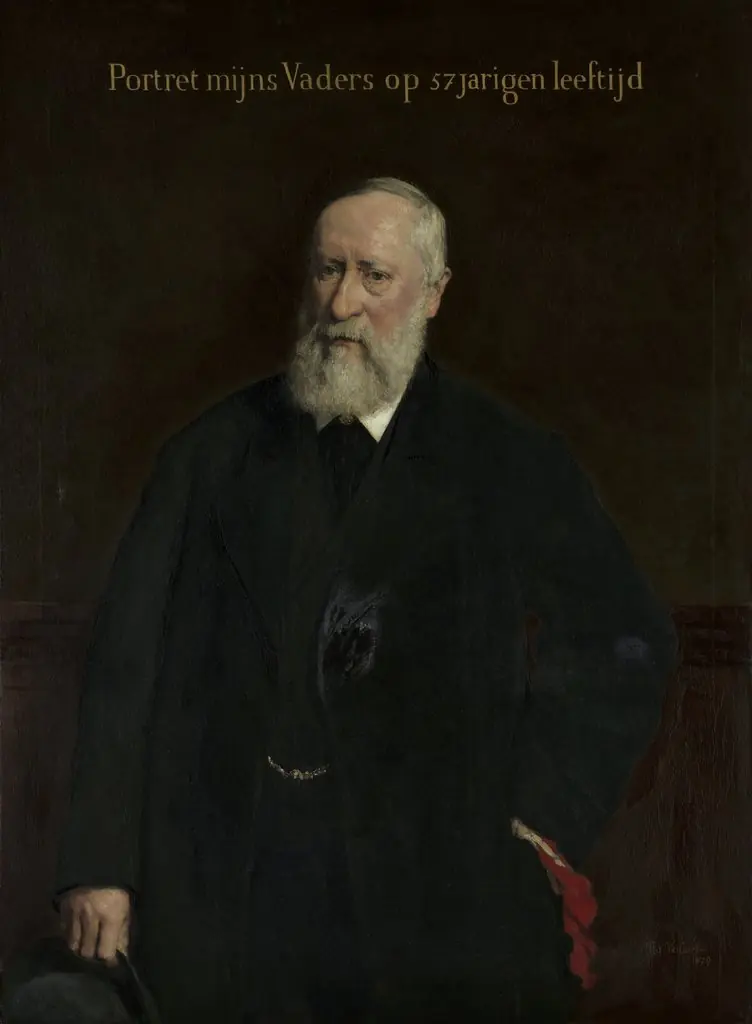 Jan Verhaert, the Artist's Father
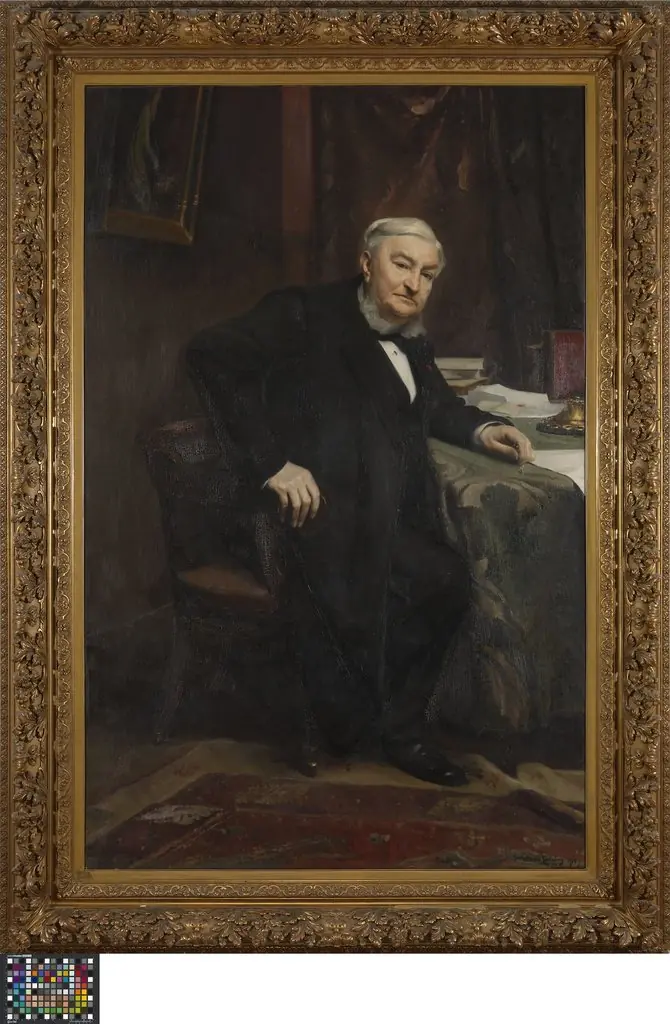 Portret van Auguste Beernaert
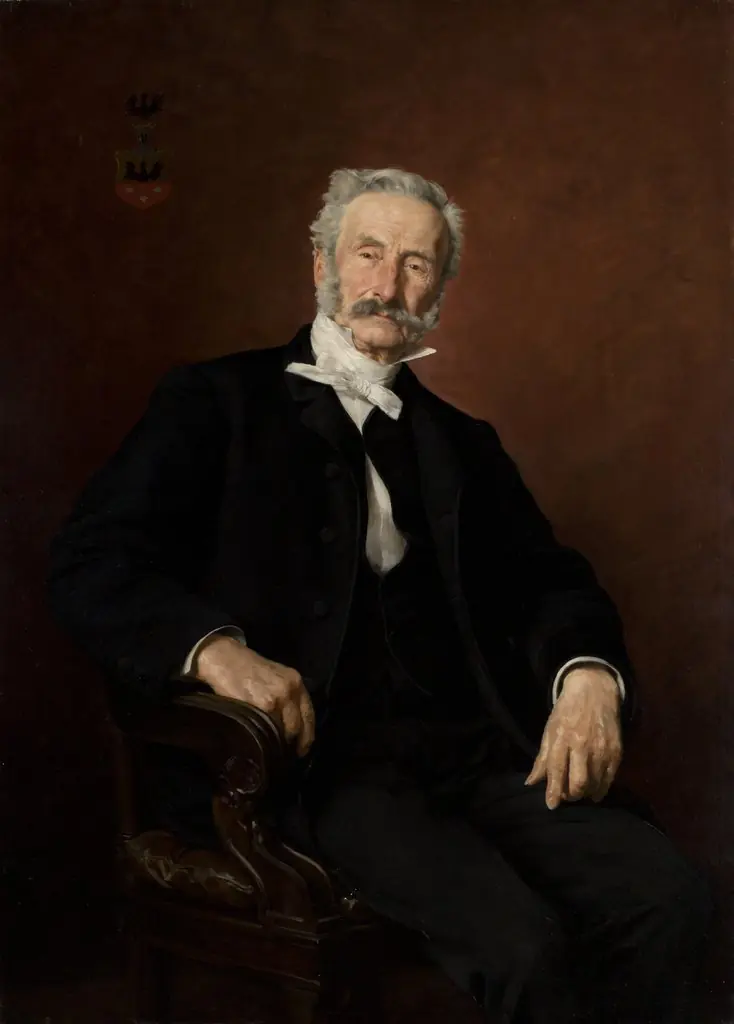 Portrait of Paweł Popiel
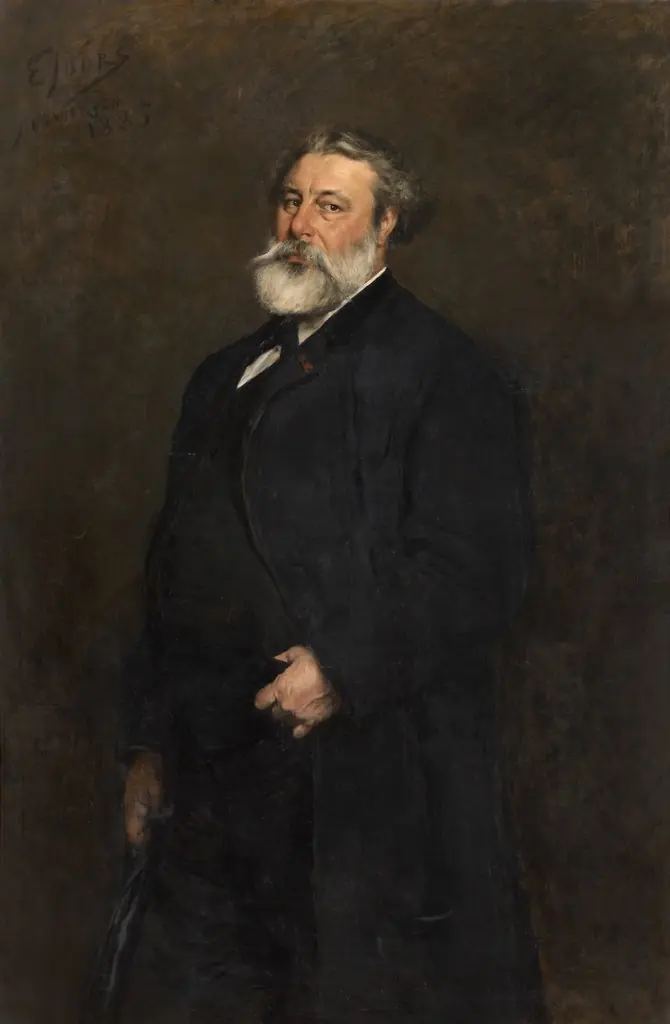 The Painter Henri François Schaefels
 Untitled
 George Cotton Smith
 Willem Steelink II (1856-1928). Graficus
 Præsten Gjerløv Christian Krog Schiøler
 Portrait of the writer Y.F. Samarin
 Præsten Gjerløv Christian Krog Schiøler
 The Poet Eduard von Bauernfeld
 Portrait of Isaac D. Fletcher