Artwork
I Puritani
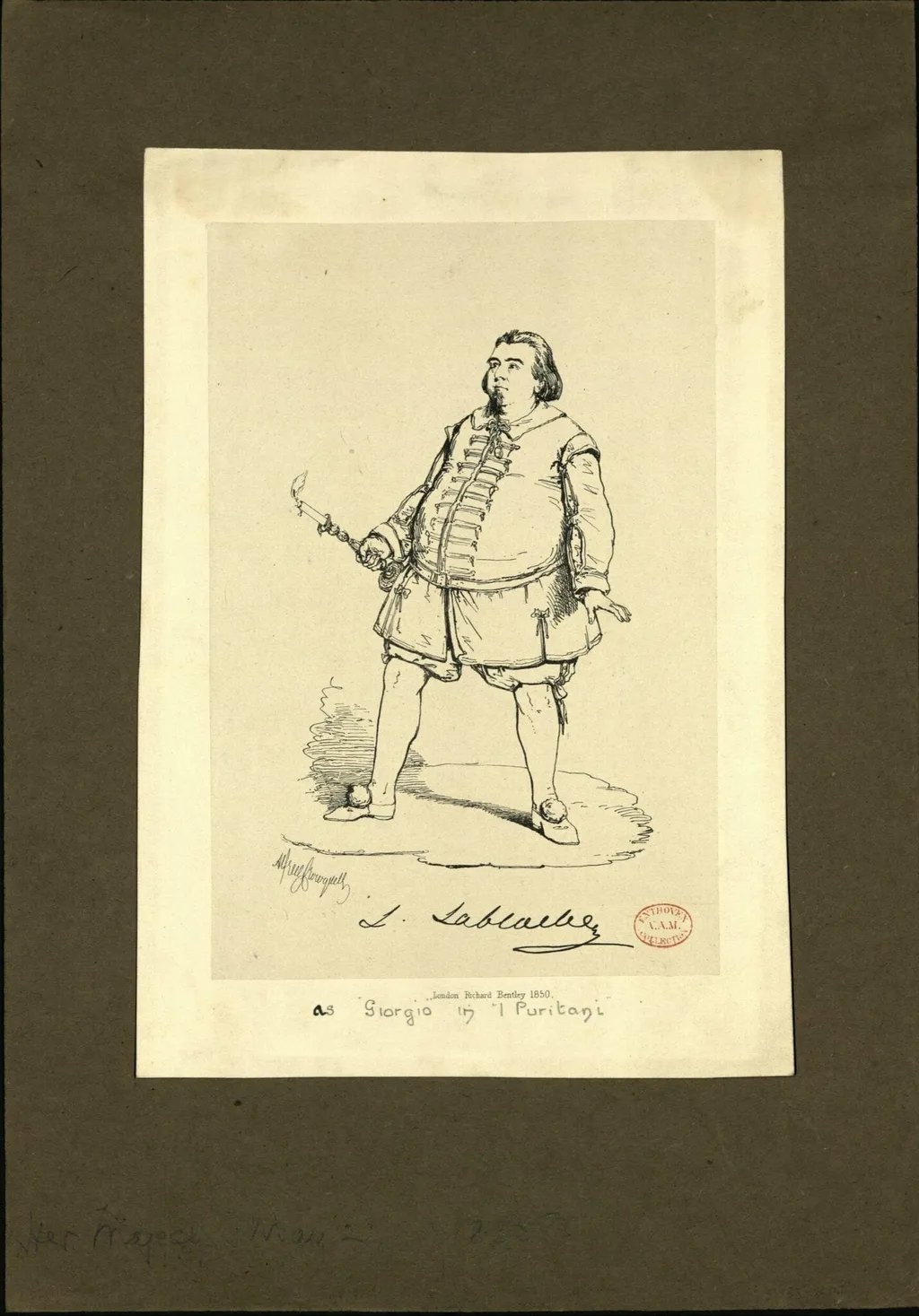
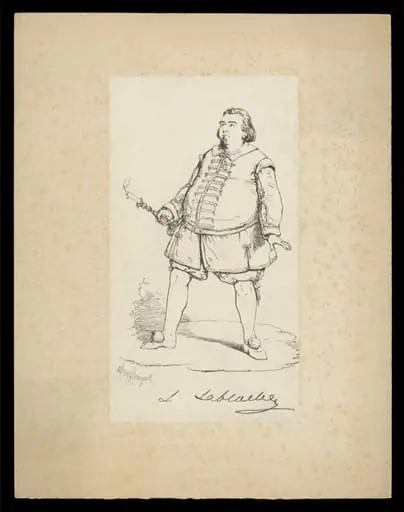
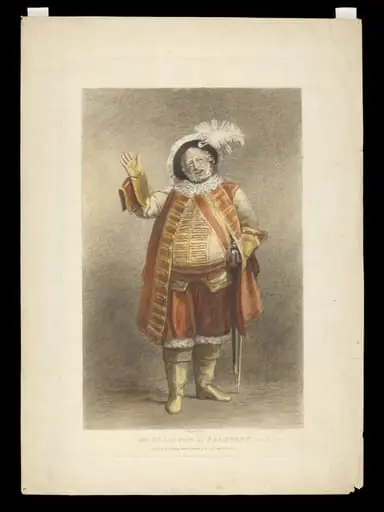
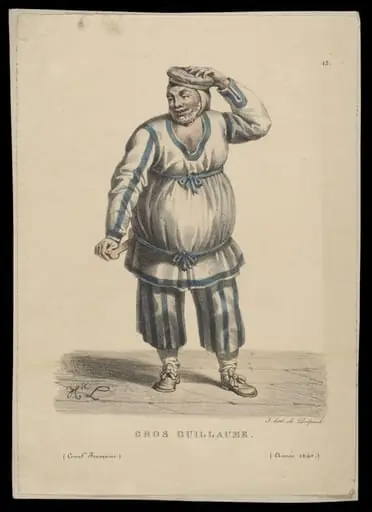
I Puritani is a print by the Impressionist artist Alfred Crowquill. It dates from 1850 and is held in the collection of the Victoria and Albert Museum.
About this work
This print shows a singer from the opera *I Puritani*. It’s by Alfred Crowquill, made in 1850 as a print, mixing Impressionism and Realism.
Crowquill drew Luigi Lablache, a famous Italian bass singer who often performed in London. Lablache even gave singing lessons to Queen Victoria.
His London performances started in 1830 and ran every summer for years. See more prints by Alfred Crowquill.
Overview
This 1850 print by Alfred Crowquill depicts Luigi Lablache, a celebrated Italian bass singer known for his commanding stage presence.
This 1850 print by Alfred Crowquill depicts Luigi Lablache, a celebrated Italian bass singer known for his commanding stage presence. Created as a reproductive print, it captures Lablache in character from the opera I Puritani, reflecting his prominence in mid-19th-century British musical life. The work blends observational detail with loose, expressive lines, characteristic of Crowquill’s approach to portraiture.
Subject & Meaning
Lablache is portrayed not as himself but as a character from Bellini’s I Puritani, emphasizing his association with operatic roles rather than personal identity. The image underscores his status as a leading interpreter of bass parts in Italian opera, particularly in London, where his performances were central to the city’s cultural scene. His connection to the royal court adds a layer of social significance to his public image.
Technique & Style
Crowquill employed a mixed approach, combining precise facial rendering with fluid, sketch-like lines in the costume and background. The print’s tonal contrasts and textured brushwork suggest an interest in capturing movement and atmosphere, aligning with emerging realist and impressionist tendencies in graphic art. The result is a portrait that feels both immediate and theatrical.
History & Provenance
Lablache first appeared in London in 1830 at the King’s Theatre, performing in Cimarosa’s Il Matrimonio Segreto. He returned annually for summer seasons and became a fixture in the city’s operatic circles. By 1836, he was engaged as a vocal instructor to Queen Victoria, a rare honor that cemented his reputation. This print, made fourteen years after his royal appointment, reflects his enduring public visibility.
Context
In the 1830s and 1840s, London’s opera houses were vital cultural institutions, attracting European stars and aristocratic audiences. Lablache’s frequent appearances and royal patronage placed him at the intersection of high art and elite society. Crowquill’s print, produced during a period of growing interest in theatrical portraiture, served both as documentation and as a commodity for music lovers.
Legacy
Though Lablache’s recordings do not survive, his influence endured through his students and the many prints and engravings made of him. Crowquill’s image contributes to a visual archive of 19th-century opera, preserving the physicality and presence of a performer whose voice shaped British musical taste. The print remains a testament to the cultural weight carried by operatic stars of the era.
Artist & collection

Artist
Alfred Henry Forrester was an English author, comics artist, illustrator and artist, who was also known under the pseudonym of Alfred Crowquill.