Artwork
Foals in the Paddock
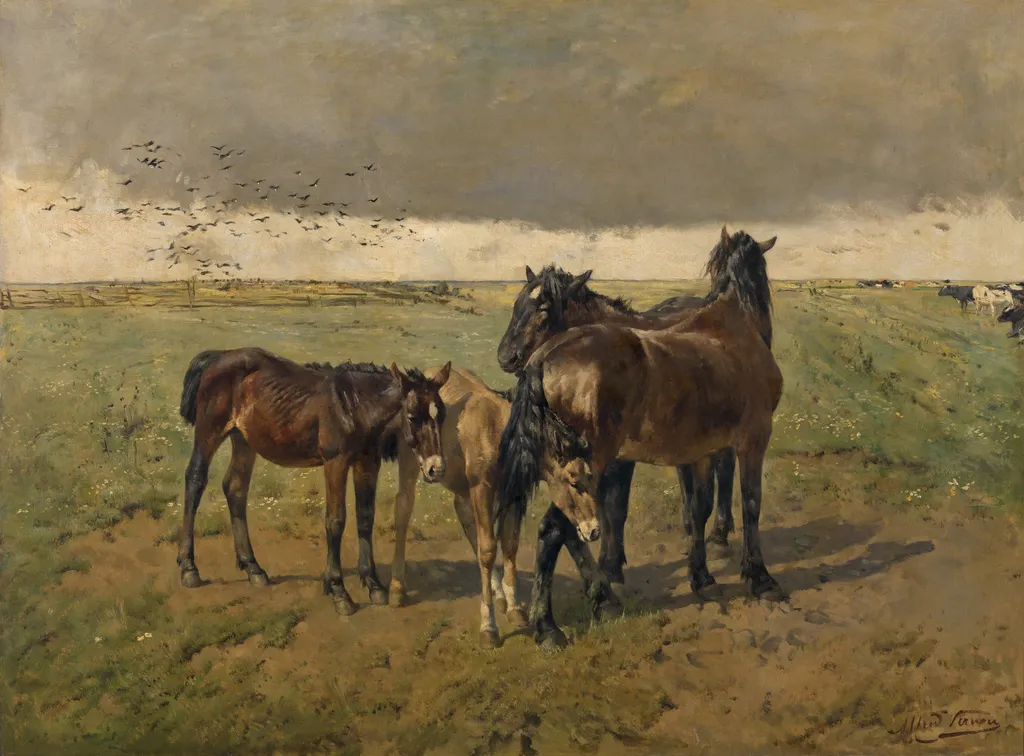
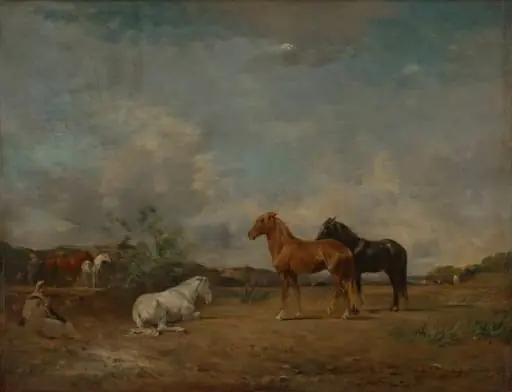
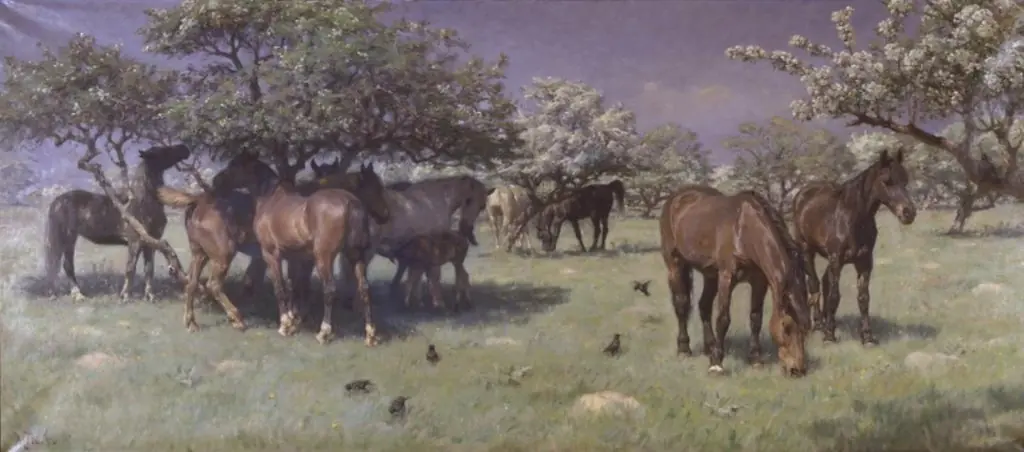
Foals in the Paddock is an oil painting by Alfred Verwee. It dates from 1876 and is held in the collection of the Royal Museum of Fine Arts Antwerp.
About this work
Overview
Painted around 1876, *Foals in the Paddock* is an oil work by Belgian artist Alfred Verwee, who specialized in rural and animal subjects.
Painted around 1876, *Foals in the Paddock* is an oil work by Belgian artist Alfred Verwee, who specialized in rural and animal subjects. The painting captures three young horses in a modest pasture, rendered with a tactile surface that emphasizes texture and natural light. Verwee’s focus on livestock reflects his broader interest in the quiet rhythms of agricultural life during the late 19th century.
Subject & Meaning
The painting portrays three foals—brown and black—in a fenced pasture, one standing slightly ahead of the others. Their postures suggest calm alertness rather than motion, evoking a moment of stillness between play and rest. The inclusion of birds in flight and a distant fence grounds the scene in a real, unidealized landscape, underscoring the animals’ place within a working environment rather than a romanticized setting.
Technique & Style
Verwee employed visible, deliberate brushwork to convey the texture of fur, grass, and sky. The oil medium allows for layered pigments that lend depth to the animals’ coats and the muted tones of the pasture. Loose strokes in the background suggest movement in the clouds and birds, while tighter handling defines the foals’ forms, creating a dynamic contrast between detail and atmosphere.
History & Provenance
The painting’s early ownership is undocumented, but it aligns with Verwee’s known output during the 1870s, a period when he frequently exhibited animal scenes in Brussels and Antwerp. No record of its exhibition or sale during the artist’s lifetime survives, though its style and subject are consistent with works from his mature period, produced after his training at the Royal Academy of Fine Arts in Antwerp.
Context
In late 19th-century Belgium, rural life remained a subject of artistic interest amid industrialization. Verwee’s focus on horses and pastures echoed a broader European trend of documenting agrarian scenes with observational accuracy. Unlike idealized pastoral traditions, his work avoids sentimentality, presenting animals as part of an everyday, unembellished landscape.
Legacy
Verwee’s oeuvre, including *Foals in the Paddock*, contributed to a modest but persistent tradition of Belgian animal painting. Though not widely known outside regional circles, his works are held in Belgian public collections and occasionally appear in exhibitions on 19th-century rural art. His quiet, untheatrical approach continues to offer insight into the visual culture of rural Belgium during a time of transition.
Own this work as a print
Artist & collection
Artist
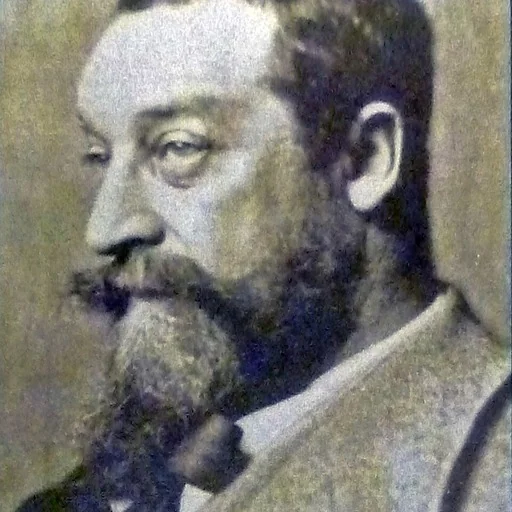
Alfred Jacques Verwee (23 April 1838, Saint-Josse-ten-Noode – 15 September 1895, Schaerbeek) was a Belgian painter known for his depictions of animals, landscapes and seascapes.