Artwork
Landscape with a Canoe in the Border
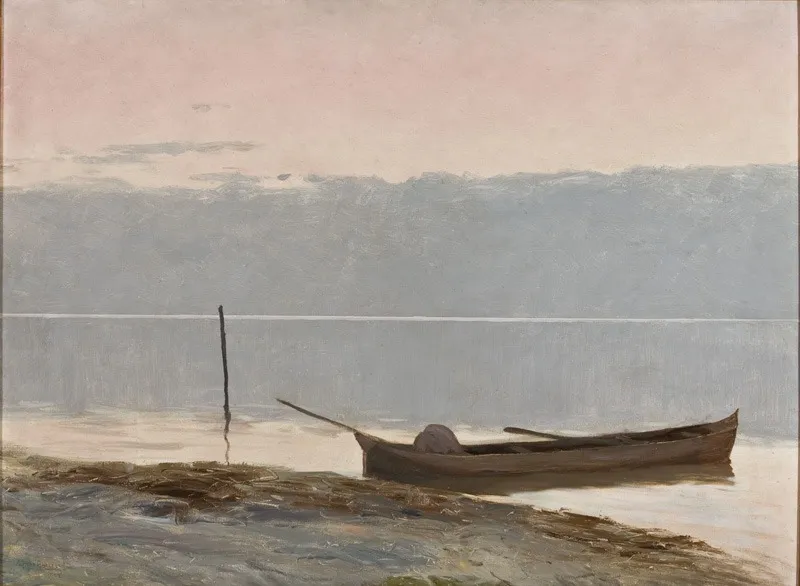
Landscape with a Canoe in the Border is an oil painting by the Impressionist artist Alfredo Andersen. It dates from 1922 and is held in the collection of the São Paulo Museum of Art.
About this work
Overview
Created in 1922, this oil painting presents a quiet riverside scene where a solitary canoe rests near the bank, its paddle lightly touching the water. The surrounding water bears faint ripples, and the distant sky is rendered in subdued, pastel tones that reinforce the work’s calm atmosphere. The composition balances foreground detail with a softened background, inviting quiet contemplation.
Subject & Meaning
The work focuses on a simple, everyday moment—a lone canoe poised on a tranquil stretch of water. By emphasizing stillness and the gentle interaction between boat and water, the artist conveys a sense of harmony with nature, suggesting a pause in human activity within an unspoiled landscape.
Technique & Style
Executed in oil, the painting employs an impressionistic approach characteristic of the artist’s mature period. Loose brushwork captures the fleeting quality of light on water, while a limited palette of muted hues creates atmospheric depth. The handling of surface texture suggests the artist’s interest in rendering the subtle movements of water and sky.
History & Provenance
The piece was painted by Alfredo Andersen, a Norwegian-born artist who settled in Brazil and became a pivotal figure in the development of painting in the Paraná region. Since its creation, the work has been held by the São Paulo Museum of Art, where it forms part of the institution’s collection of early twentieth‑century Brazilian art.
Artist & collection
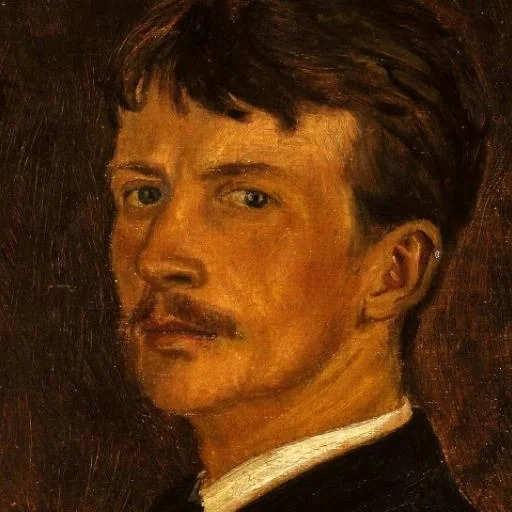
Artist
Alfred Emil Andersen, known as Alfredo (3 November 1860, Kristiansand - 9 August 1935, Curitiba) was a Norwegian-born painter, sculptor, scenographer and art professor, who spent most of his life in Brazil.

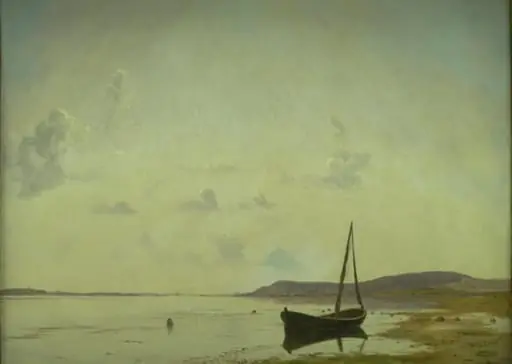
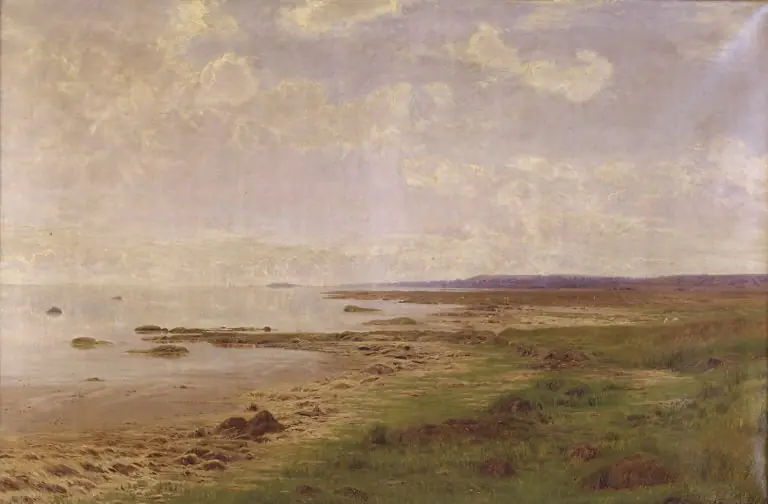 Parti af Jyllands østkyst. Stille sommerdag
 Parti af Jyllands østkyst. Stille sommerdag
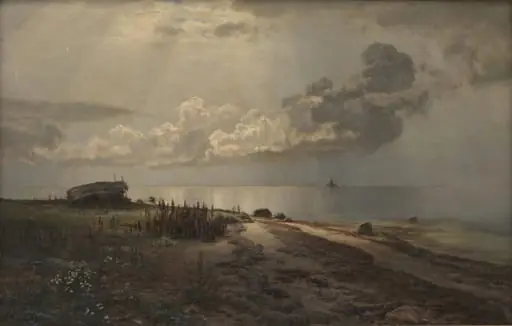 Strand
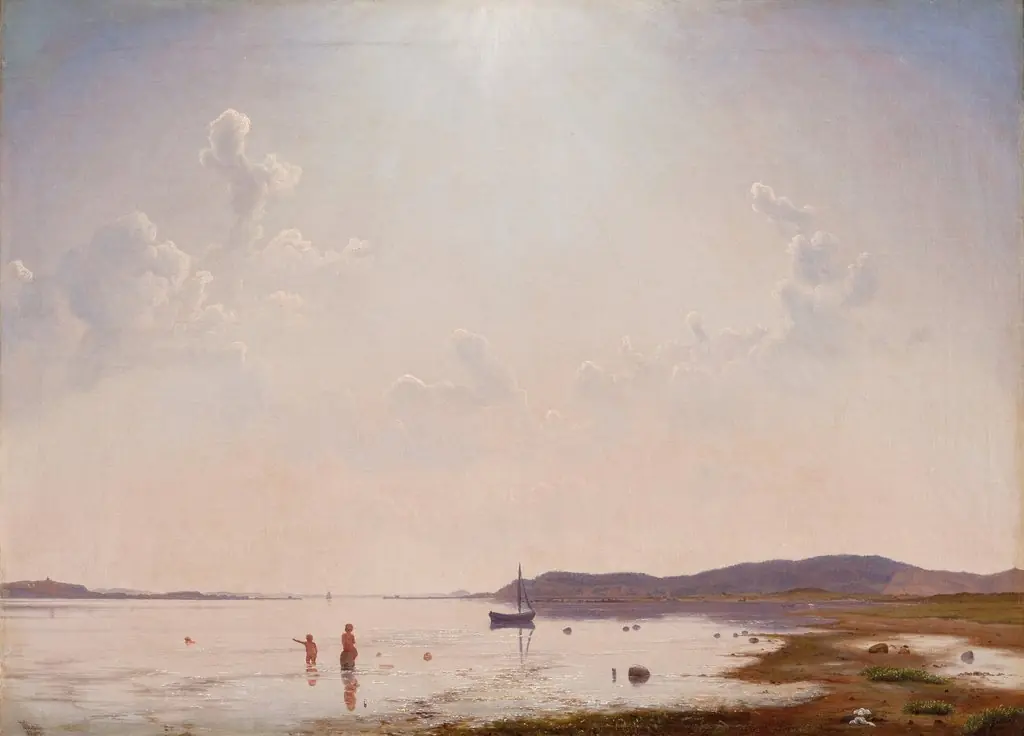 View of Roskilde Fjord near Frederikssund, Zealand
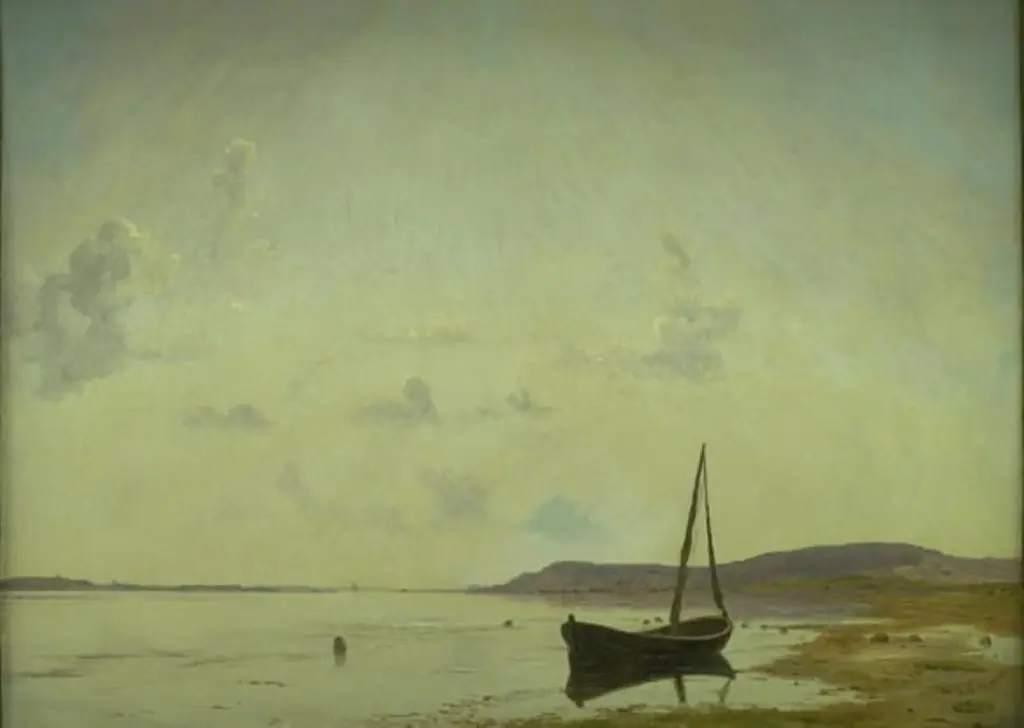 A Stretch of Coast near Frederiksund. Sketch
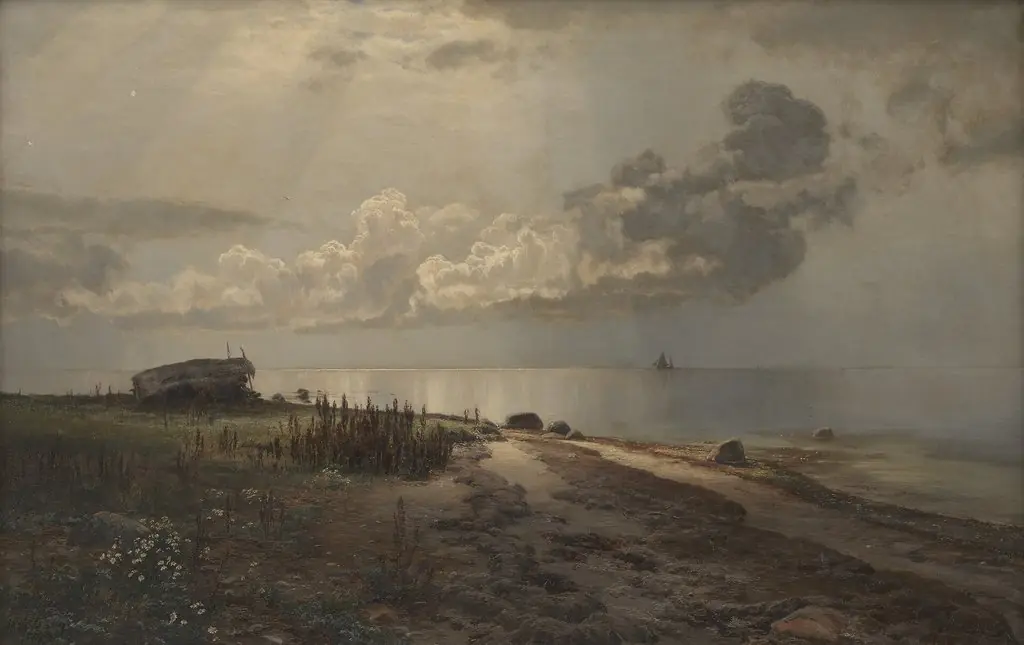 Strand
 The Coast at Frederiksund. Sketch
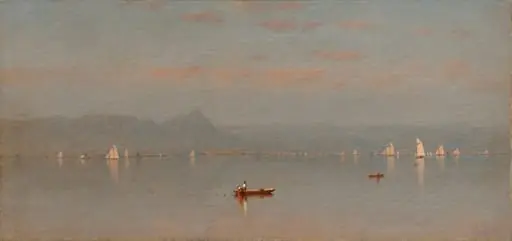 Haverstraw Bay
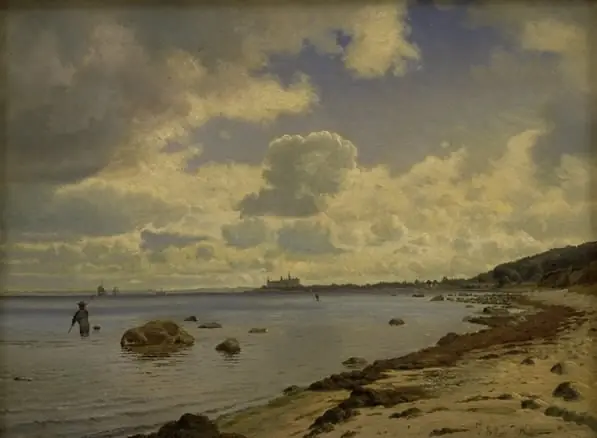 Sjællands nordkyst med udsigt til Kronborg
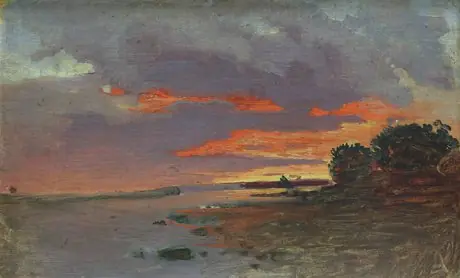 Sunset
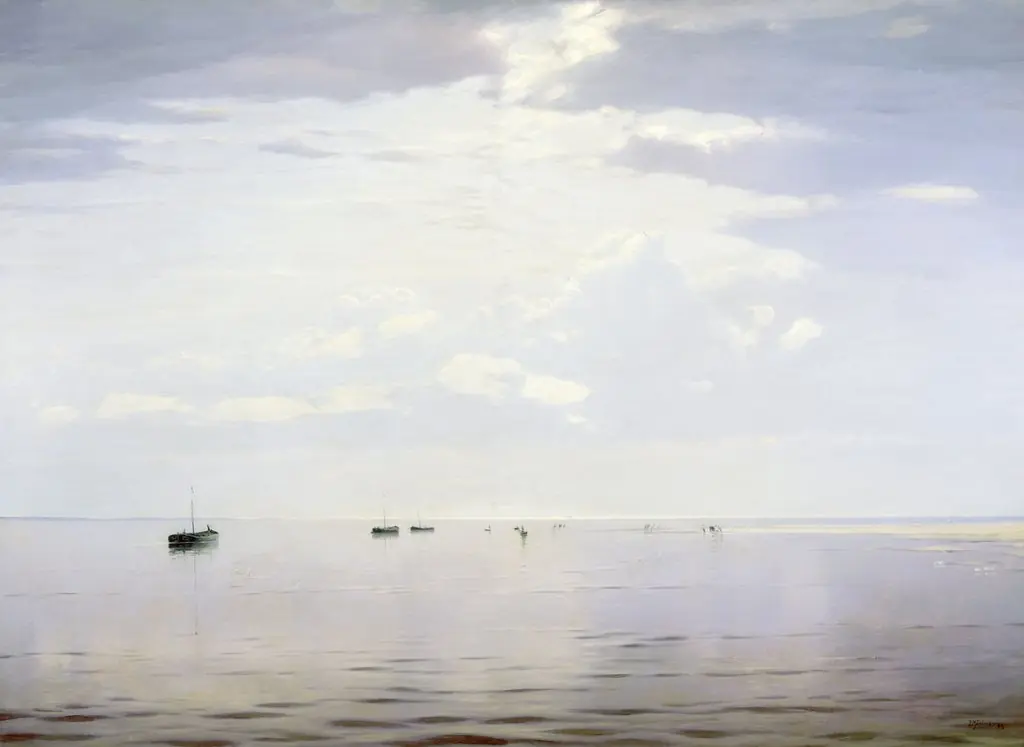 On the Volga
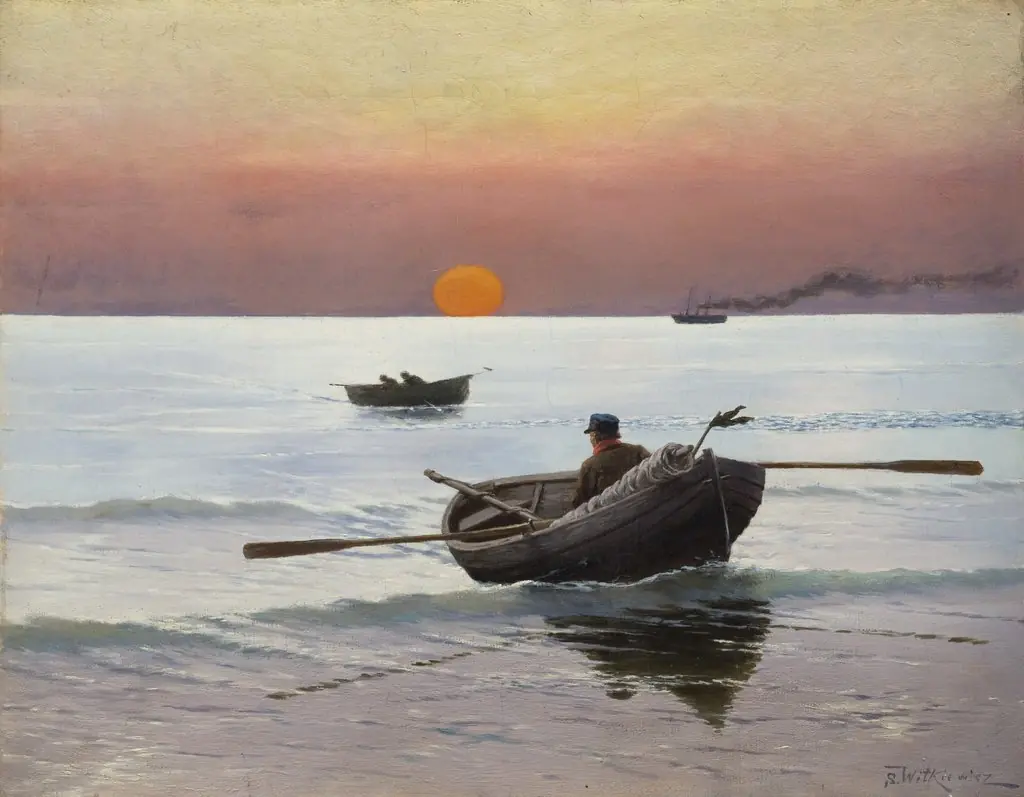 Sunset on the Sea