Artwork
Christ Taking Leave of his Mother
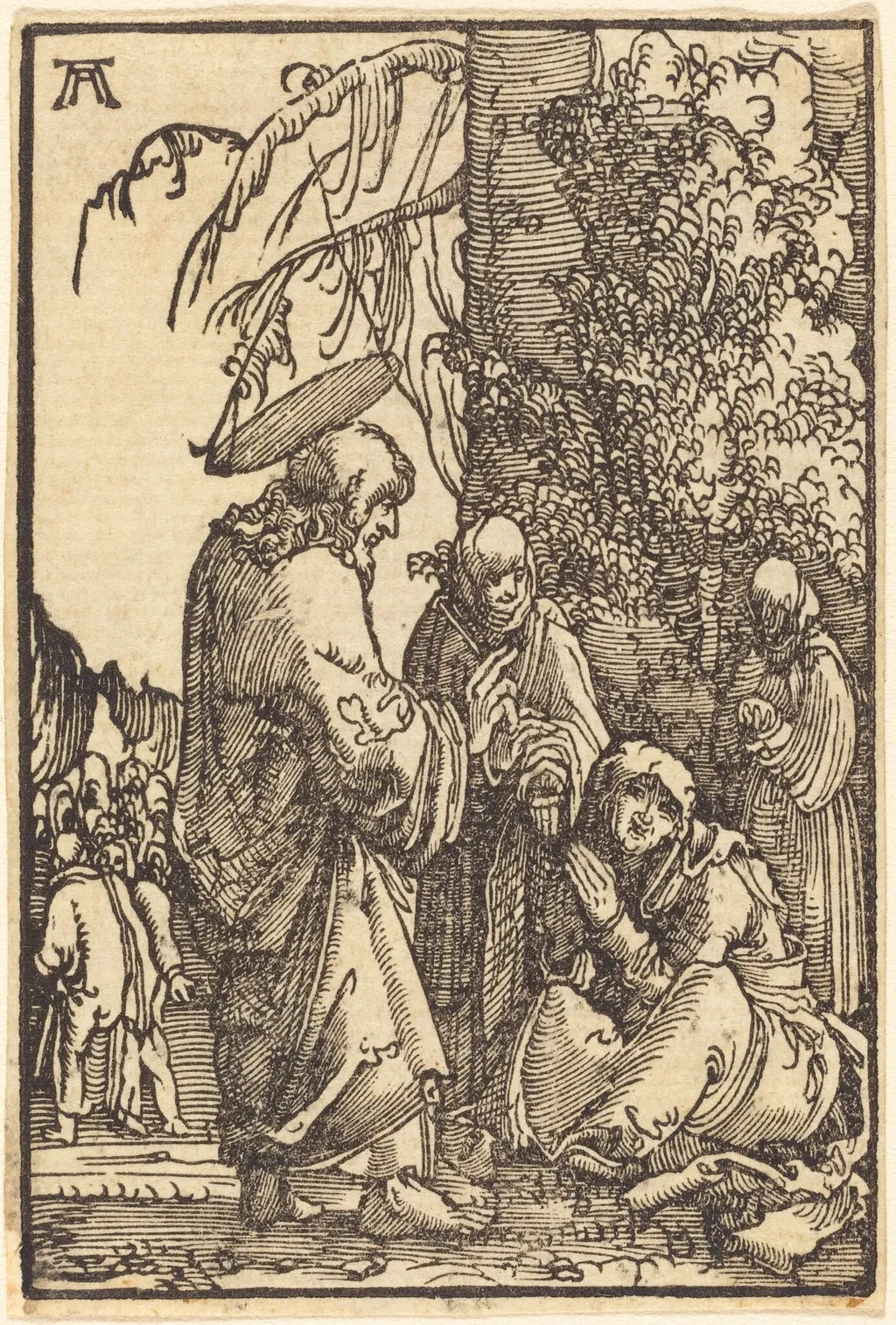
Christ Taking Leave of his Mother is an ink print by the Renaissance artist Albrecht Altdorfer. It dates from 1513 and is held in the collection of the National Gallery of Art.
About this work
Overview
Though primarily known as a painter, his prints reveal a sensitivity to emotional nuance and spatial depth, distinguishing him within the German Renaissance.
Created around 1513, this woodcut by Albrecht Altdorfer captures a quiet moment from the Passion narrative: Christ bidding farewell to the Virgin Mary. Executed on laid paper, the work belongs to a series of small-scale prints that reflect Altdorfer’s mastery of the woodcut medium. Though primarily known as a painter, his prints reveal a sensitivity to emotional nuance and spatial depth, distinguishing him within the German Renaissance.
Subject & Meaning
The scene portrays Christ’s final departure from his mother before his crucifixion, a moment not explicitly detailed in scripture but widely depicted in devotional art. Altdorfer emphasizes intimacy through physical contact—Christ’s hand resting on Mary’s shoulder—while her downcast gaze conveys silent grief. The composition avoids dramatic spectacle, instead inviting contemplation of human sorrow amid divine destiny.
Technique & Style
Altdorfer employed fine, controlled lines to model form and texture, characteristic of the Danube School’s attention to detail. The woodcut’s tonal gradations, achieved through delicate hatching and varying line density, create a hazy, atmospheric backdrop. Unlike contemporaries who prioritized clarity, he used soft edges and muted contrasts to evoke mood, blending figure and landscape into a unified, contemplative whole.
History & Provenance
The print was produced during Altdorfer’s tenure in Regensburg, where he served as city architect and maintained a workshop. While no early ownership records survive, similar woodcuts from his circle circulated among clerical and scholarly patrons in southern Germany. Its survival in multiple impressions suggests modest but sustained demand for devotional imagery in early 16th-century urban centers.
Context
Altdorfer worked alongside artists like Cranach and Huber, whose styles diverged from Nuremberg’s precisionist tradition. The Danube School favored emotive landscapes and intimate religious moments, often integrating nature as a reflective force. This print reflects broader trends in late medieval piety, where personal devotion and emotional identification with sacred figures gained prominence before the Reformation.
Legacy
Though less celebrated than his paintings, this woodcut exemplifies Altdorfer’s role in elevating printmaking as a vehicle for lyrical expression. His integration of landscape as emotional context influenced later Northern artists, and his restrained emotional tone prefigured the introspective qualities of 17th-century religious imagery. The work remains a quiet testament to his ability to convey profound feeling through minimal means.
Artist & collection
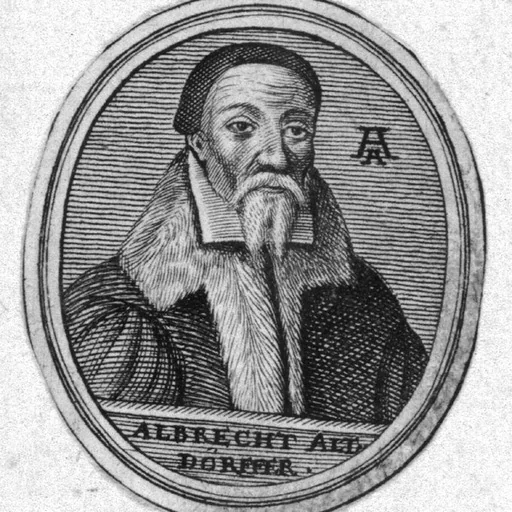
Artist
Albrecht Altdorfer (c. 1480 – 12 February 1538) was a German painter, engraver and architect of the Renaissance working in Regensburg. Along with Lucas Cranach the Elder and Wolf Huber he is regarded to be the main…

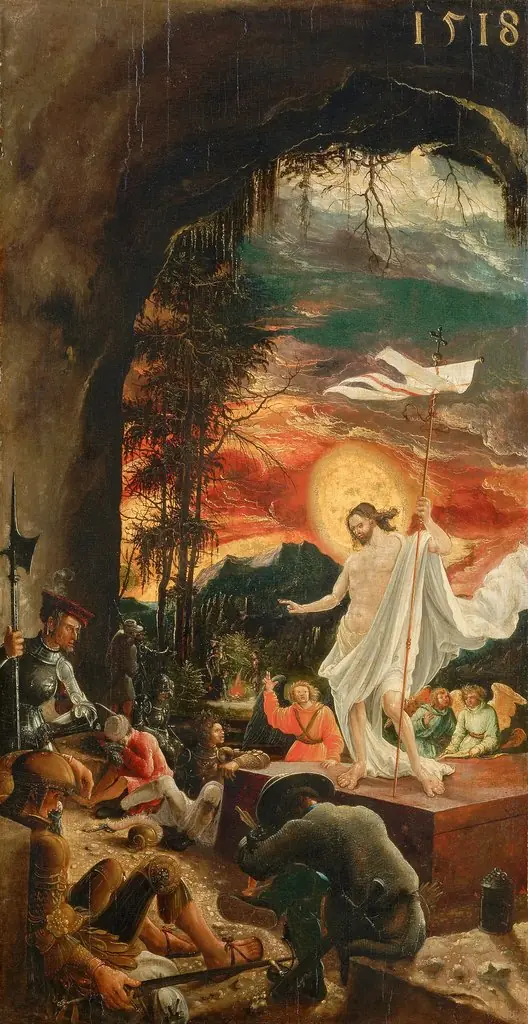
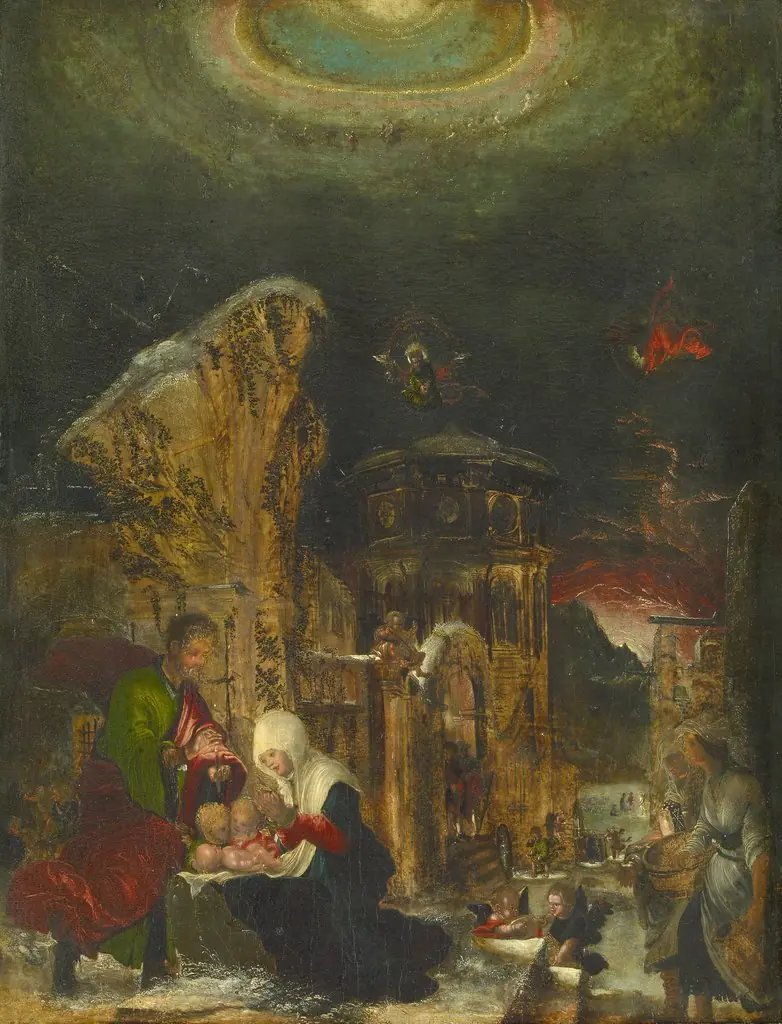
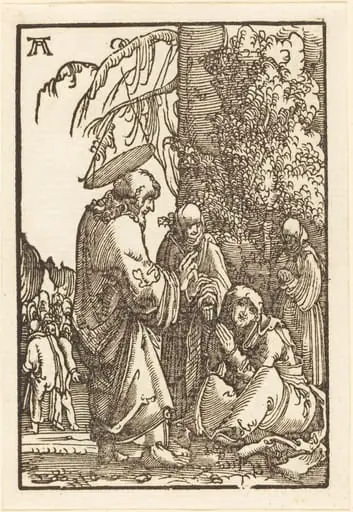 Christ Taking Leave of his Mother
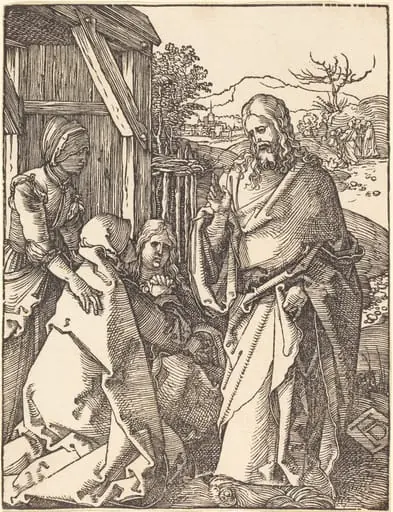 Christ Taking Leave from His Mother
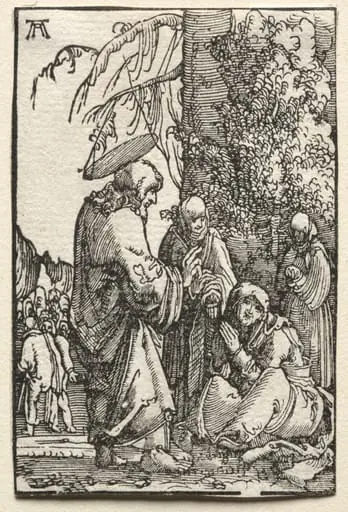 The Fall and Redemption of Man: Christ Taking Leave of His Mother before the Passion
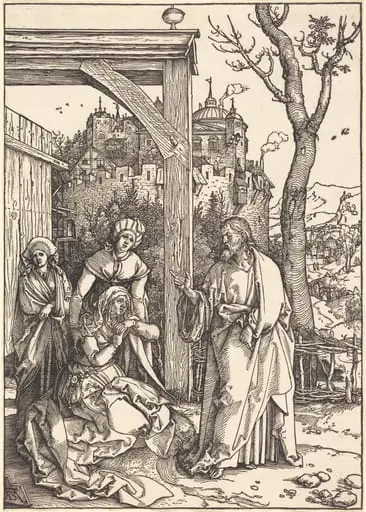 Christ Taking Leave from His Mother
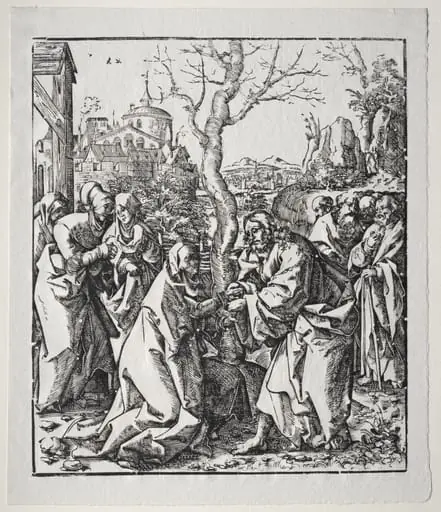 Christ Taking Leave of his Mother
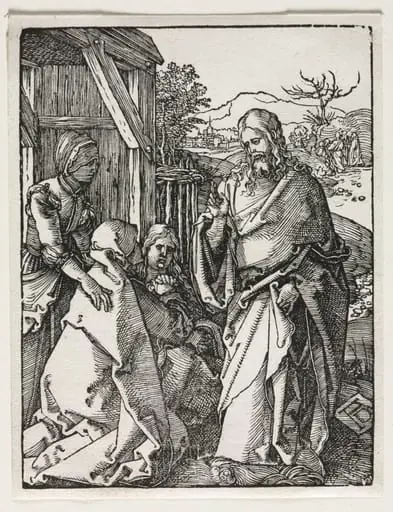 The Small Passion: Christ Taking Leave of the Virgin
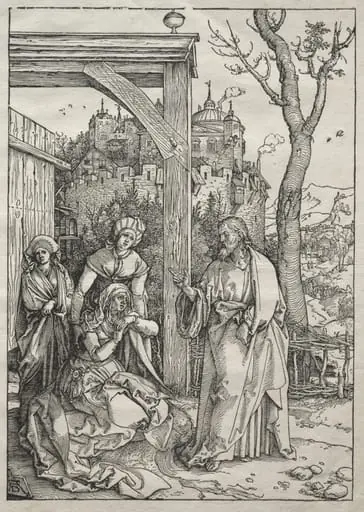 Life of the Virgin: Christ Taking Leave of His Mother
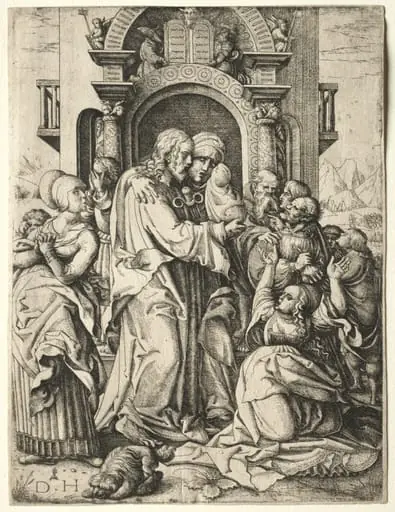 Christ Taking Leave of His Mother
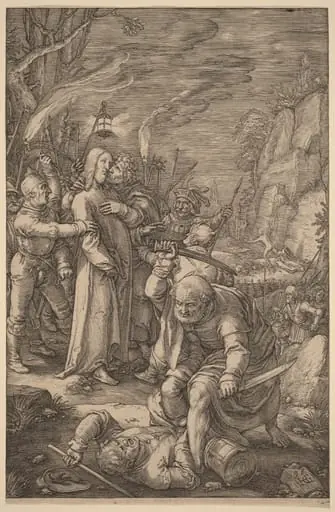 Christ Taken Captive