Artwork
Studiu (1907)
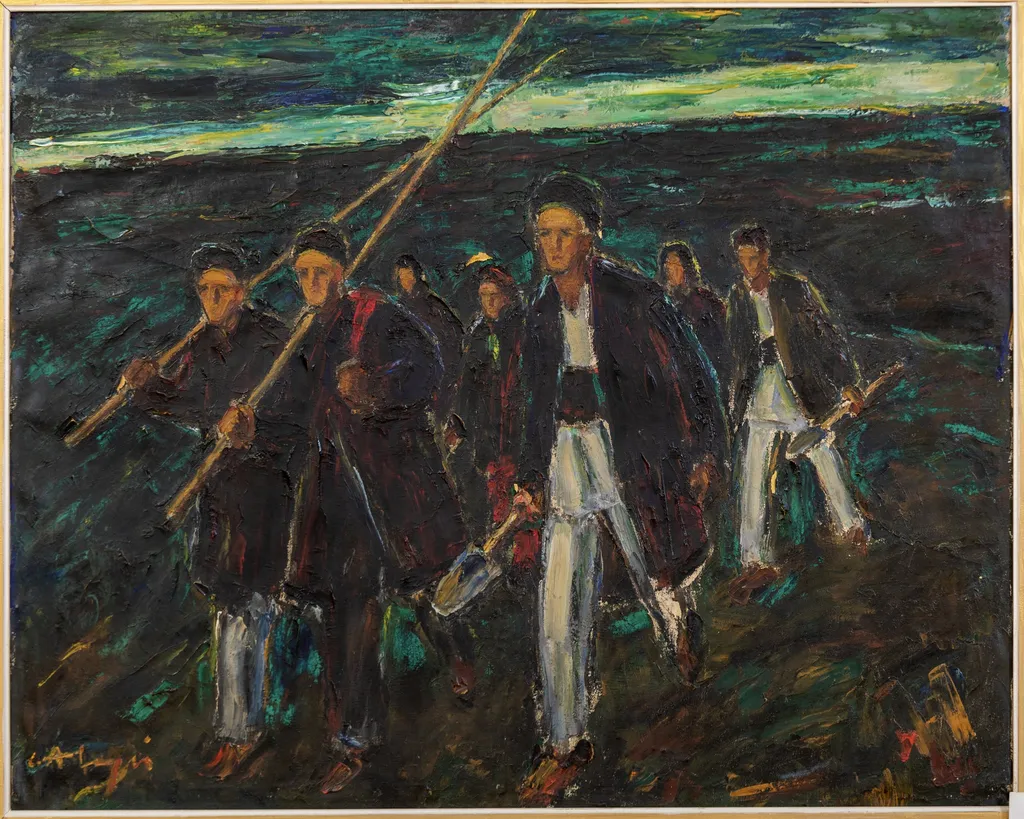
Studiu (1907) is a print by Călin Alupi. It dates from 1947 and is held in the collection of the Moldova National Museum Complex.
About this work
Overview
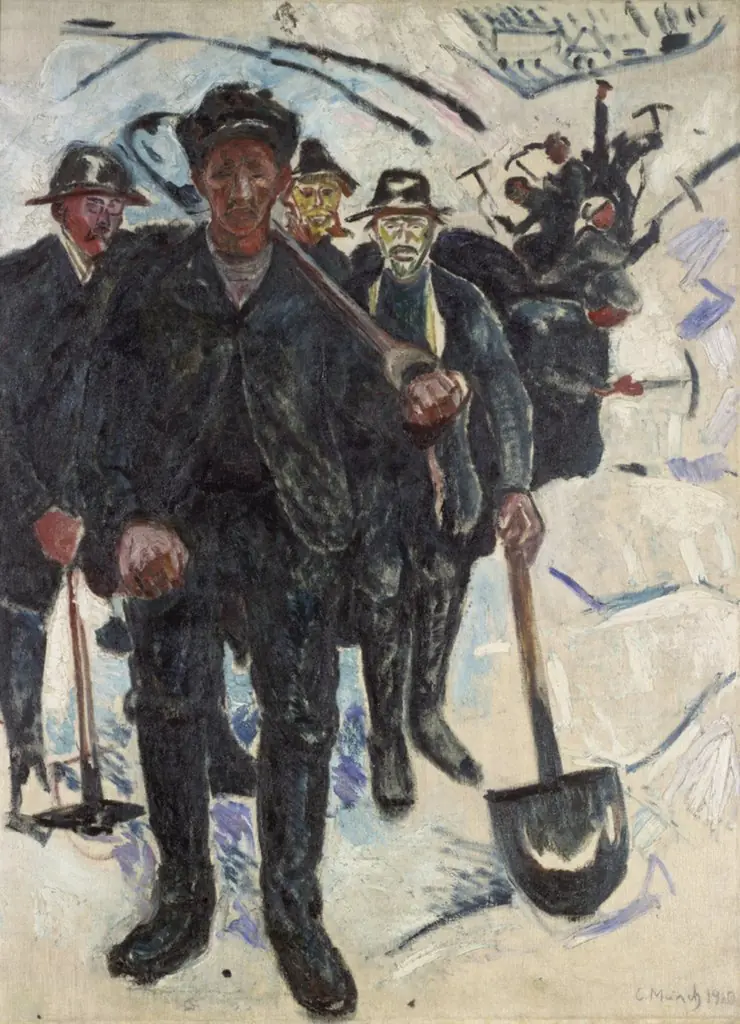
Created around 1947, Studiu by Călin Alupi depicts a group of six figures moving in single file, each bearing a long vertical pole. Though dated to 1907 in some records, the work’s style and technique align with Alupi’s mid-century output. The composition conveys collective labor through rhythmic repetition and muted tones, suggesting endurance rather than narrative specificity.
Subject & Meaning
The figures, uniformly dressed in dark garments except for one pair of light trousers, appear engaged in a shared physical task. The poles may imply transport, construction, or agricultural work, but their exact purpose remains ambiguous. The absence of context or facial detail universalizes the scene, emphasizing human effort over individual identity.
Technique & Style
Alupi employs thick, textured brushwork, using impasto to build the background in layered blues and greens that evoke a turbulent atmosphere. The figures are rendered with loose, energetic strokes, their forms emerging from the chaos of the paint. This method conveys movement and tension, prioritizing emotional resonance over precise representation.
History & Provenance
The painting’s early history is undocumented, and its creation date has been inconsistently cited. It is known to belong to Alupi’s postwar period, when he increasingly favored expressive, non-narrative compositions. The work remained in private Romanian collections until its inclusion in public exhibitions in the late 20th century.
Context
Produced during Romania’s early communist era, Studiu reflects a cultural shift toward depicting labor and collective life. Yet Alupi avoids propaganda, focusing instead on the physicality and rhythm of work. The painting aligns with broader European trends in post-expressionist figuration, where emotion overrides social realism.
Legacy
Studiu is recognized as a key example of Alupi’s mature style—where form, texture, and mood converge to suggest human endurance. It influenced later Romanian artists seeking alternatives to state-mandated realism. The work remains in institutional collections, valued for its quiet intensity and material honesty.
Artist & collection
Artist
Călin Alupi painted everyday Romanian scenes with bold brushstrokes and sharp contrasts.
 Workers in Snow
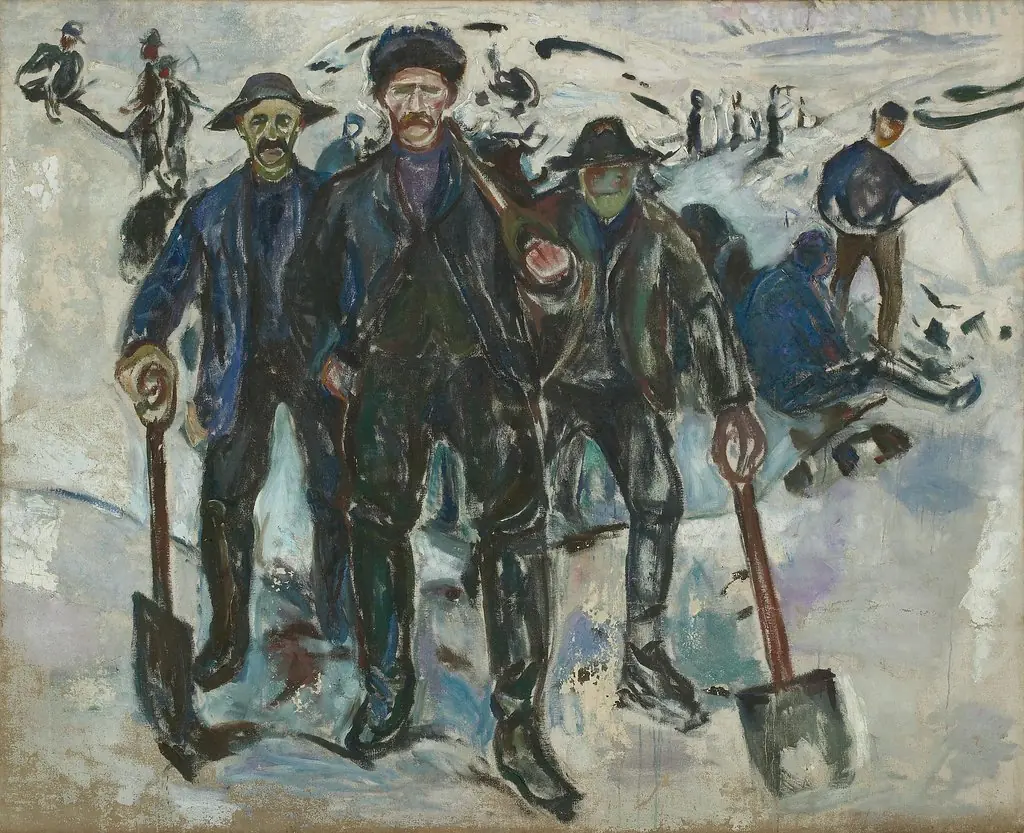 Workers in Snow
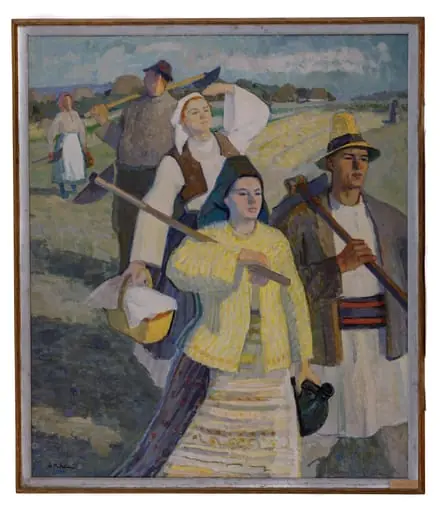 Colectiviști
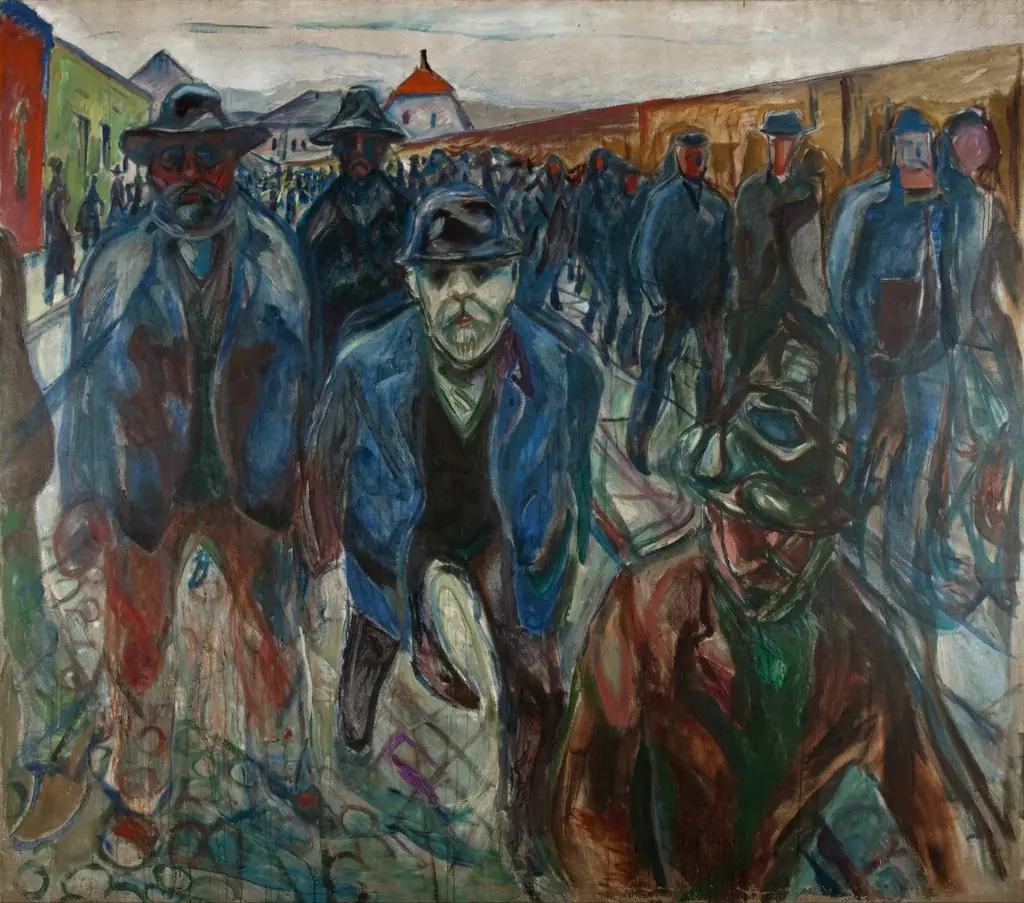 Workers on their Way Home
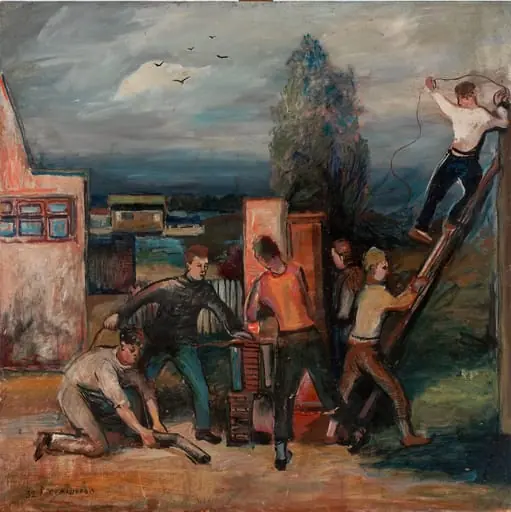 Χωρίς τίτλο
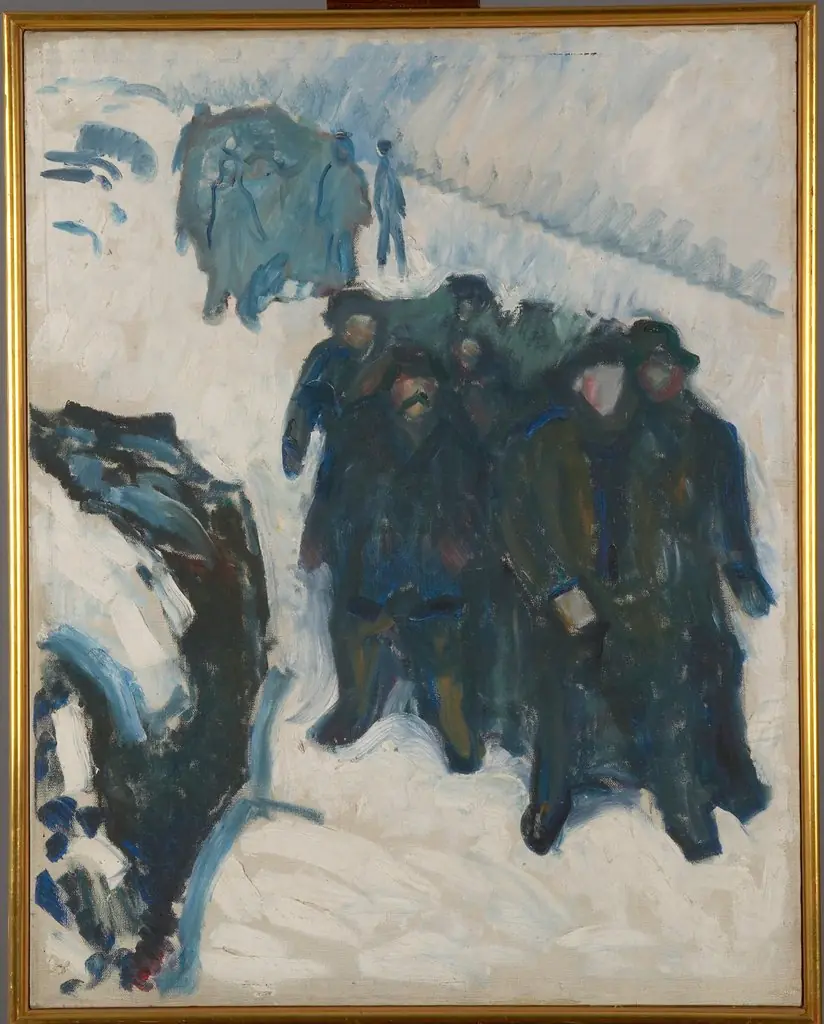 Sailors in Snow
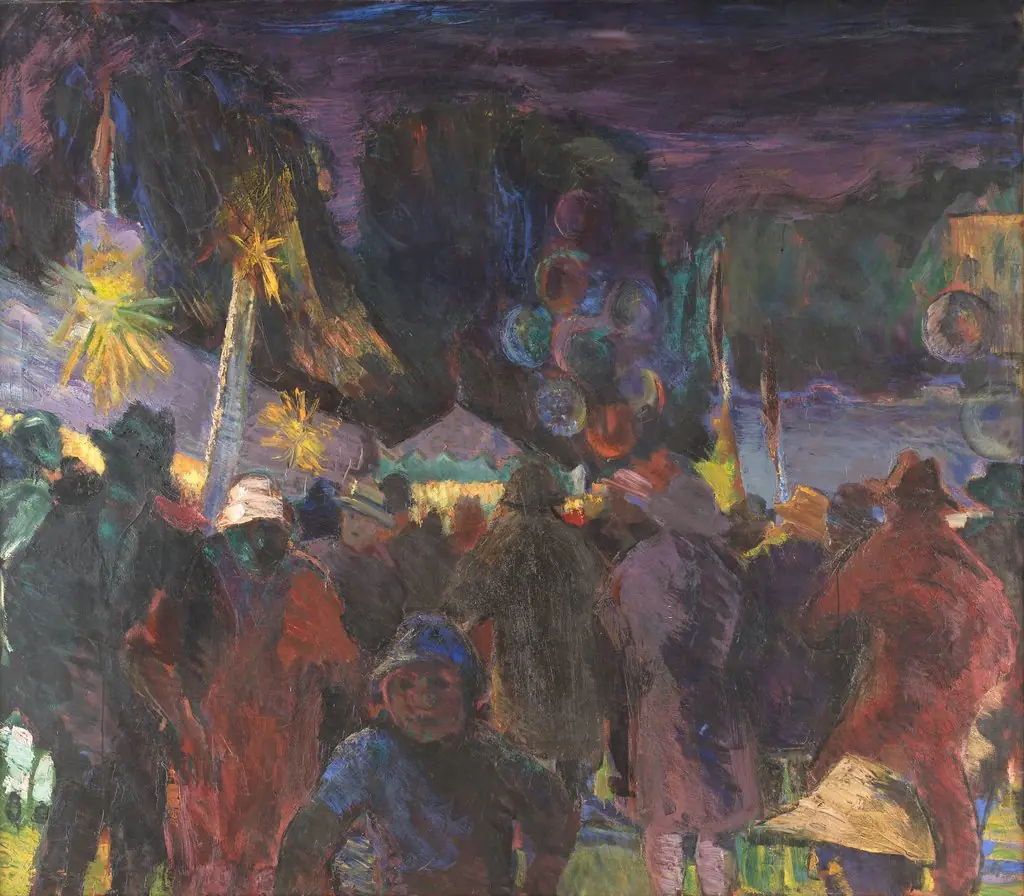 Evening at Dyrehavsbakken
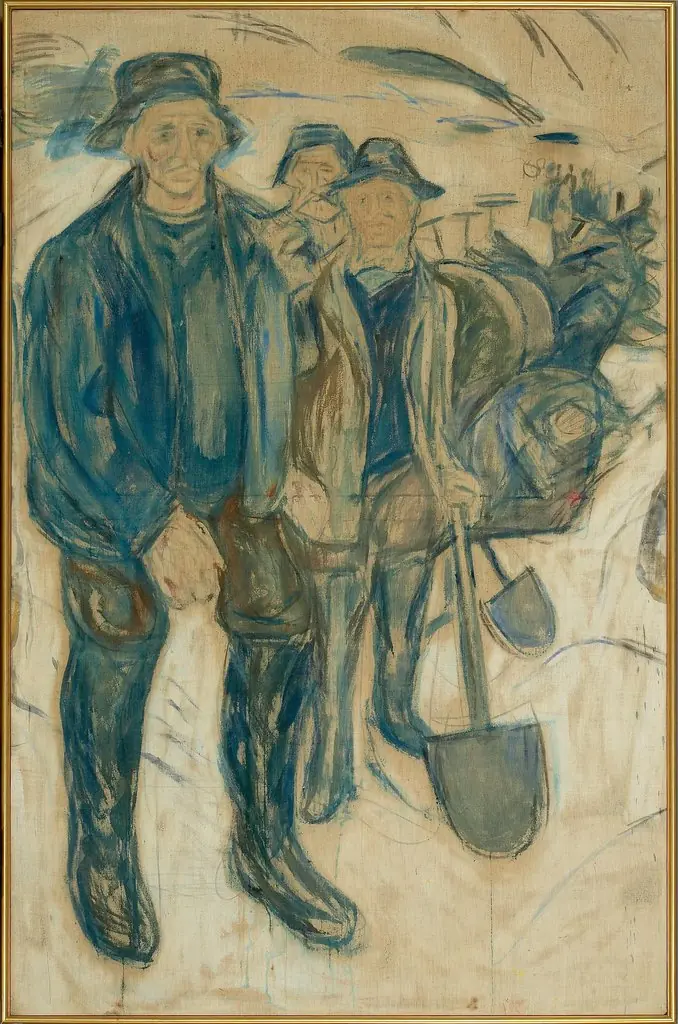 Workers in Snow
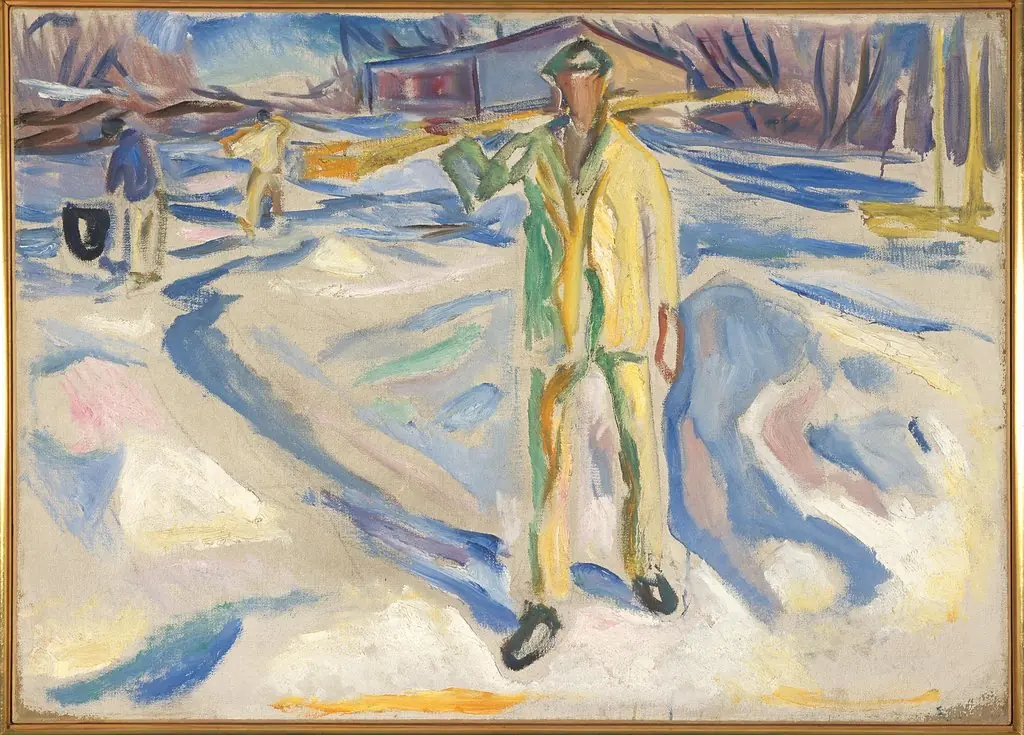 Building Workers in Snow
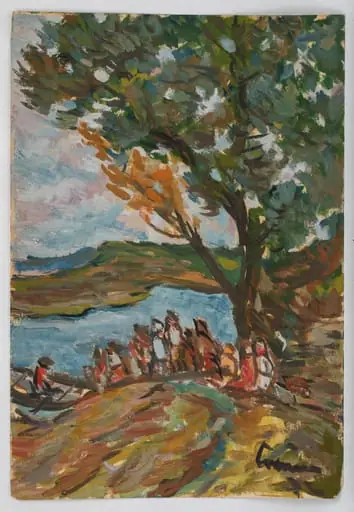 Peisaj de toamnă cu un râu la marginea căruia, pe o barcă, se urcă câteva persoane care au format un rând. Personajele umane sunt abia schițate. Peisajul este mai bine conturat; în dreapta, plan secund, un grup de copaci foarte înalți; în mijlocul lucrării - râul, iar în plan îndepărtat, dealuri și cerul. Semnat și datat, cu negru, dreapta jos: Craiu 1972.