Artwork
Christ and the Woman of Samaria
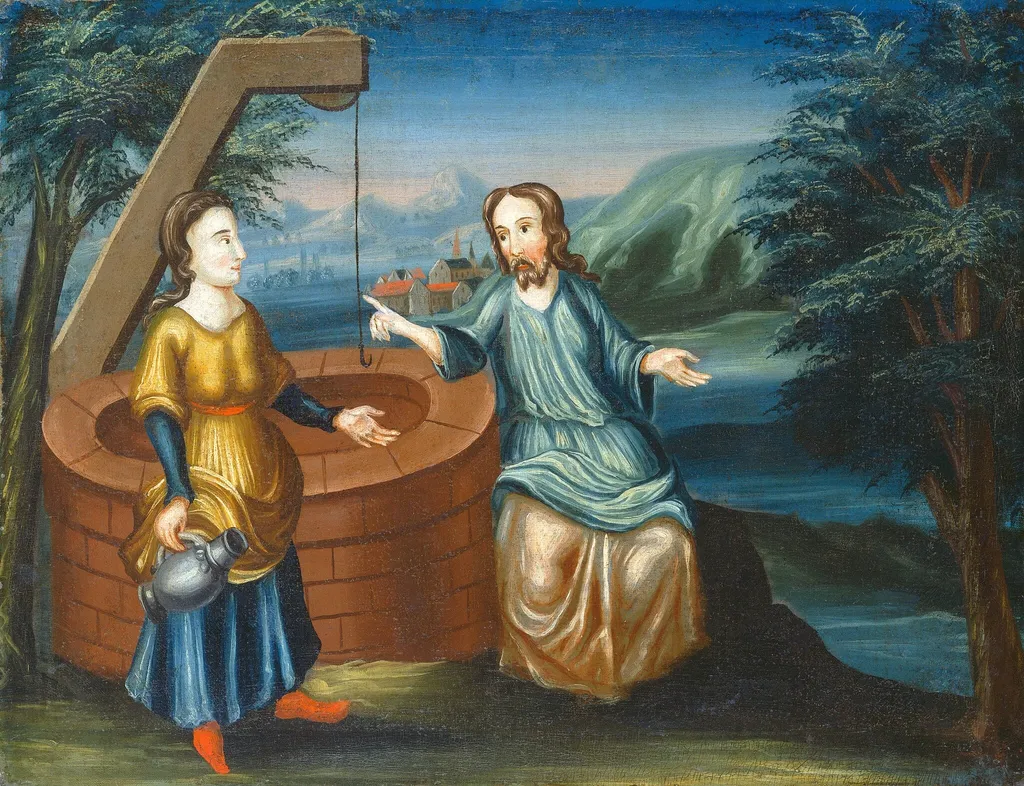
Christ and the Woman of Samaria is an oil painting. It dates from 1730 and is held in the collection of the National Gallery of Art. The canvas presents a quiet encounter between Jesus and a Samaritan woman beside a well.
About this work
Overview
The canvas presents a quiet encounter between Jesus and a Samaritan woman beside a well. The figures stand in a pastoral landscape, with the woman in a yellow tunic and blue skirt holding a silver jug, while Jesus, clad in a blue robe over a white tunic, gestures as if speaking. Red‑brick well structures, a wooden frame, and distant hills complete the setting under a clear blue sky.
Subject & Meaning
The scene illustrates the biblical episode from the Gospel of John in which Jesus engages the Samaritan woman at Jacob’s well. By focusing on the exchange of words and the woman's offering of water, the painting emphasizes themes of dialogue, spiritual thirst, and the breaking of social boundaries between Jew and Samaritan.
Technique & Style
Executed in oil on canvas, the work employs a warm palette of yellows, blues, and earth tones, softened by gentle illumination that lends a tranquil atmosphere. Careful modeling of the figures and the textured rendering of the brick well and foliage demonstrate the artist’s command of chiaroscuro and compositional balance, guiding the eye toward the central interaction.
Context
While the artist’s identity is not specified, the composition aligns with 19th‑century religious genre painting, a period when biblical narratives were frequently rendered in domestic, accessible settings. The inclusion of detailed architectural elements and a naturalistic landscape reflects contemporary interests in historicism and the moral didacticism of biblical scenes.
Own this work as a print
Artist & collection
