Artwork
Christ on the Road to Emmaus
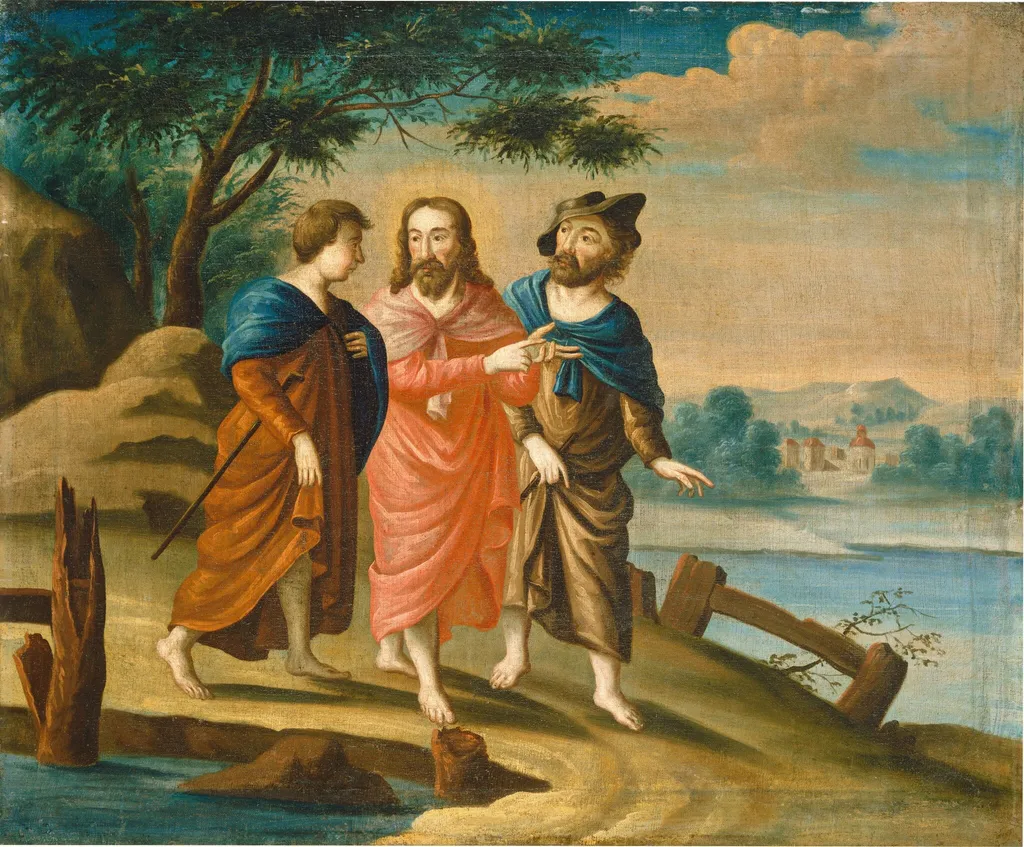
Christ on the Road to Emmaus is an oil painting. It dates from 1728 and is held in the collection of the National Gallery of Art.
About this work
Overview
It portrays three men walking along a path, with the central figure engaged in conversation and gesturing to his companions.
This oil painting, titled "Christ on the Road to Emmaus," depicts a pivotal biblical narrative. It portrays three men walking along a path, with the central figure engaged in conversation and gesturing to his companions. The artist employs a traditional medium to render this significant religious event, setting the figures within a landscape that includes natural elements and distant architectural forms under a partly cloudy sky.
Subject & Meaning
The artwork illustrates the biblical account of Christ's post-resurrection appearance to two disciples on their journey to Emmaus. The central figure, identifiable as Christ by his distinctive bright pink robe and beard, actively converses and points ahead, explaining scripture to his companions. This moment captures the disciples' initial unawareness of his identity before their eventual recognition, a key event in Christian theology.
Technique & Style
The artist employs oil on canvas to create a composition where the central figure's vibrant pink robe immediately draws attention, contrasting with the softer hues of the surrounding landscape and the other figures. The three barefoot men are positioned on a grassy path, bordered by a fence and a body of water, with a tree and distant buildings providing depth. The use of light and shadow, often referred to as chiaroscuro, likely contributes to the dramatic impact of the scene.
Own this work as a print
Artist & collection
