Artwork
Profile Portrait of a Young Man
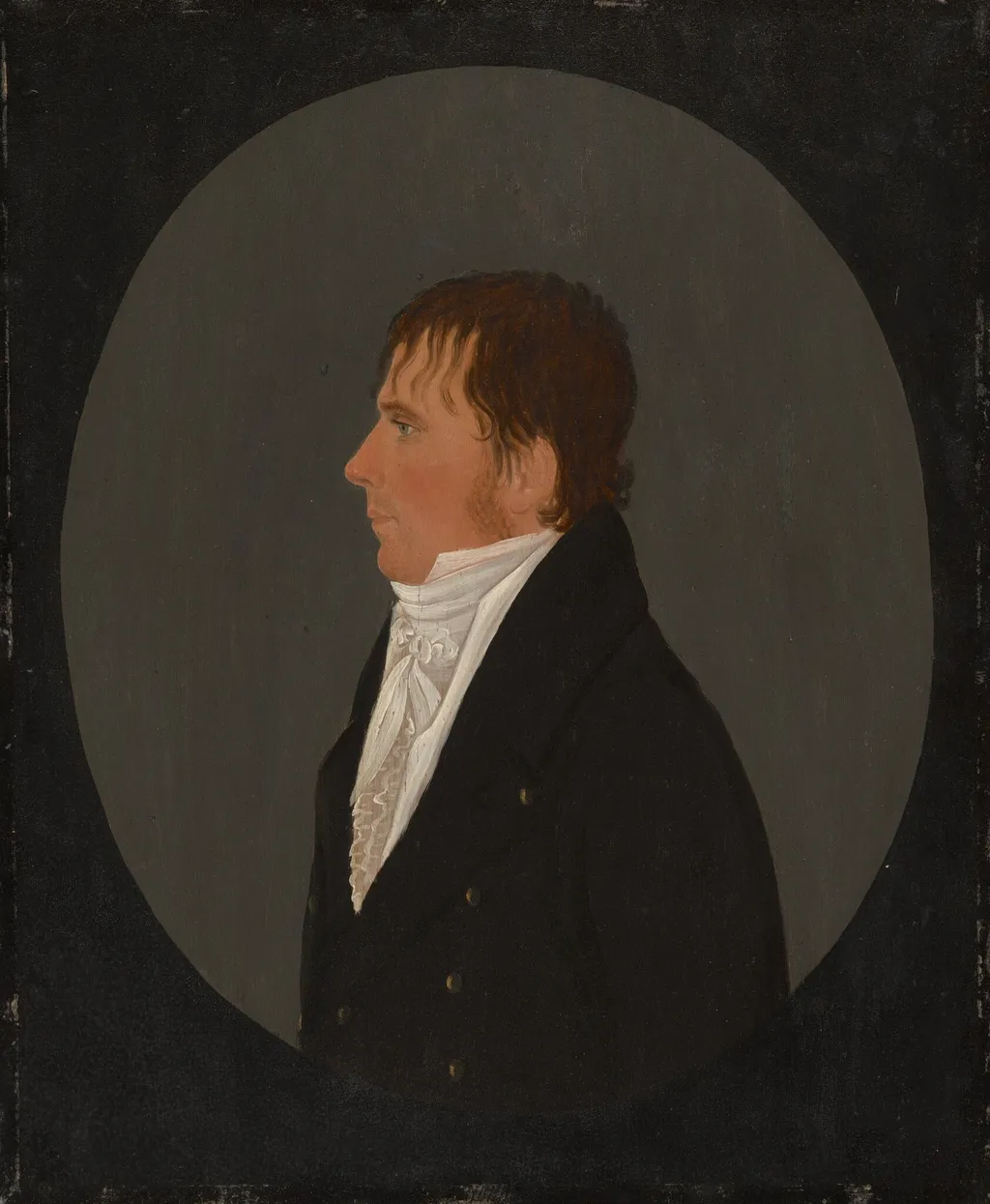
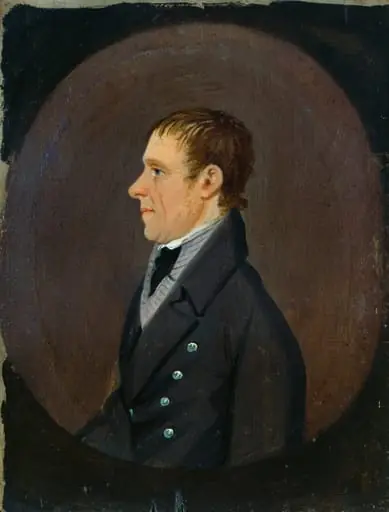
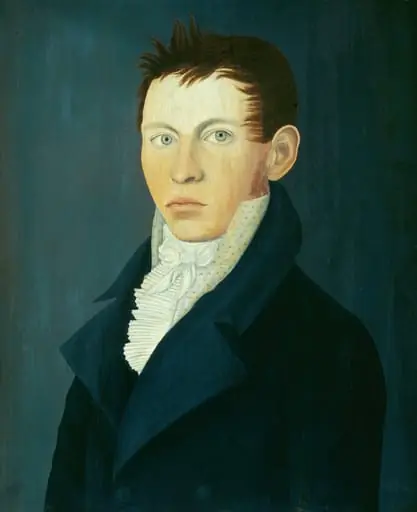
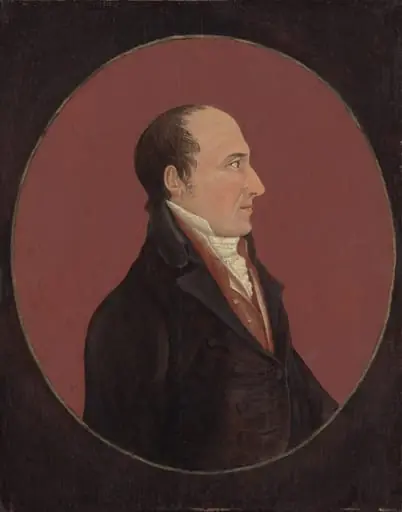
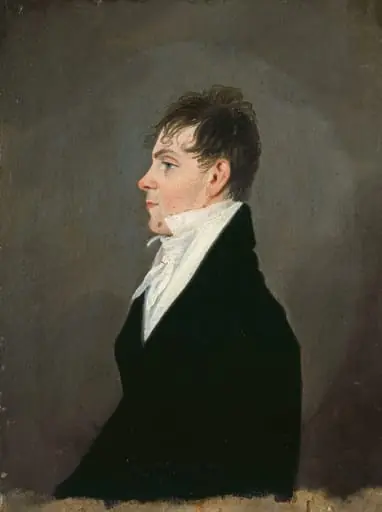
Profile Portrait of a Young Man is an oil painting. It dates from 1815 and is held in the collection of the National Gallery of Art. The work is an oil painting executed on a wooden panel, depicting a young man seated within a dark oval frame.
About this work
Overview
The work is an oil painting executed on a wooden panel, depicting a young man seated within a dark oval frame. He is turned slightly away from the viewer, dressed in a black coat and a neatly tied white cravat. His hair is short, with curls at the edges, and his expression is calm yet serious, set against a deep, uniform background.
Subject & Meaning
The portrait focuses on the sitter’s dignified bearing, emphasizing his social status through the formal attire of a black coat and white cravat. The restrained facial expression and direct gaze suggest a controlled self‑presentation, typical of early modern portraiture that aimed to convey virtue and composure.
Technique & Style
The artist employed smooth, refined brushwork to render the flesh tones and fabric, creating a polished surface that contrasts with the dark background. Subtle modeling of light and shadow—reminiscent of chiaroscuro—gives the figure a three‑dimensional presence, while the limited palette enhances the overall solemnity.
History & Provenance
The painting is catalogued as a profile portrait of a young man, though specific details about its creation date, artist, or original ownership are not recorded in the provided information. Its medium—oil on wood—places it within a longstanding tradition of panel portraiture.
Context
Portraits of this type were common in the 16th and 17th centuries, when oil on wood panels were preferred for their smooth surface and durability. The use of an oval frame and the emphasis on a single, dignified figure align with contemporary conventions for private, elite commissions.
Artist & collection