Artwork
Schooner
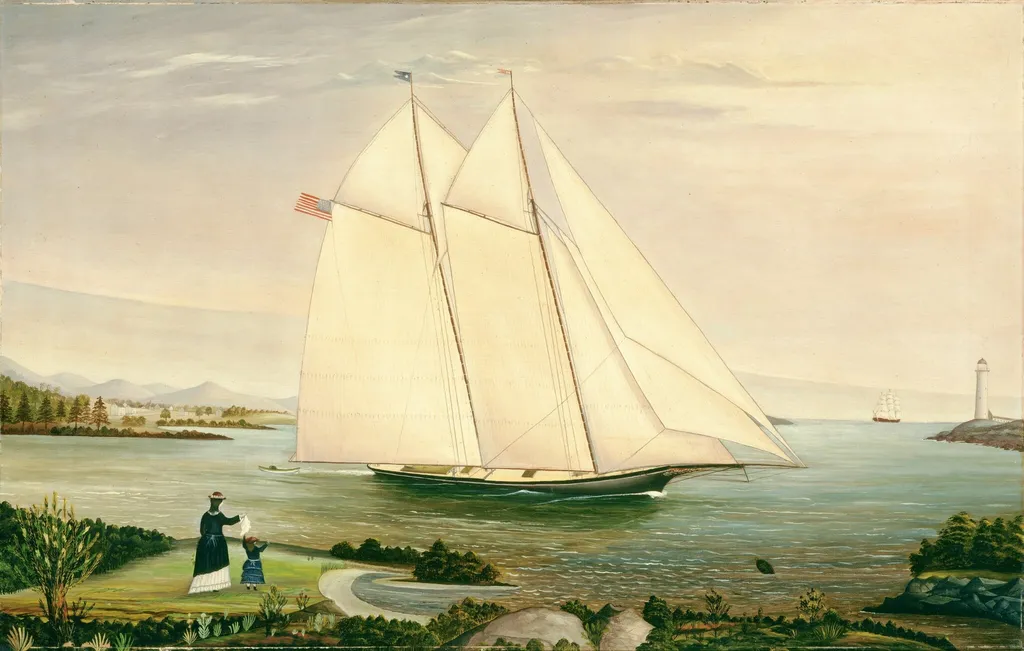
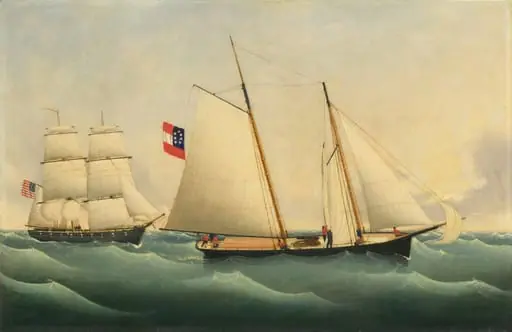
Schooner is an oil painting. It dates from 1850 and is held in the collection of the National Gallery of Art.
About this work
Notice how the wake ripples behind the boat—it tricks your eye into feeling the motion.
Paintings of ships in the 1800s weren’t just pretty pictures. They showed America’s growing power on the water. This one captures a sleek schooner cutting through calm waves. The white sails pop against the dark hull. The artist used thin, see-through glazes for the sky so light feels real.
Back then, schooners carried goods and news up the coast. The flags hint at trade routes. Notice how the wake ripples behind the boat—it tricks your eye into feeling the motion.
Try this at home: stand close to a screen and blur your eyes. The colors blur like the artist’s glazes did. See it next to other American 19th Century works.
Overview
This oil on canvas painting, titled "Schooner," depicts a graceful sailing vessel navigating tranquil waters. The artwork highlights the schooner's streamlined form as it glides across the surface. The contrast between the bright white sails and the vessel's dark hull is prominent, capturing a moment of serene maritime activity. The composition emphasizes the boat's elegant silhouette and its interaction with the calm sea, offering a focused view of the ship itself.
Subject & Meaning
During the 1800s, paintings featuring ships like this schooner transcended mere aesthetic appeal, often symbolizing America's expanding maritime influence. Schooners were vital for coastal trade, transporting goods and disseminating news along the eastern seaboard. The flags visible on the vessel subtly allude to established trade routes, underscoring the economic and communicative importance of such ships in the period's commercial landscape and national development.
Technique & Style
The artist employed specific techniques to enhance the painting's realism and sense of movement. Thin, translucent glazes were applied to the sky, allowing light to penetrate and create a lifelike atmospheric effect. The careful rendering of the wake trailing behind the schooner contributes to an illusion of motion, drawing the viewer's eye into the dynamic interaction between the vessel and the water. This attention to detail brings a tangible quality to the depicted scene.
Own this work as a print
Artist & collection