Artwork
Textile Merchant
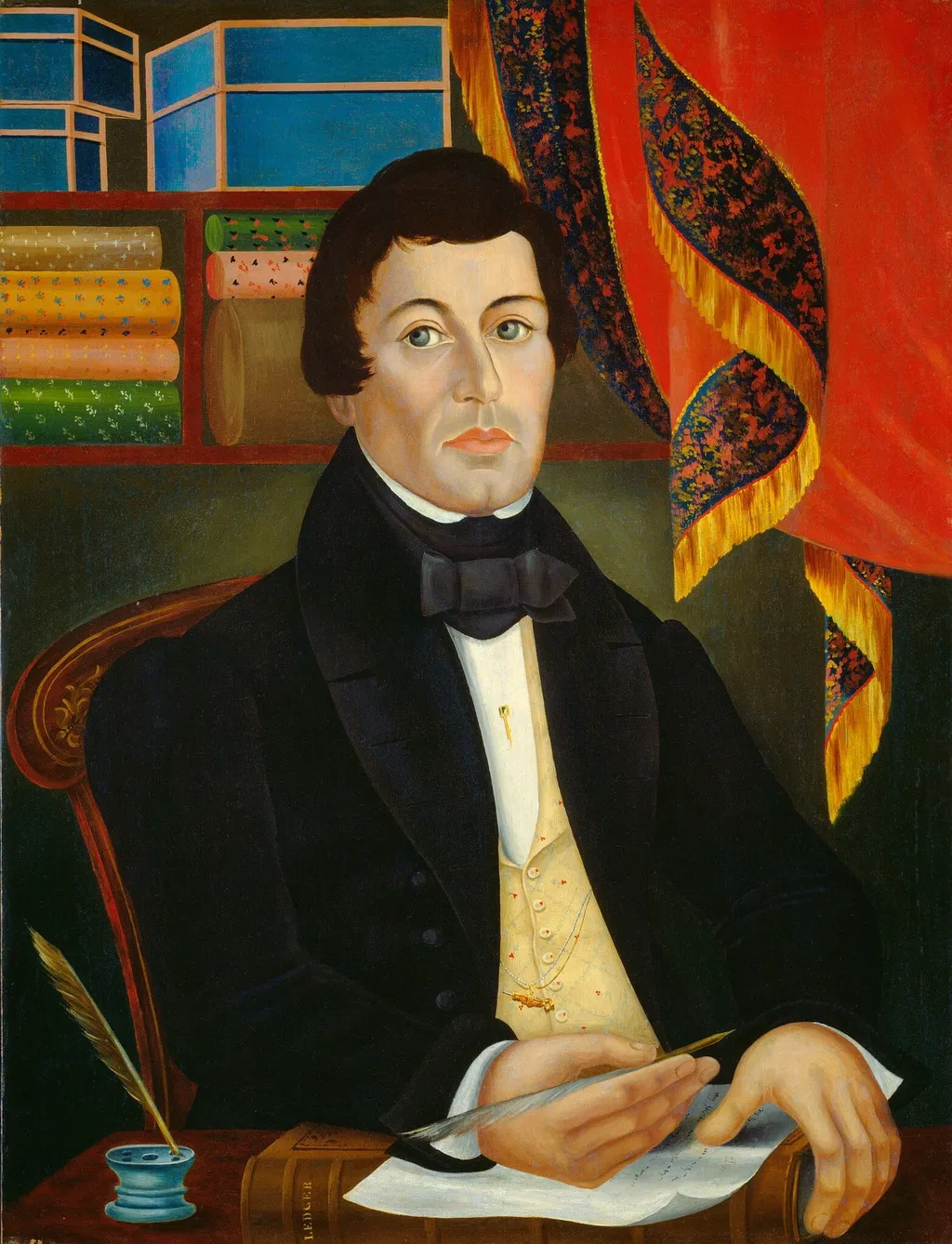
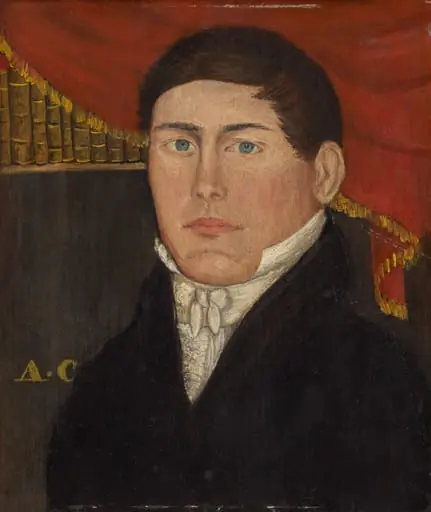
Textile Merchant is an oil painting. It dates from 1840 and is held in the collection of the National Gallery of Art.
About this work
Overview
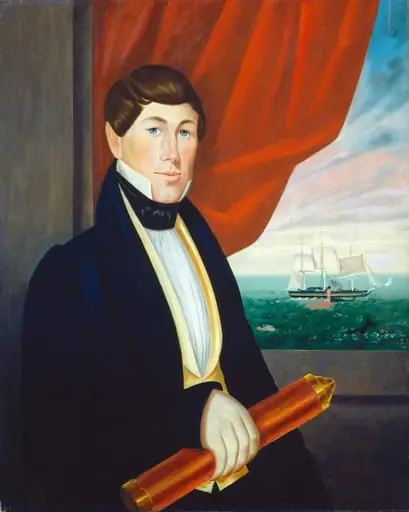
The canvas depicts a solitary figure seated at a desk, dressed in a dark jacket and vest, his hair dark and his posture attentive as he holds a quill poised over a sheet of paper. Behind him a shelf displays rolled fabrics, and a red curtain forms the backdrop, situating the scene within a space associated with textile trade.
Subject & Meaning
The work centers on a textile merchant engaged in written correspondence, suggesting the administrative side of commerce in the period. The presence of fabric rolls emphasizes his professional identity, while the act of writing hints at record‑keeping, contracts, or communication essential to trade.
Technique & Style
Executed in oil on canvas, the painting employs the soft modeling and atmospheric effects characteristic of Romanticism, with a focus on individual emotion and the quiet dignity of everyday labor. The muted palette of the figure contrasts with the richer reds of the curtain, creating depth through tonal variation.
Context
Set within the broader Romantic movement, the piece reflects the era’s interest in portraying ordinary individuals and their occupations with a sense of reverence. By foregrounding a merchant rather than a mythic hero, the artist aligns with Romanticism’s shift toward personal experience and the dignity of work.
Own this work as a print
Artist & collection