Artwork
The Army of the Potomac - A Sharp-Shooter on Picket Duty
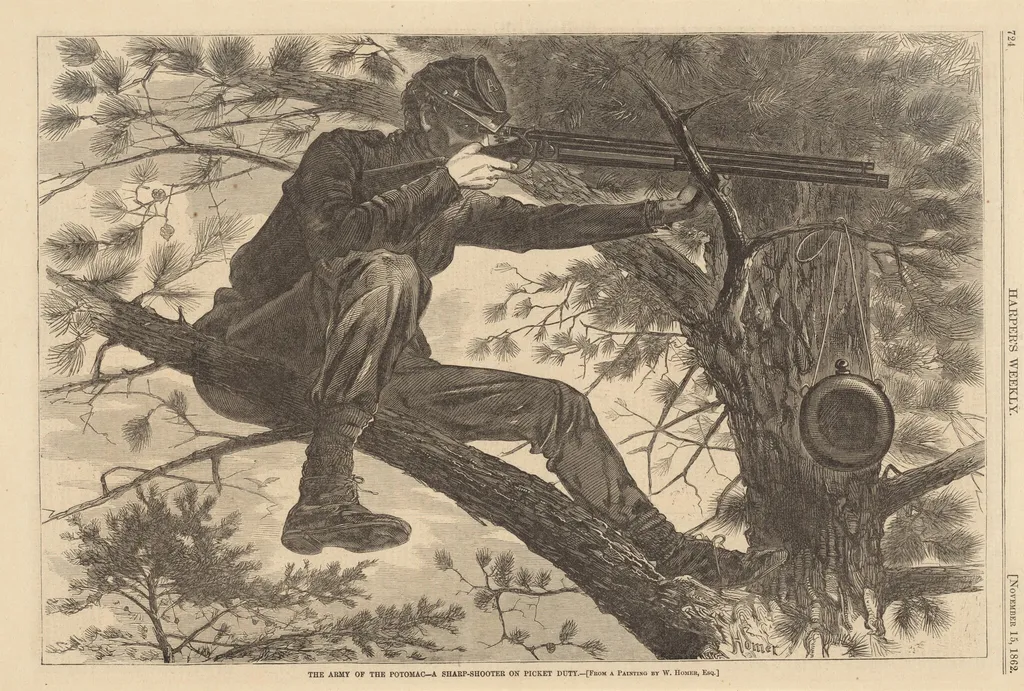
The Army of the Potomac - A Sharp-Shooter on Picket Duty is an ink print by the Impressionist artist American 19th Century. It dates from 1862 and is held in the collection of the National Gallery of Art. This wood engraving depicts a Union soldier on solitary picket duty during the American Civil War.
About this work
Overview
Sharp, linear engraving techniques define the textures of bark, fabric, and shadow, emphasizing stillness over action.
This wood engraving depicts a Union soldier on solitary picket duty during the American Civil War. Rendered on newsprint, the image captures a quiet moment of vigilance rather than combat. The soldier is positioned high in a tree, rifle in hand, his form blending with the bare winter branches. Sharp, linear engraving techniques define the textures of bark, fabric, and shadow, emphasizing stillness over action.
Subject & Meaning
The figure represents the mundane yet critical role of reconnaissance in wartime. Isolated and motionless, the sharpshooter embodies the tension of waiting—alert but unseen. The hanging pot suggests daily survival routines amid hardship. The composition avoids drama, instead highlighting the psychological weight of solitary duty, far from the chaos of battlefields.
Technique & Style
Executed as a wood engraving, the image relies on fine, incised lines to create contrast and depth. The artist used repeated, precise strokes to model shadows and suggest texture in the tree bark and clothing. The high-contrast black-and-white palette enhances the starkness of the scene, typical of illustrated newspapers of the era, where clarity and reproduction speed were essential.
History & Provenance
Created during the Civil War, the print likely appeared in a periodical such as Harper’s Weekly, which regularly featured battlefield illustrations. Wood engravings like this were mass-produced for public consumption, offering civilians a visual connection to the war. The original plate may have been carved from boxwood, a common medium for fine engraving at the time.
Context
Picket duty was a common, exhausting task for infantrymen, requiring constant vigilance against enemy movement. Artists often depicted such moments to humanize soldiers beyond battlefield heroics. This image aligns with a broader trend in wartime illustration that valued realism and quiet observation over glorification, reflecting the public’s appetite for authentic portrayals of military life.
Legacy
The engraving contributes to a visual record of Civil War soldiering that prioritizes endurance over spectacle. Its technique influenced later journalistic illustration and helped establish wood engraving as a medium for documentary realism. Today, it remains a reference for understanding how wartime experiences were communicated to domestic audiences through print media.
Artist & collection

Artist
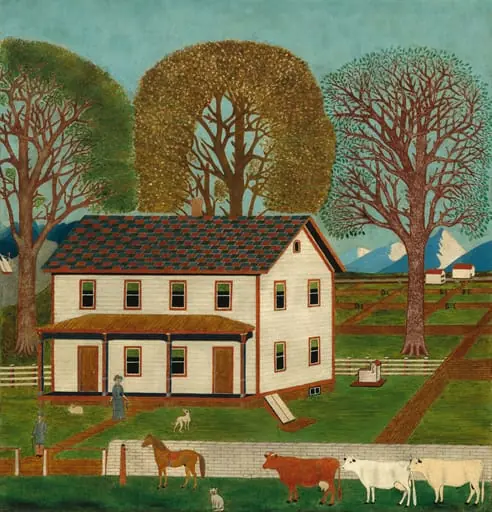
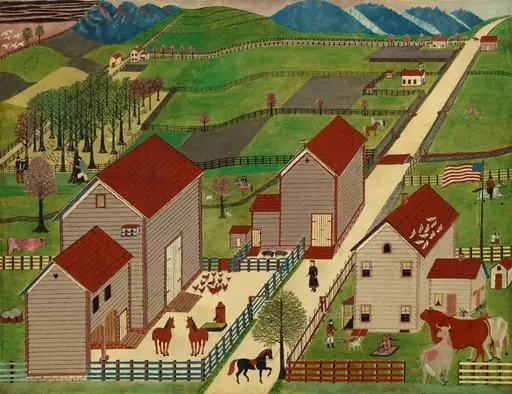
This artist painted everyday American life in the 1800s. Look at *Farmhouse in Mahantango Valley*—a quiet, sunlit scene of rural Pennsylvania. *Boy and Girl* shows two children standing close, their faces turned toward…

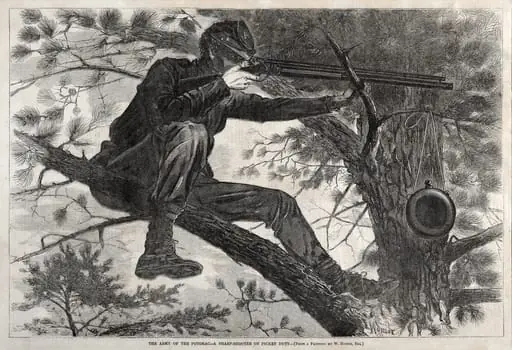 The Army of the Potomac - A Sharpshooter on Picket Duty
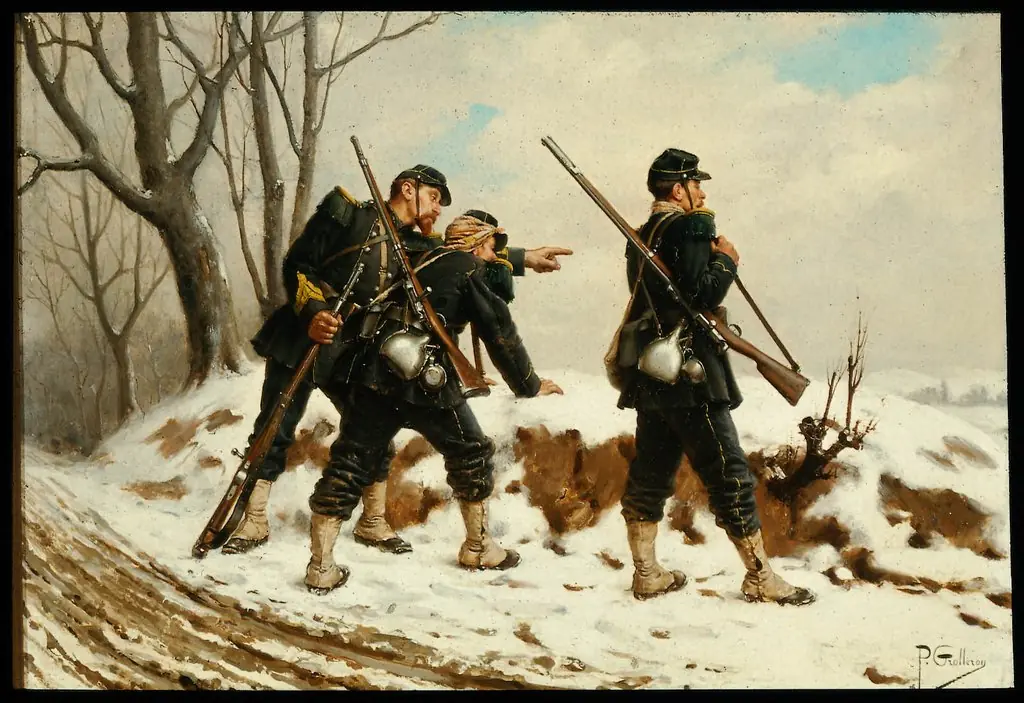 French Soldiers in the Snow
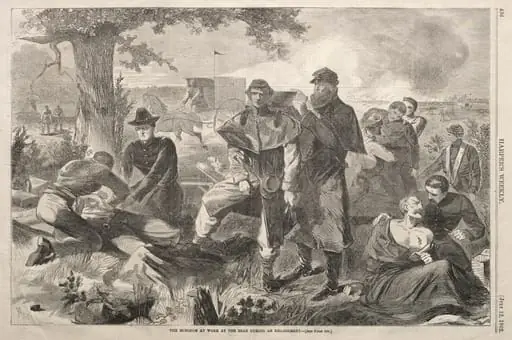 The Surgeon at Work at the Rear during an Engagement
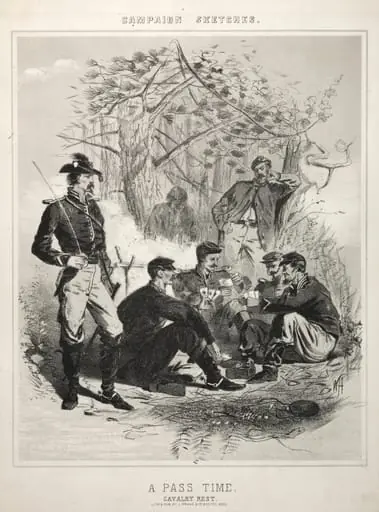 Campaign Sketches: A Pass Time
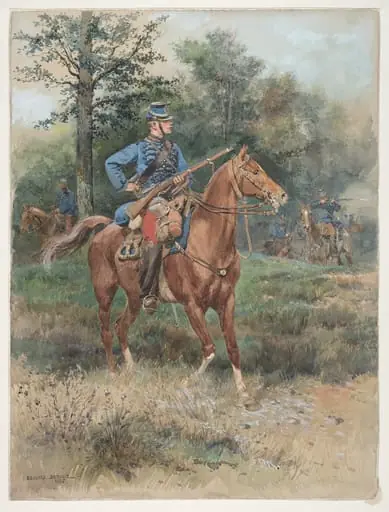 Chasseur à Cheval (Soldier on Horseback)
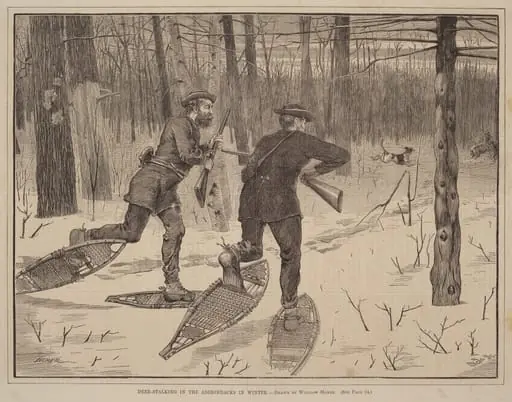 Deer-Stalking in the Adirondacks in Winter
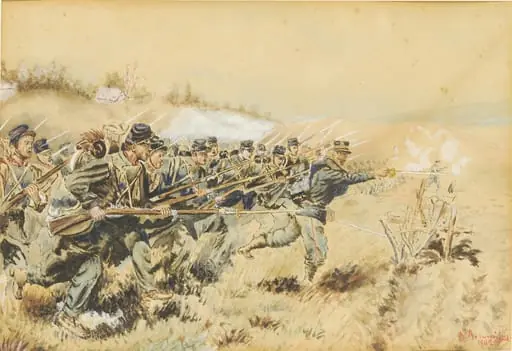 Υδατογραφία του ελληνικού στρατού κατά τον Ελληνοτουρκικό πόλεμο του 1897
 After a Good Day's Sport