Artwork
The Blue Shawl
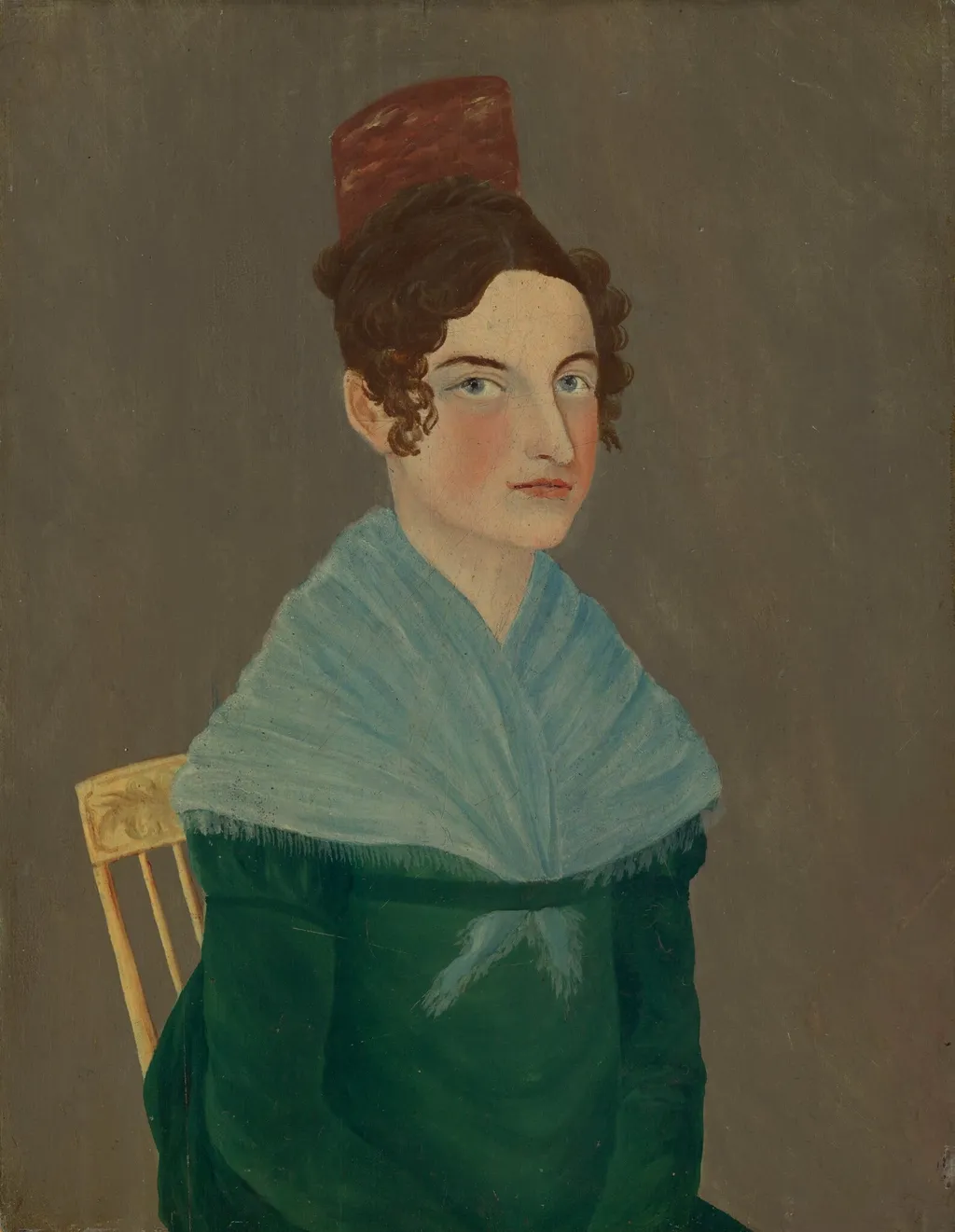
The Blue Shawl is an oil painting. It dates from 1820 and is held in the collection of the National Gallery of Art.
About this work
She wears a dark green dress with long sleeves and a light blue shawl draped over her shoulders, featuring a fringe along the edges.
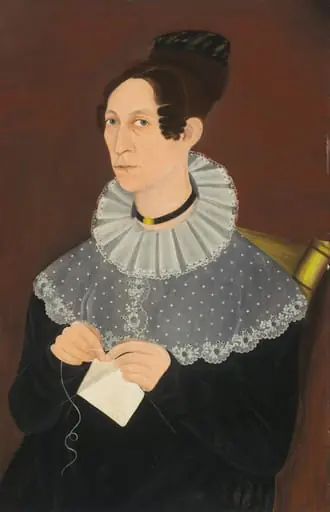
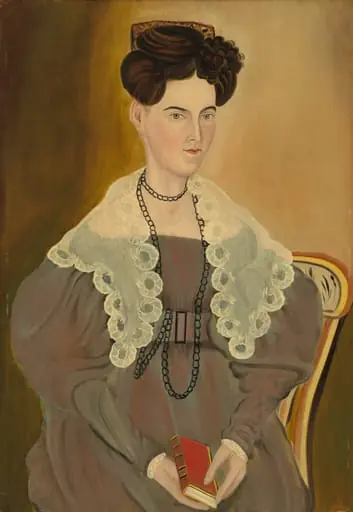
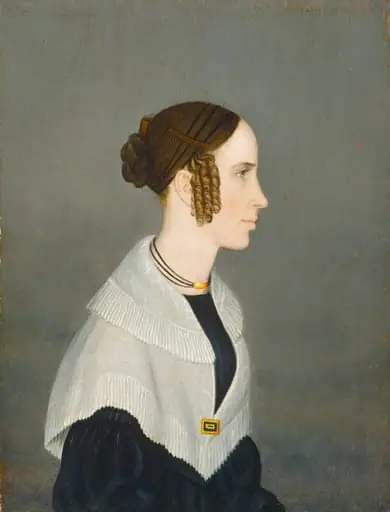
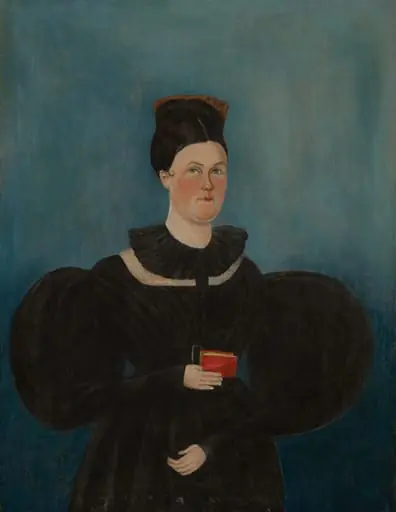
This painting depicts a woman seated in a chair, turned slightly to her right. She wears a dark green dress with long sleeves and a light blue shawl draped over her shoulders, featuring a fringe along the edges. Her curly brown hair is styled in an updo, and she sports a reddish-brown hat. The background of the painting is a muted brown color.
The woman's attire and hairstyle suggest that the painting was created in the early 19th century. The use of oil on wood as the medium adds to the overall sense of age and tradition.
For more information on the Romanticism movement, which influenced this painting, explore the Romanticism movement.
Overview
The work, titled The Blue Shawl, is an oil painting executed on a wooden panel. It portrays a seated woman turned slightly toward her right, set against a muted brown backdrop. Her attire—a dark green dress with long sleeves and a light blue shawl edged with fringe—along with her up‑do hairstyle and reddish‑brown hat, define the composition’s focal point.
Subject & Meaning
The figure’s relaxed pose and modest dress suggest a domestic or private setting typical of early‑19th‑century portraiture. The contrast between the deep green dress and the delicate blue shawl may highlight personal taste or status, while the subdued background keeps attention on the sitter’s presence.
Technique & Style
Rendered in oil on wood, the painting employs the smooth, controlled brushwork characteristic of the period. The subtle modeling of flesh tones and the careful rendering of fabric textures reflect a Romantic sensibility, emphasizing emotion through colour and tactile detail rather than strict academic realism.
History & Provenance
Stylistic cues—such as the woman’s hairstyle, clothing, and the use of oil on a wooden support—place the work in the early nineteenth century. No specific artist or ownership records are provided, indicating that its provenance remains undocumented beyond these visual indicators.
Context
The piece aligns with Romanticism’s interest in individual feeling and the portrayal of everyday subjects. While not overtly dramatic, the painting’s emphasis on personal attire and intimate setting mirrors the movement’s broader shift away from grand historical narratives toward more personal, emotive scenes.
Own this work as a print
Artist & collection