Artwork
The Cat
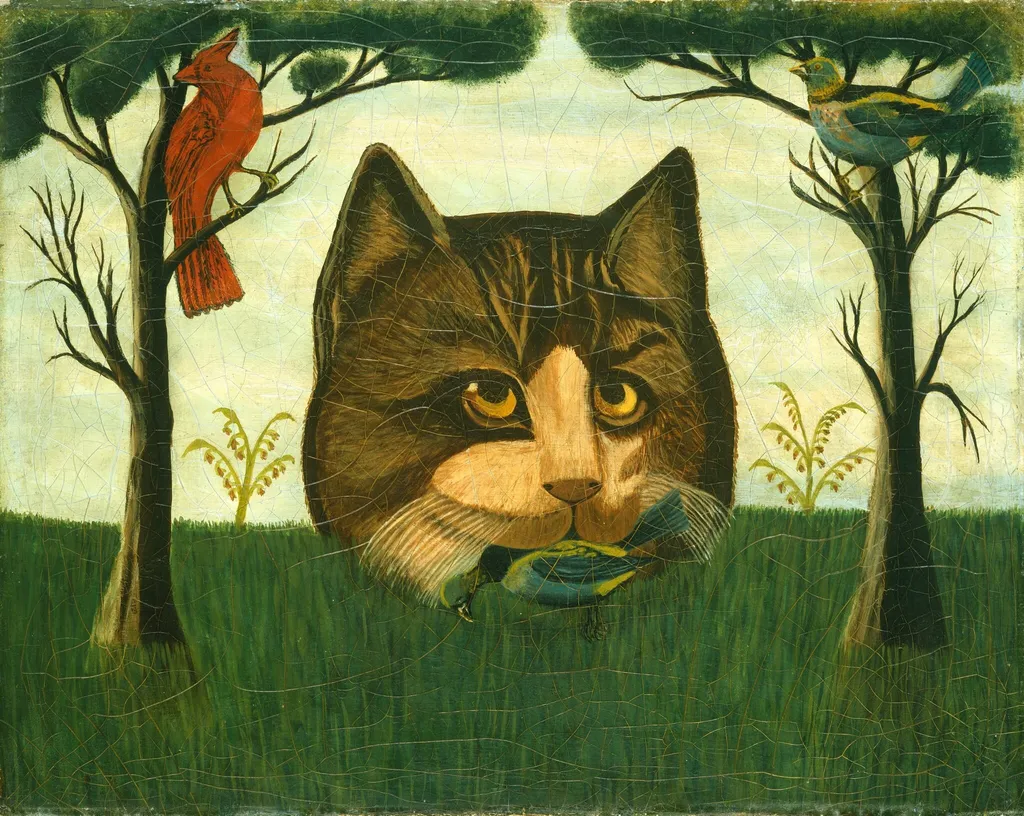
The Cat is an oil painting. It dates from 1874 and is held in the collection of the National Gallery of Art.
About this work
The artist's use of oil on canvas creates a sense of depth and texture, drawing the viewer's eye to the cat's expressive face.
The painting, titled "The Cat," showcases a feline face in the center, surrounded by a serene landscape. The cat's fur is depicted in shades of brown and black, with a white patch on its nose. In the background, a grassy field stretches out, dotted with trees and birds perched on branches. A red bird sits on a tree to the left, while a blue bird is positioned on a tree to the right.
The artist's use of oil on canvas creates a sense of depth and texture, drawing the viewer's eye to the cat's expressive face. The overall atmosphere of the painting is one of tranquility, inviting the viewer to step into the peaceful world depicted.
For more information on the artist's style and techniques, explore the works of American 19th Century.
Overview
The oil painting entitled “The Cat” presents a central feline portrait framed by a calm rural setting. The cat’s face, rendered in brown, black and a white nose spot, commands the composition, while a meadow with scattered trees and birds extends into the background. The work balances the animal’s presence with a tranquil landscape, creating a harmonious visual field.
Subject & Meaning
At the heart of the canvas lies the cat, its expressive visage suggesting quiet contemplation. Flanking the animal, a grassy plain populated by trees and perched birds introduces a sense of natural serenity. The juxtaposition of the domestic creature with the open countryside may evoke themes of harmony between the familiar and the wild, inviting viewers to pause within a peaceful environment.
Technique & Style
Executed in oil on canvas, the artist employs layered brushwork to achieve depth and tactile surface quality. Varied tonal values in the cat’s fur—rich browns and deep blacks contrasted with a bright white nose—enhance three‑dimensionality. The background’s softer hues and delicate rendering of foliage and avian forms provide atmospheric perspective, guiding the eye back from the central figure.
Context
While specific details about the creator remain unspecified, the painting reflects a tradition of integrating animal portraiture within idyllic landscapes, a motif common in European genre works of the 19th and early 20th centuries. The inclusion of vividly colored birds—red on the left, blue on the right—adds compositional balance and may reference contemporary interests in natural observation.
Own this work as a print
Artist & collection
