Artwork
Village by the River
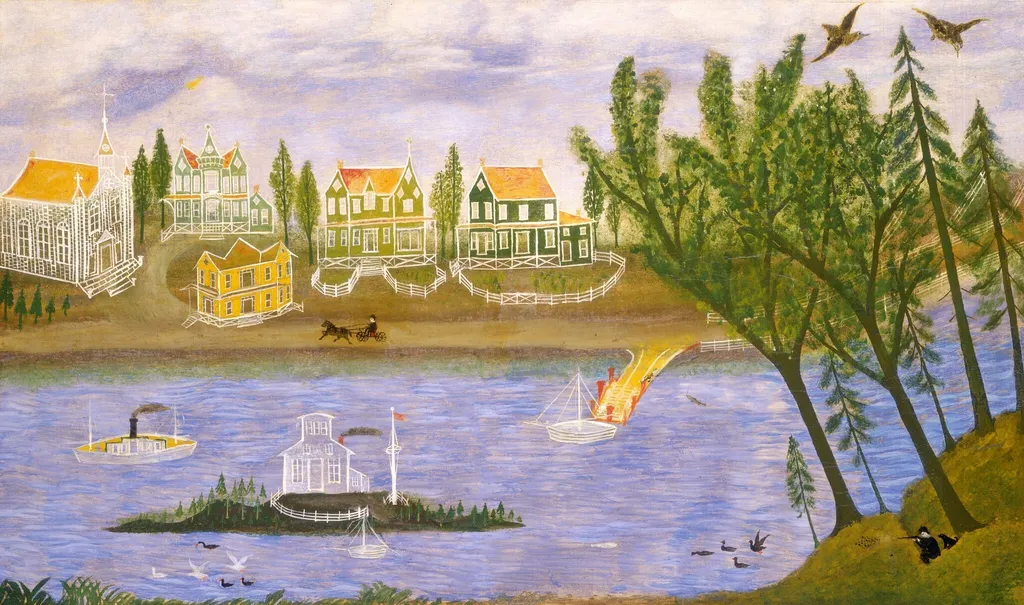
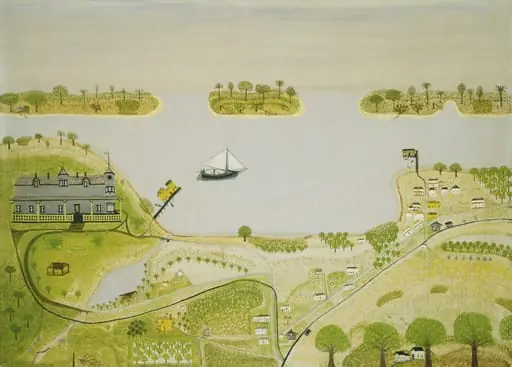
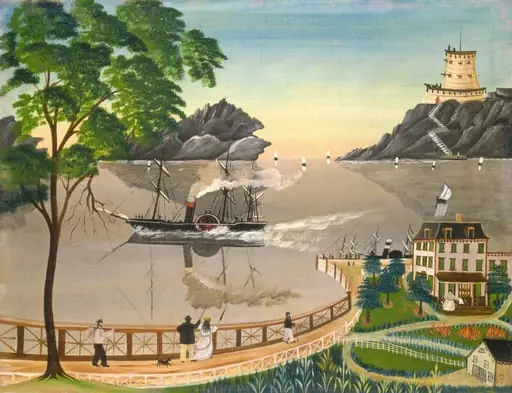
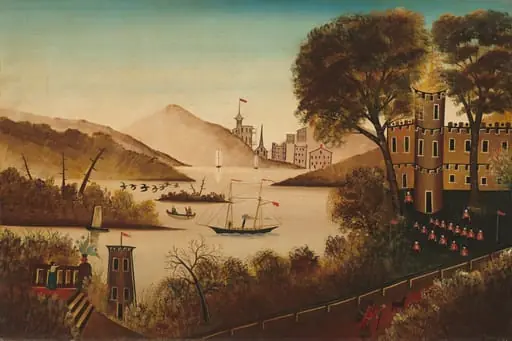
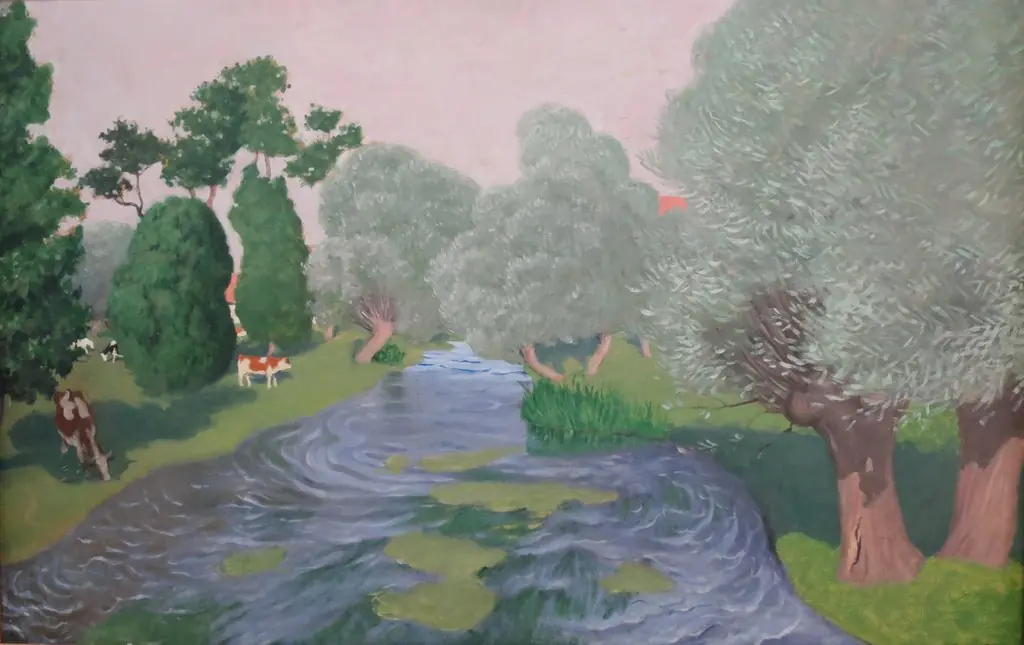
Village by the River is an oil painting. It dates from 1887 and is held in the collection of the National Gallery of Art. The canvas presents a riverside settlement where modest dwellings line a winding road that meets a flowing waterway.
About this work
Overview
The canvas presents a riverside settlement where modest dwellings line a winding road that meets a flowing waterway. A horse‑drawn carriage traverses the dirt track, while various vessels, including a steamboat, occupy the river’s surface. Trees punctuate the scene, framing the village against a bright sky rendered in vivid yellows, greens, and blues.
Subject & Meaning
The composition captures everyday life in a rural community, emphasizing the interaction between land and water. The presence of both traditional horse‑drawn transport and a modern steamboat hints at a transitional period, suggesting a balance between longstanding agrarian routines and emerging industrial influences within the locale.
Technique & Style
The artist delineates structures and fences with thin white lines, a device that separates forms while preserving a luminous quality. Brushwork combines the fleeting light effects of Impressionism with the detailed observation characteristic of Realism, resulting in a bright palette that conveys atmosphere without abandoning recognizable detail.
Context
Created within the broader 19th‑century movement that sought to depict contemporary scenes, the work reflects the era’s fascination with modernity’s impact on provincial settings. Its dual alignment with Impressionist light treatment and Realist fidelity situates it among paintings that document societal change through accessible, everyday subjects.
Own this work as a print
Artist & collection