Artwork
Watermelon on a Plate
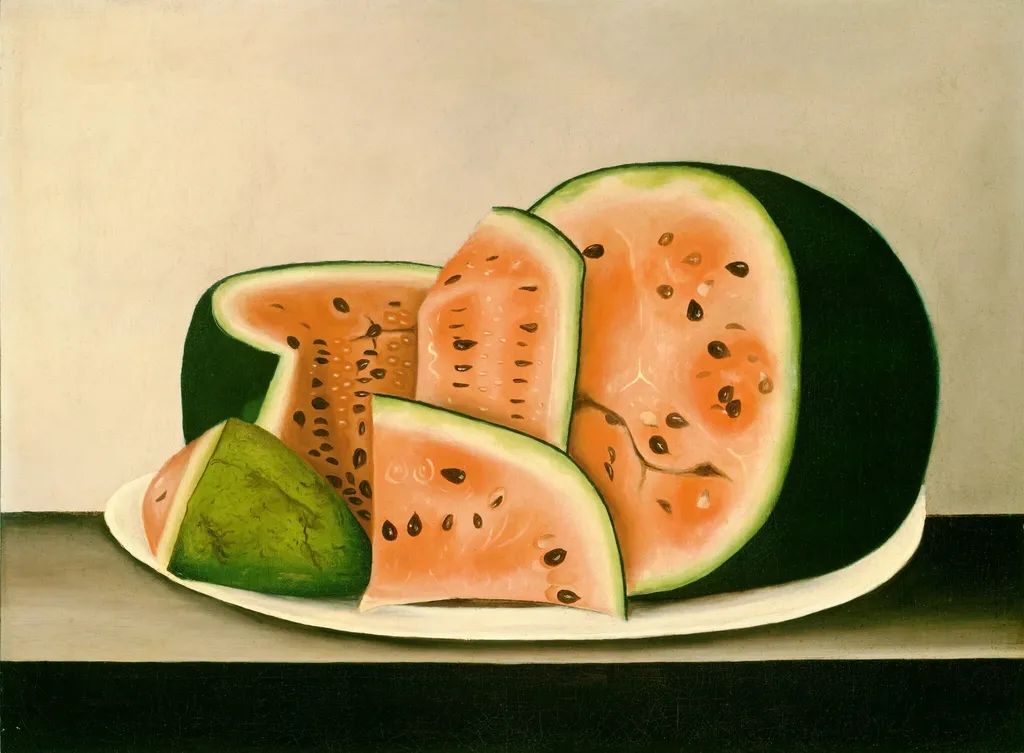
Watermelon on a Plate is an oil painting. It dates from 1850 and is held in the collection of the National Gallery of Art. The work is an oil painting on canvas that depicts a single white plate bearing several slices of watermelon.
About this work
Overview
The fruit’s flesh is rendered in pink with its characteristic black seeds, and the green rind is visible at the edges.
The work is an oil painting on canvas that depicts a single white plate bearing several slices of watermelon. The largest slice occupies the right side of the plate, while smaller pieces are arranged around it. The fruit’s flesh is rendered in pink with its characteristic black seeds, and the green rind is visible at the edges. The background is a uniform light tone, and no other objects or figures appear.
Subject & Meaning
The composition isolates the everyday act of serving fruit, focusing attention on the visual qualities of the watermelon—its color contrast, texture, and form. By presenting the food without any surrounding narrative elements, the painting invites contemplation of the simple, sensory experience of a summer fruit.
Technique & Style
Executed in oil, the artist employs a smooth, controlled brushwork that emphasizes the glossy surface of the watermelon flesh and the matte quality of the plate. The limited palette and restrained background align the piece with a pared‑down aesthetic, reminiscent of the still‑life traditions that emerged during the Romantic period, though the work does not display overtly dramatic lighting.
History & Provenance
No specific information about the painting’s creator, date of execution, or ownership history is provided. Consequently, details regarding its exhibition history or collection are unavailable.
Own this work as a print
Artist & collection