Artwork
"We Go for the Union"
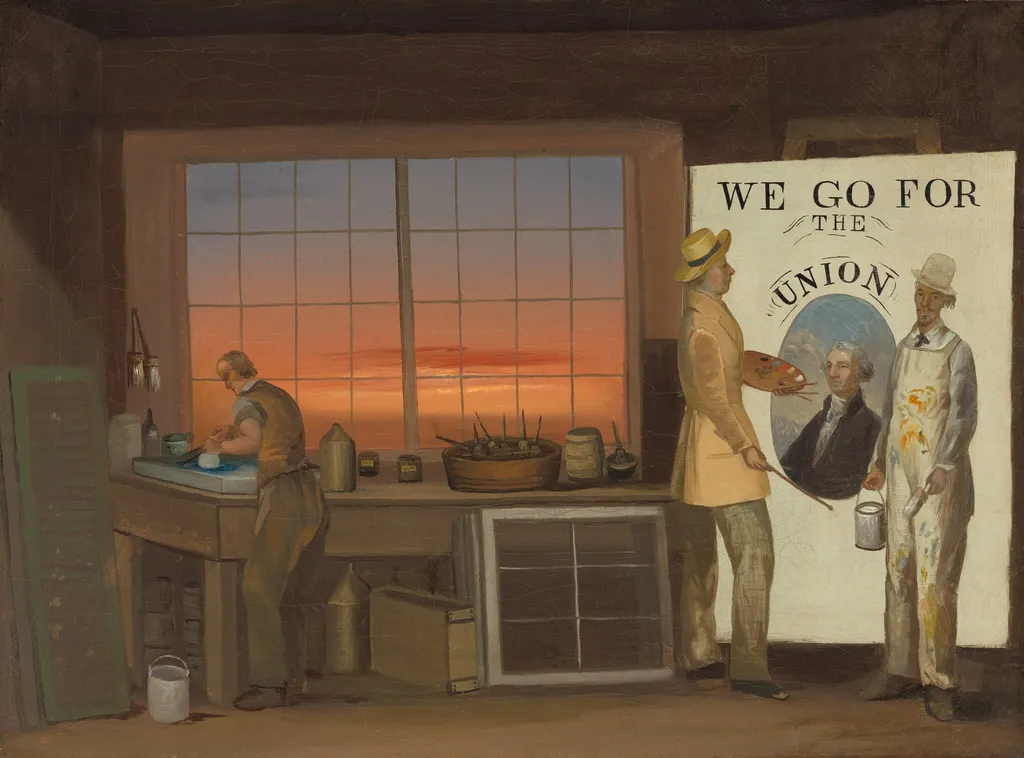
"We Go for the Union" is an oil painting. It dates from 1845 and is held in the collection of the National Gallery of Art. The oil on canvas presents an interior scene illuminated by a large window.
About this work
Overview
The composition centers on the sign that declares “We Go for the Union” and displays a portrait of an additional individual.
The oil on canvas presents an interior scene illuminated by a large window. Within the room three figures are engaged in distinct tasks: one is washing at a basin, another holds a paintbrush and palette while studying a prominent sign, and a third, dressed in an apron, carries a can. The composition centers on the sign that declares “We Go for the Union” and displays a portrait of an additional individual.
Subject & Meaning
The work juxtaposes everyday labor with a political declaration. The figure with the brush appears to contemplate the slogan, suggesting an artistic or ideological alignment with the unionist message. The presence of the washer and the laborer in apron underscores a connection between ordinary work and collective purpose, hinting at a broader social commentary on solidarity.
Technique & Style
Executed in oil, the painting employs the loose brushwork and emotive lighting typical of Romanticism, creating a sense of atmosphere within the interior. The handling of light from the window enhances the textures of the figures and objects, while the color palette balances muted tones with the vivid red of the sign, drawing the viewer’s focus to the central text.
Context
Created during the Romantic era, the piece reflects the period’s interest in individual feeling and national sentiment. The slogan on the sign references a contemporary political movement advocating union, situating the work within the social debates of its time. The inclusion of a portrait on the sign further ties the composition to specific leadership or propaganda associated with that cause.
Legacy
While not widely reproduced, the painting serves as a visual record of how Romantic artists incorporated political themes into domestic settings. It illustrates the era’s tendency to merge personal narrative with public discourse, offering scholars insight into the interplay between art, labor, and nationalist rhetoric in the nineteenth century.
Own this work as a print
Artist & collection