Artwork
Copy after St Lawrence befor the Emperor and Martyrdom of St Lawrence, Fra Angelico in the Niccoline Chapel (Vatican, Rome)
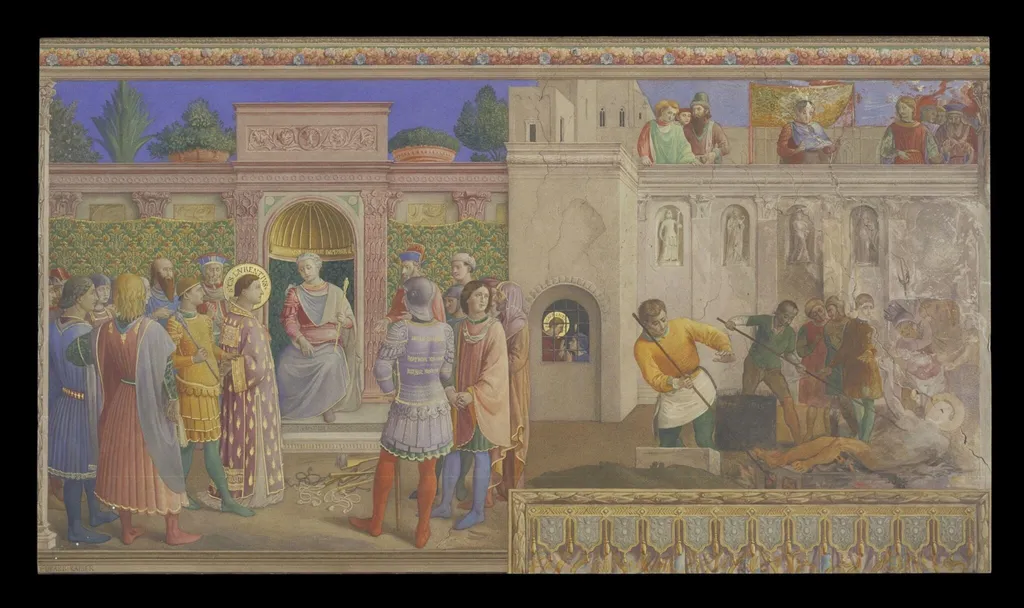
Copy after St Lawrence befor the Emperor and Martyrdom of St Lawrence, Fra Angelico in the Niccoline Chapel (Vatican, Rome) is a watercolor work on paper by the Early Renaissance artist Fra Angelico. It is held in the collection of the Victoria and Albert Museum.
About this work
Many people couldn’t travel to see it, so copies like this helped spread his fame.
This watercolor shows a scene from an old story. A man stands before a powerful ruler. The man’s calm face contrasts with the ruler’s angry expression.
It copies a much older fresco by Fra Angelico painted in a Vatican chapel. The copy was made in 1878 to share the Renaissance artist’s work. Many people couldn’t travel to see it, so copies like this helped spread his fame.
If you like this quiet drama, check out Fra Angelico’s original frescoes.
Overview
This watercolour is a 19th-century reproduction of scenes from Fra Angelico’s frescoes in the Niccoline Chapel, Vatican. Created in 1878 by Eduard Kaiser, it was commissioned by the Arundel Society to disseminate Renaissance imagery to a broader public. The work reflects the society’s mission to preserve and circulate visual records of historic art, especially when original works were inaccessible to most viewers.
Subject & Meaning
The scene depicts Saint Lawrence before Emperor Valerian, a moment from the martyr’s life as recounted in early Christian tradition. Lawrence, steadfast in his faith, confronts the emperor with quiet resolve, while the ruler’s posture conveys fury. This episode, part of a larger cycle illustrating the lives of Saints Stephen and Lawrence, emphasizes moral conviction in the face of persecution.
Technique & Style
Kaiser rendered the composition in watercolour, capturing the linear clarity and restrained palette of Fra Angelico’s original frescoes. While the medium is lighter than oil or fresco, the copy preserves the figures’ solemn dignity and spatial harmony. The technique prioritizes fidelity over embellishment, aligning with the Arundel Society’s documentary aims rather than artistic reinterpretation.
History & Provenance
The watercolour was produced in 1878 for the Arundel Society, established in 1848 to make high-quality reproductions of medieval and Renaissance art available to scholars and the public. Kaiser, an Austrian artist known for his reproductions, was commissioned to translate Fra Angelico’s Vatican frescoes into a portable format. The work entered circulation as part of a broader 19th-century effort to democratize access to art history.
Context
Fra Angelico painted the original frescoes between 1447 and 1451 for Pope Nicholas V’s private chapel, marking a shift toward more expressive narrative in his later work. In the 1870s, renewed interest in early Italian art coincided with the rise of art historical scholarship and photographic reproduction. Kaiser’s watercolour emerged within this climate, serving as both a scholarly tool and a cultural artifact of Victorian-era aesthetic reverence.
Legacy
Though not an original work, Kaiser’s watercolour played a role in sustaining awareness of Fra Angelico’s contributions beyond Rome. As part of the Arundel Society’s publications, it helped anchor the artist’s reputation in 19th-century art education. Such copies bridged the gap between elite collections and public knowledge, laying groundwork for modern art historical outreach.
Artist & collection
Artist
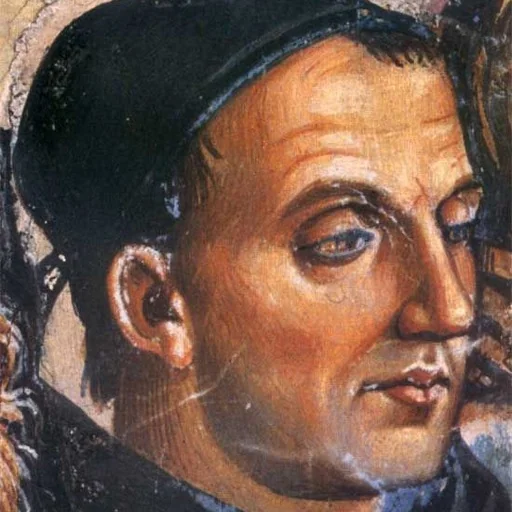
Fra Giovanni da Fiesole (born Guido di Pietro; c. 1395 – 18 February 1455), known posthumously as Fra Angelico ( FRAH an-JEL-ik-oh, Italian: ), was an Italian Dominican friar and painter active during the early…

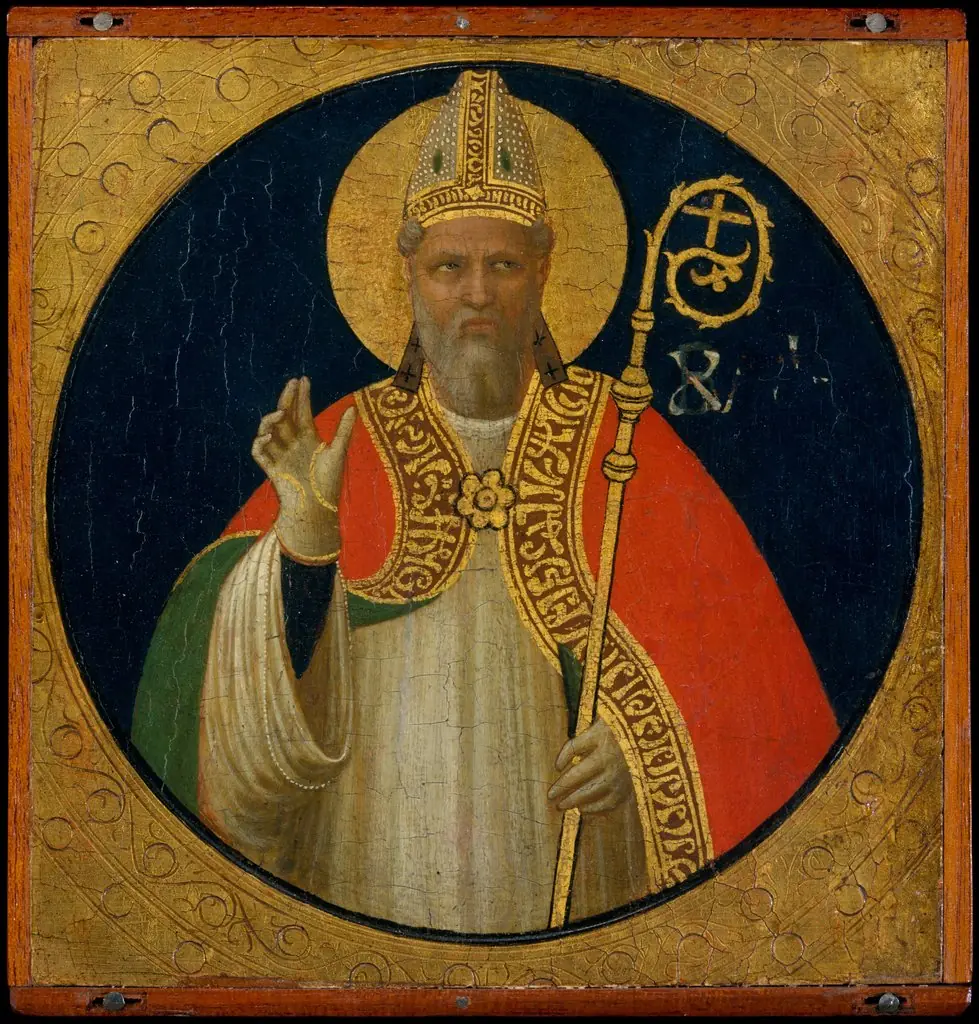
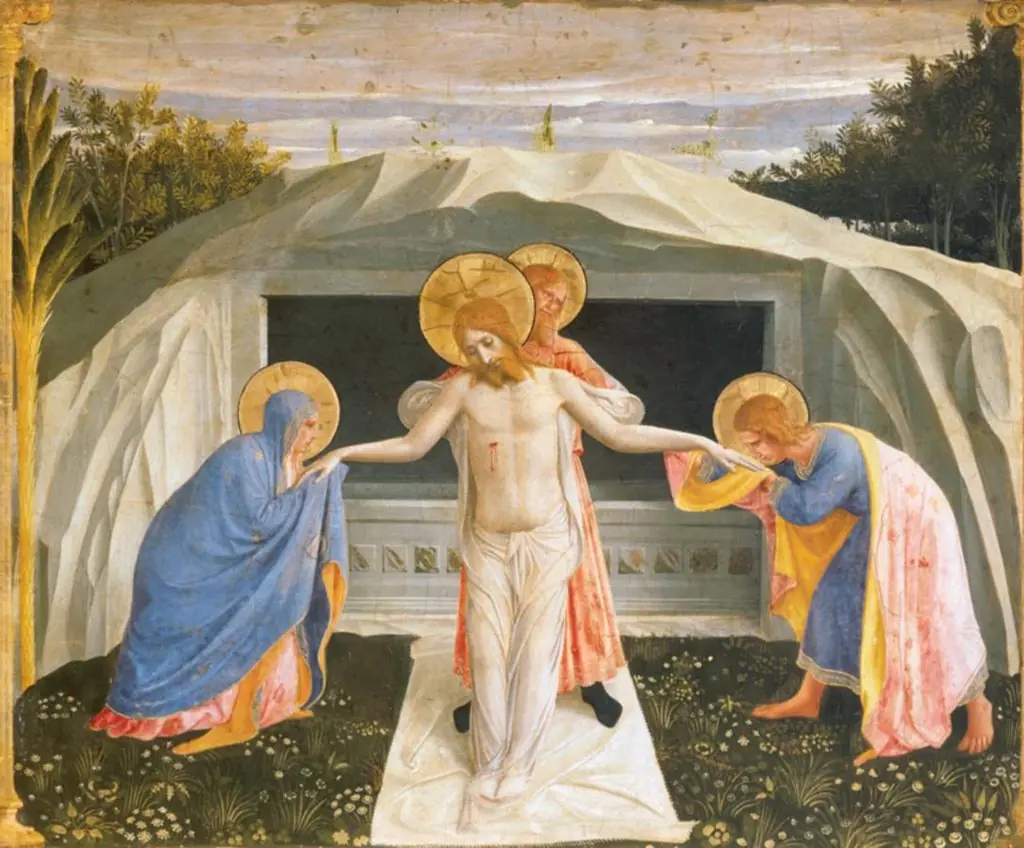
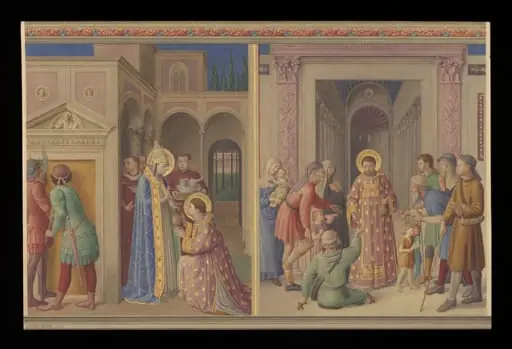 Copy after St Lawrence receiving the treasure of the Church and St Lawrence distributing Alms, Fra Angelico in the Niccoline Chapel (Vatican, Rome)
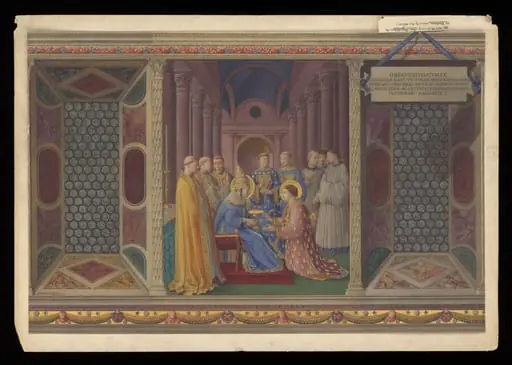 Copy after The Ordination of St Lawrence, Fra Angelico in the Niccoline Chapel (Vatican, Rome)
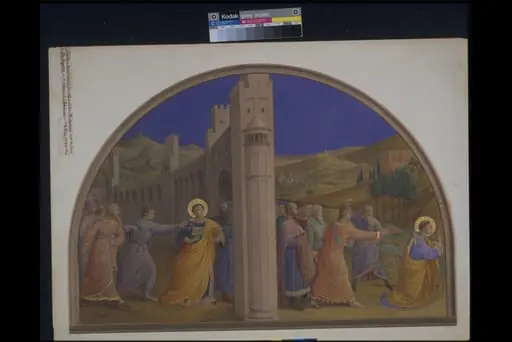 Copy after The Expulsion of St Stephen and The Martyrdom of St Stephen, Fra Angelico in the Niccoline Chapel (Vatican, Rome)
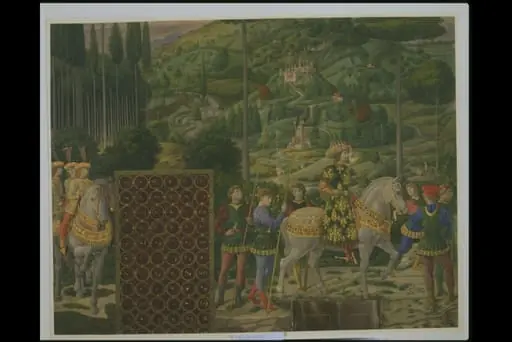 Copy after the fresco <i>The Procession of the Kings</i> (wall with the <i>Procession of the Middle King, Balthasar</i>), Benozzo Gozzoli in the Palazzo Medici-Riccardi Chapel, Florence
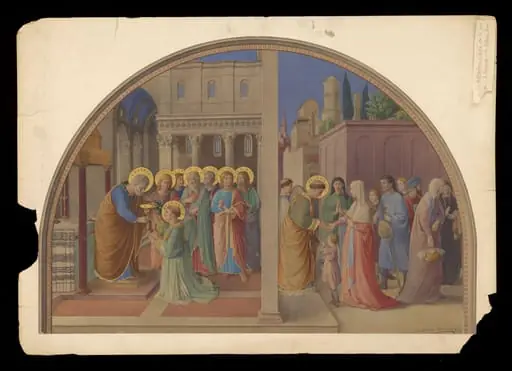 Watercolour, copy after The Ordination of St Stephen and St Stephen Distributing Alms, Fra Angelico in the Niccoline Chapel (Vatican, Rome)
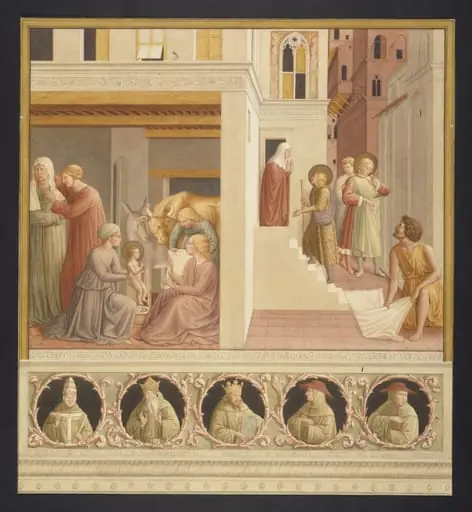 Copy after the cycle of the <i>Life of St Francis</i> (<i>Birth of St Francis</i>), Benozzo Gozzoli in San Francesco, Montefalco
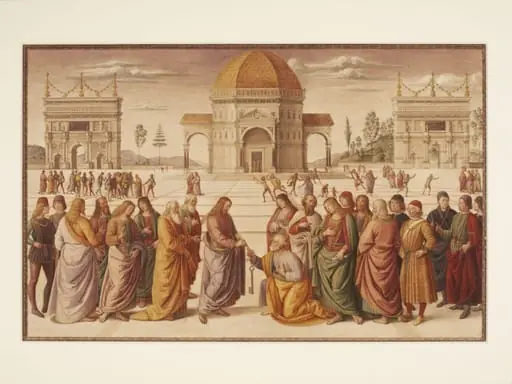 The Delivery of Keys to St Peter
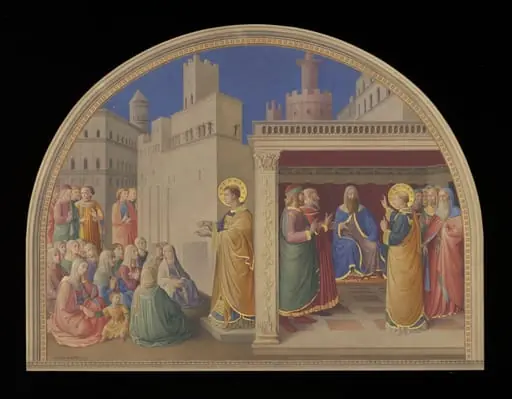 Copy after St Stephen preaching and St Stephen before the Council, Fra Angelico in the Niccoline Chapel (Vatican, Rome)