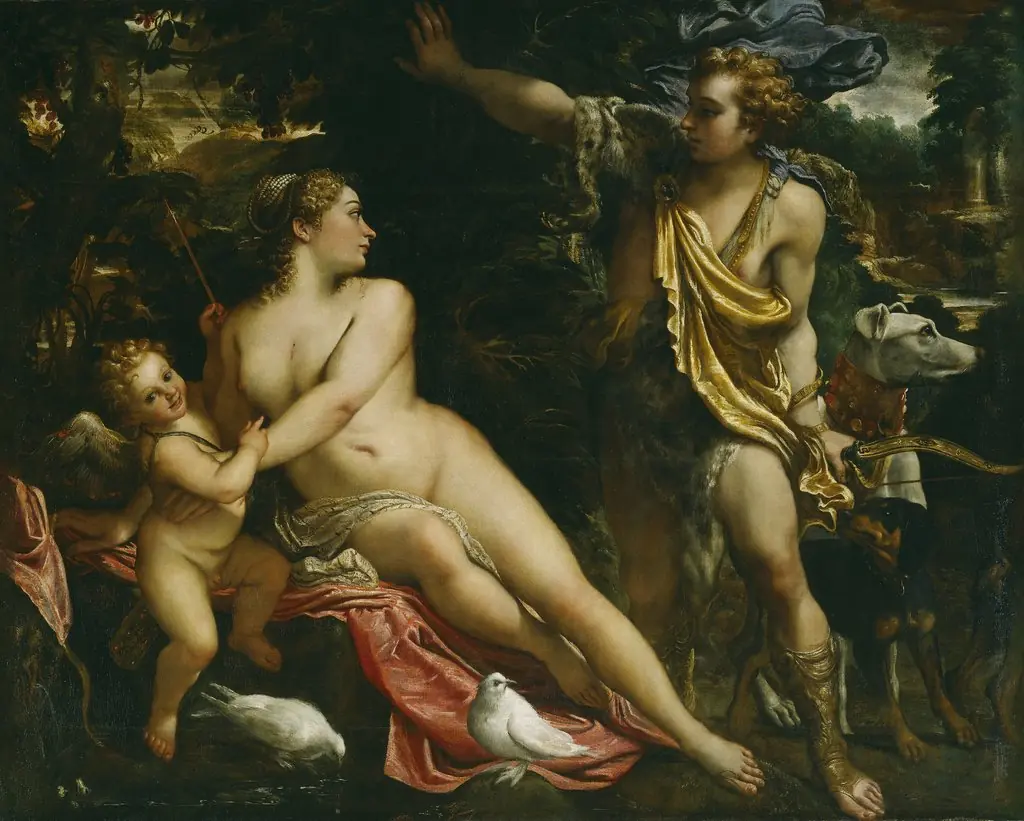
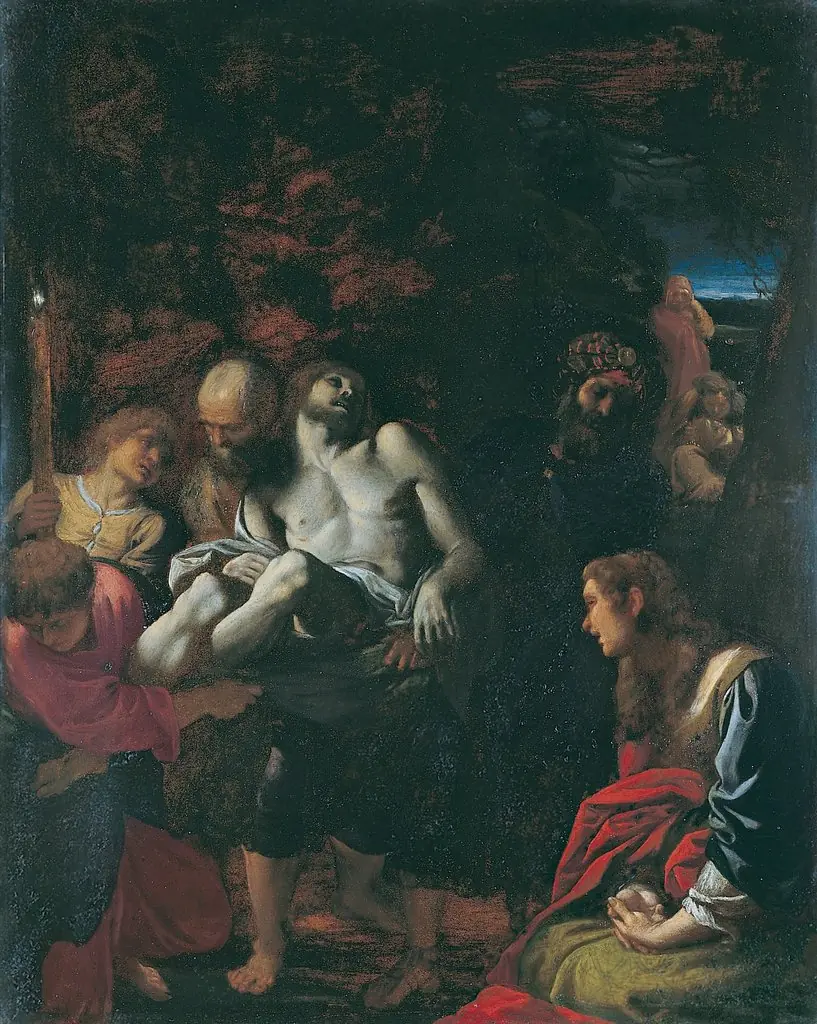
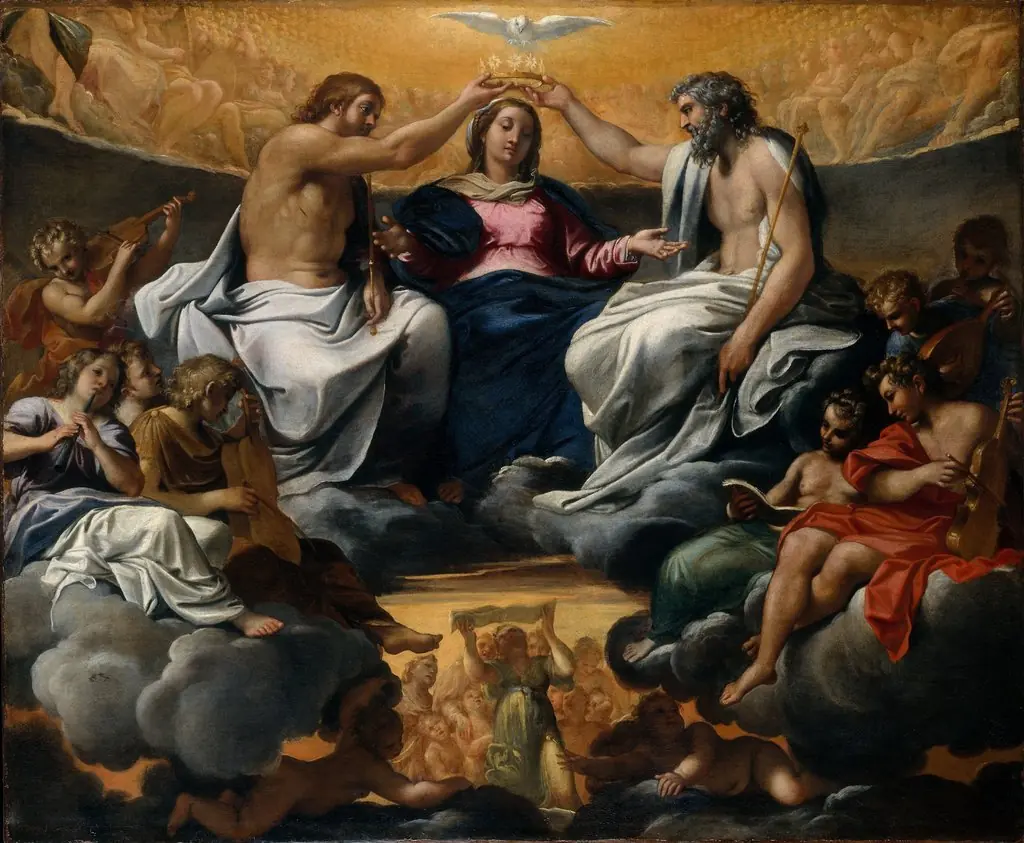
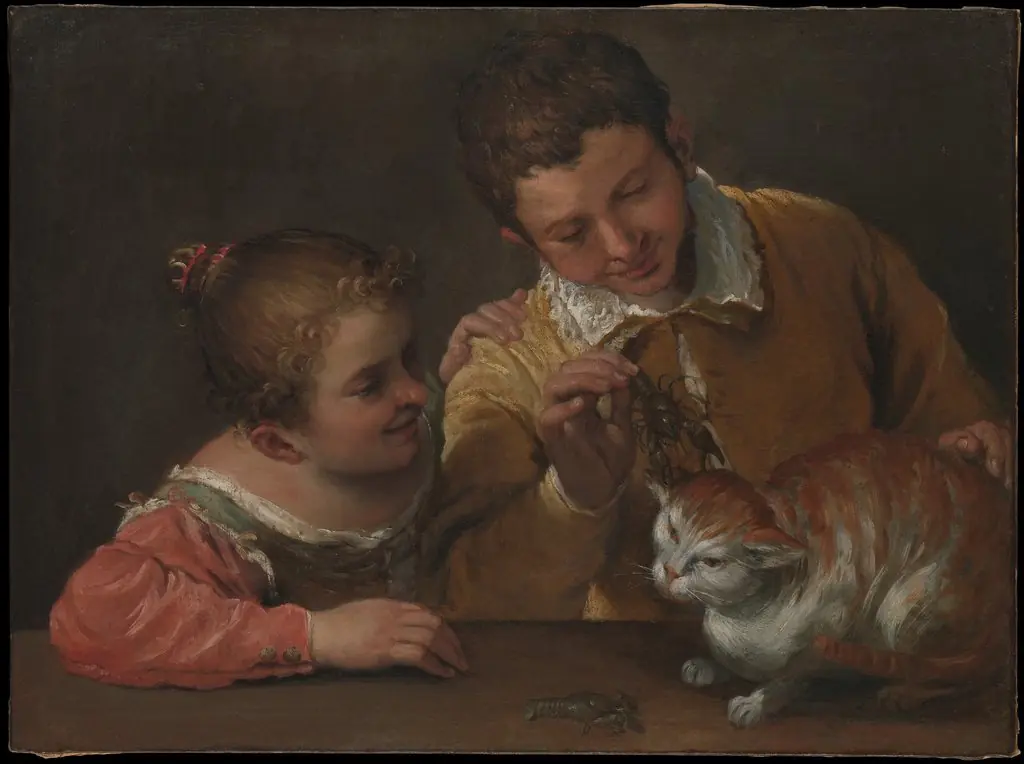
Artwork
Battesimo di Cristo
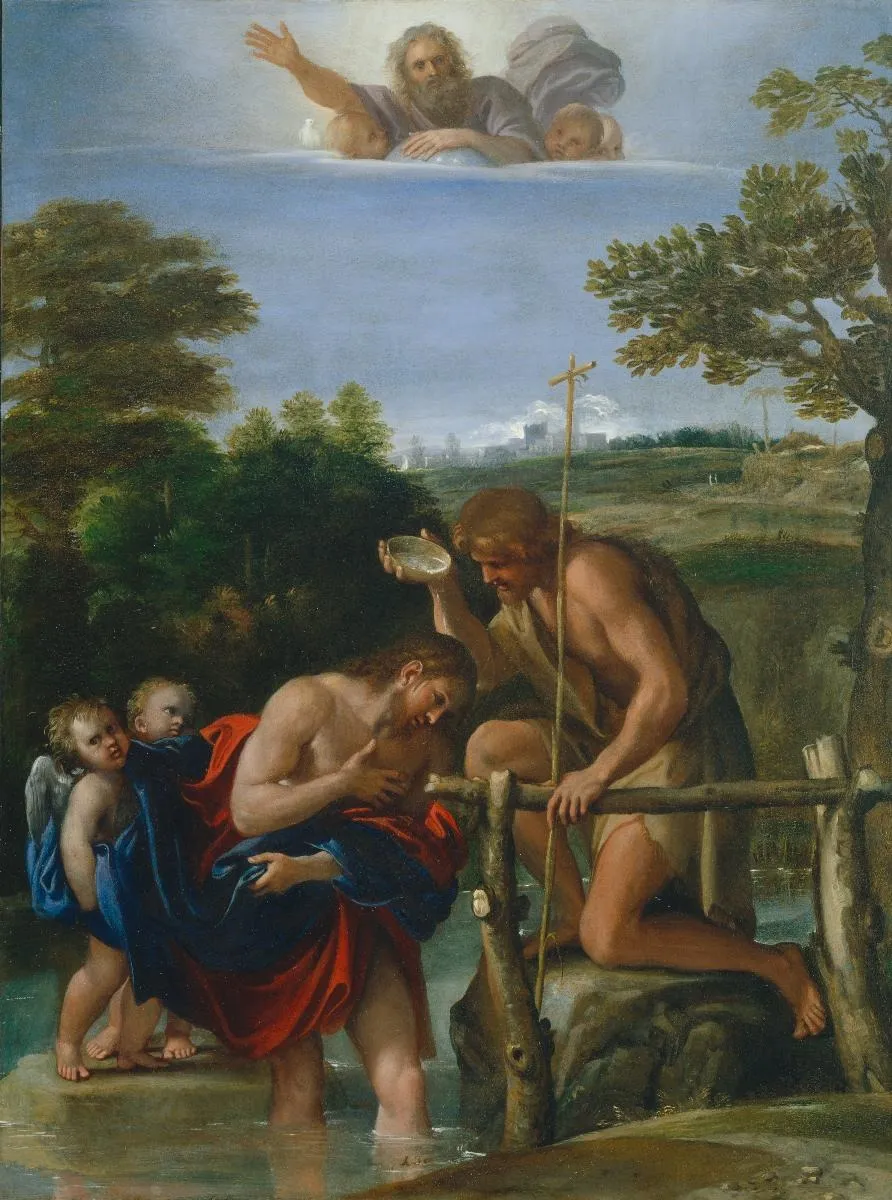
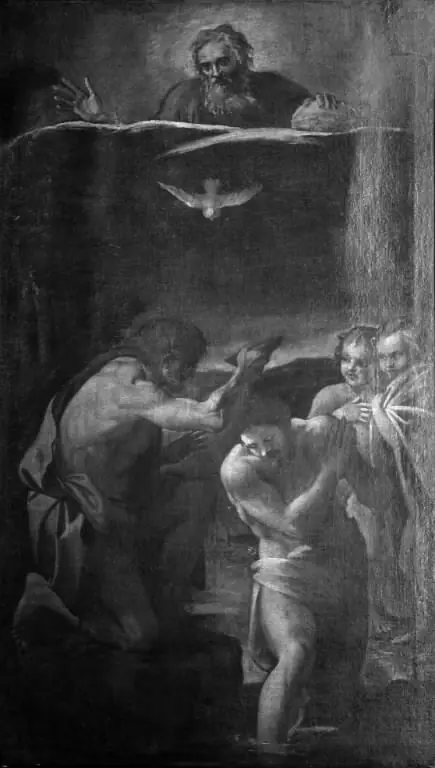
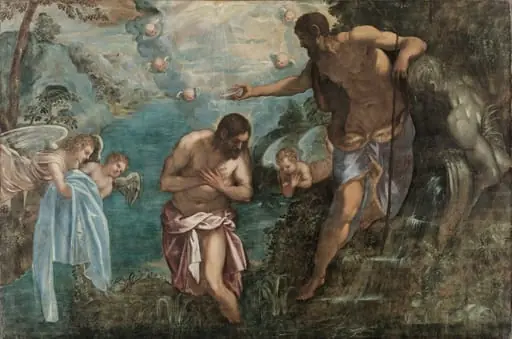
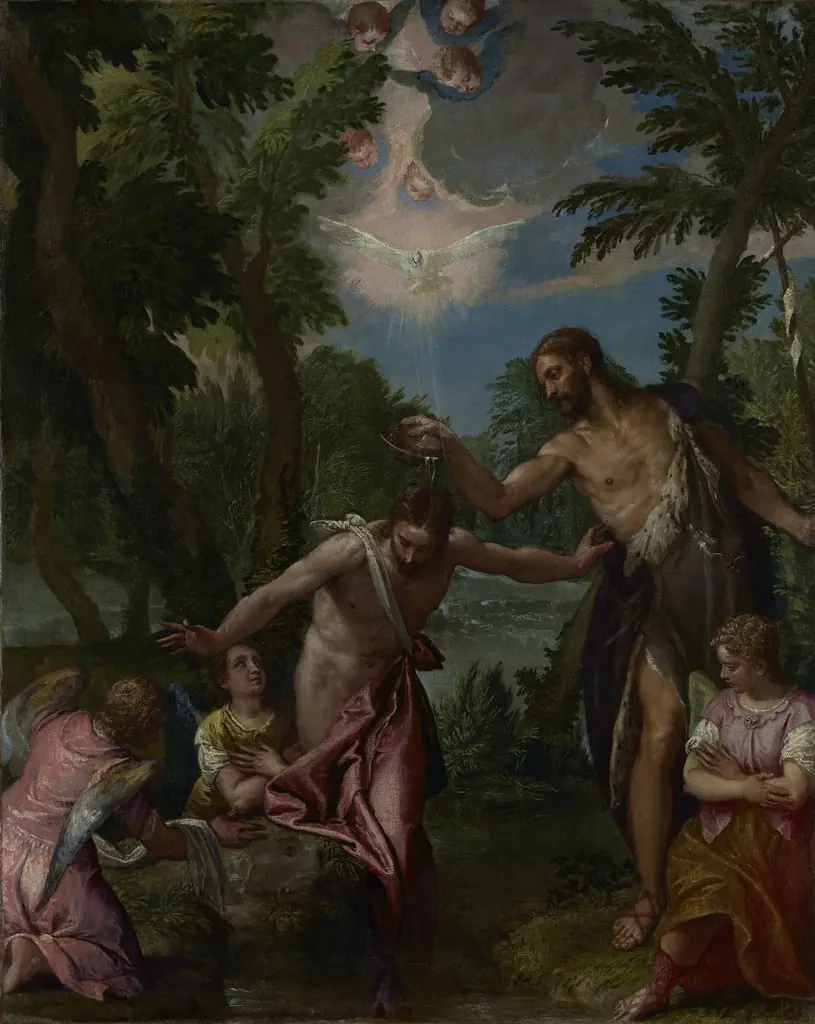
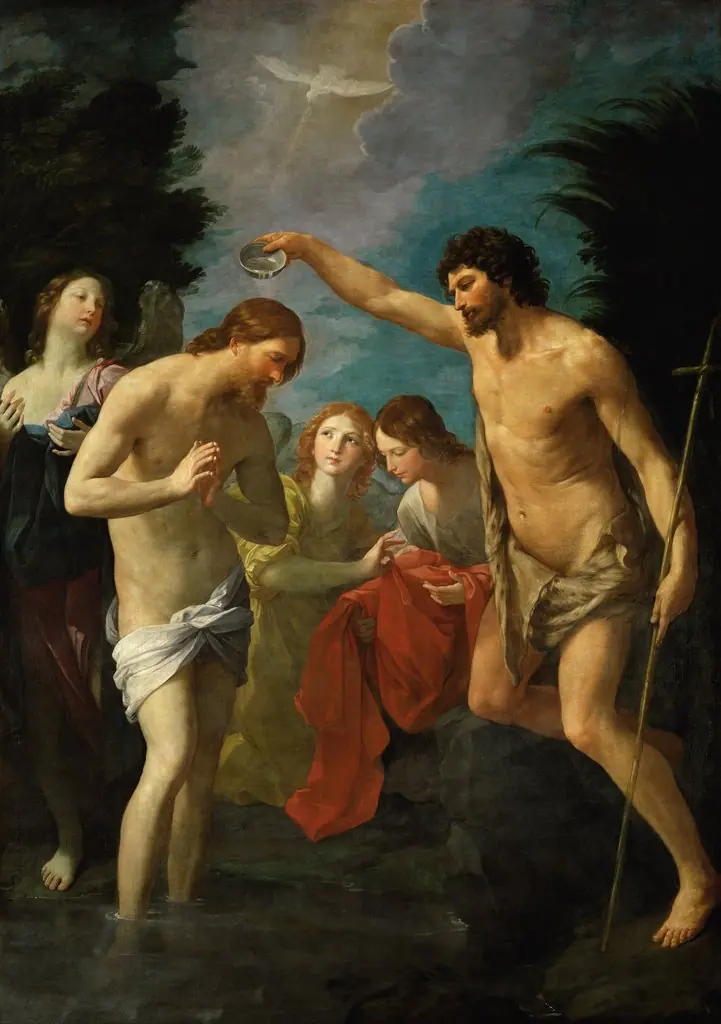
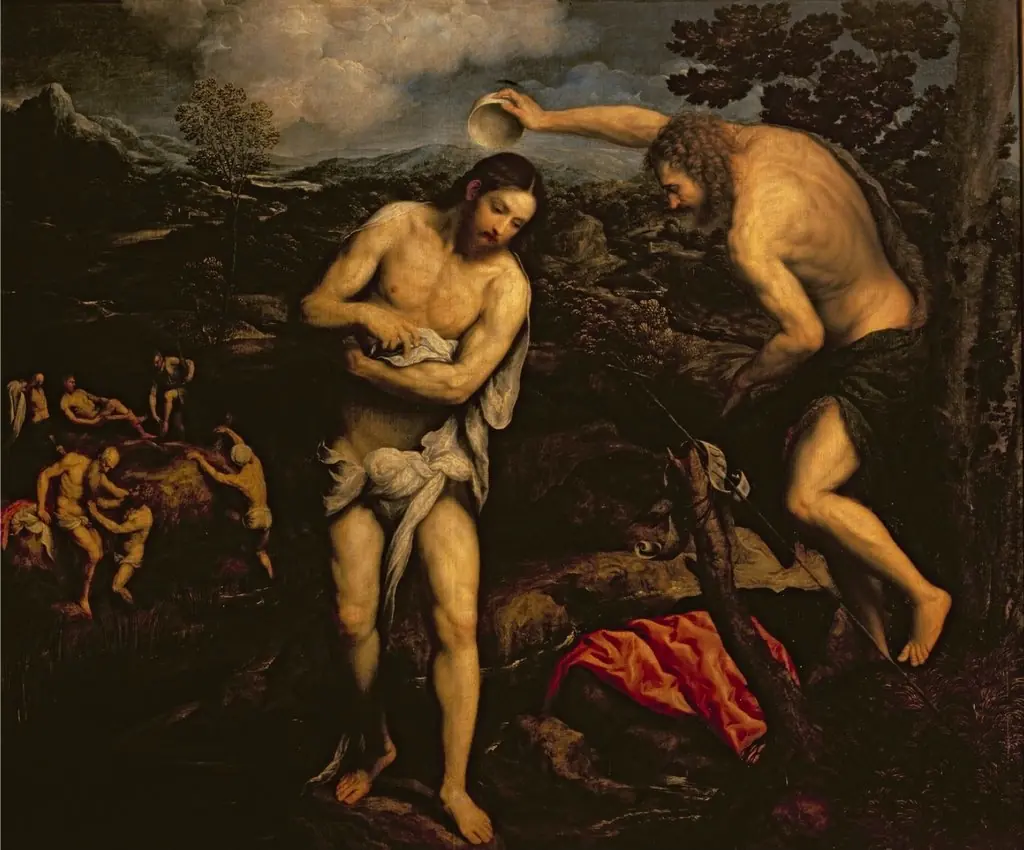
Battesimo di Cristo is an oil painting by the Early Baroque Italian artist Annibale Carracci. It dates from 1603 and is held in the collection of the Kunsthaus Zürich.
About this work
Overview
The painting is now part of the Kunsthaus Zürich collection, where it remains a quiet example of Carracci’s synthesis of naturalism and classical restraint.
Painted in 1603 on a small copper panel, *Battesimo di Cristo* is a devotional work by Annibale Carracci, reflecting his mature style developed during his time in Rome. The choice of copper as a support was characteristic of his later output, allowing for fine detail and luminous color. The painting is now part of the Kunsthaus Zürich collection, where it remains a quiet example of Carracci’s synthesis of naturalism and classical restraint.
Subject & Meaning
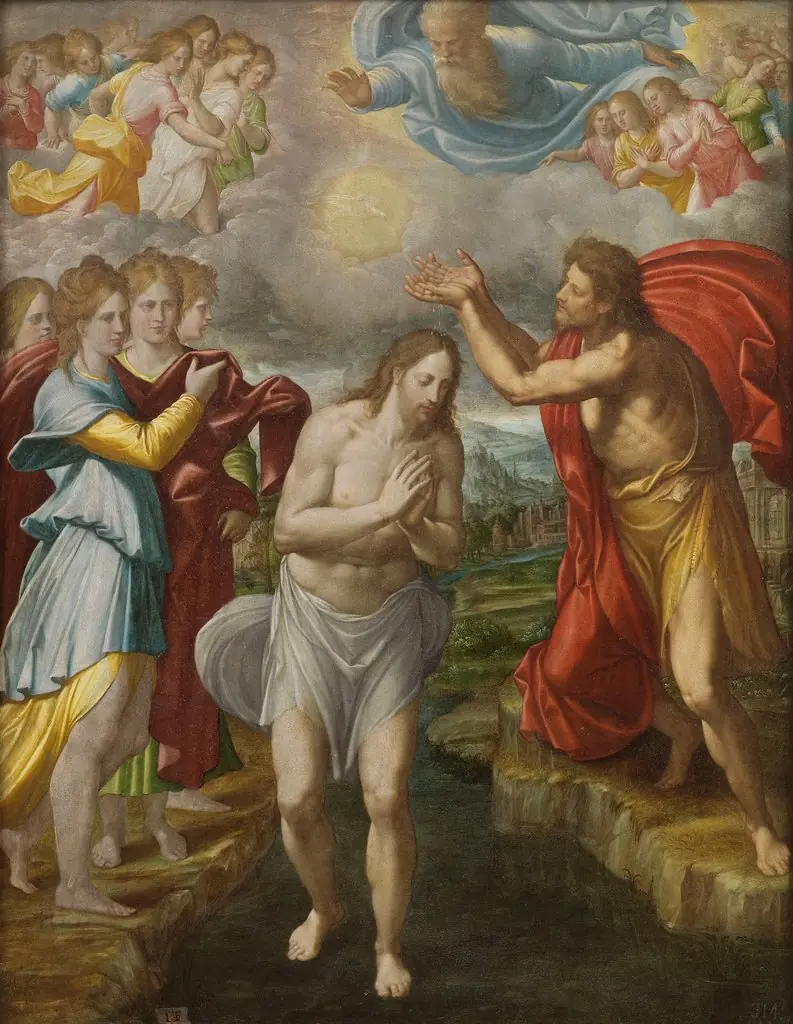
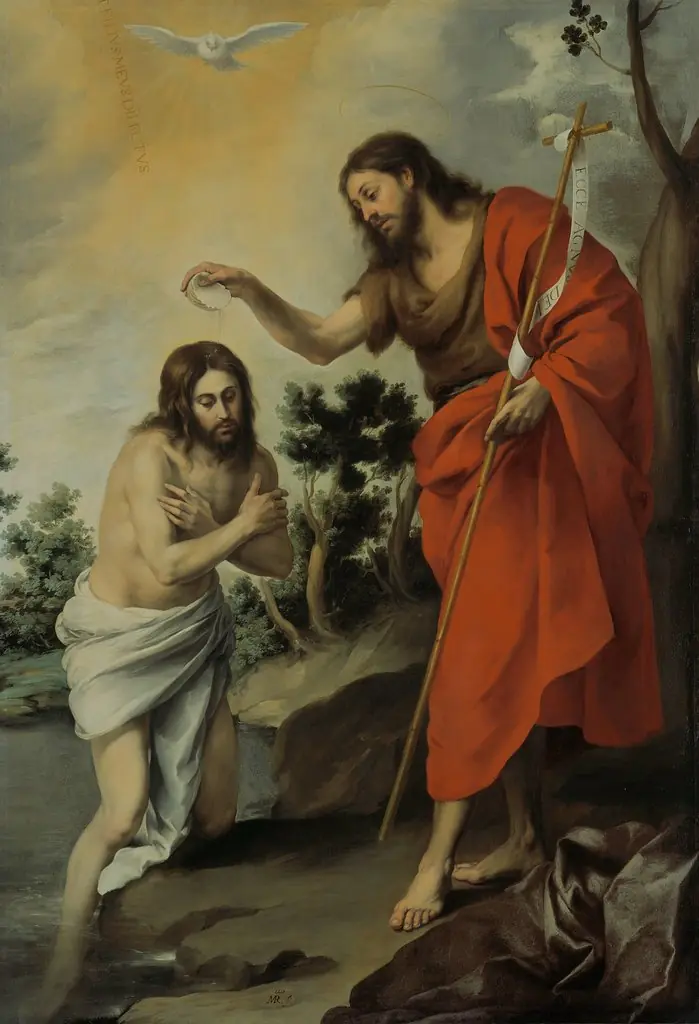
The scene illustrates Christ’s baptism by John the Baptist, as described in the Gospels. Christ stands waist-deep in water, while John, kneeling on a rock, pours water over his head. A child on the shore observes the moment, adding a contemplative presence. The composition emphasizes humility and divine grace, avoiding theatricality in favor of solemn stillness, aligning with Counter-Reformation ideals of quiet reverence.
Technique & Style
Carracci employed soft, blended brushwork and muted tones to evoke calmness, contrasting with the more dramatic chiaroscuro of his contemporaries. The copper surface enhanced the luminosity of the sky and water, while subtle gradations of light modeled the figures with quiet realism. The landscape, rendered with loose, atmospheric strokes, recedes gently, reinforcing the scene’s serenity without distracting from its spiritual focus.
History & Provenance
Created during Carracci’s Roman period, the painting likely originated in a private devotional context. It entered the Kunsthaus Zürich collection in the 19th century, following the dispersal of European private holdings. Its small scale and intimate character suggest it was intended for personal or chapel use rather than public display, consistent with Carracci’s production for discerning patrons.
Context
In early 17th-century Italy, religious imagery increasingly favored clarity and emotional restraint under Church reform. Carracci, alongside his brother and cousin, helped shift painting away from Mannerist complexity toward naturalism grounded in observation. This work reflects that transition, balancing biblical narrative with a humanized, tranquil setting that invited quiet meditation.
Legacy
Though less celebrated than his frescoes in the Farnese Gallery, *Battesimo di Cristo* exemplifies Carracci’s influence on the development of Baroque devotional painting. Its restrained emotion and technical refinement inspired later artists seeking to merge classical harmony with spiritual sincerity. The painting remains a quiet testament to his role in shaping a more accessible, human-centered sacred art.
Artist & collection
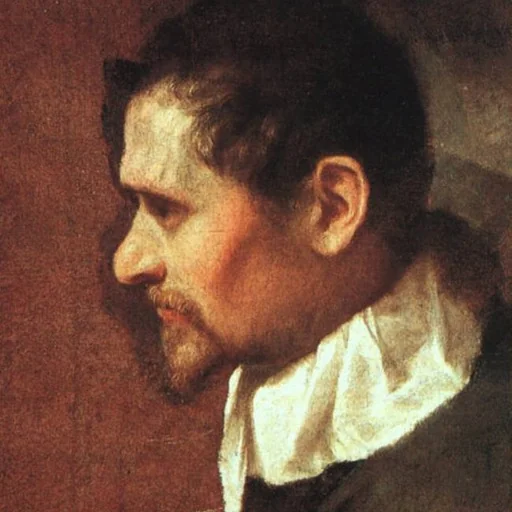
Artist
Annibale Carracci ( kə-RAH-chee, UK also kə-RATCH-ee, Italian: ; November 3, 1560 – July 15, 1609) was an Italian painter and instructor, active in Bologna and later in Rome.