Artwork
Bodegones
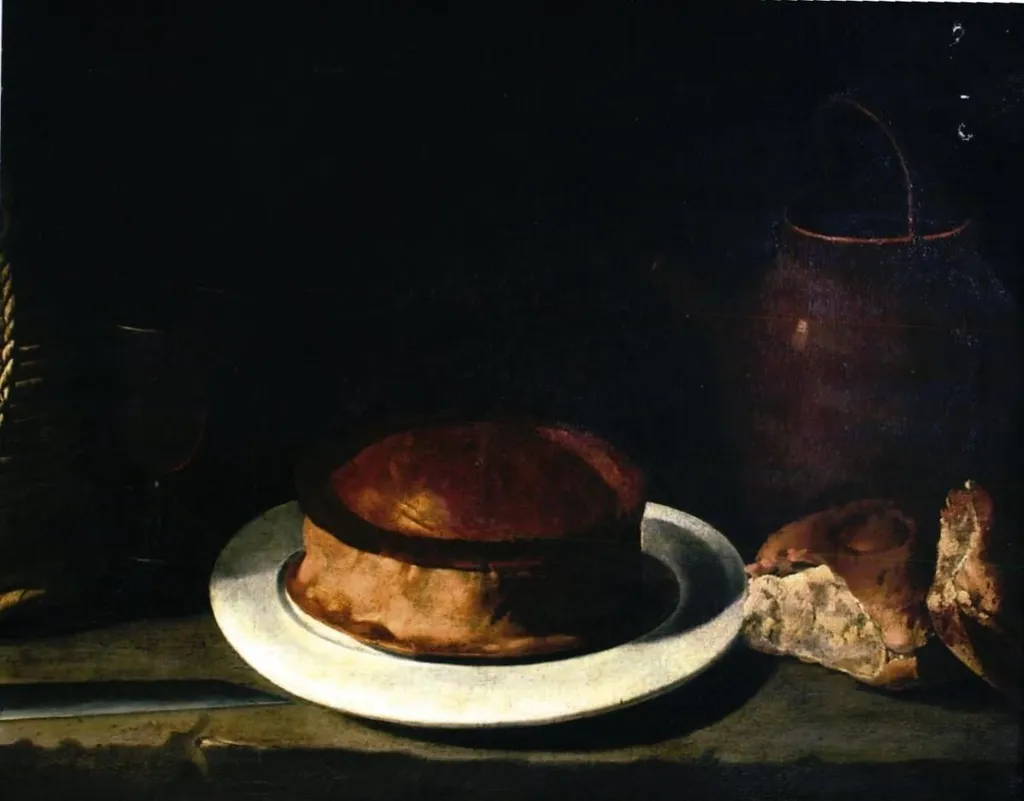
Bodegones is an unspecified painting by anonim spaniol sau italian. It dates from 1650 and is held in the collection of the Romanian Academy in Bucharest. This anonymous work, dated around 1650, belongs to the Spanish or Italian tradition of bodegón painting.
About this work
Overview
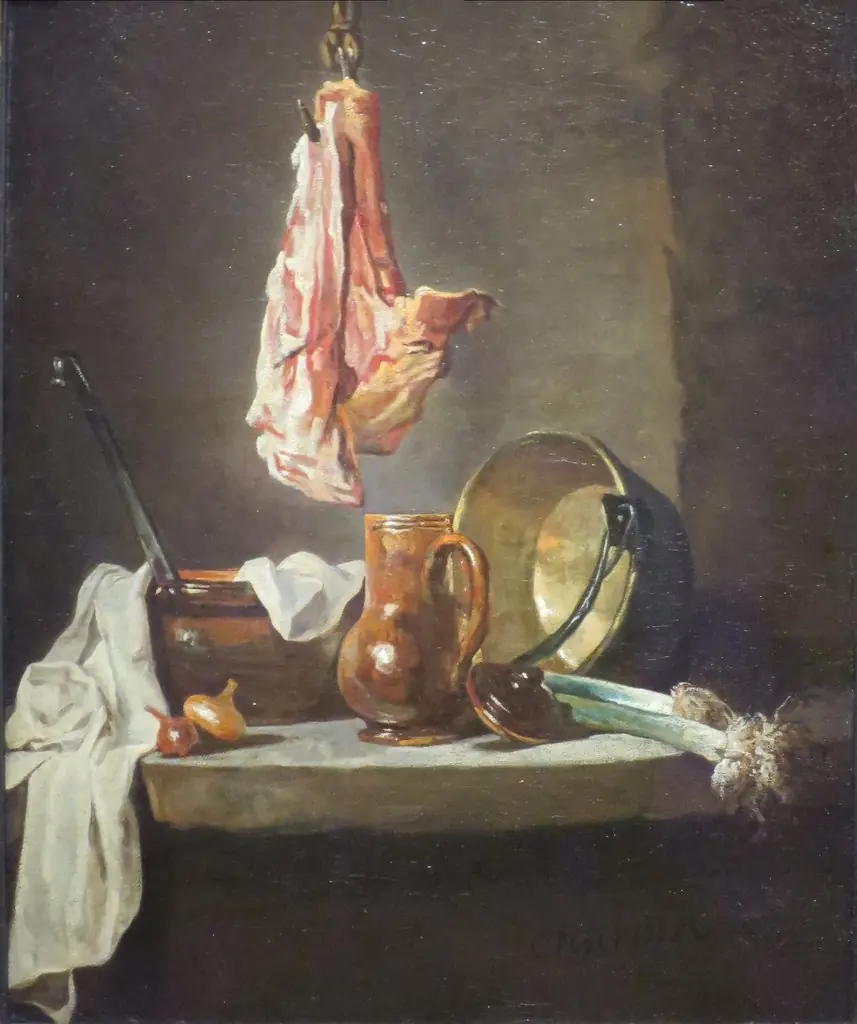
It depicts a modest still life centered on bread and simple kitchenware, rendered with restrained composition and muted tones.
This anonymous work, dated around 1650, belongs to the Spanish or Italian tradition of bodegón painting. It depicts a modest still life centered on bread and simple kitchenware, rendered with restrained composition and muted tones. The piece is held in the collection of the Museum of Ethnography, where it reflects a broader cultural interest in the dignity of everyday material life during the early modern period.
Subject & Meaning
The painting isolates humble food items—a loaf, scattered crumbs, and a chunk of bread—arranged on a rough wooden surface. These elements carry no overt symbolism but evoke quiet sustenance and the routine of domestic labor. The inclusion of a hanging jug and dim ambient light reinforces a sense of stillness, suggesting the aftermath of a meal or the preparation of one, grounded in the rhythms of ordinary existence.
Technique & Style
The artist employs chiaroscuro to model form through subtle gradations of light and shadow. The bread’s surface gains volume from the way light grazes its crust while deepening into the folds of the draped cloth. The background remains nearly monochromatic, drawing attention to the textured table and the bread’s tactile presence. Brushwork is restrained, avoiding ornamentation in favor of observational clarity.
History & Provenance
The painting’s origins remain undocumented, with no known artist attribution or early ownership records. It entered the Museum of Ethnography’s collection in the 20th century, likely acquired as part of a broader effort to preserve vernacular visual culture. Its anonymity aligns with many regional still lifes of the period, often created for private homes rather than public display.
Context
Produced during a time when Spanish and Italian painters increasingly turned to secular, everyday subjects, this work reflects a shift away from religious or aristocratic themes. Bodegón paintings like this one emerged in response to growing middle-class audiences who valued depictions of domestic realism. The quiet austerity of the scene mirrors contemporary spiritual and social values emphasizing humility and simplicity.
Legacy
Though not widely exhibited, the painting contributes to the understanding of how ordinary objects were elevated through careful observation in early modern art. Its presence in an ethnographic museum underscores its role as a cultural artifact rather than a celebrated work of fine art, offering insight into the visual language of daily life across social classes in 17th-century Iberia or southern Italy.
Artist & collection
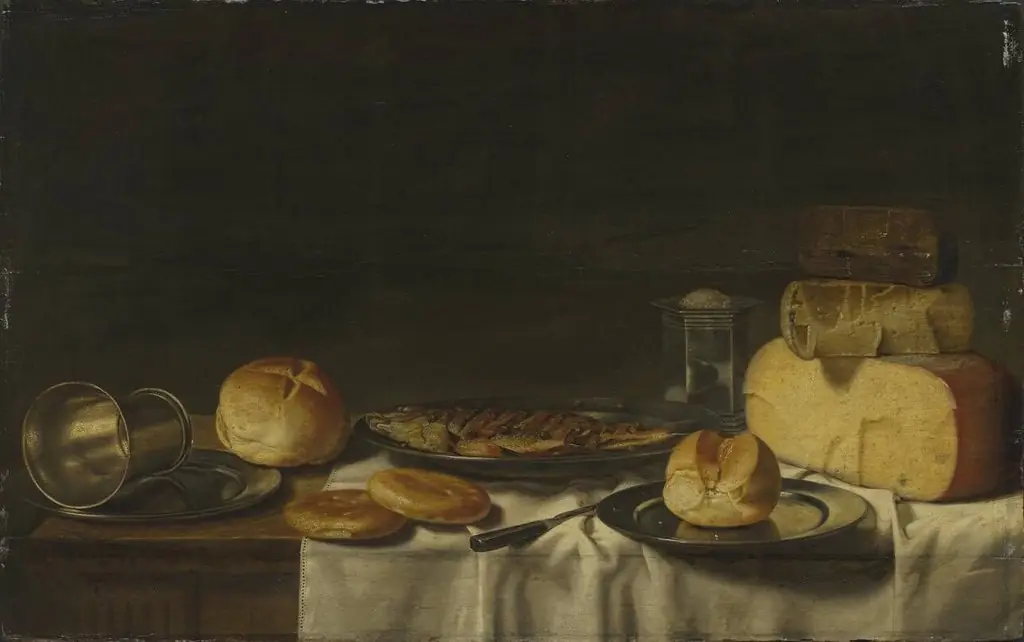 Still life of laid table with cheese
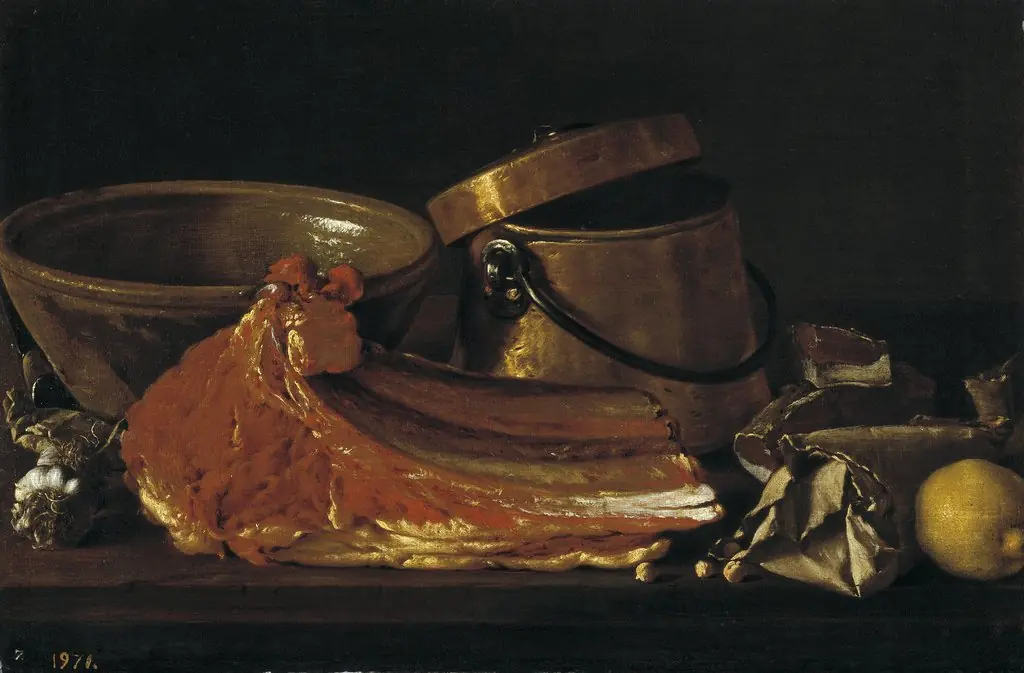 Bodegón con chuletón condimentos y recipientes
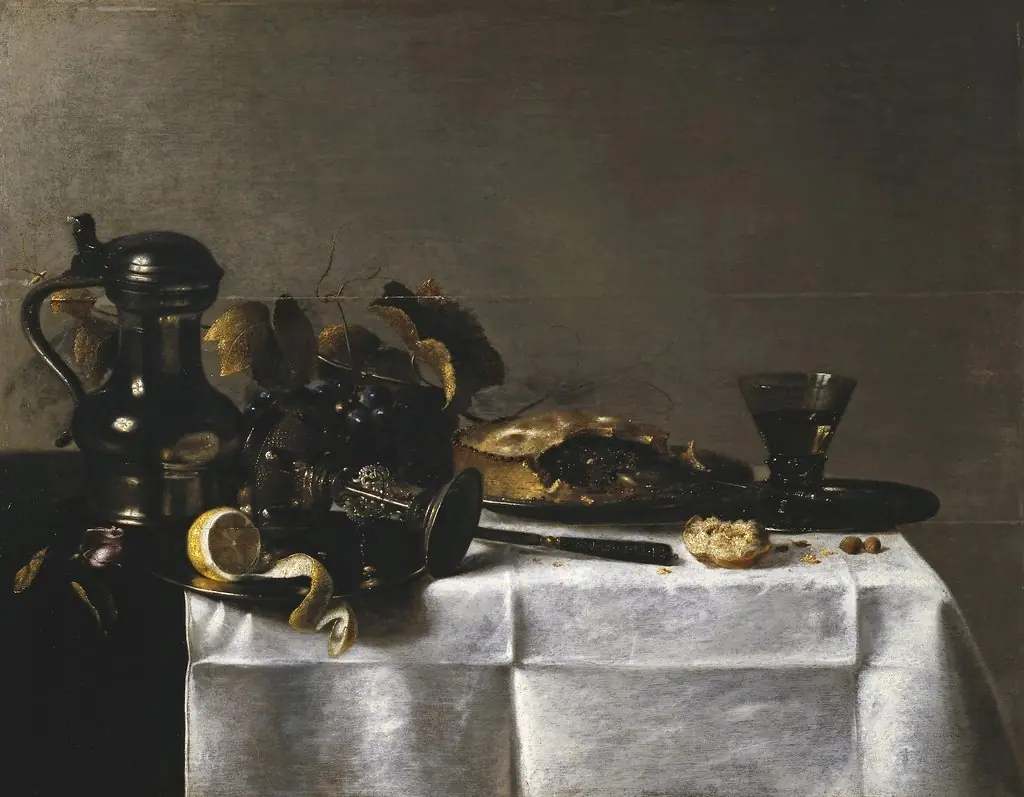 Breakfast
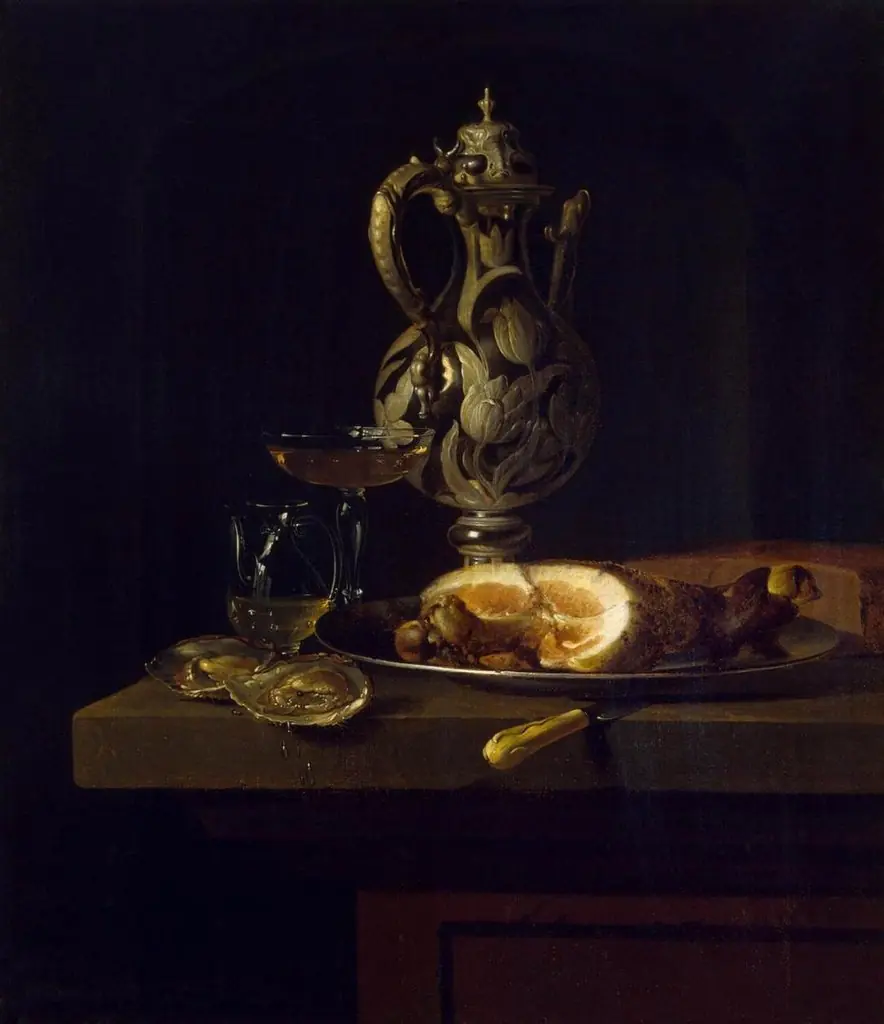 Breakfast with Ham
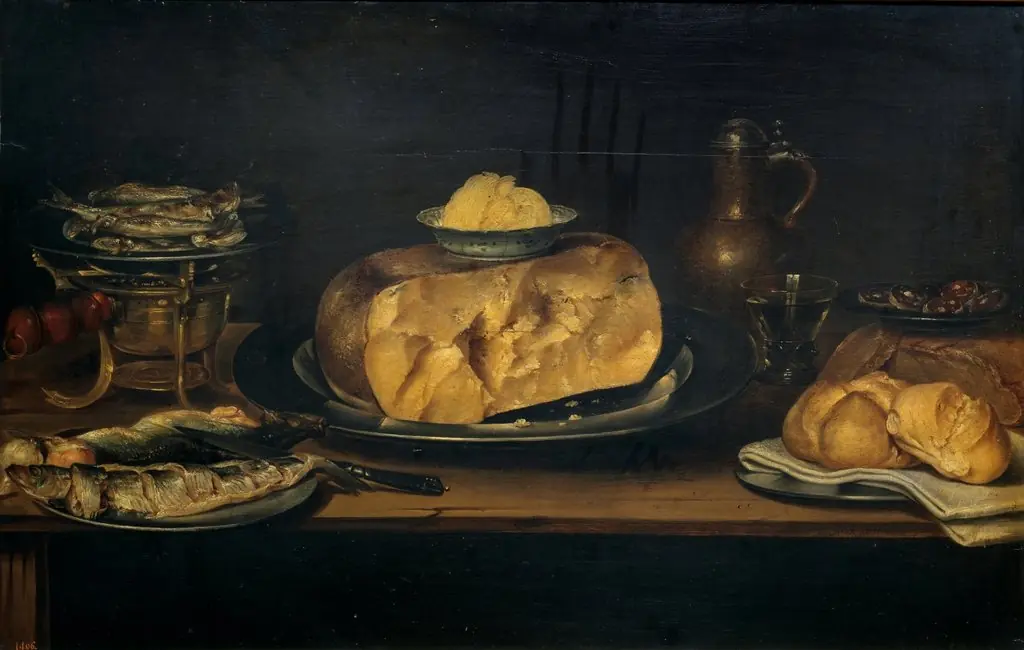 Still life of a table with crockery, cheese, sausage and fish
 The White Tablecloth
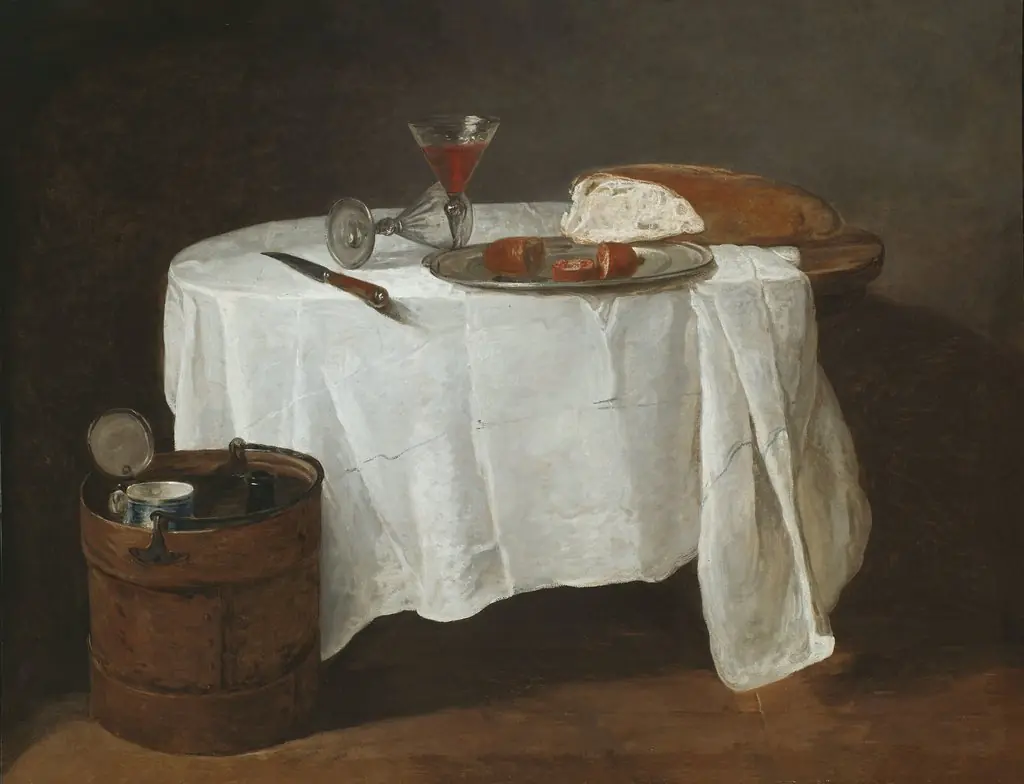 The White Tablecloth
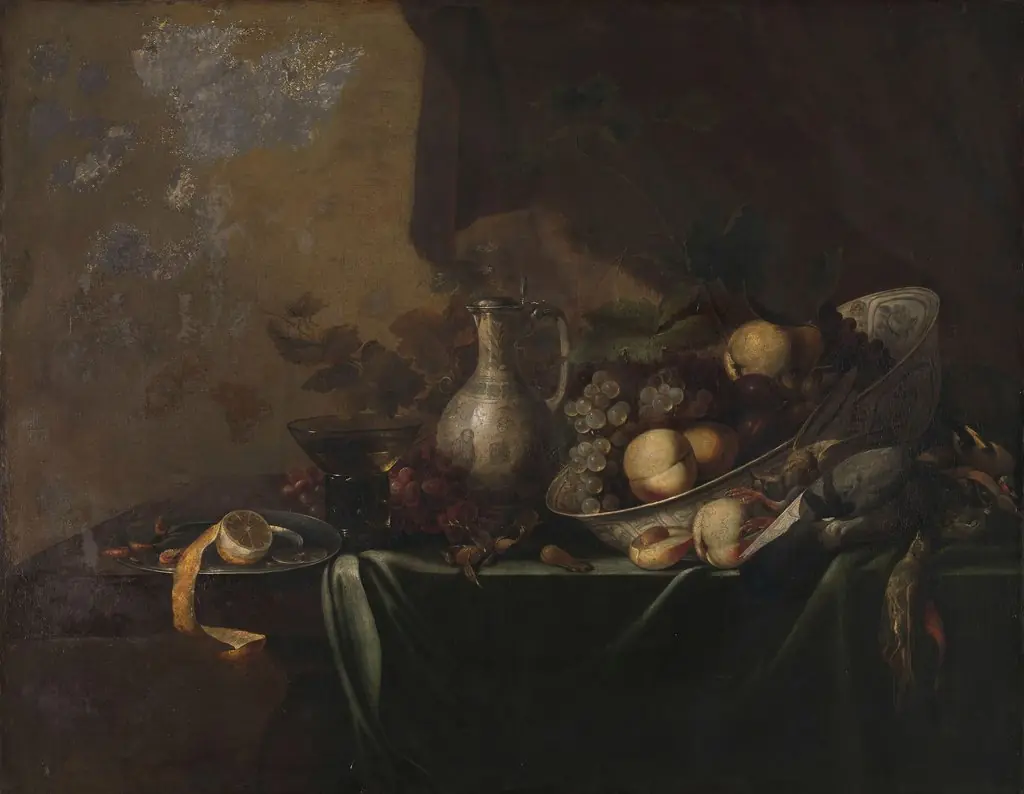 Still Life with Fruit
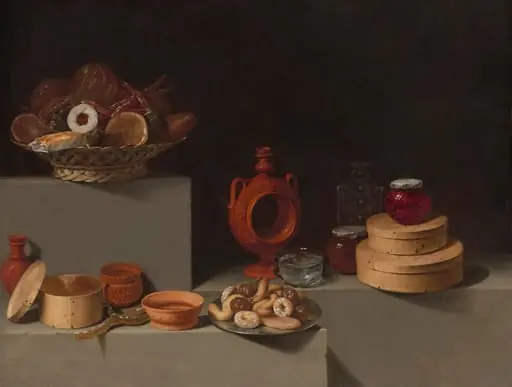 Still Life with Sweets and Pottery
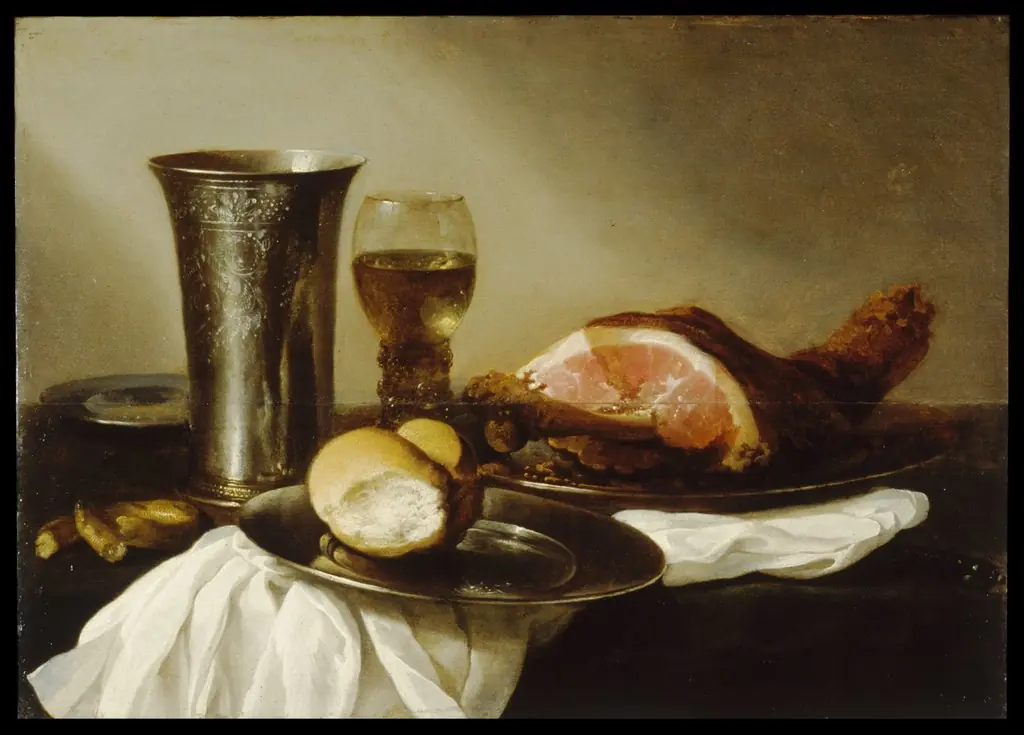 Breakfast Piece
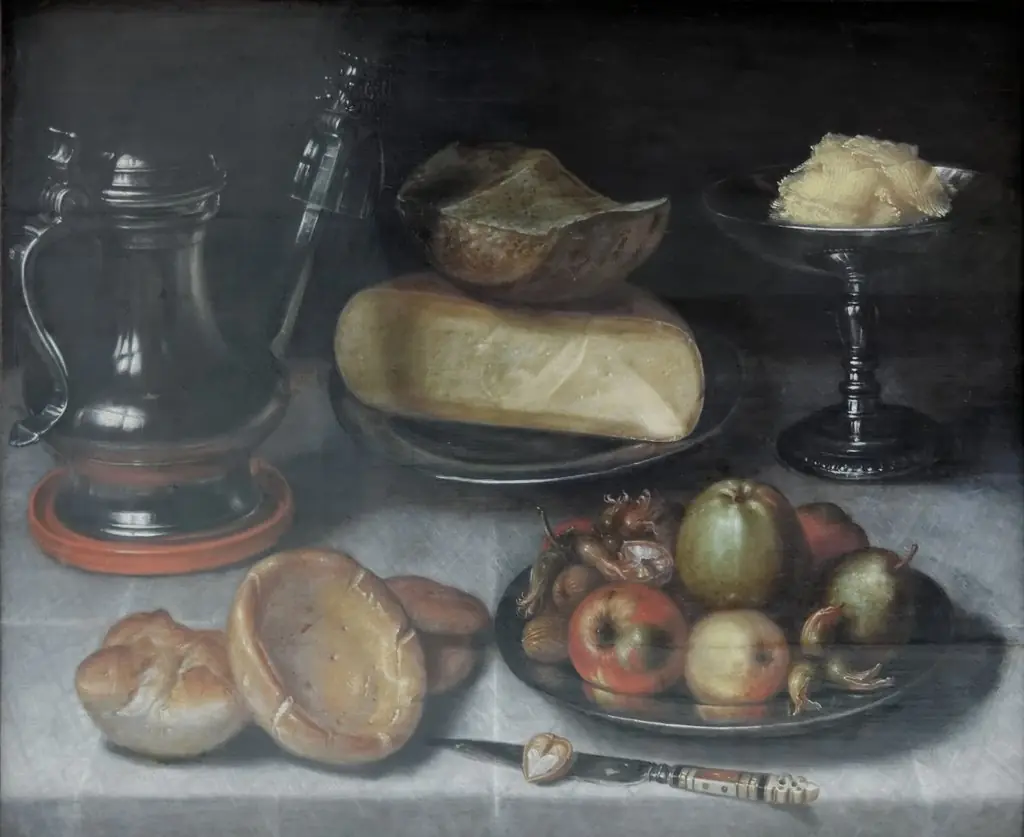 Still Life with Pewter Jug, Fruit and Cheese
 Still Life with Cooking Utensils