Artwork
Road to Calvary
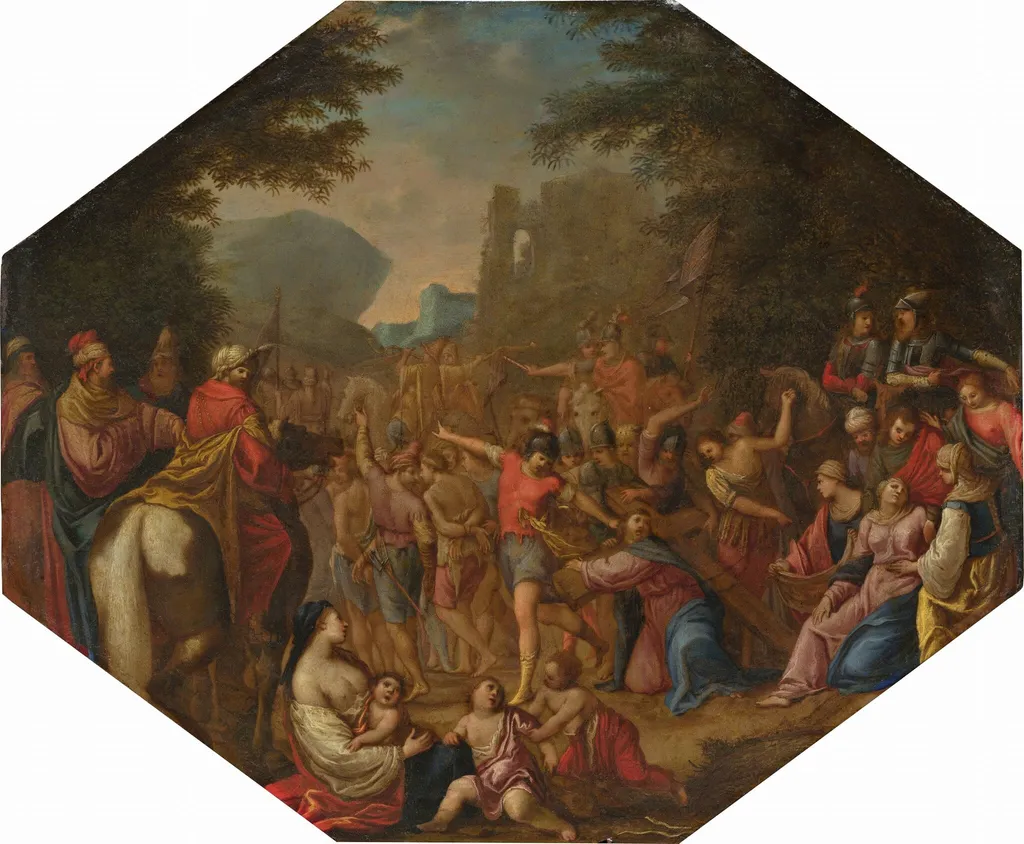
Road to Calvary is an oil painting. It dates from 1618 and is held in the collection of the National Gallery of Art.
About this work
Overview
Road to Calvary is an oil painting executed on a copper support. The composition presents a bustling procession, with a dense crowd gathered around a central figure in the foreground and additional participants, including mounted riders, receding into the distance. A landscape of trees and a cloud‑filled sky frames the scene, emphasizing its narrative scope.
Subject & Meaning
The work portrays the biblical episode of Christ’s journey to his crucifixion, populated by a multitude of onlookers and soldiers. The central figure, likely Christ, is surrounded by a varied assembly that conveys the social and emotional complexity of the event, inviting contemplation of collective responsibility and individual devotion.
Technique & Style
Rendered in oil on copper, the painting exploits the smooth, reflective surface to achieve fine detail in garments and facial expressions. A pronounced chiaroscuro model creates stark contrasts between illuminated forms and shadowed areas, a hallmark of Baroque aesthetics that heightens drama and three‑dimensionality.
History & Provenance
Created during the Baroque period, the piece reflects the era’s fascination with dynamic movement and theatrical lighting. While specific ownership records are sparse, the medium of copper suggests it was intended for a discerning patron or a setting where durability and luminous effect were prized.
Context
Baroque art, flourishing in the 17th century, emphasized emotional intensity, dramatic composition, and vigorous contrasts of light and dark. Road to Calvary aligns with these principles, employing a crowded narrative and vigorous chiaroscuro to engage viewers in the spiritual gravity of the depicted moment.
Artist & collection
