Artwork
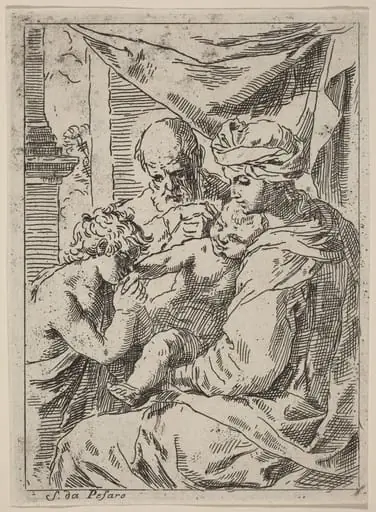
The Virgin and Saint John
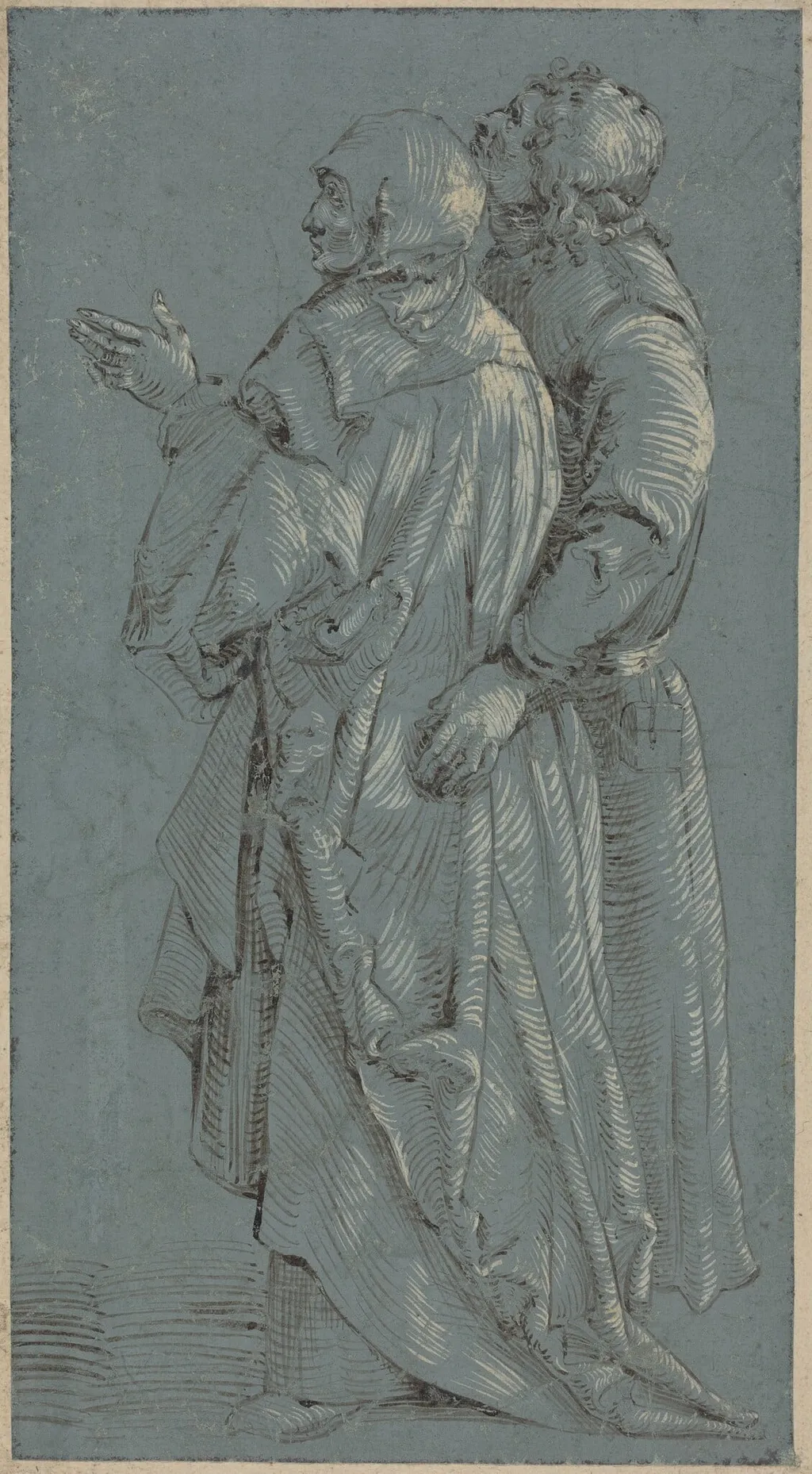
The Virgin and Saint John is an ink drawing by the Baroque artist Unknown. It dates from 1600 and is held in the collection of the National Gallery of Art.
About this work
Overview
The work titled “The Virgin and Saint John” is a drawing executed with brush and brown ink, enhanced with white highlights on a blue‑prepared paper support. It presents a modest composition featuring the Virgin Mary alongside the youthful Saint John, rendered in a restrained palette that emphasizes line and tonal contrast.
Subject & Meaning
The image focuses on two central figures of Christian iconography: the Virgin, often symbolizing purity and maternal devotion, and Saint John, typically associated with youthful piety and prophetic insight. Their juxtaposition suggests a contemplative narrative, inviting viewers to reflect on themes of devotion, innocence, and the interrelationship of holy figures within a quiet, intimate setting.
Technique & Style
The artist employed brown ink applied with a brush, employing cross‑hatching to build volume and texture, while selective white strokes on the blue ground create highlights and a sense of depth. This combination of ink and white on a colored paper was a common practice in the period, allowing the drawing to achieve atmospheric shading without the use of full colour.
History & Provenance
The drawing is catalogued as a work on paper, though specific details regarding its creation date, workshop, or ownership lineage are not provided in the available documentation. Its material composition aligns with drawing practices of the late medieval to early Renaissance era, when artists frequently prepared paper with a tinted ground for ink studies.
Context
During the time when such ink drawings were produced, blue‑prepared paper served both aesthetic and practical purposes, offering a mid‑tone that facilitated the modeling of forms through the interplay of dark ink and light white. This method was especially favored for devotional subjects, allowing artists to convey reverence with economical means.
Artist & collection

 Domestic Scene
 Giacomo and Cardinal Marco, investing Andrea, Abbot of San Zeno, with his Benefice
 The Nymph of Fontainebleau
 Portrait of a Woman
 Madonna and Child with Saints in the Enclosed Garden
 Venus and Minerva
 Family Group of Four on Sofa
 Wall painting from Room H of the Villa of P. Fannius Synistor at Boscoreale
 A Kneeling Friar in Prayer
 A Standing Saint
 Saint Louis of Toulouse Holding a Staff
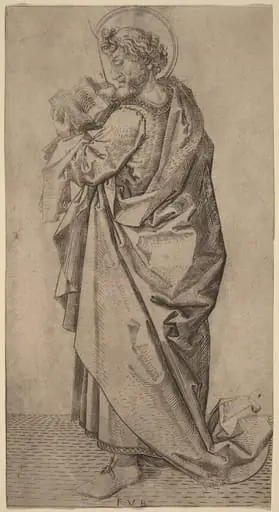 Saint Bartholomew
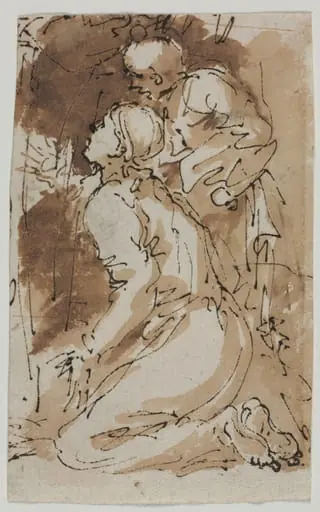 Figure Studies
 Figure Studies (recto)
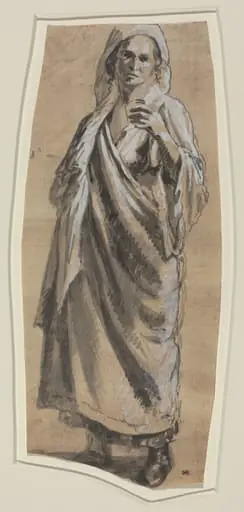 Study of a Standing Woman
 Two Standing Saints
 A Standing Saint Holding a Book and a Palm Frond
 Woman Walking to the Right
 The Virgin in the Niche
 The Virgin and Child with Saint John