Artwork
Nuns
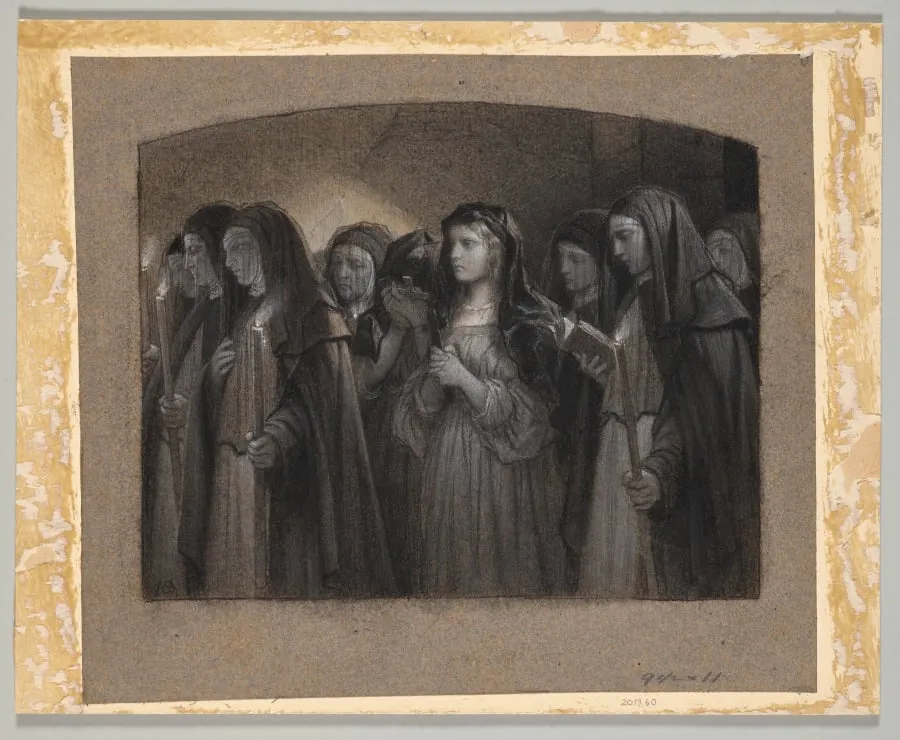
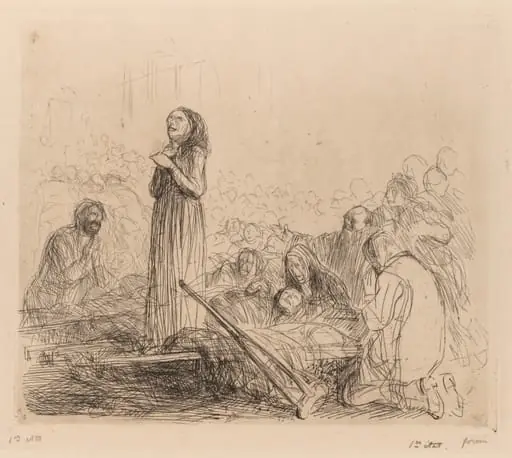
Nuns is a drawing by the Romanticist artist Unknown. It dates from 1804 and is held in the collection of the Cleveland Museum of Art.
About this work
The artist left no name, so the drawing was likely meant for a quick exhibition—not a grand church wall.
You see three young nuns in long habits, heads bowed, hands folded in prayer. The paper is mostly bare except for soft white chalk that catches the light on their faces and sleeves.
This quiet sketch was made when France’s middle class started buying art for their homes. The artist left no name, so the drawing was likely meant for a quick exhibition—not a grand church wall.
If you like these plain, everyday scenes, look up *france, 19th century* next.
Overview
This anonymous French drawing depicts a serene scene of three young nuns in contemplative prayer, rendered in soft white chalk on largely unmarked paper.
Subject & Meaning
The artwork focuses on the intimate, everyday devotional moment of the nuns, reflecting a shift in 19th-century French art towards themes relatable to the emerging middle-class audience.
Technique & Style
The artist employed white chalk to subtly highlight the central nun's clasped hands and the subjects' faces and sleeves, capturing a sense of quiet reverence through minimal yet effective use of medium.
History & Provenance
Created during the mid-19th century, the drawing coincides with the rise of the Paris Salon and the growing practice of middle-class art collecting for domestic spaces. The lack of attribution suggests it may have been intended for temporary exhibition.
Context
The piece is characteristic of the period's new interest in ordinary, religious life scenes, catering to the tastes of a burgeoning middle-class market for art.
Legacy
While not attributed to a specific artist, the drawing represents a broader artistic trend in 19th-century France, influencing or reflecting the popularity of humble, religious genre scenes during this time.
Artist & collection

 Domestic Scene
 Giacomo and Cardinal Marco, investing Andrea, Abbot of San Zeno, with his Benefice
 The Nymph of Fontainebleau
 Portrait of a Woman
 Madonna and Child with Saints in the Enclosed Garden
 Venus and Minerva
 Family Group of Four on Sofa
 Wall painting from Room H of the Villa of P. Fannius Synistor at Boscoreale
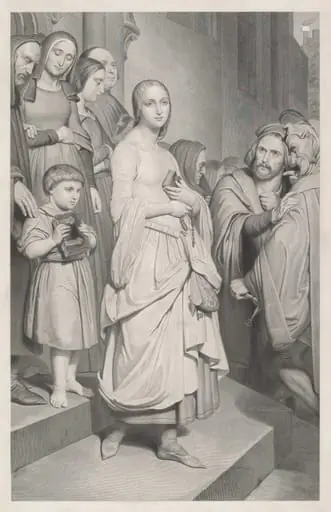 Faust Seeing Marguerite for the First Time
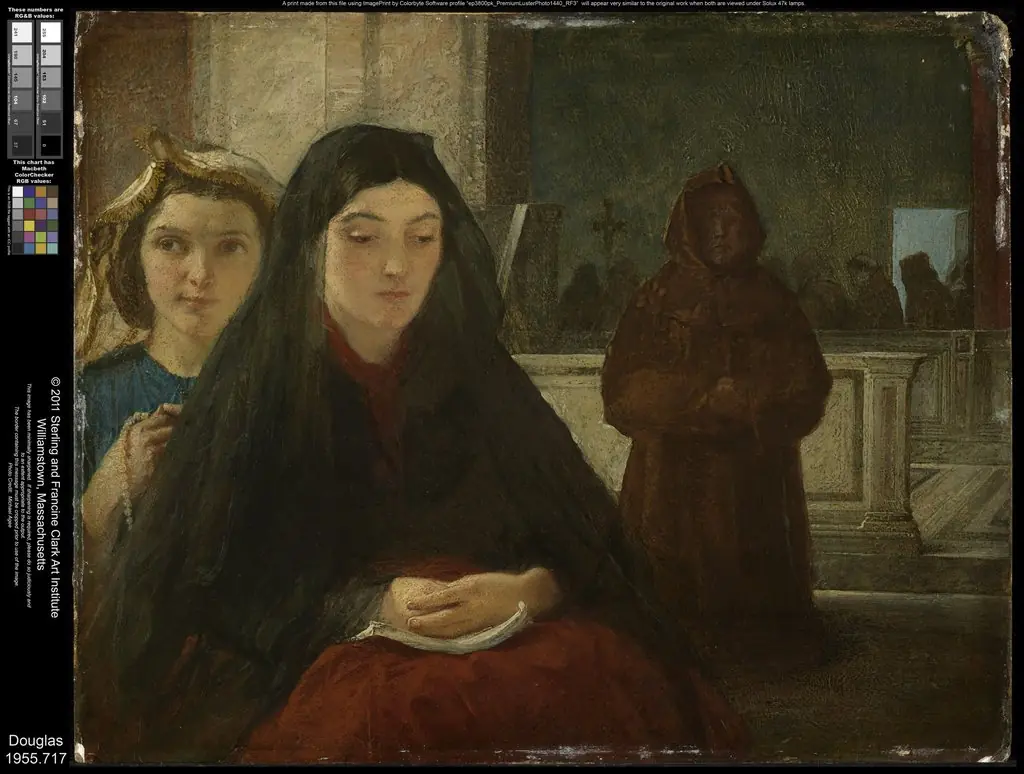 Women in Church
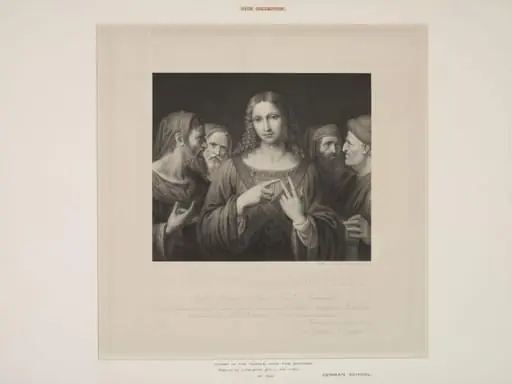 Christ Disputing with the Doctors
 Two Roman Women
 The Novitiate
 Study of Courtesans
 Untitled
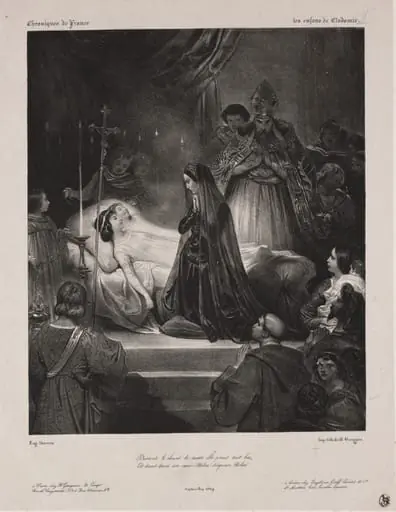 Chronicles of France: The Children of Clodomir
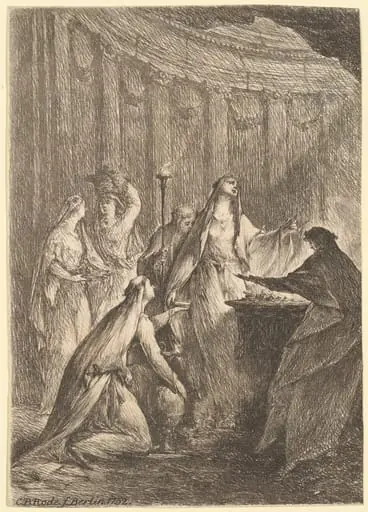 Antique Sacrifice
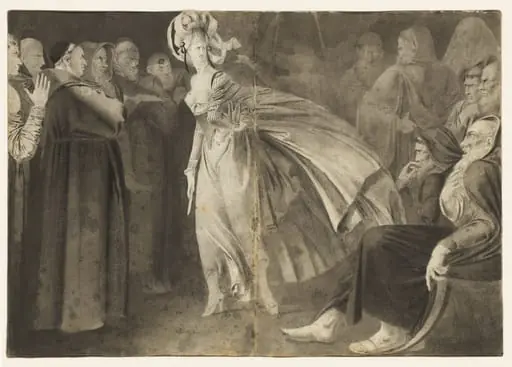 Woman Standing among the Friars (recto)
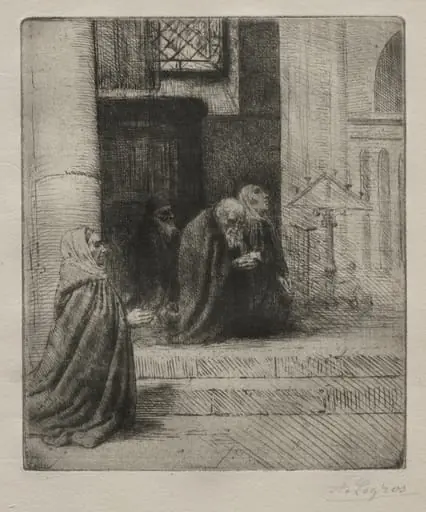 Interior of a Church
 The Miracle before the Blessed Sacrament