Artwork
Coronation of Saint Rosalia
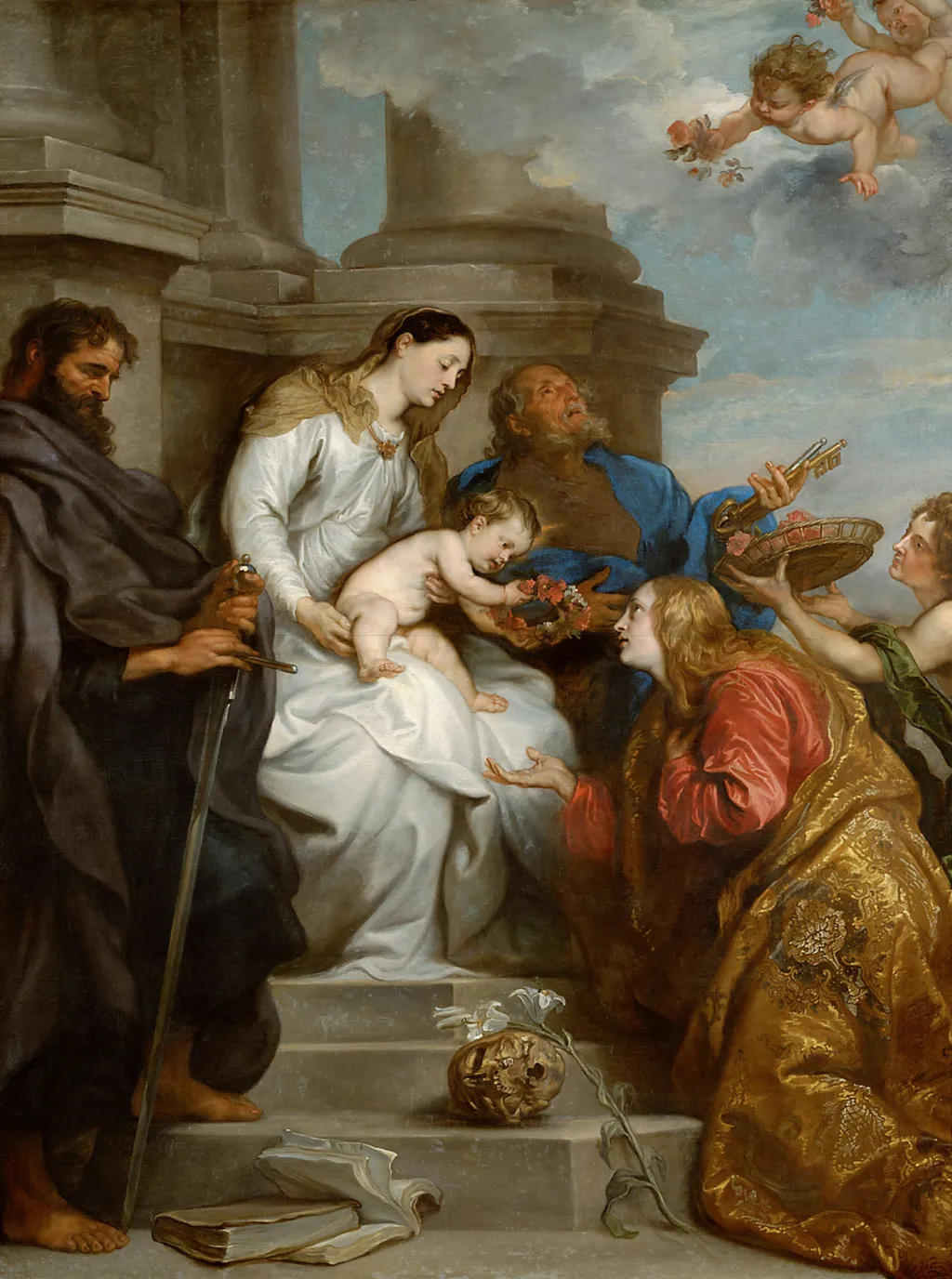
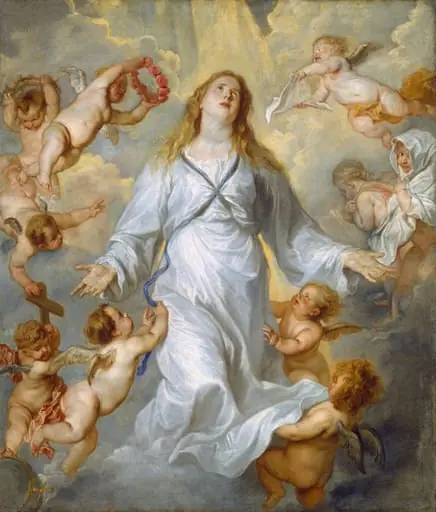
Coronation of Saint Rosalia is an oil painting by the Flemish Baroque painting artist Anthony van Dyck. It dates from 1629 and is held in the collection of the Kunsthistorisches Museum.
About this work
Overview
Anthony van Dyck’s 1629 oil on canvas, known as the Coronation of Saint Rosalia, portrays a devotional scene that combines the Madonna and Child with the saints Peter, Paul and the eponymous Rosalia. The work was created for the chapel of the senior bachelors’ fraternity within Antwerp’s Jesuit church, then called Saint Ignatius and later renamed Saint Charles Borromeo.
Subject & Meaning
Two ethereal figures hover above, bearing musical instruments and flowers, underscoring the heavenly celebration of the saint’s coronation.
At the composition’s centre stands a woman in white, identified as Saint Rosalia, cradling an infant that signifies protection and faith. Flanking her are the apostles Peter and Paul, while a skull and an open book on the steps evoke mortality and spiritual wisdom. Two ethereal figures hover above, bearing musical instruments and flowers, underscoring the heavenly celebration of the saint’s coronation.
Technique & Style
Van Dyck employs a luminous palette and fluid brushwork typical of his early Baroque period, rendering delicate flesh tones and rich fabrics. The arrangement of figures on a stair‑like platform creates a sense of depth, while the contrast between the earthly setting and the floating angels highlights the interplay of the material and the divine.
History & Provenance
The painting remained in its original Antwerp chapel until 1776, when Empress Maria Theresa of Austria purchased it for the imperial collection. It was subsequently transferred to Vienna, where it has been on display in the Kunsthistorisches Museum since the late eighteenth century.
Context
Saint Rosalia, a 12th‑century hermit venerated for interceding during the plague in Palermo, was a popular devotional figure in the Counter‑Reformation. Van Dyck’s inclusion of Peter and Paul reflects the Jesuit emphasis on apostolic authority, while the work’s original setting in a bachelor’s fraternity chapel underscores its role in communal prayer.
Legacy
The canvas exemplifies van Dyck’s synthesis of Venetian colour and Flemish detail, influencing later religious commissions in the Habsburg territories. Its presence in the Kunsthistorisches Museum links the artist’s Flemish origins with the broader imperial patronage that shaped European Baroque art.
Own this work as a print
Artist & collection
Artist
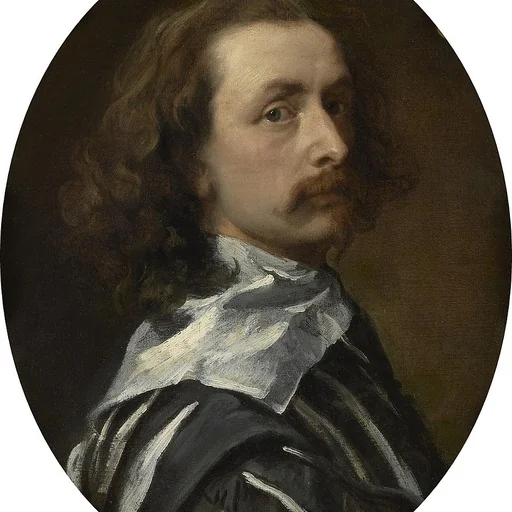
Sir Anthony van Dyck (; Dutch: Antoon van Dijck ; 22 March 1599 – 9 December 1641) was a Flemish Baroque artist, who became the leading court painter in England after success in the Spanish Netherlands and Italy.