Artwork
Portrait of a Genoese Lady
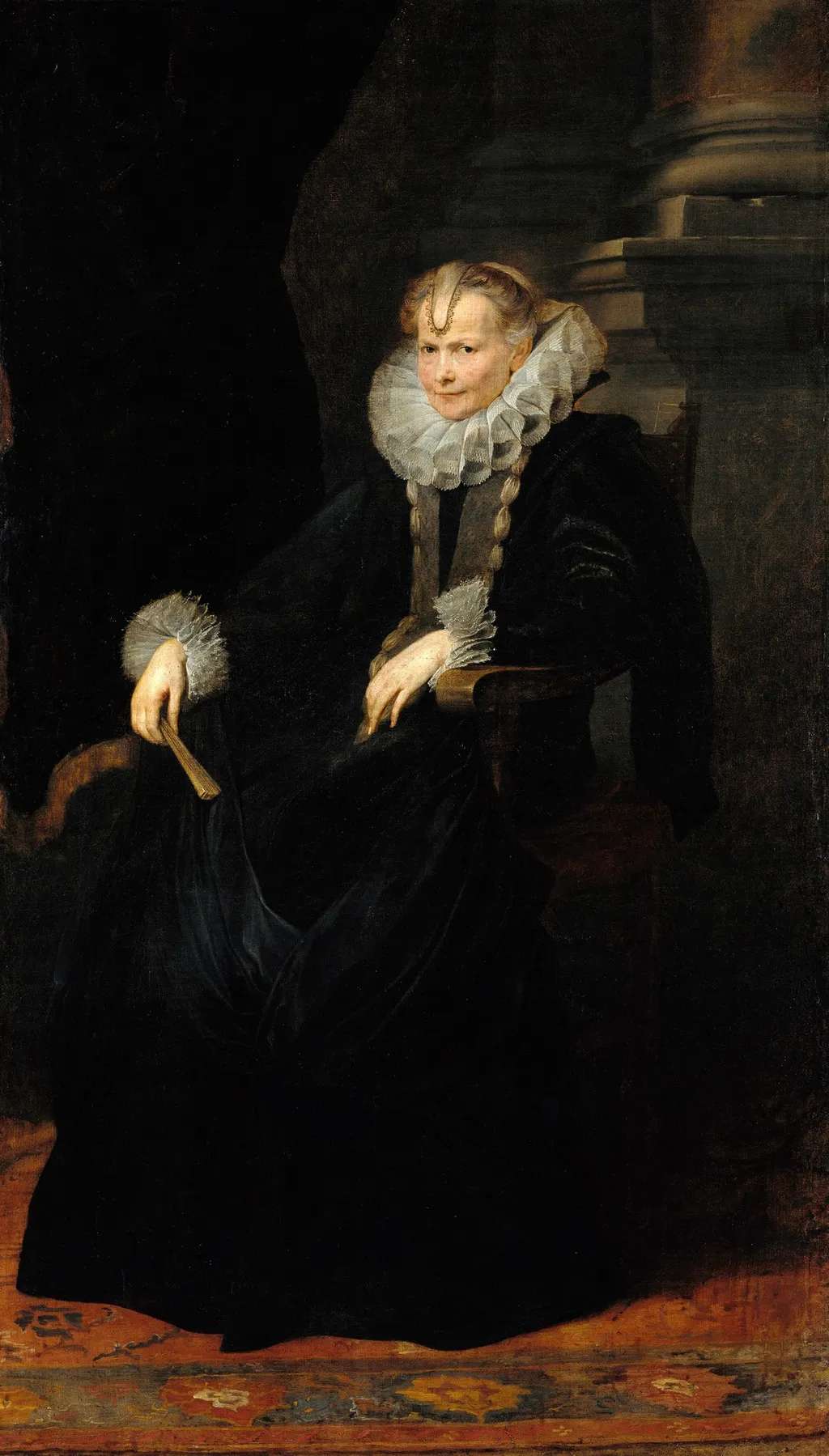
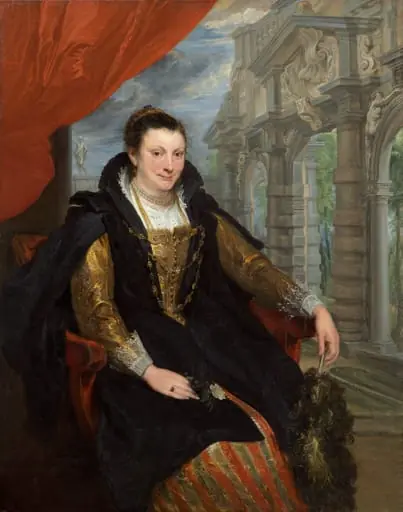
Portrait of a Genoese Lady is an oil painting by the Flemish Baroque painting artist Anthony van Dyck. It dates from 1622 and is held in the collection of the Gemäldegalerie Berlin.
About this work
Overview
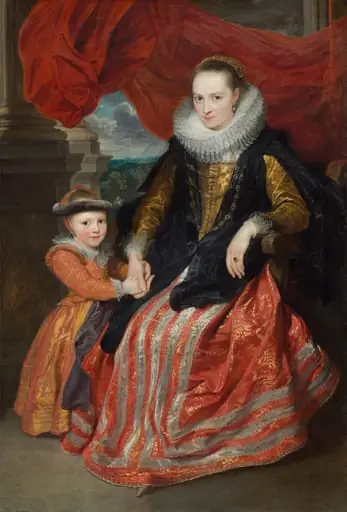
Anthony van Dyck painted *Portrait of a Genoese Lady* in 1622. The work, executed in oil on canvas, shows a seated woman in a dark gown with a white ruffled collar, holding a hand fan. The composition is set against a dark background with a classical column visible behind her, lending a formal atmosphere.
Subject & Meaning
The sitter is presented with a serious expression, her face turned slightly to the left. Her hair is gathered back and bound with a modest headband, emphasizing restraint and dignity. The fan and the elegant attire suggest a woman of refined status, possibly connected to the mercantile elite of Genoa.
Technique & Style
Van Dyck employs his characteristic Baroque handling of light, using a subdued chiaroscuro to model the figure against the dark backdrop. The smooth rendering of the fabric and the delicate treatment of the fan demonstrate his skill in depicting texture, while the restrained palette reflects his early mature style.
History & Provenance
After its creation, the portrait entered various private collections before becoming part of the Gemäldegalerie in Berlin. The museum acquired the work as a representative example of van Dyck’s early portraiture, linking the Flemish artist’s output to broader European patronage networks.
Context
Painted while van Dyck was still working in the studio of Peter Paul Rubens, the portrait reflects the influence of Rubens’ dynamic compositions and the emerging trend of individualized court portraiture. The work predates van Dyck’s later appointment as court painter to Charles I of England, marking an early stage in his development.
Artist & collection
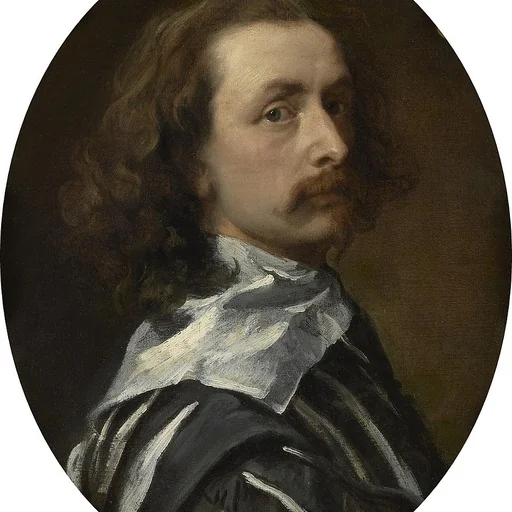
Artist
Sir Anthony van Dyck (; Dutch: Antoon van Dijck ; 22 March 1599 – 9 December 1641) was a Flemish Baroque artist, who became the leading court painter in England after success in the Spanish Netherlands and Italy.